

A gap in the family.
"Spare the rod and spoil the child," a saying passed down from our ancestors, reflects traditional parenting methods. However, as society has developed, circumstances and methods of raising children have fundamentally changed. While this saying is not outdated in its essence, the core principle of raising children is that love must always go hand in hand with discipline. Excessive love or discipline can do more harm than good. A balance between love and discipline will help children develop holistically.
However, corporal punishment should not be considered a form of discipline. There are many other forms of discipline besides corporal punishment!
Many people misunderstand this and apply corporal punishment to children. This is where a major loophole emerges, occurring daily but difficult to identify, and sometimes beyond the reach of the law. It concerns the right to discipline children (of both parents and schools), which takes place in what is considered a safe environment, and adults have the right (almost naturally). The difficulty lies in distinguishing between strictness and harshness, between the right and abuse of power; the line between permissible and impermissible discipline is very thin, both between the educator and the child's capacity to endure.
Even more dangerously, there are people who beat their children, even torture them, and believe they have the right to do so!
When things go too far, they will lead to consequences.

Dr. Vu Thi Kim Hoa, Vice President of the Vietnam Association for the Protection of Children's Rights, stated (during an online discussion titled "What to do to heal the wounds of children after abuse?" organized by Vietnam Children's Magazine): "Acts of physical and mental abuse are sometimes normalized under the guise of educating children, making violence harder to detect."
Recognizing and addressing this issue, Dr. Vu Thi Kim Hoa offered a profound explanation: Parenting classes are necessary. “…It shouldn't only be something people learn after they have children, but should be prepared early as an important life skill. Equipping oneself with knowledge about childcare, raising children, managing emotions, or applying positive discipline methods should begin in the pre-marital stage, continue during pregnancy, and be maintained. To achieve this, various forms of support and training for young parents need to be promoted, such as pre-marital classes, parenting skills classes, counseling activities in schools and healthcare facilities; and simultaneously, increased communication on social media, television, and programs guiding positive parenting in the community.”
Ms. Hoa also affirmed : Over the past time, the Vietnam Association for the Protection of Children's Rights has implemented many activities to support parents. Through training courses in the community, schools, parent groups, and direct support models, many parents have gradually changed their perceptions and parenting methods in a positive direction, showing more respect and understanding for their children.
"The family needs to be seen as the first and most important 'shield' in protecting children from violence and abuse. Therefore, parents not only need love but also need support in terms of knowledge and positive parenting skills to accompany their children with understanding instead of violence," Ms. Hoa emphasized.
The vulnerability stemming from "invisible damage"
In reality, society still tends to identify child abuse through tangible harm such as physical injuries and beatings (easily recognizable signs that have already resulted in consequences). Meanwhile, psychological trauma, mental violence, invasion of privacy, or prolonged pressure are difficult to detect (leading to severe and lasting consequences).
According to psychologists, it's crucial to identify psychological trauma early so that parents and teachers can reconsider their approach to children. Signs that adults should recognize when a child is experiencing trauma include: sudden withdrawal and reluctance to socialize; prolonged anxiety, fear, and insecurity; unusual, shocking, or strange behavioral changes; a sudden decline in academic performance; and signs of self-harm.
For children, it's important to recognize some behaviors that may be signs of abuse: Being beaten or threatened; being frequently insulted or ridiculed; being forced to do things against their will; having their personal information publicly shared; being bullied online, etc.
Discussing this issue, Miss Vietnam Ha Kieu Anh (at the online Q&A session "What to do to heal the wounds of children after abuse?" organized by Vietnam Children's Magazine) said: "Please don't wait until your child becomes silent, withdrawn, or distant to realize that they have been hurt for a long time. Many 'lifelong wounds' don't begin with major events, but with very small things that are repeated every day: a time when they weren't listened to, a feeling that was disregarded, an unintentional remark that made them feel inadequate, or a time when they needed a hug but were ignored..."

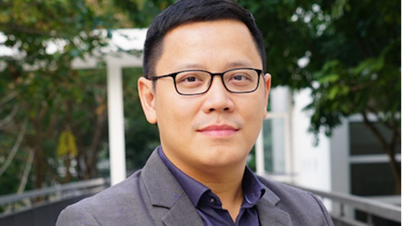
Speaking with a reporter from the Vietnam Law Newspaper, Lawyer Ha Trong Dai, Director of Ha Trong Dai and Associates Law Firm, stated: "If we want to effectively protect children, we must shift from a mindset of dealing with consequences after they have occurred to a mindset of detecting risks and intervening early."
Vietnam has now established a comprehensive regulatory system to address acts of violence and abuse against children through criminal, administrative, and specialized regulations. However, the major challenge today lies not only in the enforcement of penalties but also in identifying, determining, and proving the harm inflicted.
Unlike physical violence, which is visible through injuries, psychological trauma often leaves no tangible traces. Many cases only manifest through behavioral changes, psychological disorders, prolonged anxiety, withdrawal, or self-harm.
According to experts, identifying invisible injuries requires a coordinated, interdisciplinary approach rather than relying on a single agency.
In this context, families and schools need to become key early detection channels.
The healthcare sector, psychologists, and social workers play a crucial role in professional assessment and determining the extent of trauma.
Local child protection systems receive information, assess risks, and connect children with support.
When there is evidence of a violation, the police, judicial authorities, and other relevant agencies will conduct verification and take action.
Dr. Vu Thi Kim Hoa stated, “It is necessary to develop and standardize criteria for identifying signs of violence in a simple, easy-to-understand, and easy-to-apply manner, to be directly integrated into the regular training programs of the education and health sectors. Simultaneously, we need to establish a clear and seamless reporting mechanism between schools, healthcare facilities, the government, and the specialized child protection system. Only when all parties are closely linked and share information promptly can we create a robust protection network that helps detect and address issues early…”
International experience shows that many countries have shifted from a "treat only when injured" approach to a holistic assessment of the impact on children's development.
Because invisible injuries cannot be seen with the naked eye, protecting children cannot rely solely on physical injuries; it requires a scientific identification mechanism and interdisciplinary coordination.
The loophole stemming from "Community Indifference"

The 2016 Children's Law stipulates that protecting children requires coordination among families, schools, agencies, organizations, and the community. This means that any individual or organization that discovers a child at risk of abuse, violence, or deprivation of rights has a responsibility to participate in protecting them.
A teacher notices a student suddenly withdrawing. A neighbor frequently hears shouting and violence. A social media user discovers private images of a child being leaked. They may be among the first to help protect children.
Discussing this issue, lawyer Ha Trong Dai affirmed: "In society, the mentality of keeping things to themselves behind closed doors is still very prevalent. Many people witness domestic violence but hesitate to intervene because they consider it a family matter, a matter of raising children..."
Experts argue that society needs to shift from a "witness" mindset to an "action" mindset, from reacting only after consequences have occurred to proactively identifying risks.
Lawyer Ha Trong Dai analyzed: “More importantly, it is necessary to stipulate that indifference to child abuse can result in legal consequences. This is a crucial issue, helping the community to protect children; it must be understood that no matter how strict the penalties are, they are only addressing the symptoms. More importantly, and more practically, we must use the judicial system to change social awareness. We must build and ensure a mechanism that mandates immediate reporting and intervention for organizations and individuals who have the means to know/should know about potential child abuse. We must not allow a situation where consequences only arise after they occur, while neglecting the role and responsibility of organizations and individuals in monitoring and protecting children at all times and in all places.”

Dr. Vu Thi Kim Hoa observed: “Another important requirement is to continue strengthening the child protection system with three pillars: perfecting the legal framework, improving the organizational system, especially the staff and collaborators at the grassroots level, and developing a network of child support services. More attention needs to be paid to investing in the grassroots child protection system, especially for social workers and child collaborators – those who directly identify, support, and accompany children in the community. In addition, child protection services should be developed in a friendly, accessible way, following a ‘one-stop shop’ model, allowing children and their families to access psychological, medical, legal, and social support simultaneously in a quick and comprehensive manner.”
EVERYONE CAN PROTECT CHILDREN
- Do not remain silent in the face of unusual signs;
-Listen to the child;
- Respect privacy;
- Proactively report potential risks of harm.
Support channel: National Child Protection Hotline 111
RESEARCH ON THE IMPACT OF PSYCHOLOGICAL ABUSE
A study by Liverpool John Moores University (UK) on 20,687 adults showed that those who had experienced verbal abuse in childhood had a 64% higher risk of poorer mental health compared to those who had experienced physical abuse (52%).
Eliminate the notion that "corporal punishment is discipline."
"Communication efforts also need to be reformed in a more substantive direction. Communication content should focus on helping people recognize early signs of violence and child abuse; improving positive parenting skills; and eliminating the misconception that 'corporal punishment is discipline'."
Dr. Vu Thi Kim Hoa - Vice President of the Vietnam Association for the Protection of Children's Rights
(to be continued)
Source: https://baophapluat.vn/ky-2-nhan-dien-nhung-lo-hong-cua-cuoc-chien.html



















































































Comment (0)