


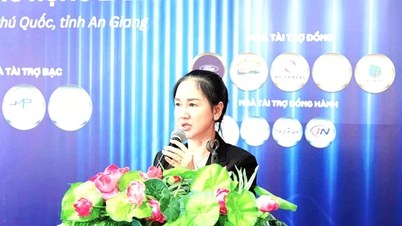
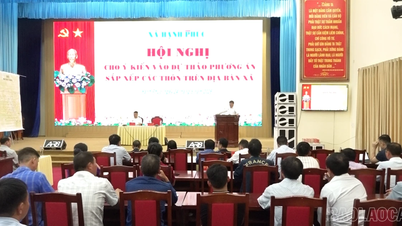
Conference on implementing judicial work in 2026. Photo: NGUYEN HUNG
According to Deputy Director of the Department of Justice Pham Thi Huong, after the reorganization of provincial-level administrative units, the unit promptly advised the Provincial Party Committee and the Provincial People's Committee to issue an Action Program to implement Resolution No. 66-NQ/TW, Resolution No. 27-NQ/TW, etc. The management and handling of administrative violations have been implemented synchronously and with a focus. The dissemination and education of law has become increasingly in-depth and practical, contributing to improving the effectiveness of law enforcement and aiming for the goal of "the people know - the people understand - the people act in accordance with the law".
In the field of civil registration and judicial support, the judicial sector focused on promoting decentralization and delegation of authority; completing 100% of the digitization of civil registration data. Simultaneously, it disseminated legal regulations on preventing and combating illegal, unreported, and unregulated (IUU) fishing through text messages to 7,663 subscribers in the province. The sector also launched a 90-day intensive campaign to clean up marriage data and streamline procedures for confirming marital status. Mediation at the grassroots level achieved a success rate of 82.2%, exceeding the set plan, further affirming the effectiveness of resolving conflicts and disputes among the people, contributing to maintaining social stability from an early stage and at the grassroots level.
To ensure continuity in management and administration, the Department of Justice advised on consolidating the system of resolutions and decisions of the Provincial People's Council and the Provincial People's Committee. After July 1, 2025, the Provincial People's Council passed 14 resolutions; the Provincial People's Committee issued 10 decisions and the Chairman of the Provincial People's Committee issued 1 decision to promptly address issues arising related to the organization and operation of local governments at two levels. At the commune level, from July 1, 2025 to the present, 29 legal documents have been issued.
Leaders of the Nui Cam Commune People's Committee shared that although the number of legal documents under the authority of the Commune People's Council and People's Committee has not increased, their nature is becoming increasingly complex (especially with the decentralization of local government management to two levels). The commune's legal drafting team is unstable, not truly professional, and lacks sufficient numbers, experience, and professional expertise. Therefore, the commune level needs to continue to emphasize the role of advisory agencies in drafting and issuing detailed regulations, especially in adhering to the process of drafting and issuing legal documents; and strengthen monitoring, urging, and inspection of the issuance of detailed regulations within the agency.
Director of the Department of Justice Trinh Tuan Ngoc stated: “Given the increasingly demanding requirements and tasks in the coming period, the justice sector will continue to thoroughly understand the resolutions and policies of the Party, the directives of the Government, the Ministry of Justice , and the Provincial People's Committee; promote the spirit of unity, innovation, discipline, and responsibility. At the same time, we will strengthen monitoring, supervision, and inspection of forensic examination work, promptly address difficulties, and strive to successfully complete assigned tasks, contributing to building a more professional, modern, effective, and efficient justice sector.”
According to Nguyen Thanh Phong, Standing Vice Chairman of the Provincial People's Committee, despite significant pressure, the judicial sector has completed a very large volume of work, with increasingly improved quality, making important contributions to political stability, social order and safety, improving the investment and business environment, and serving the socio-economic development of the province. “With the goal of achieving double-digit growth in 2026, the Central Government and the province will continue to issue many new guidelines and policies to promote socio-economic development. Among these, perfecting institutions and building a rule of law state is identified as one of the strategic breakthroughs, specifically outlined in Resolution No. 66-NQ/TW of the Politburo. Therefore, the provincial justice sector needs to continue focusing on advising on and effectively implementing the Central Government's resolutions on building and perfecting the socialist rule of law state; improving the quality of advice, ensuring that institutions lead the way for development; and innovating the thinking on lawmaking, shifting from “management by law” to “creating institutions for development,” Comrade Nguyen Thanh Phong suggested.
Alongside this, the judicial sector is stepping up its efforts to inspect, review, and systematize legal documents; promptly identifying and recommending solutions for conflicting, overlapping, or outdated regulations. Administrative and judicial reforms, as well as the promotion of digital transformation, continue to be intensified. Simultaneously, emphasis is placed on developing high-quality judicial human resources with strong ethics, political integrity, in-depth expertise, a thorough understanding of the law, and technological proficiency, especially at the grassroots level.
NGUYEN HUNG
Source: https://baoangiang.com.vn/phat-huy-vai-role-gac-cong-phap-ly--a479224.html






























































































Comment (0)