

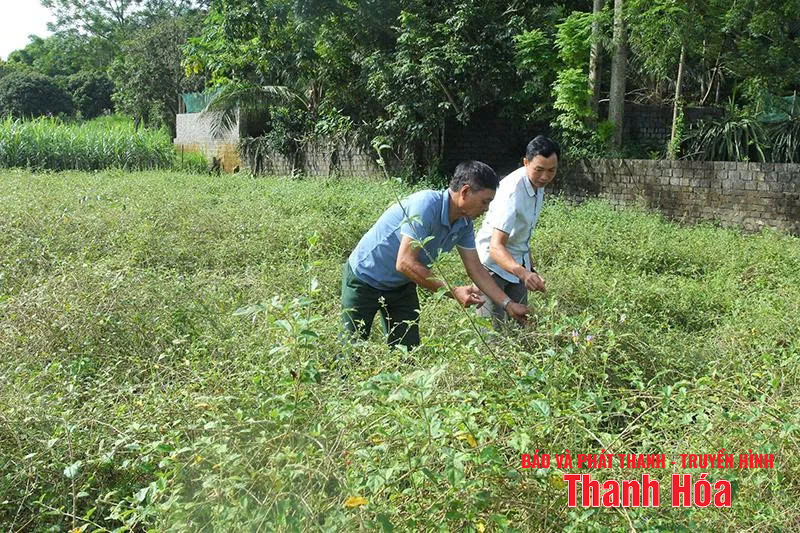
Area planted with Solanum torvum by Ba Thuoc Agricultural and Pharmaceutical Services Cooperative.
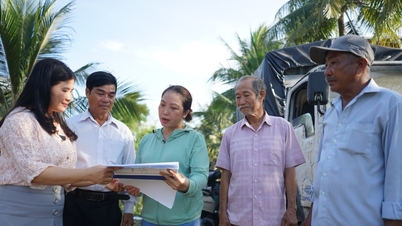
For nearly two years now, Mr. Nguyen Dinh Hai's family in Truc village, Dien Lu commune, has had a stable income from 5 sao (approximately 0.5 hectares) of papaya trees for flowering and 5 sao (approximately 0.5 hectares) of Solanum torvum (Solanum nigrum). Every day, his family harvests and sells the produce to traders, earning a profit of about 250,000 - 300,000 VND. This is a significant income for people in mountainous areas. From Mr. Hai's small-scale medicinal herb production model of only 1,000 square meters, the entire Dien Lu commune now has about 50 households growing various medicinal herbs, such as male papaya, Solanum torvum, bear bile, etc., and is capable of supplying tons of products to the market daily. However, when people saw the high economic efficiency of the medicinal herb cultivation model, they only learned to produce it but did not focus on finding markets for their products. Faced with this reality, in 2023, Mr. Hai and several other households collaborated to establish the Ba Thuoc Agricultural and Medicinal Service Cooperative to support the consumption of medicinal herb products for the people.
Mr. Hai stated: “To date, the cooperative has proactively cultivated 2.75 hectares of Solanum torvum (thorny eggplant), 2.5 hectares of flowering papaya, and developed 500 bee colonies. Simultaneously, it has organized the expansion of an additional 5 hectares of Solanum torvum cultivation for local people through a production linkage contract with the Dong Hoang Agricultural Service Cooperative (Dong Quang ward). This production chain linkage has been and continues to provide stable income for local medicinal herb growers.”
As one of the province's medicinal herb production and processing enterprises, since 2018, Hoang Thao Moc Co., Ltd. (Hac Thanh ward) has partnered with several households in Thach Thanh and Cam Thuy (formerly) districts to cultivate over 40 hectares of Solanum torvum (thorny vine). Simultaneously, the company signed contracts with these households to transfer organic cultivation and care techniques for medicinal herbs, aiming to produce clean raw materials for processing. To build a sustainable medicinal herb production and consumption chain, the company has invested in additional processing lines for products such as: Hoang Thao Moc tea, Solanum torvum tea, Gymnema sylvestre tea, Centella asiatica tea, ginger tea, etc., to expand the scale of purchasing medicinal herbs from local people. Thanks to its guaranteed production process, the company successfully developed Hoang Thao Moc tea, achieving OCOP 3-star certification in 2020 and is currently distributed in many large supermarkets in provinces and cities nationwide.
In reality, while medicinal plant cultivation was previously concentrated mainly in mountainous areas such as Quan Son, Quan Hoa, Muong Lat, Lang Chanh, and Ba Thuoc (formerly) districts, in recent years, due to high production efficiency, the area under medicinal plant cultivation is tending to expand to midland and lowland areas with alluvial soil and low hills. The total annual medicinal plant cultivation area in Thanh Hoa is approximately 5,000 hectares, with over 94,000 hectares planted under forest canopy. The number of OCOP-certified products derived from medicinal plants is still small, and consumption volume remains modest, not commensurate with the inherent potential and advantages. Furthermore, according to statistics, there are currently about 10 enterprises investing in and collaborating in medicinal plant production in the province, and about 50 cooperatives organizing the production and purchase of medicinal plants from local people.
Therefore, to develop sustainably, in addition to maintaining and developing existing medicinal plant varieties, it is necessary to expand and seek out new medicinal plants that are favored by the market. Along with that, localities need to coordinate with specialized units to open training courses and transfer scientific and technical knowledge on medicinal plant cultivation to the people. This will change the habit of small-scale, spontaneous cultivation, creating favorable conditions to attract businesses to purchase products and produce medicinal plant-based products to meet the increasing demands of the market.
Text and photos: Le Thanh
Source: https://baothanhhoa.vn/phat-trien-cay-duoc-lieu-theo-huong-ben-vung-256645.htm




![[Image] A brilliant symphony and explosive power in the skies of Da Nang.](https://vphoto.vietnam.vn/thumb/1200x675/vietnam/resource/IMAGE/2026/05/31/1780196945787_anh-man-hinh-2026-05-31-luc-10-08-51.png)












![[Video] Sunset at Lap An Lagoon – Where the sun sets over the fishing nets](https://vphoto.vietnam.vn/thumb/340x192/vietnam/resource/IMAGE/2026/05/31/1780192137701_beach-landscape-sea-water-nature-grass-745871-pxhere-com.jpeg)
































































Comment (0)