

Gifts from nature
The Phu Yen region (now eastern Dak Lak ) has a coastline nearly 200 km long, with a topography featuring numerous mountain ranges jutting out into the sea, forming a system of interwoven lagoons and bays. Notably, it also boasts a brackish coastal area of approximately 21,000 hectares, with relatively stable water quality and temperature, and is protected by a thriving coral reef ecosystem, making it an ideal environment for aquatic life.
According to MSc. Nguyen Van Ga (Institute of Soil Science and Agricultural Chemistry), due to geographical characteristics, the number of benthic animals, phytoplankton, especially algae and microalgae, in the eastern localities of Dak Lak is concentrated at a much higher density than in other sea areas, creating an extremely abundant natural food chain for juvenile eels.
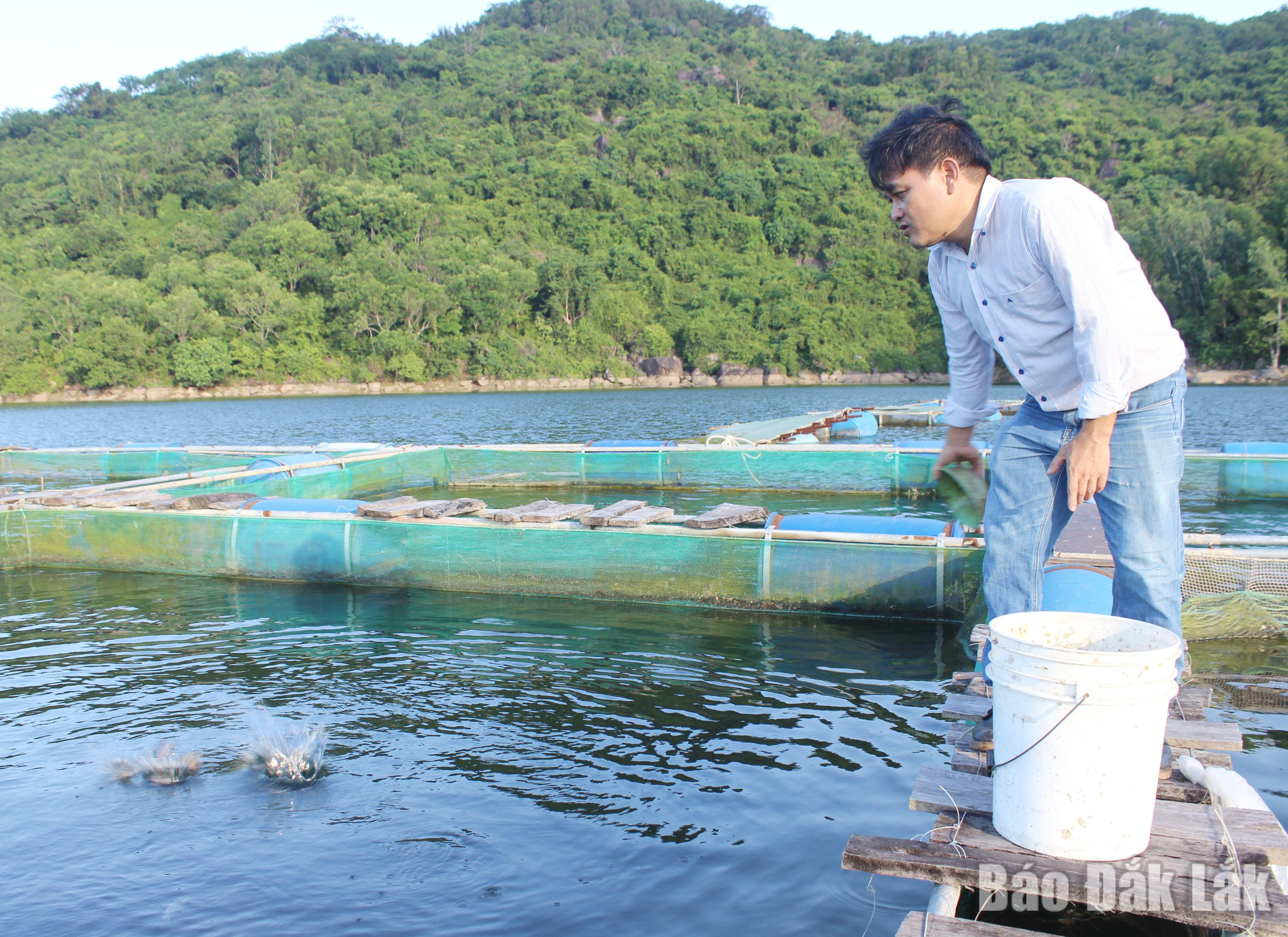 |
| People raise spotted eels in Hoa My commune. |
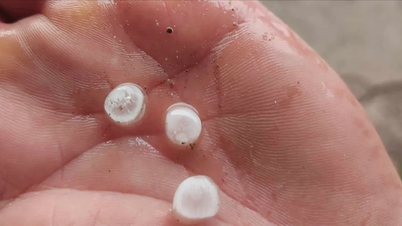
Currently, eastern Dak Lak province leads the country in natural breeding stock of spotted eel, accounting for 80-90% of the national supply. Every year, during the breeding season, people along the lower reaches of the Ban Thach River and the Tam Giang Dam are busy collecting eel fry. These "white eels" (transparent baby eels) caught from the wild become the source of breeding stock for aquaculture areas inside and outside the province. Because artificial breeding is not yet possible, this natural breeding stock is the "golden key" that determines the quality of Phu Yen's spotted eel brand.
The industrial protection granted to the "Phu Yen" geographical indication for spotted eel not only enhances its commercial value but also serves as a catalyst for strong and sustainable local economic development in the future. |
Currently, many eel farmers in eastern Dak Lak have diversified their farming models, raising eels in earthen ponds, in mud, and in cages on rivers and bays. Mr. Nguyen Van Phu, an eel farmer in Phu Yen ward, said that with a farming cycle of 18-24 months, the yield reaches about 20-22 tons/ha, and the profit margin is 30-40%. Given the current market price of eels at around 400-450 thousand VND/kg, the profit earned by farmers is significantly better than that of other livestock.
Enhancing product value
Despite its high reputation and value, Phu Yen's spotted eel product has long faced the risk of brand substitution, price manipulation, or mixing with other eels of unknown origin. In response to this situation, since December 2021, the Institute of Soil Science and Agricultural Chemistry has collaborated with provincial authorities to implement the scientific and technological project "Registration and Management of Geographical Indication for Phu Yen Spotted Eel Product".
After extensive testing, surveying, and documentation efforts, the Intellectual Property Office recently officially granted protection certificates for the product, including both naturally occurring spotted eel juveniles and commercially farmed spotted eels from the local area.
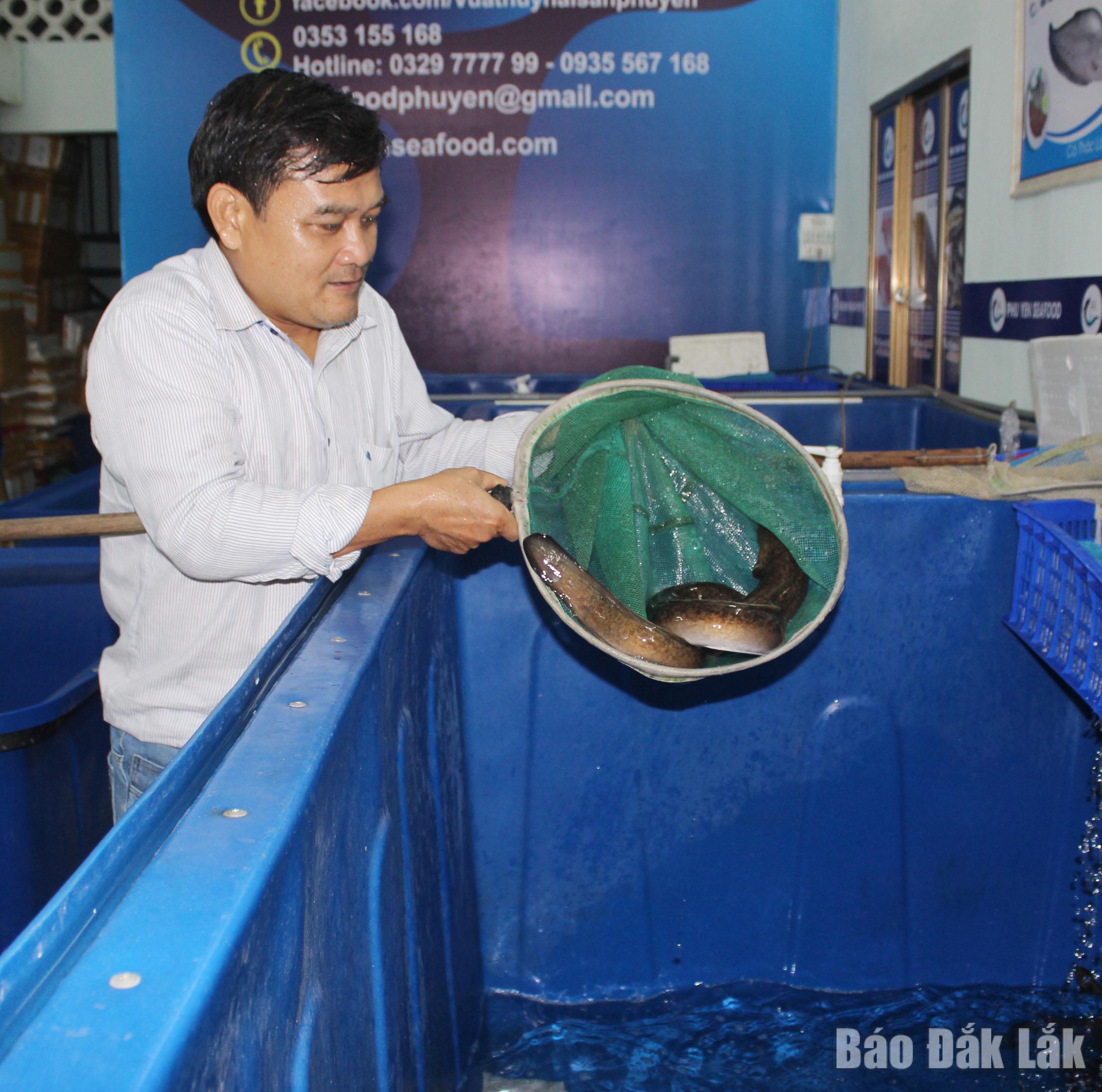 |
| Mr. Nguyen Van Phu (Phu Yen ward) harvests commercially farmed spotted eels. |
Obtaining national protection for a new specialty product is only the first step. Recognizing the importance of protecting the legitimate rights of farmers and combating commercial fraud and trademark infringement, the People's Committee of Dak Lak province has issued regulations on the management of the geographical indication "Phu Yen" for spotted eel, comprising 7 chapters, 29 articles, and 7 appendices.
To ensure that the management of geographical indications is not merely a legal framework but truly effective in practice, the application of science and technology to quality control and traceability is considered a key requirement. Ms. Lam Vu My Hanh, Deputy Director of the Department of Science and Technology, stated that to realize this, the Department has collaborated with the Institute of Soil Science and Agricultural Chemistry – the unit responsible for registration and protection – to build and operate a synchronized online database system at two addresses: cachinhbong.com and truyxuat.cachinhbong.com. This online system integrates a digitized map of the farming area, ensuring transparency of information for each protected production facility. Each organization or individual farming spotted eel within the planned area will be issued a unique traceability code for use on commercial packaging. With just a simple scan of the code, consumers can access all the required information: from the name and address of the farming facility, the area of the cages, the farming period, the care process, to the harvest date and quality classification. Conversely, any misuse or distortion of the geographical indication will be closely monitored by the management agency, and the traceability code will be blocked immediately upon detection of the violation.
Van Tai
Source: https://baodaklak.vn/kinh-te/202605/phat-trien-thuong-hieu-ca-chinh-bong-phu-yen-c362b4f/


![[Image] Close-up view of the interchange connecting the two expressways and Long Thanh Airport.](https://vphoto.vietnam.vn/thumb/1200x675/vietnam/resource/IMAGE/2026/05/25/1779703378210_ndo_br_z7863716673926-224453a31600126cce10622af6290afd-4549-jpg.webp)
![[Image] Hanoi's urban life under the challenge of a "scorching hot" environment](https://vphoto.vietnam.vn/thumb/1200x675/vietnam/resource/IMAGE/2026/05/25/1779706979265_nang-nong-t5-2026-minh-duy-7-4636-jpg.webp)










































































Comment (0)