Vietnam occupies a unique position on the world map, especially on the geopolitical map, as a country with exceptionally rapid economic growth and a bright spot in growth over the years. It is projected that by 2050, Vietnam will be able to compete with the biggest economic giants, according to Eurasia Review.
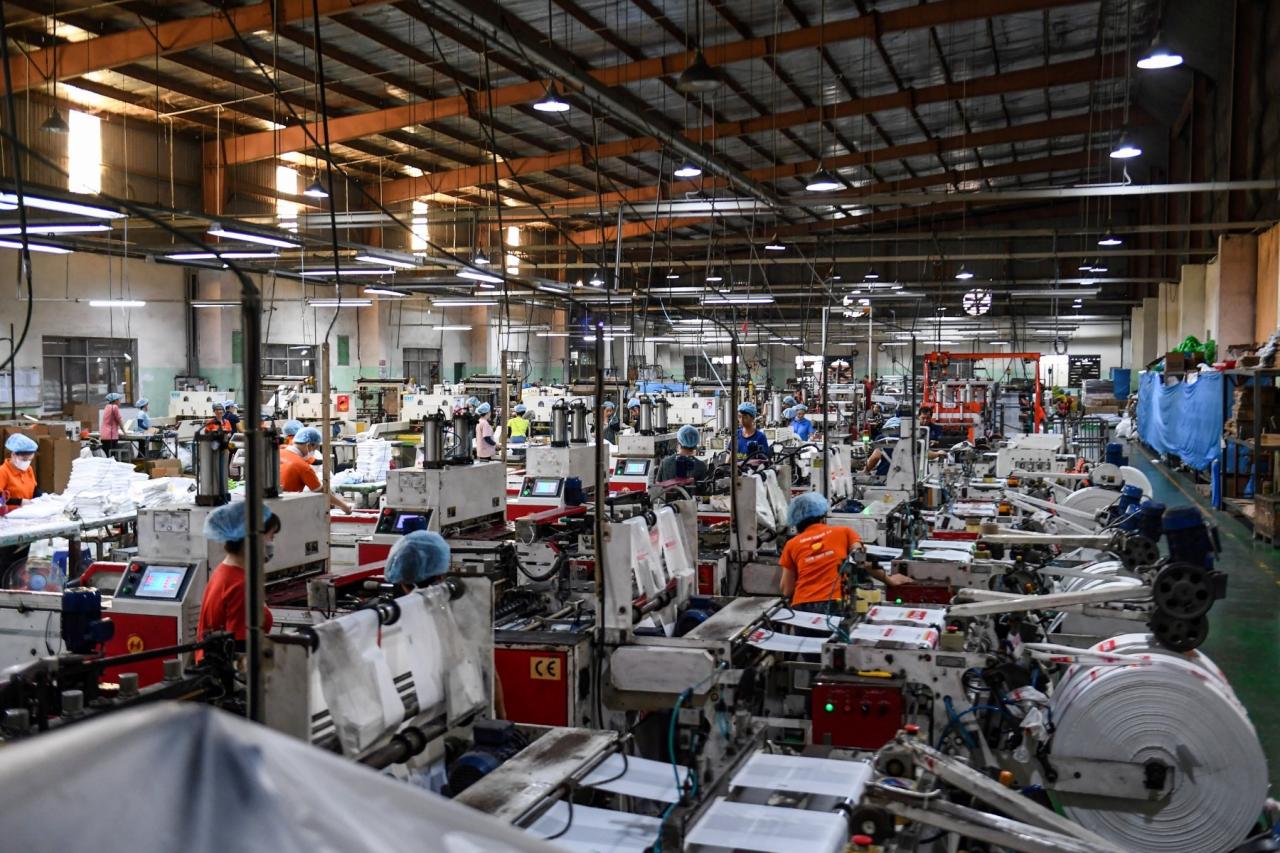
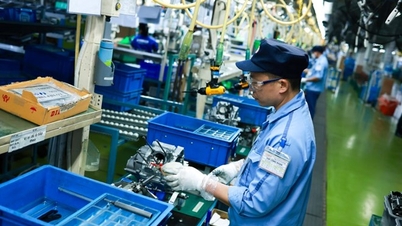
Workers are seen working inside a factory in Ho Chi Minh City. Photo: AFPRapid, Efficient Growth: In over 35 years of reform, Vietnam has become one of the fastest-growing economies. Few countries have recorded such high growth rates except for China. The economy has grown so rapidly and efficiently that there is very little underutilized labor and very little unused productive capacity. Vietnam's economy has achieved the strongest growth in agricultural and industrial production, construction, exports, and foreign investment. The question is, how did this Vietnamese economic miracle happen? An author for Eurasia Review points out three main factors contributing to Vietnam's rapid GDP growth, production, and investment: near-maximum trade liberalization with Asia and the rest of the world; domestic reforms; and large investments through public investment in human and material resources. With reforms, the number of private companies in Vietnam increased: By 1996, there were 190 joint-stock companies and 8,900 limited liability companies registered. During those years, the National Assembly introduced many tax incentives to encourage domestic and foreign investment. Regarding rural development, the government restructured the rural economy and trained the workforce for industry. Regarding trade liberalization, it is very important that Vietnam has participated in many international organizations and associations promoting free trade over the past three decades. In 1995, Vietnam joined ASEAN, and in 1998, Vietnam joined the Asia-Pacific Economic Cooperation (APEC) Forum. In 2000, the Vietnamese government signed a bilateral trade agreement with the United States, and in 2007, Vietnam officially became a member of the World Trade Organization (WTO). Vietnam has also signed special trade agreements with China, Japan, India, and South Korea, and in 2018, Vietnam joined the CPTPP. Vietnam's efforts have attracted attention from international organizations and economic research institutions. According to the World Economic Forum's (WEF) Global Competitiveness Report, the Vietnamese economy improved its competitiveness ranking from 77th in 2006 to 67th in 2020. The World Bank's Ease of Doing Business Index also rose from 104th in 2007 to 70th in 2020. Vietnam has made progress in all areas, from contract enforcement and increased access to credit and electricity to tax incentives and international trade. Crucially, the government has invested heavily in human resources and infrastructure. The government has invested heavily in infrastructure to better connect the country with transportation and make internet and information technology access as easy as possible. Positive forecasts for the future indicate Vietnam's economic growth is around 6 to 7% per year. Since 2010, GDP has generally grown by at least 5% annually, and last year it grew by 8%. Vietnam has become a hub for foreign investment and industrial production in Southeast Asia. The main economic zones are Hanoi and Ho Chi Minh City. Most globally renowned products are manufactured in Vietnam, from Nike and Adidas to Samsung smartphones. Walmart, IKEA, Starbucks, McDonald's, Intel, Microsoft, LG Group, and many others operate in Vietnam. Rapid economic growth has transformed Vietnam from one of the poorest countries in the world to a middle-income country. In 1985, GDP per capita was $230, and in 2022 it reached $4,475. This places Vietnam 116th in the world, still a low GDP figure due to its large population, but the progress is significant, Eurasia Review notes. Inflation in Vietnam was estimated at 3.2% last year, an excellent figure compared to the rest of the world. According to this article, Vietnam's success lies in sustainable growth and effective structural reforms. PricewaterhouseCoopers estimates that by 2050, the Vietnamese economy could be the 10th largest in the world. Experts place Vietnam in the Next Group – 11 countries, including Egypt, Mexico, Nigeria, and others, along with the BRICS nations, which will be among the world's largest economies of the 21st century. As its economic capacity strengthens, Vietnam is also asserting itself increasingly strongly in the geopolitical arena. Vietnam is a member of ASEAN, the Non-Aligned Movement, the International Organization of Francophonie, and has been a two-time member of the United Nations Security Council. In addition, Vietnam has hosted international conferences such as the World Economic Forum, APEC, ASEAN, and the US-North Korea Summit... "Vietnam is already a (medium) power in the region and in the future could become an even stronger power in Asia, the Indo-Pacific region, and possibly even wider," the author of the article asserts.












































































Comment (0)