

TPO - Circular 29, now in effect, has left many teachers wondering that no one understands their students better than the teacher in the classroom; teachers are concerned about reduced income, and parents will have to struggle to find expensive tutoring centers...
TPO - Circular 29, now in effect, has left many teachers wondering that no one understands their students better than the teacher in the classroom; teachers are concerned about reduced income, and parents will have to struggle to find expensive tutoring centers...
Speaking with a reporter from Tien Phong newspaper, Dr. Nguyen Thi Thu Anh, a member of the National Council for Education and Human Resource Development of Vietnam and Vice President of the Hanoi Educational Psychology Association, said that with Circular 29 of the Ministry of Education and Training coming into effect, schools will focus on their management role and will not participate in paid tutoring to ensure transparency and fairness in education, and students will not have to worry about taking extra classes to get higher grades.
There is a need to reform examinations and student assessment.
Madam, how does Circular 29 recently issued by the Ministry of Education and Training affect teaching and learning in schools, as well as the issue of extracurricular tutoring outside of school?
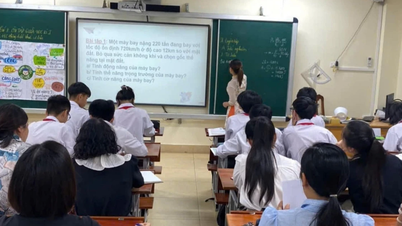
In accordance with Circular 29, schools will focus on their management and academic guidance roles, and will not participate in extra tutoring activities to ensure transparency and fairness in education , so students do not have to worry about taking extra classes to get higher grades.
Meanwhile, the circular also requires teachers to improve the quality of their regular teaching and innovate examination and assessment methods so that students do not need to attend too many extra classes. This will strengthen the trust of families and society in each teacher and school.
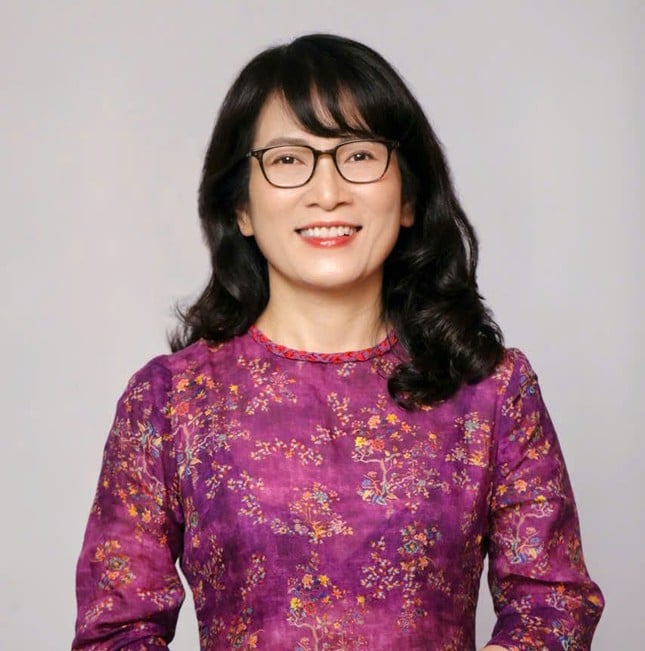 |
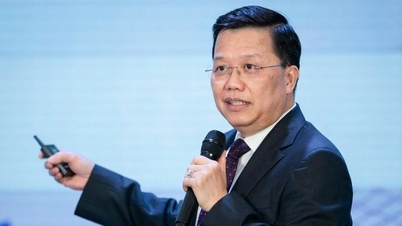
Dr. Nguyen Thi Thu Anh, member of the National Council for Education and Human Resource Development of Vietnam - Vice President of the Hanoi Educational Psychology Association. |
Organizing extracurricular tutoring at centers outside of schools will help eliminate the ethical shortcomings of teachers in organizing supplementary classes, which society has long criticized as widespread. However, this always comes with challenges, including managing the quality of teaching at these tutoring centers. Ensuring that sufficient support is available for students who need assistance is also a matter that needs attention.
The regulation prohibiting teachers from offering paid tutoring to their own students outside of regular classes has left many teachers wondering: no one understands their students better than the teacher in the classroom; teachers are concerned about reduced income; and parents will have to struggle to find more expensive tutoring centers… What are your thoughts on these concerns of some teachers today?
I think those concerns of teachers are completely understandable, because tutoring has long been a source of income for a segment of teachers.
However, statistics show that the number of teachers who provide paid extra tutoring within the school is very small compared to those who do not. Many teachers have used their understanding to motivate students to improve with each lesson. They research and learn how to teach effectively in the classroom and guide their students on how to learn independently at home.
"I have witnessed many teachers proactively helping students after school hours without receiving any compensation. These teachers deserve to be honored for their dedication to their students and to the teaching profession," said Dr. Nguyen Thi Thu Anh.
To avoid the burden of parents searching for expensive tutoring centers, homeroom teachers regularly provide information about students' academic progress at school and discuss with parents how to support their children's learning and help them improve. Instead of sending their children to tutoring centers, parents can closely monitor their children's learning process, encouraging and motivating them to proactively learn on their own.
Change your habit of relying on tutoring.
As an educator and school administrator, what impact and significance does this circular have on students? Many students have long been accustomed to passive learning; will restricting extra classes affect their academic performance? Especially considering their continued anxiety about and pressure to keep up with entrance exams and the high school graduation exam...?
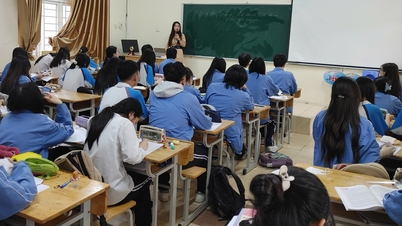
Whether students learn passively or actively depends on how teachers and parents guide them in self-learning. We all acknowledge that students learn passively due to excessive extra tutoring, and that is why the Ministry of Education and Training requires schools to change.
Numerous scientific studies have shown that, in order to transform the knowledge taught by teachers in class into their own, students need to spend two to three times as much time studying independently. Therefore, if a student studies with a teacher for one hour, they need at least two to three hours of self-study to understand, practice, and memorize the material.
Perhaps many teachers and parents will be shocked when they "count" the total time their children spend on self-study and discover that their children have no time for self-study, no time for playing, learning life skills, or learning how to show care and love for themselves and others - Dr. Nguyen Thi Thu Anh.
Knowing how to learn independently is not easy for students, teachers, or parents. I believe Circular 29 is an opportunity for teachers and parents to change their reliance on extra tutoring, thereby helping children progress by working with them to implement proactive and creative learning methods, and developing self-learning abilities for both themselves and their children. Knowing how to learn independently is not only important for children to avoid extra tutoring but also for their entire lives.
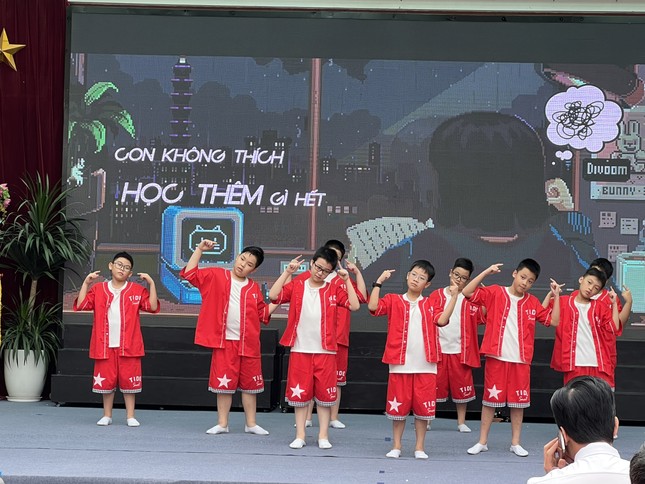 |
Circular 29 of the Ministry of Education and Training completely prohibits extra tutoring in cultural subjects for primary school students. |
Given the highly competitive nature of the high school graduation exam and entrance exams to higher education, the discontinuation of extra classes at school is causing anxiety among some students. Therefore, teachers need to focus on stabilizing students' mental state, improving teaching methods, and building a learning support system such as free tutoring classes, creating student support groups, and establishing academic counseling teams to provide as much assistance as possible to students.
In the context of implementing the 2018 general education program, what should schools and teachers do to educate students in a way that fosters the holistic development of their qualities and abilities?
That is the question that schools have been answering together since the beginning of the 2018 General Education Program. The most important thing is that teachers need to deeply understand what it means to teach in a way that comprehensively develops qualities and competencies, in order to change the old teaching methods that have become deeply ingrained and ingrained habits.
From there, teachers will make important innovations in their teaching methods, forms of organizing teaching and learning, testing and evaluation, and organizing educational activities.
The Ministry of Education and Training previously issued Circular 17 regulating tutoring, but in reality, tutoring remains widespread, and there are even instances of students being pressured to attend. According to you, how can the circular be strictly implemented in practice, and what solutions are needed?
For Circular 29 to be effectively implemented, the entire system needs to work together. Prime Minister Pham Minh Chinh has sent a telegram regarding the management of extracurricular tutoring to the Minister of Education and Training and the chairmen of the People's Committees of provinces and cities. The Ministry of Education and Training is directing efforts to improve the quality of regular teaching and learning, aiming to eliminate extracurricular tutoring in schools.
Many activities need to be implemented synchronously at the local level, including: improving the quality of teaching and assessment in schools; building a clear and strict legal framework for extracurricular tutoring; organizing regular monitoring and inspection of the activities of centers and imposing sanctions on centers operating illegally or providing poor quality education; raising awareness among parents and students to avoid following ineffective tutoring trends;…
Circular 29 is an important step in curbing the widespread practice of private tutoring, aiming to improve the quality of formal education and promote active learning methods.
There is still much work to be done in the future, but we have strong confidence in improvements to the quality of teaching.
Thank you, ma'am!
Source: https://tienphong.vn/siet-day-them-hoc-them-khien-nhieu-thay-co-tam-tu-pho-chu-tich-hoi-tam-li-giao-duc-noi-gi-post1718062.tpo









































































Comment (0)