

 |
Cunha is one of the notable new signings in the 2025 summer transfer window. |
This enormous figure demonstrates the overwhelming financial strength of English football, but also exposes instabilities that could threaten the system's sustainability.
Absolute power from television broadcasting rights
The biggest turning point came from a £6.7 billion, four-year domestic television deal, along with massive revenue from expanded European cup competitions. The Premier League was therefore able to spend more than ever before. Sunderland – a newly promoted team – spent a net £118 million, more than any other European club except Real Madrid. In the Championship, Wrexham also invested heavily, spending £30 million, surpassing Barcelona, AC Milan, and Dortmund.
In that context, it's not hard to understand why Bayern Munich had to watch Florian Wirtz and Nick Wolverhampton leave the Bundesliga to join Liverpool and Newcastle respectively. Honorary president Uli Hoeness called it "madness," while coach Vincent Kompany admitted that even Bayern couldn't compete with the English teams.
Christian Purslow, former Liverpool director, points out a paradox: the stronger the Premier League, the deeper the divide. The three teams promoted in the last two consecutive seasons were immediately relegated, showing that the gap with the Championship is almost insurmountable.
Right within the league, the PSR (Profit & Sustainability Rules) inadvertently created a misleading incentive: forcing teams to sell academy players because it counted as "net profit." Aston Villa had to let Jacob Ramsey go to Newcastle, while Newcastle themselves sold Sean Longstaff - two figures with strong ties to the local community.
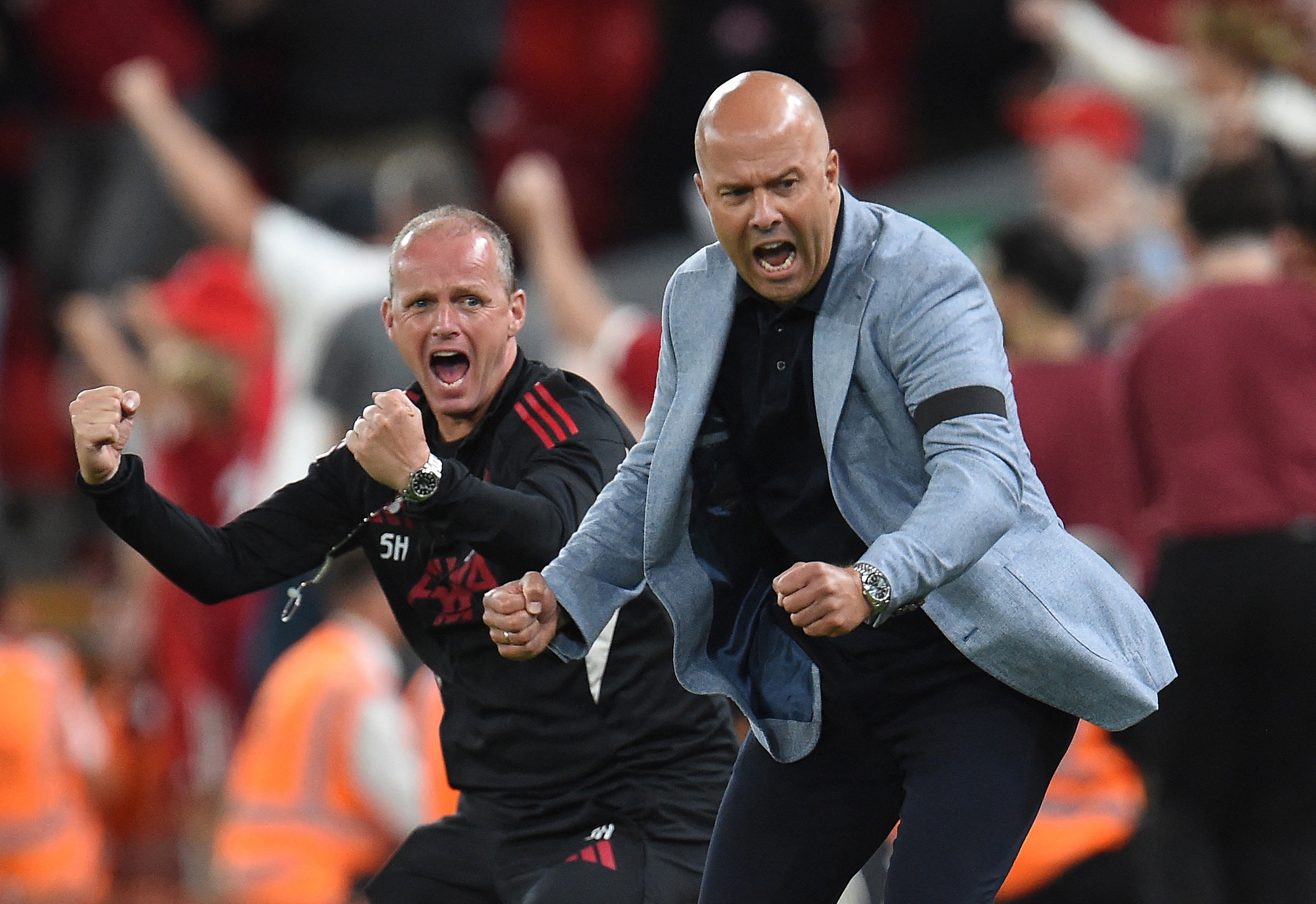 |
Liverpool spent hundreds of millions of pounds to strengthen their squad. |
Fans have reason to be outraged. They wanted to see the team retain its local "backbone," but the owners sold them off just to legitimize the books. Purslow calls this a "double blow": the big teams benefit from Champions League revenue, while the mid-table teams lose key players and their soul.
If the inflated spending is the visible aspect, then the mountain of transfer debt is the frightening hidden part. According to expert Kieran Maguire, clubs currently bear over £3 billion in installment payments for player transfers. Manchester United is a prime example: from a debt of £34 million in 2013, it has now exceeded £400 million.
The consequence is the emergence of a "sub-market": clubs sell their debt to financial institutions to obtain cash quickly. The risk of contagion is real – if just one club becomes insolvent, a domino effect could shake the whole of Europe.
When the player takes control
Besides money, this transfer window has also been overshadowed by the concept of "player power." Alexander Isak (Newcastle) and Yoane Wissa (Brentford) both refused to train to force their clubs to release them. As a result, both got what they wanted, while professional role models like Marc Guehi (Crystal Palace) were left out.
Purslow stated frankly, "That's not a good precedent." But he also acknowledged that clubs sometimes want to sell, they just want the story to unfold discreetly. However, this trend signals a risky future: once players realize that public pressure can force clubs to compromise, "strikes" to leave could become commonplace.
 |
Isak once rebelled in an attempt to leave. |
Amidst the £3 billion frenzy, another concern has emerged: clubs will try to compensate by raising ticket prices. Last season, 13 out of 20 clubs raised season ticket prices, despite television rights accounting for a large portion of their revenue. The Supporters' Association (FSA) has called for a campaign to "Stop Exploiting Loyalty," emphasizing that price increases yield only small profits but have a significant negative impact on the community.
The Premier League has every right to boast: it is now a hub of top stars, combined with homegrown talent. CEO Richard Masters asserts: “Spending increases competitiveness.” But the bigger question is: is that competitiveness sustainable, or is it merely an illusion masking an unbalanced system?
The Premier League was created to prevent crises, but now it has become a barrier forcing mid-table teams to sell off their best players. Meanwhile, the "Big Six" become stronger, benefiting more from the Champions League cycle and global commercial opportunities. Without adjustments, the Premier League risks becoming a two-tiered playing field: where the super-rich compete for titles, while the rest struggle for survival.
The 2025 summer transfer window will be remembered not only for its record-breaking £3 billion, but also for the warning signs. The Premier League is soaring higher than ever, but the higher you go, the stronger the winds become. Without early adjustments to balance interests, control debt, and curb player power, the league could plunge itself into crisis.
The question isn't how much more the Premier League can spend, but how long the football world can withstand the "madness" that is the Premier League.
Source: https://znews.vn/premier-league-va-con-dien-3-ty-bang-post1582381.html

































































![[Infographic] Vietnam's Economic Situation Report, Q1 2026: Strong Growth Momentum](https://vphoto.vietnam.vn/thumb/402x226/vietnam/resource/IMAGE/2026/04/04/1775298512042_tang-truong-kinh-te-viet-nam.jpeg)
![[Image] Close-up view of the 10-lane road connecting to Long Thanh Airport](https://vphoto.vietnam.vn/thumb/402x226/vietnam/resource/IMAGE/2026/04/04/1775291871988_ndo_br_1-resize-5690-jpg.webp)

























Comment (0)