

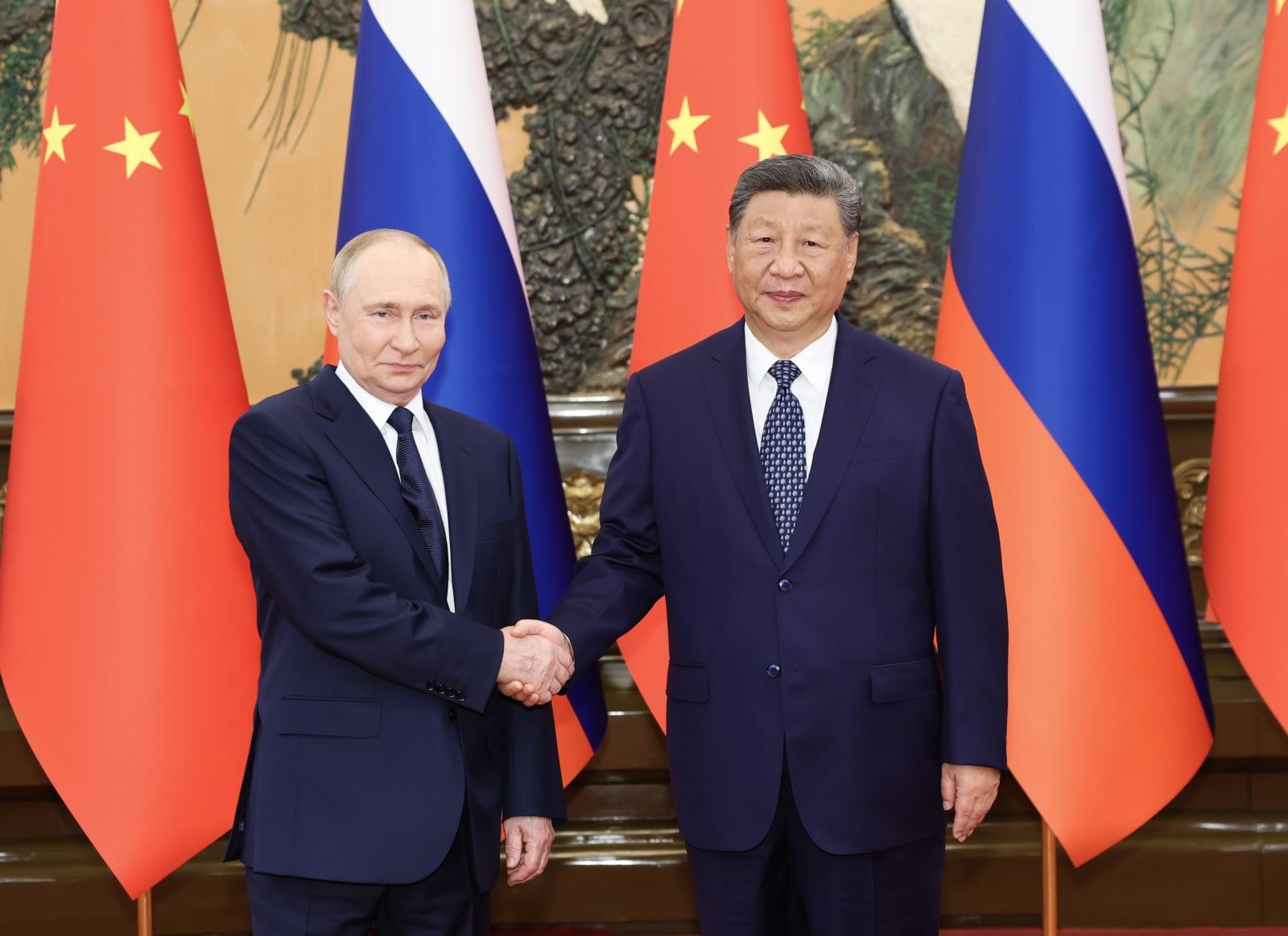
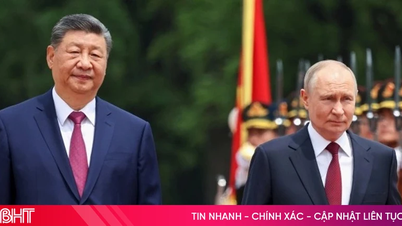
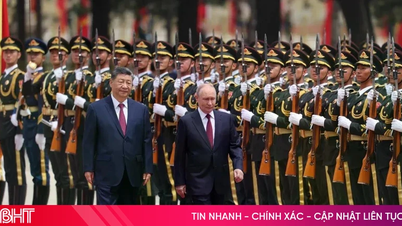
Russian President Vladimir Putin will meet with Chinese President Xi Jinping in Beijing today, May 19, to discuss expanding economic and strategic cooperation, marking the 25th anniversary of the signing of the landmark friendship treaty between the two countries.
Moscow and Beijing are expected to sign dozens of agreements during the two-day visit, underscoring the increasingly close ties between the two powers on foreign policy and trade. Russia Today highlights the commonalities between Russia and China in global politics .
Multipolar world
Moscow and Beijing are increasingly aligning on the idea of a “multipolar world”—a global order they believe should no longer be dominated by the West, and especially the United States.
Both countries oppose Washington's abuse of sanctions, military alliances, and the global financial system to maintain its hegemony, arguing that emerging powers should play a greater role in international decision-making.
Russia and China have fostered deeper cooperation through forums such as BRICS and the Shanghai Cooperation Organization, viewing them as alternatives to Western-led institutions and pillars of a more balanced global order.
The Taiwan (China) issue
Russia has consistently supported the "One China" policy, under which Beijing considers Taiwan an inseparable part of Chinese territory. While most countries officially adhere to this policy, continued US military support for Taipei has heightened tensions between Washington and Beijing.
“The Taiwan issue is the most important issue in China-U.S. relations,” Chinese President Xi Jinping said last week during President Donald Trump’s repeatedly delayed visit to Beijing, warning that mishandling the issue could trigger “conflict and confrontation” between the two powers. The trip had been delayed for weeks due to the U.S. and Israel’s conflict with Iran.
Middle East conflict
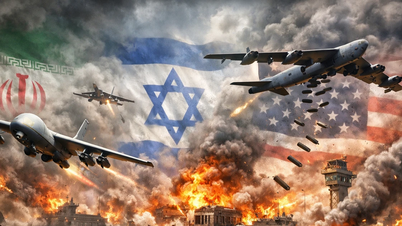
Moscow condemned the US and Israeli attack on Iran as "a completely unprovoked act of aggression." Beijing also warned that the fighting and disruption of shipping through the Strait of Hormuz had caused a shock to global energy and economic activity.
China, Iran's main crude oil buyer, has lost much of its supply since the US and Israel launched their attacks on February 28. Since then, Russia has increased its oil exports to China to partially compensate for the shortfall.
Both Moscow and Beijing have repeatedly called for resolving the conflict through dialogue and a diplomatic solution.
The Ukraine issue
In recent years, China has put forward a number of peace proposals regarding the conflict in Ukraine, consistently urging Moscow and Kyiv to resume negotiations and pursue a lasting solution that addresses the root causes of the crisis.
Russia describes this conflict as a NATO-backed proxy war, stemming from NATO's expansion toward Russia's borders and its growing influence over Kyiv following the 2014 Western-backed coup.
Moscow insists that any lasting peace agreement must include Ukraine's return to neutral, non-aligned status, as well as its demilitarization and "de-fascistization," along with the withdrawal of Ukrainian troops from all territories that voted to join Russia in 2022.
Source: https://daibieunhandan.vn/quan-he-nga-trung-quoc-and-nhung-mau-so-chung-10417427.html
![[Image] Close-up view of the interchange connecting the two expressways and Long Thanh Airport.](https://vphoto.vietnam.vn/thumb/1200x675/vietnam/resource/IMAGE/2026/05/25/1779703378210_ndo_br_z7863716673926-224453a31600126cce10622af6290afd-4549-jpg.webp)


![[Image] Hanoi's urban life under the challenge of a "scorching hot" environment](https://vphoto.vietnam.vn/thumb/1200x675/vietnam/resource/IMAGE/2026/05/25/1779706979265_nang-nong-t5-2026-minh-duy-7-4636-jpg.webp)































































Comment (0)