Ms. Le Chau Giang is a highly experienced expert who has worked for many years in the cosmetics industry in Vietnam, ASEAN, and Singapore.
On the sidelines of the training program, in an interview with the Health & Life Newspaper, Ms. Le Chau Giang, an expert with many years of experience in the cosmetics industry in Vietnam, ASEAN, and Singapore, shared that cosmetics are classified as low-risk products. Therefore, the common management model worldwide – including in developing countries – follows a more lenient pre-inspection approach, with increased post-inspection.
If regulatory agencies focus too much on the licensing process, businesses may prepare "perfect" and compliant applications, but the actual products released to the market may not match the registered documents. In that case, the risk lies not with the paperwork but with the consumers themselves.

Le Chau Giang, an expert from the Singapore Cosmetics Association, shared her insights at the training session.
"Therefore, post-market surveillance – including testing circulating products and assessing the actual capabilities of businesses – is a mandatory requirement," Ms. Giang emphasized. However, this also poses a significant challenge for many developing countries due to limitations in human resources, professional expertise, and investment in testing laboratory systems.
There is no shortage of legal frameworks; the problem lies in the sanctions.
According to experts from the Singapore Cosmetics Association, legally, ASEAN countries – including Vietnam – do not lack regulations governing cosmetics. The implementation of the ASEAN Cosmetic Directive shows that Vietnam has followed the global trend, creating a relatively open legal framework that encourages innovation and product development.
According to Ms. Giang, the remaining limitation lies in the penalties. "The current penalties in some countries, including Vietnam, are still too lenient and lack sufficient deterrent effect," the expert noted.
Meanwhile, China is seen as a prime example of drastic changes in cosmetics regulation. Its new cosmetics law imposes very high financial penalties. Furthermore, key individuals within businesses who commit serious violations can face criminal prosecution and be banned from the cosmetics industry for many years.
"As a result, Chinese businesses have no choice but to invest systematically, considering product quality and safety as a matter of survival, instead of waiting for regulatory agencies to come and inspect," Ms. Giang analyzed.
Consumers become the ultimate "managers".
Ms. Giang argued that, along with improving regulations, it is necessary to raise businesses' awareness of the role of consumers. In the context of an open market, consumers are the ultimate decision-makers. Only businesses that operate ethically and produce quality and safe products can survive sustainably.
In the cosmetics industry, quality and safety must be prioritized. Effectiveness comes second but is still a crucial factor, as advertising and claims about effectiveness directly influence purchasing behavior.
"Whatever a business says about a product must be proven," Ms. Giang emphasized. This applies not only to content on labels and in mass media, but also to promotional activities through KOLs and KOCs. The responsibility for proving the product's effectiveness rests with the person bringing the product to market, in accordance with the regulations of the Ministry of Health , the ASEAN Cosmetics Agreement, and international practices.
Not only the manufacturers, but also the sales platforms are responsible.
A new regulatory trend being adopted by many countries is extending responsibility to intermediary platforms, especially e-commerce platforms. In China, if an e-commerce platform allows businesses to advertise falsely, the platform itself is also subject to penalties.
"This forces the platforms to exercise stricter control: Have businesses publicly announced their products? Do they have safety records? Are the claimed benefits verifiable?" - Ms. Giang stated. This mechanism creates a multi-layered control system, instead of relying solely on state regulatory agencies.
According to Ms. Giang, the aforementioned issues are not unique to Vietnam but are a common reality in many countries. The most important factor, however, remains the mindset of businesses.
"If you're a business owner, the first question should be: Do I have the capacity to work in this field? Do I understand the industry? And who can provide me with professional support?" she said.

The trainees participating in the training course came from various cosmetics companies and testing agencies in the South.
Investing in research and development (R&D) is often considered a "luxury," but for small and medium-sized enterprises (SMEs) producing only a few products, this investment is not excessive compared to the long-term benefits. Only by ensuring safety, efficiency, and ethical business practices can Vietnamese businesses compete and build trust with domestic consumers.
Be cautious about relying entirely on legal advice.
According to Ms. Le Chau Giang, it is necessary and entirely justified for cosmetic companies to seek the services of law firms and legal consultants during the product launch process. However, risks can arise when businesses become completely dependent on legal advice while lacking independent assessment from a scientific and technical perspective.
"Lawyers help businesses understand and comply with legal regulations, but they cannot delve into the technical nature of a cosmetic formula," Ms. Giang analyzed. In reality, there are cases where businesses are advised to adjust ingredients or formulas simply to "bypass" the application process, without fully assessing the stability, safety, or long-term effectiveness of the product.
According to experts from the Singapore Cosmetics Association, this misunderstanding sometimes stems not from malicious intent, but from limitations in the specialized knowledge of the consulting firm. If a business lacks experience and a sufficiently competent technical team to provide counter-arguments, following inappropriate recommendations can lead to serious consequences during post-inspection by regulatory agencies or once the product has been released onto the market.
"In all cases, the ultimate responsibility lies with the business – not the law firm," the expert emphasized. Therefore, before making any decisions regarding formulas, product claims, or ingredient changes, businesses need to seek the opinion of independent scientific experts and clearly understand what they are doing and what responsibilities they have.
Based on international experience, Ms. Giang believes that many countries, especially China, have developed an integrated consulting model, in which legal units work in parallel with teams of scientific and technical experts. This approach not only helps businesses "get their documents approved" but also ensures the highest level of legal compliance and reduces long-term risks.
According to Professor Tran Viet Hung, Director of the Ho Chi Minh City Institute of Drug Testing, drugs, functional foods, and cosmetics have different purposes, but they are all directly related to public health. Cosmetics, while primarily used for beautification, are increasingly appearing with therapeutic features, placing higher demands on quality and safety management.
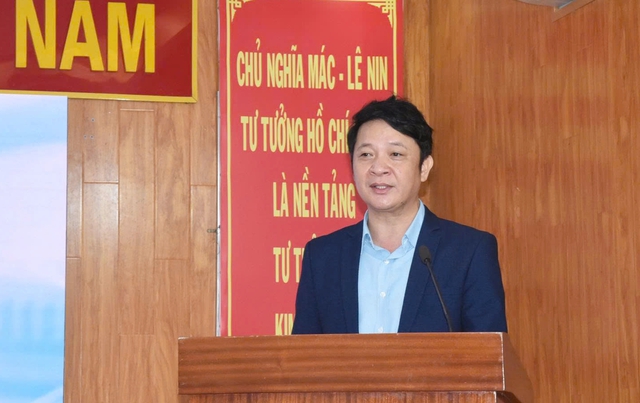
Professor Tran Viet Hung, Director of the Ho Chi Minh City Institute for Drug Testing, shared his insights at the training program.
Recently, many issues related to the quality of medicines, food, and especially cosmetics have been discovered and handled by authorities. Numerous cases involving counterfeit or substandard cosmetics, including sunscreens, have negatively impacted legitimate businesses and increased risks for consumers.
Through practical testing, the Ho Chi Minh City Institute of Drug Testing has found that many shortcomings still exist in cosmetic production, even in some facilities that have been certified GMP. In response to this situation, the Institute has reviewed the analytical methods for sunscreen cosmetics and strengthened professional exchanges with international experts and the Singapore Cosmetics Association.
The training program "Research, Development, and Quality Management in Cosmetic Production" was organized to provide businesses with the right approach, ensuring compliance with the law from research and product disclosure to quality management. Professor Tran Viet Hung emphasized that preventing risks from the outset is crucial; any fraudulent or deceptive behavior towards consumers is unacceptable.
Source: https://suckhoedoisong.vn/quan-ly-my-pham-hau-kiem-la-chot-chan-then-chot-169260107123616749.htm































![[Photo] Reception to welcome General Secretary and President To Lam and his wife on their State visit to the Philippines](https://vphoto.vietnam.vn/thumb/1200x675/vietnam/resource/IMAGE/2026/06/01/1780295488620_vna-potal-chieu-dai-chao-mung-tong-bi-thu-chu-tich-nuoc-to-lam-va-phu-nhan-tham-cap-nha-nuoc-toi-philippines-8798060-7855-jpg.webp)





























































Comment (0)