Everything is flourishing everywhere.
Over the past period, along with the National Target Program for building new rural areas, the Program for socio -economic development in ethnic minority areas, and the National Target Program for sustainable poverty reduction, these initiatives have contributed to positive changes in socio-economic development and improved living conditions for the poor, especially in mountainous areas and ethnic minority regions in Quang Ngai province.
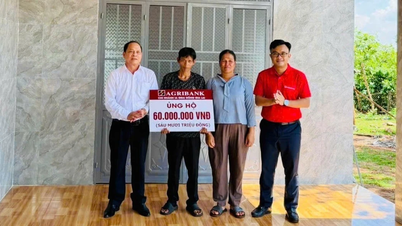
During the 2021-2025 period, the total resources mobilized to implement national target programs in Quang Ngai reached over 7,000 billion VND. The beneficiary localities implemented 98 infrastructure projects, 260 projects on diversifying livelihoods, supporting production, and improving nutrition. Housing support was provided to over 3,900 poor and near-poor households. Over 800 poor laborers were connected to jobs, and over 400 went to work abroad under contract.
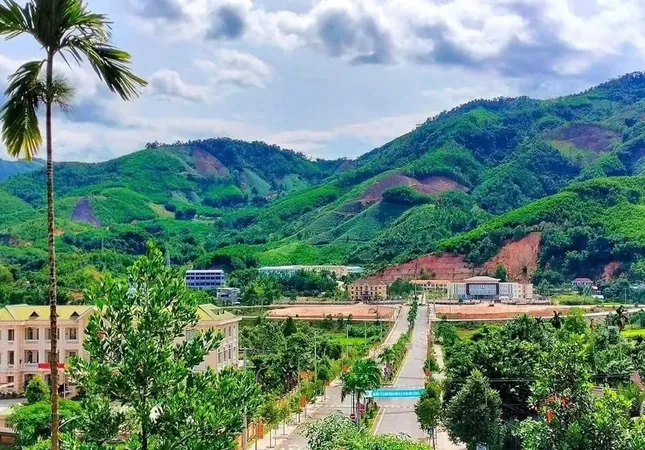 |
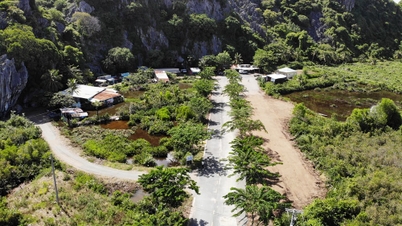
Infrastructure in mountainous areas has been invested in comprehensively and is now modern and well-maintained. |
Thanks to these efforts, people's lives have gradually improved, and ethnic minority areas in the province have seen significant progress. The poverty rate according to the multidimensional poverty standard across the province has steadily decreased year by year, averaging a reduction of 1.76% per year, exceeding the central government's target by 0.26%. The poverty rate among ethnic minorities has decreased by an average of 6.42% per year; in poor districts, this rate has decreased by an average of 9.25% per year, exceeding the central government's target by 4.75%.
With government support, the family of Mr. Le Hong Ngoc (Mo Duc town, Mo Duc district) boldly invested and borrowed additional capital to plant various fruit trees, developing their family economy and escaping poverty. "After our economy gradually stabilized and we overcame difficulties, I voluntarily wrote a letter requesting to be removed from the list of poor households," Mr. Ngoc shared.
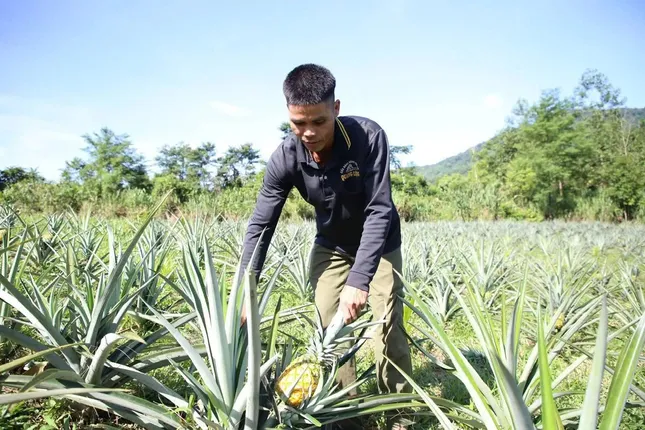 |
The national target program for sustainable poverty reduction has contributed to positive changes in the socio-economic development of Quang Ngai. |


According to Dinh Truong Giang, Vice Chairman of the Son Tay District People's Committee, the implementation of the National Target Program for Sustainable Poverty Reduction has helped people rise out of poverty. "The district's approach is to go door-to-door, mobilizing each individual. We've strengthened support for production support projects, providing seedlings directly to the people. We've assigned officials to directly visit households to guide them on how to generate income," Mr. Giang shared.
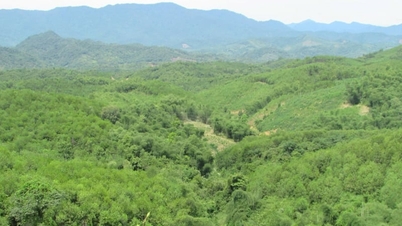
In addition, the lives of the poor have improved significantly, and infrastructure in ethnic minority and mountainous areas has received substantial investment. Roads, schools, health centers, electricity, water, etc., have been developed comprehensively.
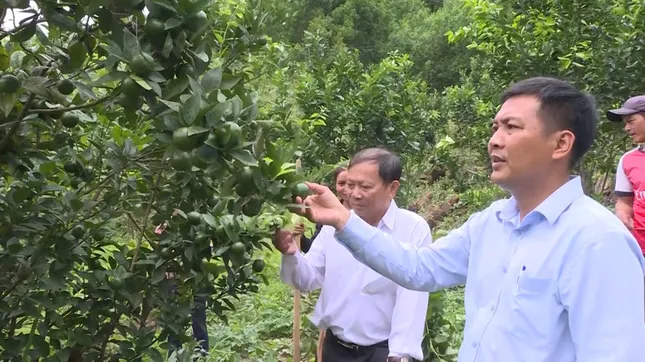 |
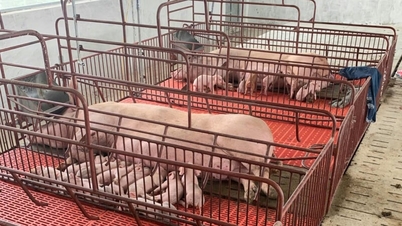
Supporting livelihoods linked to value chains and transforming models to adapt to climate change. |
“The rural roads from the hamlets to the commune center have been neatly paved with concrete. National electricity and solar-powered lighting systems have been fully invested in. The people are very happy,” shared Mr. Le Van Bao (residing in Long Hiep commune, Minh Long district).
According to statistics, the poverty rate in the province during the 2021-2025 period decreased from 9% to 2.5% by the end of 2025. Currently, the province still has 5 mountainous districts receiving central government funding, with many poor households remaining. On average, the poverty rate decreased by 1.76% each year, exceeding the central government's target by 0.26%.
The poverty rate in the districts, which started at 43%, is expected to decrease to 6.84% by the end of 2025. The quality of life for the poor has improved, and infrastructure has been developed. Many production models, livelihood support programs, and job creation initiatives have been effectively implemented in mountainous districts.
We need a set of criteria for new rural development in the period 2026-2030.
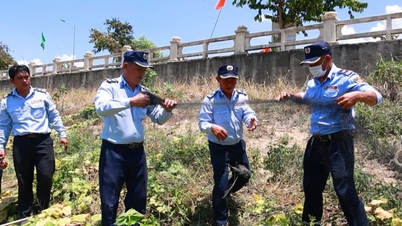
However, poverty reduction efforts still face some challenges. Some mountainous districts and ethnic minority areas still have high poverty rates, and the quality of poverty reduction is not truly sustainable. The integration of resources and the effectiveness of project implementation are not uniform.
 |
The spiritual life of ethnic minority and mountainous communities has been improved. You may also like  In this commune in Nghe An province, there is an ancient pagoda relic where a unique golden box containing Buddha's relics was discovered.At the Thap Nhan relic site in Kim Lien commune, Nghe An province, archaeologists discovered a golden box containing Buddha relics. The golden box containing the Buddha relics was subsequently recognized as a national treasure.  The latest merger of villages and residential areas in Hai Phong: Where will the 120 billion VND saved come from?The city of Hai Phong expects to reduce its budget expenditure by approximately 120 billion VND annually by implementing the new resolution on allowances and support for part-time workers and personnel participating in activities at the village and neighborhood levels. |

To effectively implement national target programs, including the Sustainable Poverty Reduction Program, at the recent National Conference summarizing national target programs for the 2021-2025 period and the movements "The whole country joins hands to build new rural areas," and "For the poor - Leaving no one behind," the Chairman of the People's Committee of Quang Ngai province, Nguyen Hoang Giang, proposed that the Government and central ministries and agencies soon issue a set of criteria for new rural areas for the 2026-2030 period that are consistent with reality, with clear regional divisions between mountainous, plain, and coastal areas to avoid creating excessive pressure on disadvantaged communes.
At the same time, guidelines should be issued to review and determine the level of achievement of new rural standards and advanced new rural standards for communes after mergers. Mr. Giang also suggested perfecting the poverty reduction policy for the period 2026-2030 based on deficit indicators, including the issuance of a new poverty standard linked to indicators that the policy can directly impact.
Source: https://tienphong.vn/quang-ngai-giam-ngheo-an-tuong-tu-9-xuong-25-post1754483.tpo
![[Photo] Prime Minister Le Minh Hung presides over the thematic session on promoting science and technology development and innovation.](https://vphoto.vietnam.vn/thumb/1200x675/vietnam/resource/IMAGE/2026/06/23/1782207872934_ndo_br_dsc-1724-jpg.webp)