

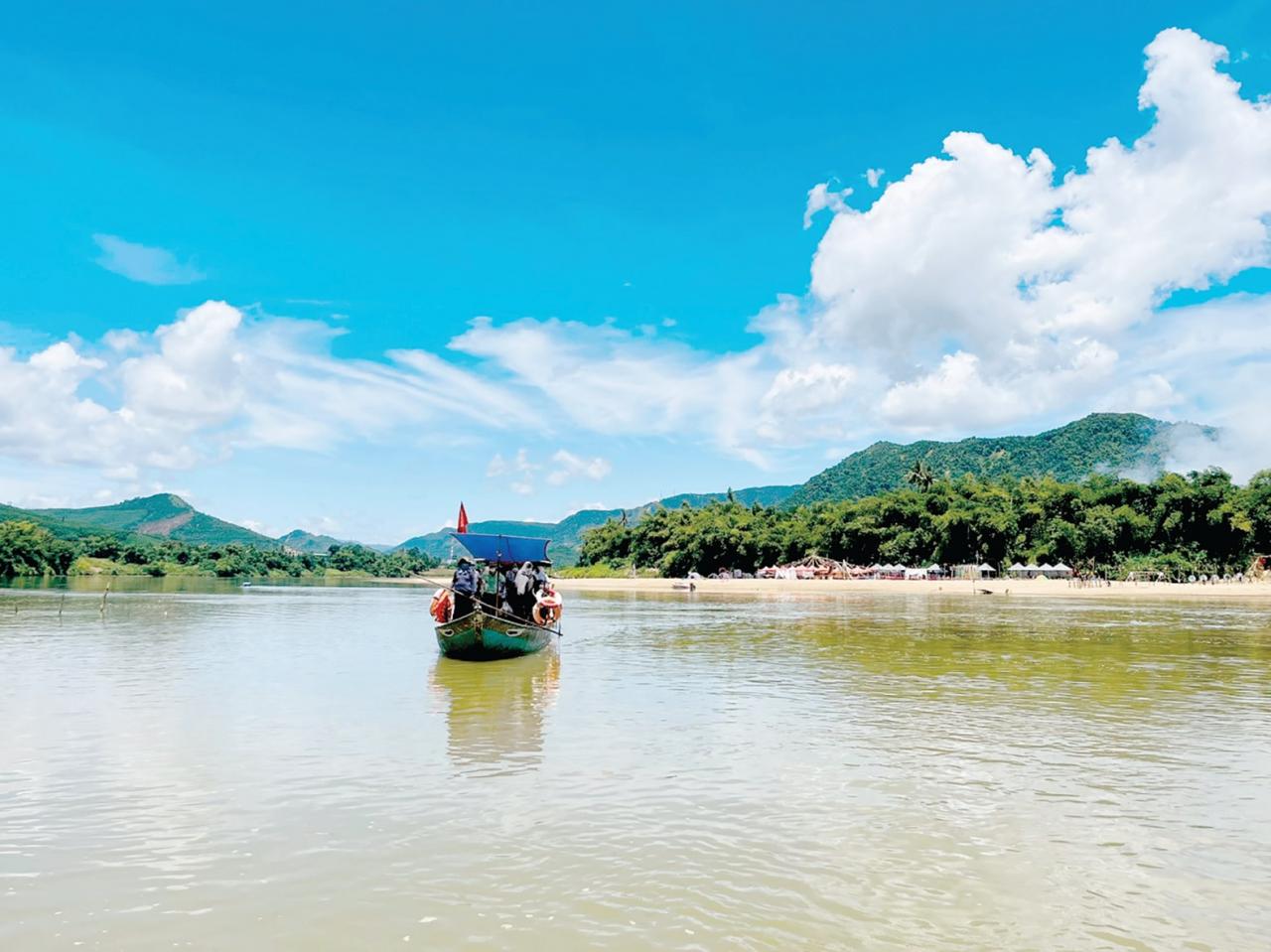
Name derived from shape
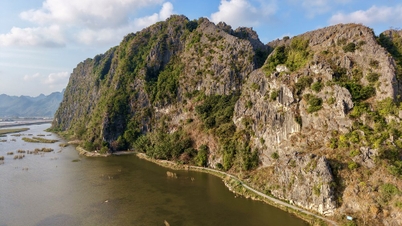
Mount Ấn, also known as Mount Chúa, Hòn Vung, Hòn Đền, etc., is the most majestic mountain with an altitude of nearly 1,000 meters above sea level. Ấn Sơn belongs to the Hòn Tàu mountain range, a system of mountains covering an area of over 100 km² , stretching across three localities: Duy Xuyên, Quế Sơn, and Nông Sơn.
It's called Hon Vung because the mountain is shaped like an inverted lid. A folk rhyme still circulates: "Hon Tau, Hon Kem, Hon Vung. Three islands clustered together support the Quang Nam region."
Teacher Ha Van Da, who has conducted numerous field studies and written works about Nong Son, believes that due to its altitude and independent position, even from distant places like Dien Ban and Hoi An, people can still recognize Mount Chua by its distinctive shape, towering majestically over a corner of Quang Nam province. “With such altitude and topography, along with Hon Tau and the Hon Kem and Hon Than mountain ranges, Mount Chua directly influences and creates the local weather and climate patterns of the Trung Loc valley. In the past, experienced farmers relied on the color, shape, and movement of the clouds covering Mount Chua in the mornings and afternoons to predict rain and sunshine, and this was summarized in folk wisdom: “Mount Chua edged with white clouds, the sun is turning to rain,” “Hon Tau and Mount Chua are gloomy. Khe Canh and Vuon Ruou have abandoned potato cultivation…” – wrote teacher Ha Van Da.
HA VAN
It is called Ấn Mountain because the mountain "has a towering shape, its peak resembling a square, red seal" (according to Đại Nam nhất thống chí).
The mountain is named Chúa Mountain because "there is a temple dedicated to the goddess Ngọc Tiên Nương on the mountain." Local people still commonly refer to it by this name.
The name Hon Den (Temple Island) probably originates from the fact that at the foot of the mountain lies the My Son temple complex, the largest temple complex of the Cham people.
Locals believe the mountain is sacred. Anyone who cuts wood from the mountain to build a house will inevitably have their house burned down; if not, the owner will die a sudden and unnatural death. Perhaps this story was passed down to "deter" people from over-exploiting the mountain, thus preserving Ấn Sơn as a "forbidden mountain."
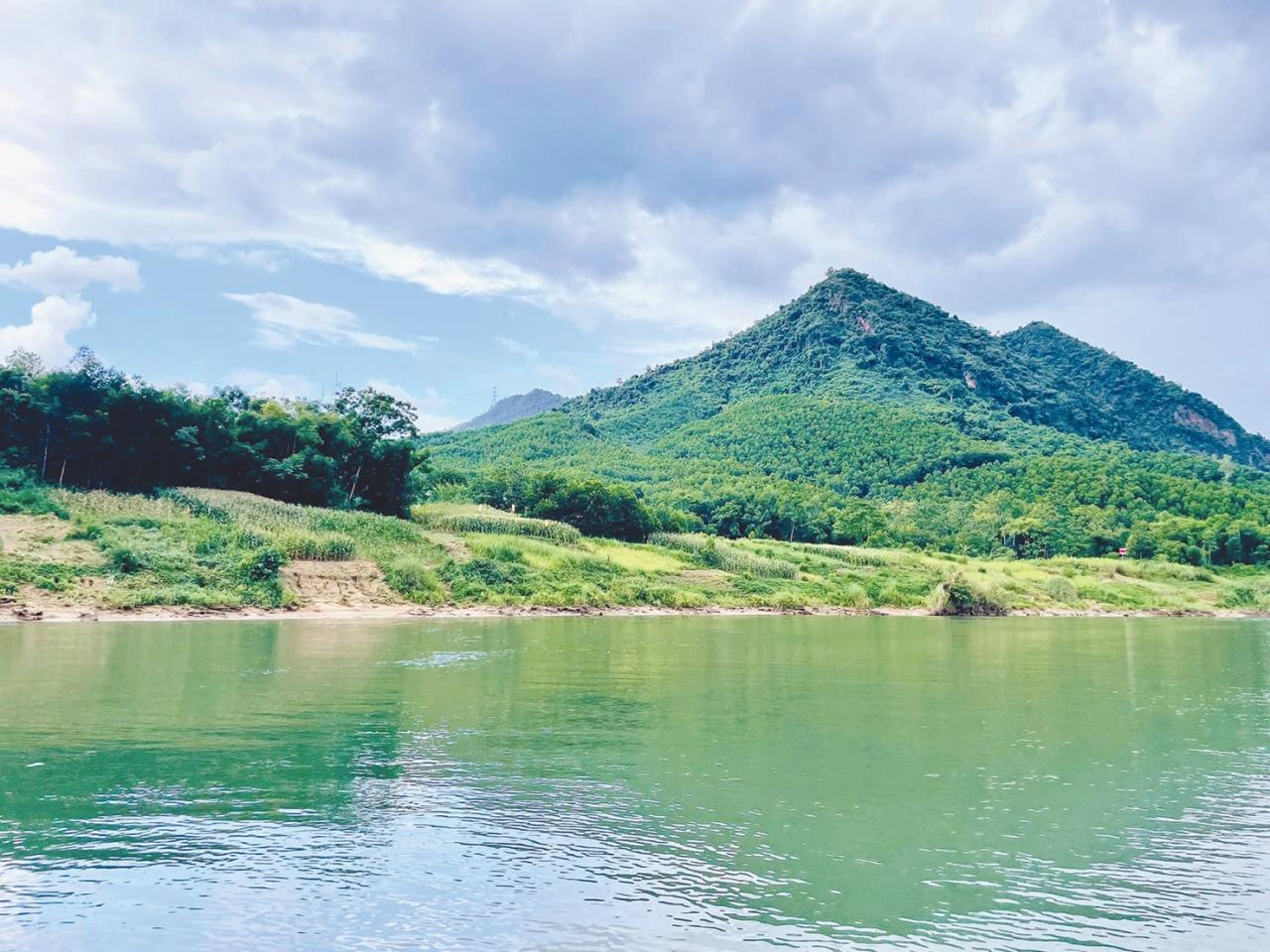
"There are the Ấn mountain, and the Đà river."
Nguyen Dinh Hien (1872-1947), who held the title of "Phó bảng" (a high-ranking scholar), was from Loc Dong village, Que Son district (now Que Loc commune, Nong Son district). His village was located at the foot of An Son mountain. Sitting in the village, one could always see An Son mountain towering before their eyes.
Nguyen Dinh Hien was a fellow student of Huynh Thuc Khang (1876-1947) at Doc Thanh Chiem school, where Tran Dinh Phong taught. The two were also classmates in the Canh Ty year (1900) provincial examination, with Huynh being the top scholar and Nguyen the second-highest. Huynh Thuc Khang visited Nguyen Dinh Hien many times and was very impressed by the majestic beauty of Mount An Son.
In 1908, when the anti-tax movement broke out, Huynh Thuc Khang was arrested and sentenced to life imprisonment and exile to Con Dao Island. While imprisoned in Da Nang , on the day of his exile to Con Dao, he composed a song called "Farewell Song." The poem contains two lines: "There are Mount An, there is the Da River. That land and its rivers await our weaving..."
The Ấn Mountain mentioned here is Ấn Sơn, the main mountain of Quảng Nam. The Đà River here is Đà Giang, the name used at the time for the river flowing through Da Nang – today it consists of the Cẩm Lệ and Hàn rivers. This time, Mr. Huỳnh used Ấn Mountain and Hàn River as symbols for Quảng Nam, instead of the Thu Bồn River and Ngũ Hành Mountain as many people have used for a long time.
In 1947, as Chairman of the Viet Lien Front, Huynh Thuc Khang was sent to inspect the Central region of Vietnam. Upon arriving in Quang Ngai , he fell ill and passed away. Concerned about the long journey and the ongoing war, he expressed a wish to be buried in Quang Ngai before his death. The people of Quang Ngai respectfully buried him on Thien An Mountain – a famous scenic spot and the province's main mountain.
Today, many people visiting his tomb on Thien An Mountain overlooking the picturesque Tra Khuc River think that the tomb matches two lines of poetry he wrote in 1908 (because they thought the mountain in the poem was Thien An Mountain and mistakenly read the Da River as the Tra River) and believe that Huynh Thuc Khang had "predicted" his final resting place 39 years earlier.
This is a "remarkable" coincidence that led to a rather interesting misunderstanding!
Source: https://baoquangnam.vn/quanh-ngon-an-son-3142264.html



![[Photo] General Secretary and President To Lam presides over a working session with the Central Policy and Strategy Committee on the development of the materials industry.](https://vphoto.vietnam.vn/thumb/1200x675/vietnam/resource/IMAGE/2026/05/21/1779359935432_a3-bnd-3129-1412-jpg.webp)







































































Comment (0)