

There are childhood memories that we cherish throughout our lives. They accompany us on our entire journey through life. They cannot be forgotten, they cannot be lost because they are so simple, unpretentious, and gentle, yet they are deeply ingrained in our hearts, firmly attached to our souls, accompanying us as we grow through the years and cherishing them in our hearts.
Those childhood days are unforgettable, intertwined with homeland, life, family, village, and friends. Everyone is born and raised in a particular place, the land where they were born and raised. It's connected to the days of childhood spent under the protection and care of loved ones. Then, they grow up carefree, without worries, until one day they are strong enough, courageous enough to fly to distant horizons, embarking on a journey to build their future. But no matter where they go, no matter what they do, whether they succeed or fail, there are times when their souls feel empty and lost, and they suddenly remember and long for those cherished days with their parents and siblings, and with their grandparents on both sides, living in their old age beside their fields, orchards, potato patches, and fish ponds. Further on, filled with love and carefree childhood friends, we walked hand in hand to school, from elementary to high school in our village. The mischievous antics of yesteryear, the days of "the naughtiest, the most mischievous, and the most troublesome students." The marks of our teachers' discipline still linger in the pages of our lives. Those carefree summer days, the rivers, streams, and fields, with kites soaring high into the sky. The days of taking the buffaloes to the fields, each of us with a fishing rod, relaxing by the riverbank. When we got tired of fishing, we'd all jump into the river, splashing around to our heart's content, a stretch of our hometown river forever etched in our memories. After swimming until we were exhausted, we'd jump back onto the bank, searching for wild, overgrown trees to climb and pick fruit, to wreak havoc without fear of being scolded or reprimanded, "Whose child are you? You're dead!"
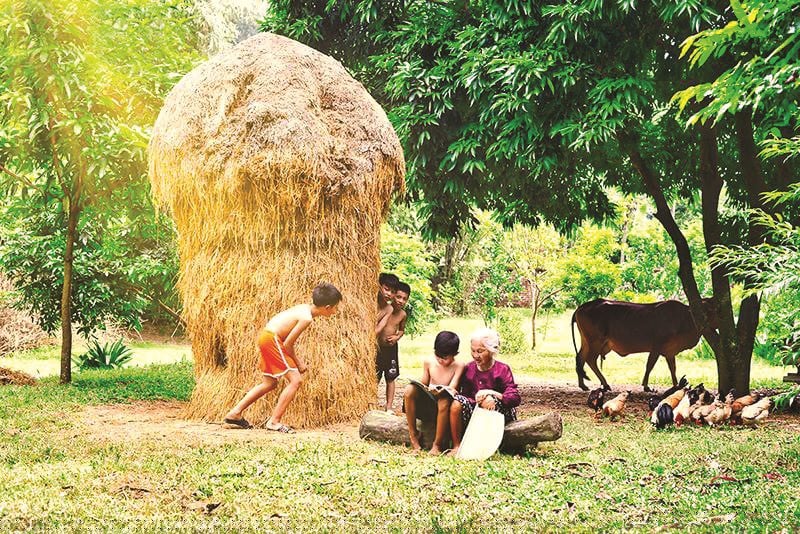
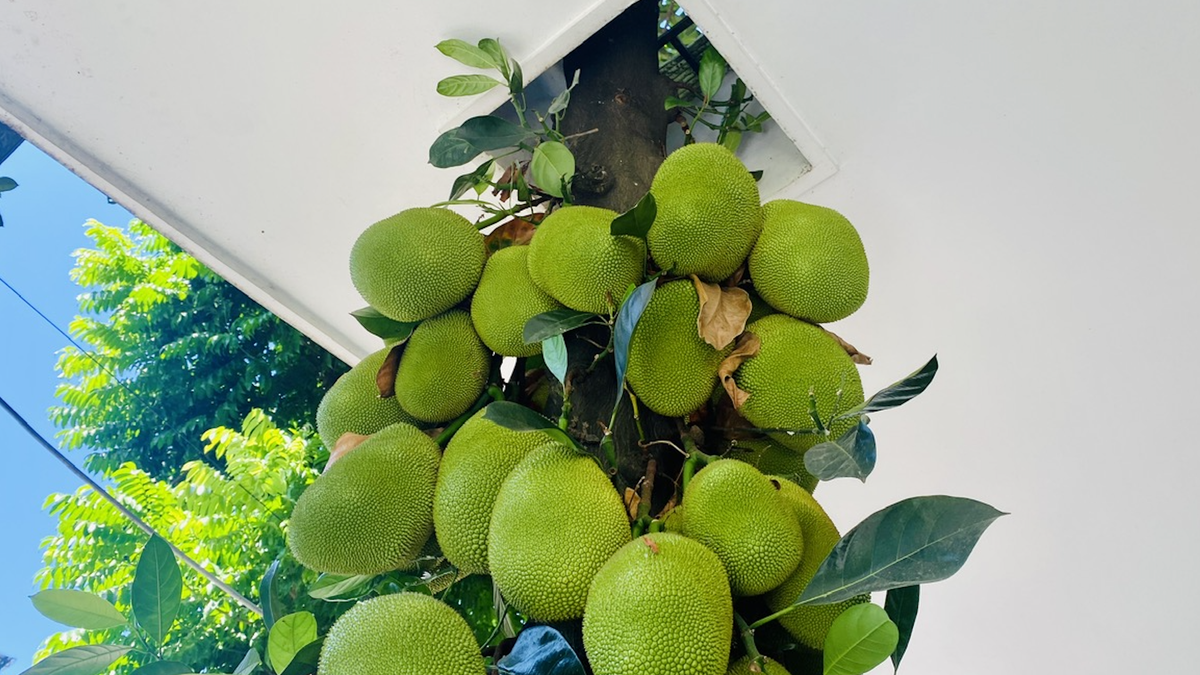
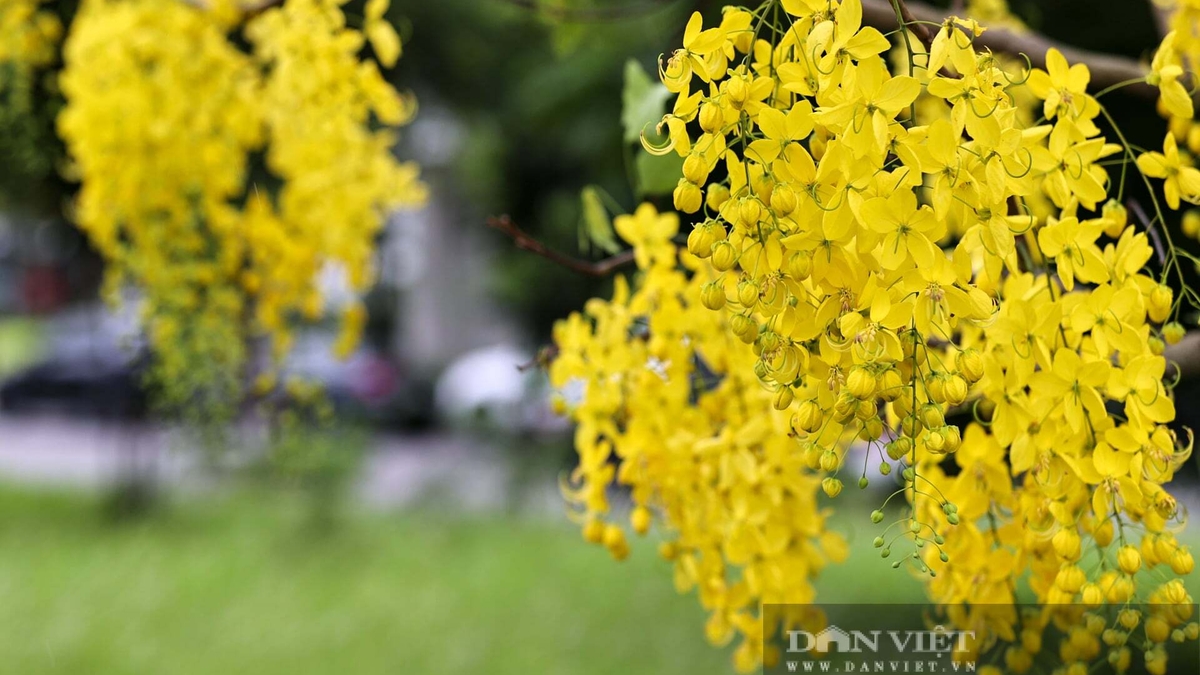
In the old village of Dai Nam, Xuan Phong, many kinds of fruit trees were cultivated and cared for, but there were also wild ones. Along the roadside, by the riverbanks and streams, beside the abandoned termite mounds or on the unclaimed hillsides, which were left over after the surrounding land was cleared to create flat, square rice paddies. There were ancient tamarind trees, old acacia trees with thorns running along their branches. Mango trees laden with ripe, golden fruit, but no one picked them because the fruit was small and fibrous rather than fleshy, yet the juice was very sweet. There were burial grounds full of hawthorn trees, with small, sour-sweet fruits that every child craved and would tire their hands and feet to pick. There were rice fields harvested early, the soil still damp, plowed and harrowed to sow some green or black beans. Bean plants, once harvested, are discarded, but the plants remain alive, striving to bear small, shorter, and crooked pods, as if trying to preserve their seeds. These pods were our joy. We'd walk side by side through the fields, searching for any remaining pods, filling our hats and bags, then gathering in a small hut by the field, lighting a fire to boil them. The pods, still young and not yet ripe, had a delightful, nutty flavor when boiled. We'd bite into one end, then pull the other end apart, revealing a row of soft, cooked beans, which we could chew endlessly without getting tired of them. The most delightful were the rows of starfruit trees, their tall branches spreading in all directions, providing cool shade for a whole area of our childhood. The pods hung in clusters, swaying in the foliage. Picked and eaten, they were fragrant and sweet; with a crunch, a drop of sweet juice flowed down our throats and lingered on the tip of our mouths. The starfruit tree has a smooth, thornless trunk and flexible branches. After picking and eating the fruit, each of us would happily choose a branch, lie down, swing our legs, and gaze at the blue sky through the sparse leaves, with sunlight casting a rosy glow on our eyelashes and eyes. It was sweet, but also challenging, especially trying to pick the cluster of starfruit. Starfruit trees grow abundantly in my hometown of Xuan Phong and Thuong Ca. Birds eat the fruit and scatter it everywhere. The seeds are small, but the trees are ancient, with thick trunks and long lifespans, sometimes lasting as long as a human life. The starfruit is small and round, about the size of a thumb, with tiny seeds inside. It has a sweet and sour taste, but is sweeter when fully ripe. In every large garden, there are two or three trees to sell the fruit seasonally. From December to January, the trees begin to bloom, with clusters of purplish-white flowers swaying at the top of the branches, their gentle fragrance carried on the wind. By the end of January, clusters of white and purple flowers have fallen to the ground, leaving behind clusters of tender, green fruit on the tree. By the end of March, in the early days of summer, the first fruits begin to ripen, ready to be harvested and sold until the end of July and August each year. The chùm quân tree is thorny, with long, very hard, and sharp thorns growing all over its trunk from the base to every branch. It's impossible to climb the tree to pick the fruit without removing all the thorns before the fruit is ripe. The tree grows wild in home gardens, and people choose to harvest the chùm quân thorns during the season when sea snails are abundant near the coast. The chùm quân thorns are hard and sharp, perfect for extracting snails. The pleasure of sitting and extracting snails for hours with the chùm quân thorns is indescribable; it's almost addictive, a kind of intoxicating pleasure that's hard to break until the entire basket is empty. To pick ripe star fruit, you need a tall ladder. You lean the ladder against the branches of a tree with ripe fruit and then climb up to pick them. Overripe star fruit is easily bruised, so you have to handle them gently when picking them to sell. Bruised fruit can only be sold individually for a small amount of money because it can't be strung together like prayer beads, which city children like to wear around their necks.
I miss it so much! I long for those dreamy childhood days. Every time I go back to my hometown, I search for memories. I text this person, call that person, just hoping to meet up, to relive a time when we were young, playing, messing around, and studying. Later, we grew up and went our separate ways, each carrying our youthful souls into life. Some succeeded, some failed, some even fell into ruin and uncertainty. Just like back then, we competed to tie the string of the kite that would fly, a kite that would determine our destiny. Not knowing how to tie the string, some kites flew up, some flew down, some wobbled and tilted before crashing headfirst into the rice field. I carry with me throughout my life those cherished childhood memories.
Source






































![[Video] Sunset at Lap An Lagoon – Where the sun sets over the fishing nets](https://vphoto.vietnam.vn/thumb/1200x675/vietnam/resource/IMAGE/2026/05/31/1780192137701_beach-landscape-sea-water-nature-grass-745871-pxhere-com.jpeg)





























Comment (0)