

With the recently passed law, fertilizers are now subject to Value Added Tax (VAT) at a rate of 5%. This was one of the points of contention during the discussion of the draft amended Value Added Tax Law at this session.
Earlier that day, the Secretary General of the National Assembly sent out questionnaires to National Assembly deputies seeking their opinions on several issues related to the draft law, including the inclusion of fertilizers in the scope of VAT taxation.
The results of the opinion poll showed that 234 National Assembly deputies (accounting for 72.67% of the total number of deputies who gave opinions) approved the regulation to reinstate fertilizers, specialized machinery and equipment for agricultural production, and fishing vessels under the 5% VAT rate.
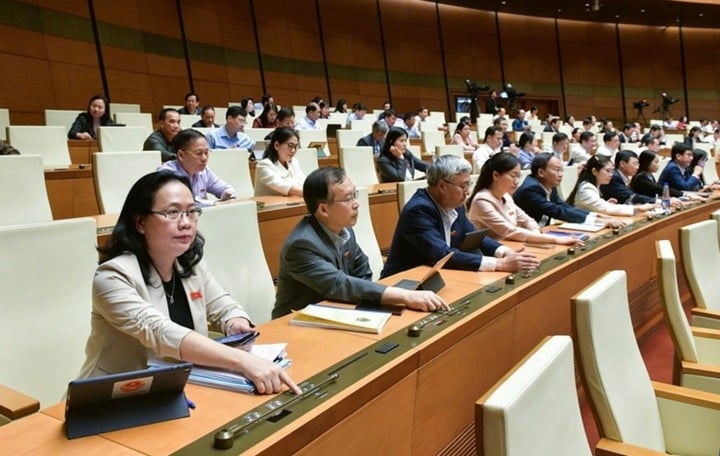
Members of the National Assembly vote to approve the amended Value Added Tax Law. (Photo: Ho Long)
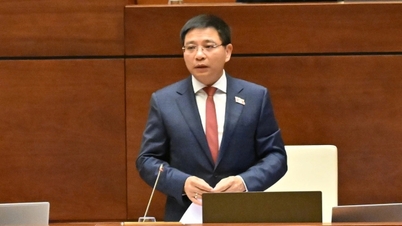
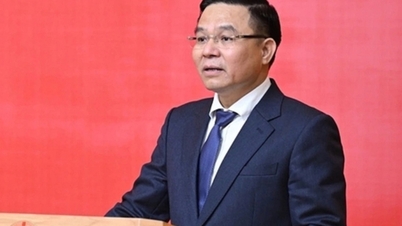
The report explaining, receiving feedback, revising, and finalizing the draft law, presented by Mr. Le Quang Manh, Chairman of the National Assembly's Finance and Budget Committee, clearly states that the proposal to include fertilizers under the 0% (or 1%, 2%) VAT rate will ensure benefits for both domestic fertilizer manufacturers and importers because both imported and domestically produced fertilizers will receive a refund of the input VAT already paid and will not have to pay VAT on the fertilizers when sold.
However, in this case, the State budget would have to spend thousands of billions of dong annually to refund input VAT to businesses. Besides the drawbacks for the State budget, applying a 0% VAT rate to fertilizers contradicts the principle and practice of VAT, which stipulates that a 0% rate should only apply to exported goods and services, not to domestic consumption. This approach would disrupt the neutrality of tax policy, create a bad precedent, and be unfair to other industries.
Regarding the opinion that "applying a 5% VAT rate will increase fertilizer prices," the National Assembly Standing Committee stated that experts have calculated that if fertilizers are subject to a 5% tax rate, there is room for a reduction in the prices of domestically produced urea, DAP, and phosphate fertilizers.
According to the current fertilizer market structure (consumption of domestically produced fertilizers accounts for over 70%, while consumption of imported fertilizers accounts for less than 30%), domestic fertilizer manufacturers will be able to lead and adjust the overall price level of fertilizers in the market.
With the policy of applying a 5% VAT rate to fertilizers, the cost of domestically produced fertilizers will decrease, creating room for further price reductions. This will lead to fertilizer importers also having to lower the selling prices of imported fertilizers to match market prices, bringing significant benefits to farmers.
Regarding the possibility of businesses exploiting policies to influence fertilizer prices in the market, as some National Assembly deputies have expressed concerns, the Standing Committee of the National Assembly believes this is entirely justified. However, fertilizers are currently a commodity subject to state price stabilization. Therefore, if the market shows signs of instability, state management agencies can implement price stabilization measures as stipulated in the Law on Price Management, such as inspecting and requiring businesses to report on factors forming prices, controlling inventory, assessing supply and demand, etc., to determine the cause and whether there is any profiteering involved, in order to apply appropriate measures.
Regarding the opinion that applying a 5% VAT rate to fertilizers would increase the state budget by 1,500 billion VND, with farmers bearing the burden, the Standing Committee of the National Assembly emphasized that if a 5% tax rate were applied, fertilizer importers would have to pay 1,500 billion VND in VAT to the state budget from the import stage.
However, the value of imported fertilizers is likely to decrease due to the application of a 5% VAT, resulting in actual revenue for the state budget (if any) being lower than 1,500 billion VND. Furthermore, the VAT collected from imported fertilizers will have to be offset against the VAT that needs to be refunded to domestic businesses, so the impact on state budget revenue from the 5% VAT is negligible and, if any, will be much lower than 1,500 billion VND.
Regarding the practical impact on farmers, the Standing Committee of the National Assembly believes that farmers can choose to buy domestically produced fertilizers at a lower price instead of imported fertilizers. In addition, importing companies will have to balance their selling prices harmoniously with the general market price in the country to ensure sales viability.
This law will come into effect on July 1, 2025.
Source: https://vtcnews.vn/quoc-hoi-chot-ap-thue-vat-5-doi-voi-phan-bon-ar909793.html









































































Comment (0)