

Entering a year promising many variables that will strongly impact the market, investment funds are formulating scenarios for a new investment cycle.
Entering a year promising many variables that will strongly impact the market, investment funds are formulating scenarios for a new investment cycle.
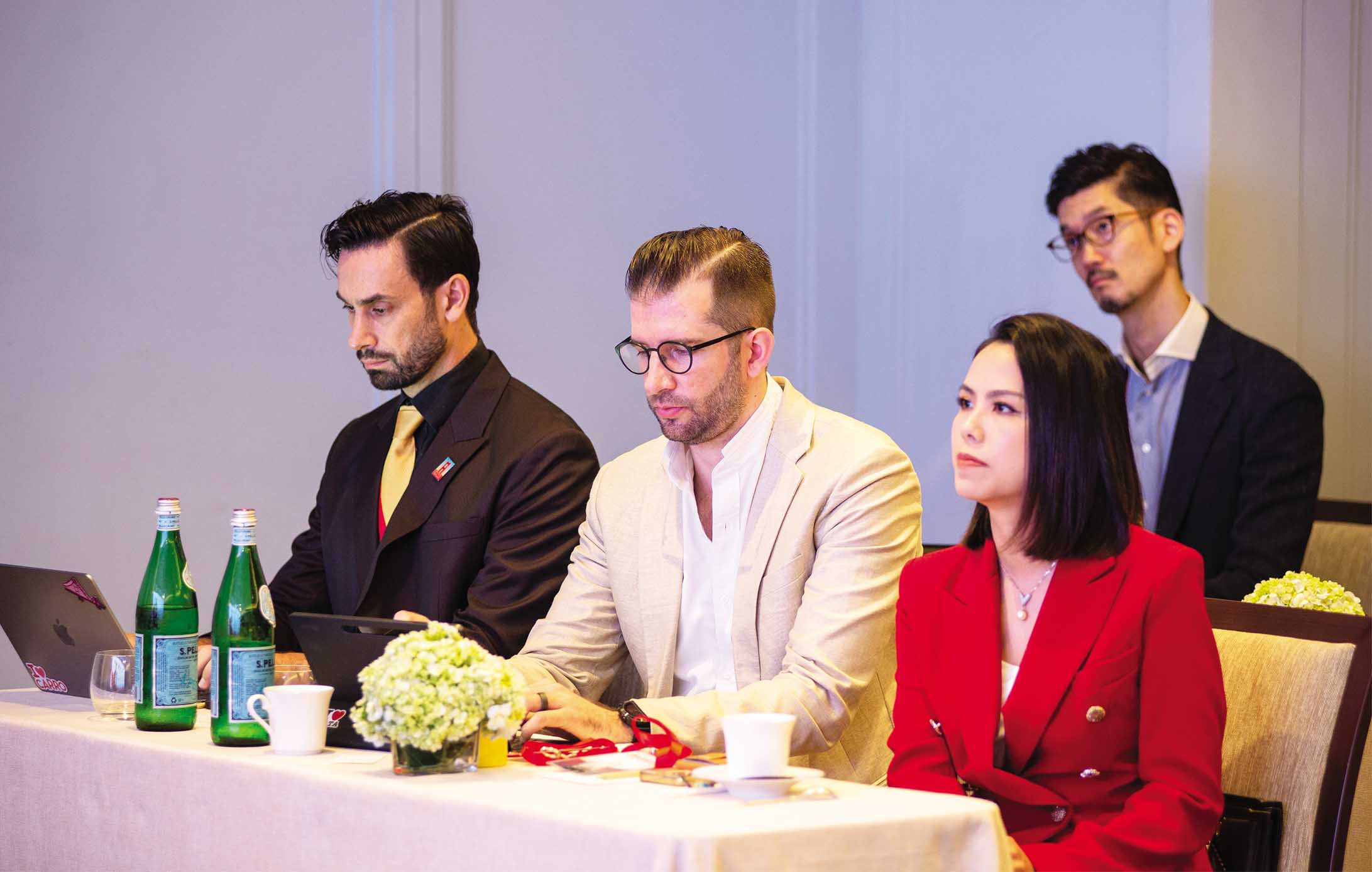 |
| Representatives from several investment funds within the Vietnam Private Capital Agency (VPCA) alliance at the founding event in September 2024. |
Foreign capital leads the way.
Global funds are shaping their portfolios for 2025. For Asian markets, funds are seeking to combine new and old economies to protect investments against the challenges posed by the uncertain trade policies of the Donald Trump administration and the upward trend of the USD.
Saudi Arabia's Public Investment Fund (PIF), with assets of approximately $930 billion, plans to further reduce its international investment portfolio, bringing to an end a period of massive investment with billions of dollars of capital spread across the globe .
This shift is taking place as the massive fund refocuses on the domestic economy, rather than seeking opportunities abroad. Specifically, PIF will reduce its overseas investment portfolio to 18-20%, from the current 21% and a high of 30% by 2020.
Nevertheless, PIF aims to reach $2 trillion in assets by 2030, so outbound investment flows must increase. However, international investors intending to seek funding from PIF must also adjust their strategies.
This change comes after a decade of PIF making a series of massive overseas investments. These include a $45 billion investment in SoftBank's Vision Fund (Japan) in 2016 and a $20 billion investment in a Blackstone infrastructure fund (USA) in 2017.
Blackstone is the world's largest investment fund, with total assets under management exceeding $1 trillion. The fund's leaders also wish to expand their investments in the Vietnamese market.
Blackstone has joined the race for artificial intelligence (AI) data centers – a field in which Vietnam has a strategy for development.
Warburg Pincus, one of the oldest and largest private equity funds globally, has also invested approximately $4 billion in Vietnam, making Vietnam its third-largest investment destination in Asia (after China and India). In the Vietnamese market, Warburg Pincus is interested in collaborating to attract green finance and renewable energy capital.
Against this backdrop, the US-based KKR investment fund considers Vietnam an attractive investment destination and affirms its intention to continue expanding its presence here. With total assets valued at $528 billion, KKR has invested heavily in the Vietnamese economy, with total investments exceeding $2 billion. Notable investments by this fund in major Vietnamese corporations include Masan , Vinhomes, Equest, KiotViet, and Saigon Medical Group (MSG).
Besides the aforementioned major players, many investment funds also release their projections, scenarios, and variables for the coming year at the end of the year. While VinaCapital believes it is difficult to predict the future, SGI Capital sees 2025 as a promising year with many new variables that will strongly impact the market. This fund is carefully reviewing the overall context, as well as individual opportunities, to decide on a strategy for the new investment cycle.
Waiting for a boost from within the country.
Michael Kokalari, Director of Macroeconomic Analysis and Market Research at VinaCapital, believes that internal factors will determine Vietnam's GDP growth in 2025, as many factors could negatively impact Vietnam's export growth. Among these, export growth to the US is projected to slow down.
VinaCapital experts believe that consumption accounts for over 60% of Vietnam's economy, so strong consumption growth will easily offset the decline in export growth. Several government plans indicate that infrastructure spending in 2025 will reach approximately US$31 billion, a 15-20% increase compared to 2024, to build 1,000 km of expressways, complete the first phase of Long Thanh airport, and expand existing airports in Ho Chi Minh City and Hanoi.
According to Michael Kokalari, these measures will help consumers feel more confident in increasing their spending. Furthermore, the Fund expects the government to take significant steps to restore the real estate market. A recovery in the real estate market will have a much greater impact on consumer sentiment than increased infrastructure spending. In addition, the government needs stronger measures to achieve its goal of attracting capital from global funds.
Meanwhile, SGI Capital believes that, amidst rising deposit interest rates and the need to diversify investment flows across other channels such as real estate and cryptocurrencies, the opportunities for the stock market in the coming period will largely depend on the trend of foreign capital flows and the performance of individual, differentiated stocks.
The fund also assessed that credit is dependent on real estate, and the encouraging sign is that the real estate market is showing many positive signs.
Recently, BTS Bernina Fund and investor Terne Holdings invested in the Haus Da Lat project on prime land overlooking Xuan Huong Lake (Da Lat), adhering to ESG criteria. These two investors have billions of USD in assets under management. Their investment preferences favor businesses with unique stories in Asia, rapid growth, and leading trends in their respective industries.
According to the announcement, BTS Bernina is an open-ended investment fund, established on December 11, 2009, owned and managed by leading financial experts worldwide. The fund allocates 60% of its resources to investments in Asia. Over the past three years, the fund's performance has reached 71.9%, indicating that BTS Bernina's investments are yielding positive results.
The Fund's Board of Directors comprises a team of experienced professionals in international finance and investment management. The Fund specializes in navigating global markets and overseeing investment strategies. Furthermore, it has experience in real estate and emerging markets. A representative from BTS Bernina stated that investing in the Haus Da Lat Project represents a commitment to high-quality, diversified assets in fast-growing markets.
Meanwhile, Terne Holdings is a diversified investment company from Singapore. Terne Holdings' core business areas include real estate investment consulting, commercial partnerships, brand consulting, design, and more.
Venture capital alliance invests in startups.
Notably, leading corporations from Japan, South Korea, and Thailand recently joined forces to establish the Alpha Intelligence Venture Capital (AIVC) fund, a substantial and rapidly growing investment in AI startups across Asia. SoftBank, SK Networks (part of the SK Group), LG Electronics, Hanwha Financial, and a Thai conglomerate signed an agreement to participate in the $130 million fund, founded by the venture capital firm The Edgeof.
Despite its relatively modest initial capital, the fund aims to act as a platform connecting large corporations and AI startups through investment or mergers. The fund is in negotiations with other companies in East and Southeast Asia to raise up to $200 million. This move comes as venture capital funds struggle to keep pace with the rapid growth of startups utilizing GenAI (Generative AI). Alpha Intelligence also targets startups in Silicon Valley, but will focus its investments on companies with business plans in Asia.
The model of forming alliances through partnerships quickly spread to Vietnam. Currently, stakeholders are awaiting a boost from an investment alliance called the Vietnam Private Capital Agency (VPCA). This alliance was formed by partners from private equity funds in the Asian region, including Golden Gate Ventures, Do Ventures, and Monk's Hill Ventures.
Over the next decade, the Vietnam Fund for the Prosecution of Vietnam (VPCA) aims to attract up to $35 billion in investment into Vietnam in sectors such as agriculture, education, and healthcare. The VPCA plans to expand its membership to 100 individuals by the end of 2025, compared to over 40 currently. Funds participating in the alliance include Vertex Ventures, Ascend Vietnam Ventures, and Mekong Capital.
Many investors appreciate Vietnam's potential, especially as US-China trade tensions are prompting businesses to seek new markets for expansion. Southeast Asia, in particular, shows its unique appeal. They believe the trend of shifting manufacturing away from China is benefiting Southeast Asian countries. Indonesia stands out as a prime example, thanks to its strong domestic economy, robust commodity sector, and central bank focused on currency exchange rate stability.
Wenting Shen, a multi-asset solutions strategist and portfolio manager at T. Rowe Price, believes that Vietnam will solidify its position as a future export powerhouse. She suggests that Vietnam's potential inclusion in the FTSE emerging markets list could improve the market's short-term outlook.
Source: https://baodautu.vn/quy-dau-tu-can-nao-cho-chu-ky-moi-d238906.html

![[Photo] The heat at the fireworks display site on the opening night of the Da Nang International Fireworks Festival 2026](https://vphoto.vietnam.vn/thumb/1200x675/vietnam/resource/IMAGE/2026/05/27/1779889741485_ndo_br_z7872039145157-fecaba5112f39e8352544099d7ef4738-5140-jpg.webp)


![[Photo] Life on both banks of the river returns to its bustling pace on the day the Long Bien Bridge opens to traffic.](https://vphoto.vietnam.vn/thumb/1200x675/vietnam/resource/IMAGE/2026/05/28/1779949763708_cau-long-bien-minh-duy-7-3610-jpg.webp)



















































































Comment (0)