Humanoid robots face a critical weakness: expensive hardware.
The humanoid robotics industry is attracting tens of billions of dollars in investment, but the biggest bottleneck lies not in AI but in hardware and the component supply chain.
Báo Khoa học và Đời sống•10/05/2026
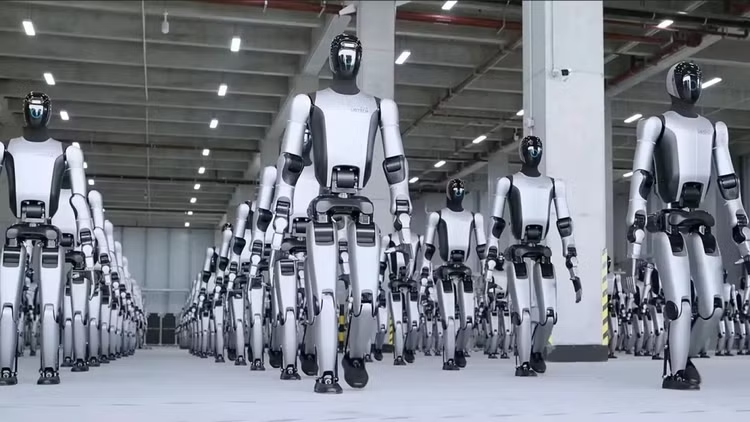
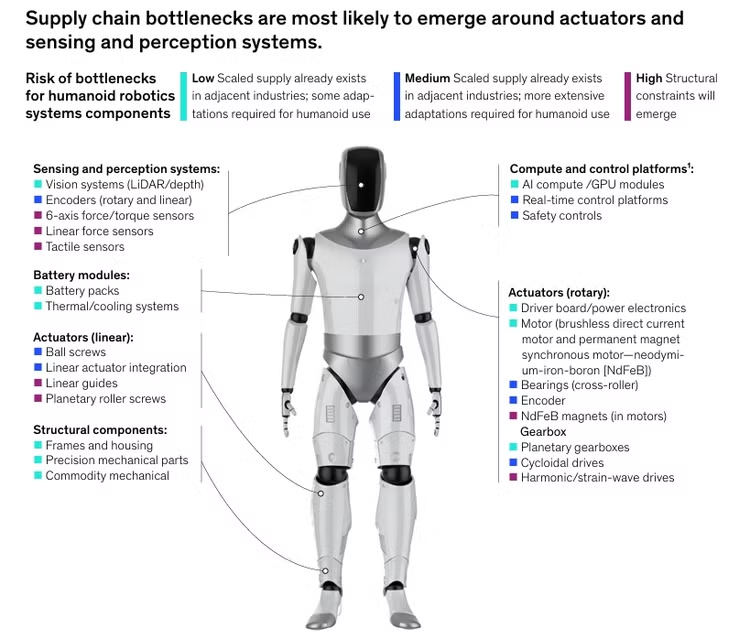
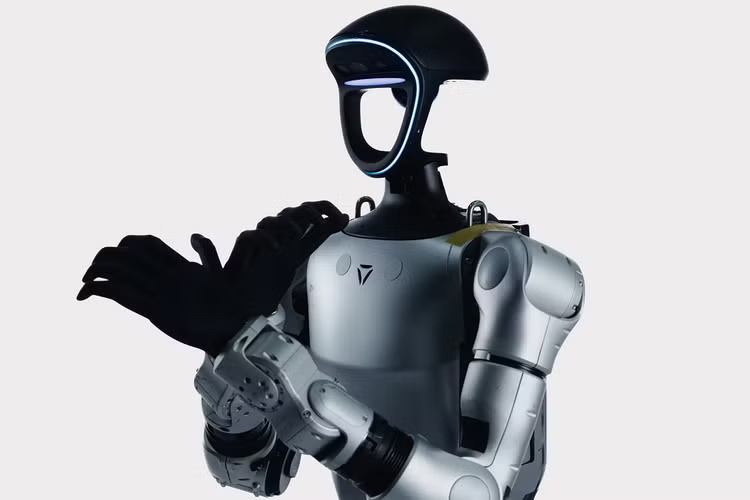
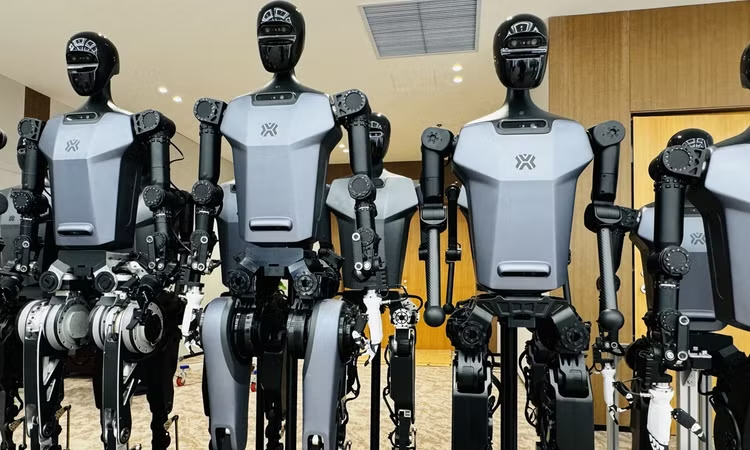
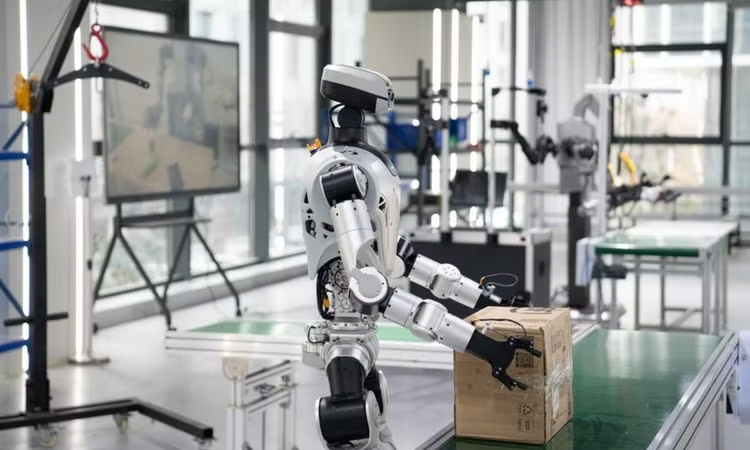
The craze for humanoid robots is booming globally, with investment reaching $40.7 billion by 2025, but behind the technological glamour lies a "fatal flaw" that is causing the entire industry to struggle. According to a new report from McKinsey & Company, the biggest challenge for humanoid robots today is not artificial intelligence but the hardware, particularly the actuator and sensor systems.
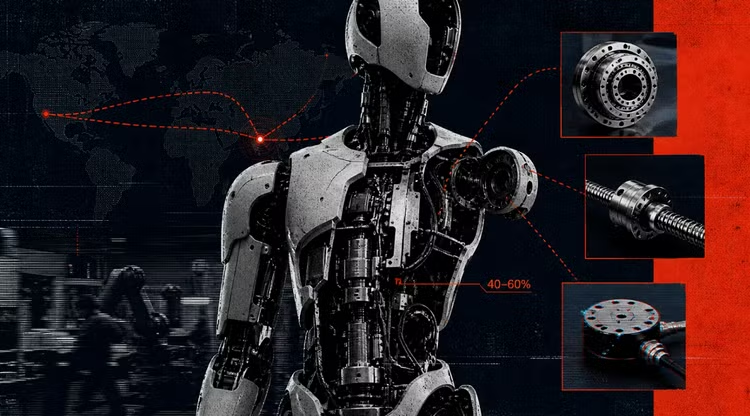
Actuators—the components that enable robots to move as flexibly as humans—currently account for 40-60% of total production costs and are also the most difficult components to standardize.
Advanced robots like Tesla Optimus require dozens of tiny actuators just to control their arms, driving up production costs significantly.
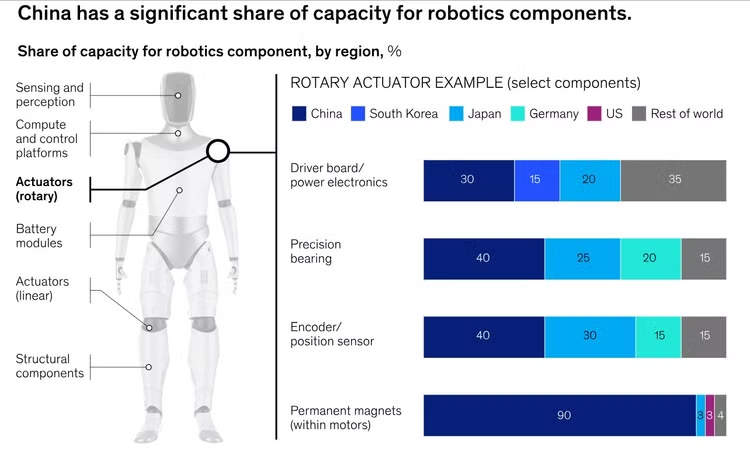
Furthermore, the global supply chain is heavily reliant on rare materials such as neodymium magnets, while the majority of processing capacity is currently controlled by China. Western technology companies are therefore facing the risk of component shortages, prolonging wait times and slowing down the commercialization of humanoid robots. Experts believe that the humanoid robotics industry is currently similar to the automotive industry of the early 20th century, when manufacturing standards were fragmented and there was no unified component ecosystem.
In this race, the company that solves the problem of low-cost hardware and large-scale production first will have the advantage of shaping the future of the entire global humanoid robotics industry.


 Báo Khoa học và Đời sống•10/05/2026


























































































Comment (0)