

Change direction to take control of your life.
After working for over two years at a real estate company in Ho Chi Minh City, Minh (27 years old, from Dong Nai province) decided to resign. Instead of joining a new office, Minh decided to form a team specializing in designing and constructing office spaces, homes, and gardens. Currently, Minh's team has four members and operates on a turnkey project basis. Depending on the scale and nature of the project, after deducting expenses, each person earns between 30 and 50 million VND per month.

According to Minh, working on projects offers flexibility and control over both time and finances, although she faces considerable pressure regarding deadlines and quality. "In return, I get to decide on my own work and career path, so I feel that my current choice suits me," Minh shared.
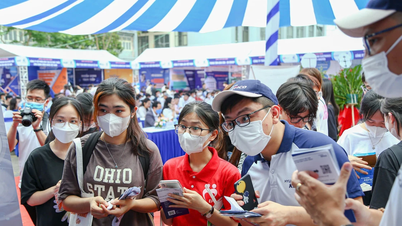
Anh Minh's career shift reflects a clearly emerging trend in the labor market. According to a survey by the Ho Chi Minh City Center for Human Resource Demand Forecasting and Labor Market Information of over 37,200 job seekers, employment trends are undergoing a significant change. The labor structure is shifting towards higher skill levels, with over 62% of job seekers holding a university degree or higher.
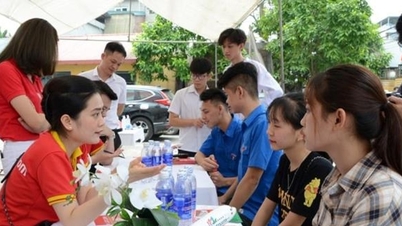
Notably, over 43% of workers desire a salary of 20 million VND/month or more. Job demand is concentrated in business-commerce, services, information technology, and logistics sectors. In particular, highly flexible positions such as freelancers, online sales, programmers, and system administrators are receiving special attention.
According to labor experts, the demand for highly flexible work stems from young people's fear of time constraints and living expenses, especially in large cities. Therefore, fixed salaries are increasingly failing to meet the living needs of many young workers.
Nguyen Minh Thanh, who has four years of sales experience at an electronics company in Ho Chi Minh City, shared that after the COVID-19 pandemic, his income decreased significantly as the company underwent restructuring. Facing financial pressure, he proactively sought new avenues by taking on additional work delivering goods and assisting with livestreaming for several small stores. "Not relying on a single salary has made me less vulnerable to financial constraints in the city," Thanh stated.
However, this level of preference does not mean that young people are completely abandoning traditional jobs. Many are choosing flexible work in stages, combining stability with practical experience. Le Ngoc Huyen Tran, a recent graduate of the University of Social Sciences and Humanities in Ho Chi Minh City (currently living in Ho Chi Minh City), believes that flexible work is an inevitable trend. However, Tran also acknowledges the limitations such as unstable income and a lack of benefits.
According to Huyen Tran, many young people still tend to start with traditional jobs to build a skills foundation, accumulate experience, and secure their finances before expanding into freelance work. Tran herself plans to combine her main job with home tutoring on weekends to increase her income.
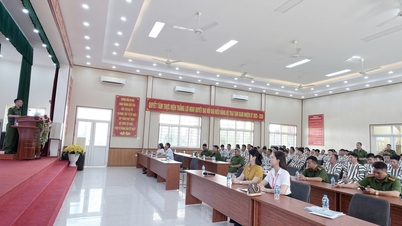
Vocational training should aim to enable self-employment.
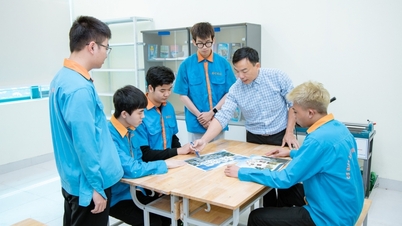
From an employment perspective, Mr. Tran Tai, Director of Vietnam Biological Mushroom Company, believes that the rise of flexible work trends reflects a profound shift in the values of the younger generation. "They are not only seeking income but also value experiences, freedom, self-development, and a desire for work-life balance," Mr. Tai analyzed.

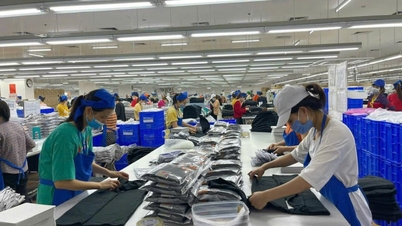
Instead of viewing this shift as a sign of disunity or instability, business owners should see it as a positive signal to proactively change and adapt. In fact, this trend gives companies access to a young, dynamic, creative workforce that is particularly adept at new technologies. However, for traditional manufacturing industries that prioritize stability, this presents both significant pressure and a crucial impetus for businesses to restructure and build a more modern work culture.
However, the biggest challenge today is retaining talent. Young people tend to change jobs very quickly, while the nature of the manufacturing industry always requires a sufficiently long period of time for workers to accumulate skills and experience.
To solve this challenging problem, Mr. Tai suggested that businesses need to start building a truly meaningful work environment. In this environment, employees must see and feel the value of their contributions extending beyond repetitive daily tasks. In addition, designing a clear career path from worker to technician or manager is also a key factor in motivating employees. Simultaneously, organizations need to promote the application of technology and automation to reduce monotony and increase creativity in the workplace.
Furthermore, implementing flexible policies within permissible frameworks, such as rationally scheduling shifts, organizing cross-training, or establishing performance-based reward systems, will also contribute to better meeting the needs of the young workforce. "Young people aren't afraid of long-term commitment; they're only afraid of staying in places that don't give them a reason to stay," Mr. Tai emphasized.
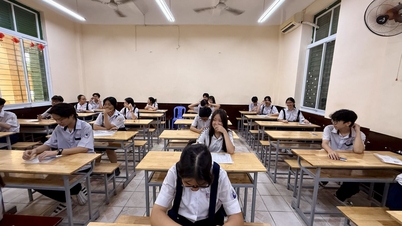
From the perspective of an expert in human resource forecasting, Mr. Tran Anh Tuan, Vice President of the Ho Chi Minh City Vocational Education Association, believes that the trend of flexible employment is strongly impacting the vocational training choices of young people today in three main directions.
Firstly, young people are increasingly less reliant on academic degrees, instead valuing practical skills that can be immediately applied to the workplace. Many young people don't wait until they finish their studies to start working, but proactively adopt a "learn while you work" approach through part-time jobs, online sales, or digital content creation.
Secondly, flexibility empowers young people to be more proactive in career planning, freely choosing jobs based on their personal abilities and the actual needs of the market. Careers that offer quick income potential and are easy to experiment with, such as digital marketing, design, information technology, or e-commerce, are increasingly preferred over many traditional professions.
Finally, a short-term career mindset is clearly on the rise. While job switching is easy, the lack of a long-term development path is leading to the risk of "working hard but not accumulating significant experience," potentially causing a misdirection for the future.

To prevent the education system from being left behind, Mr. Tuan believes that vocational training institutions need to urgently transform into an open, flexible, highly personalized model based on digital platforms. The focus now is on continuously updating training programs to meet high-tech standards and aligning them with the actual needs of businesses.
“Vocational training should not only aim at securing employment but also at enabling workers to create their own jobs. Therefore, it is necessary to integrate flexible work skills into the curriculum, such as personal project management, online sales, personal branding, creative thinking, and entrepreneurial skills. The learning programs should also be broken down into smaller, short-term modules lasting 3-6 months, allowing learners flexibility in a learning-working-continuing-learning process,” Mr. Tuan analyzed.
Besides redesigning the program, Mr. Tuan also emphasized the importance of closely integrating training with digital platforms and international standards to serve the green economy. Workers need to understand that flexible employment is not a temporary job, but a completely new approach to building a sustainable career. The core foundation remains formal training, proficiency in at least one primary skill, a conscious adherence to financial and legal discipline, and proactive participation in voluntary insurance schemes to protect themselves in a flexible economy.
Source: https://baotintuc.vn/van-de-quan-tam/roi-van-phong-nguoi-tre-tim-duong-rieng-20260411141053129.htm

![[Photo] General Secretary and President To Lam presides over a meeting on preparations for the review of one year of operation of the three-tiered government system.](https://vphoto.vietnam.vn/thumb/1200x675/vietnam/resource/IMAGE/2026/06/02/1780391821195_a1-bnd-4595-9717-jpg.webp)










































































Comment (0)