Creating a uniformly colored, durable, and fade-resistant indigo-dyed fabric is a meticulous and skillful handcrafted process requiring the expertise and dedication of women.
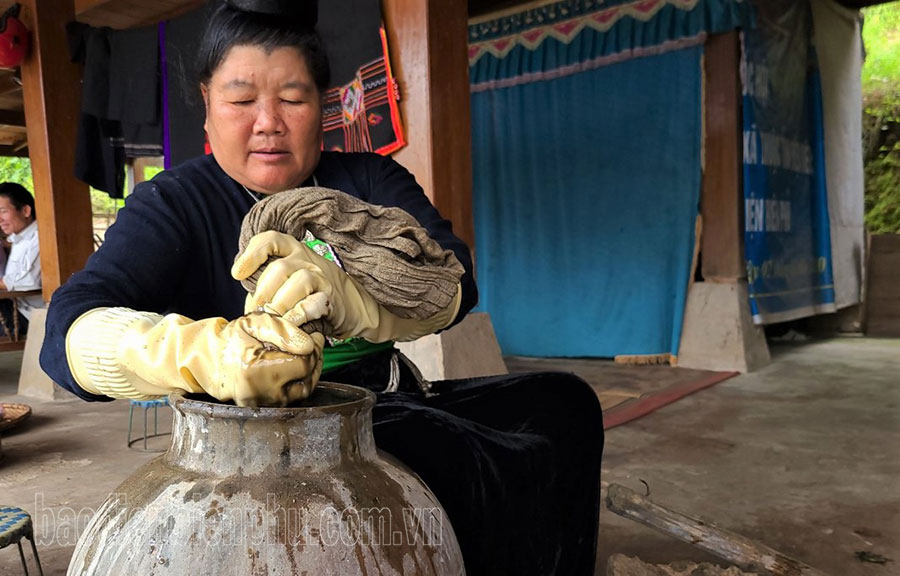
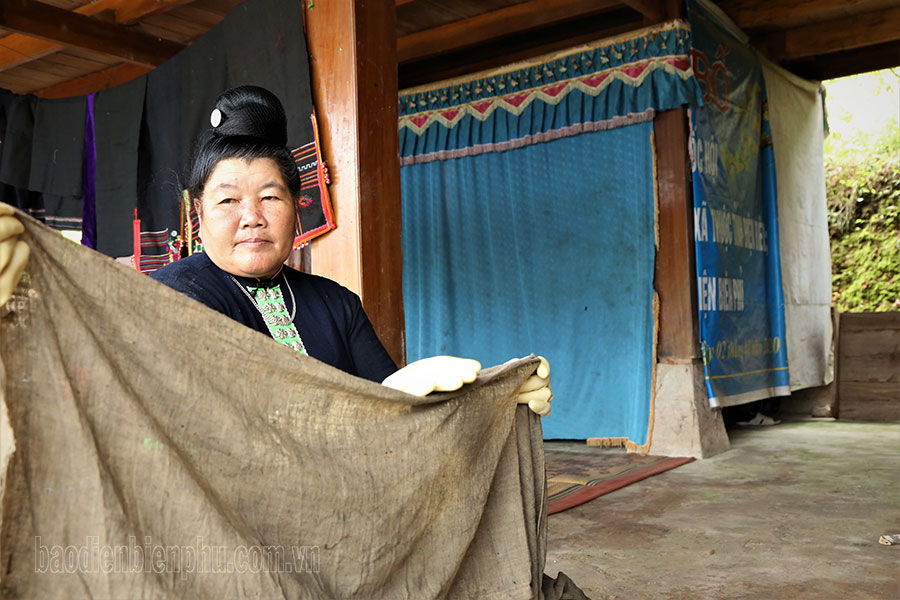
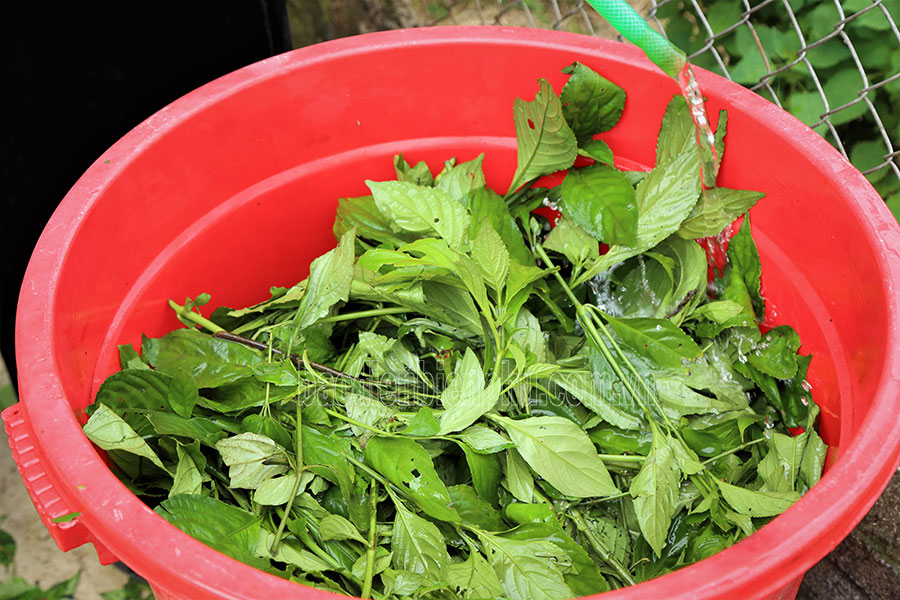
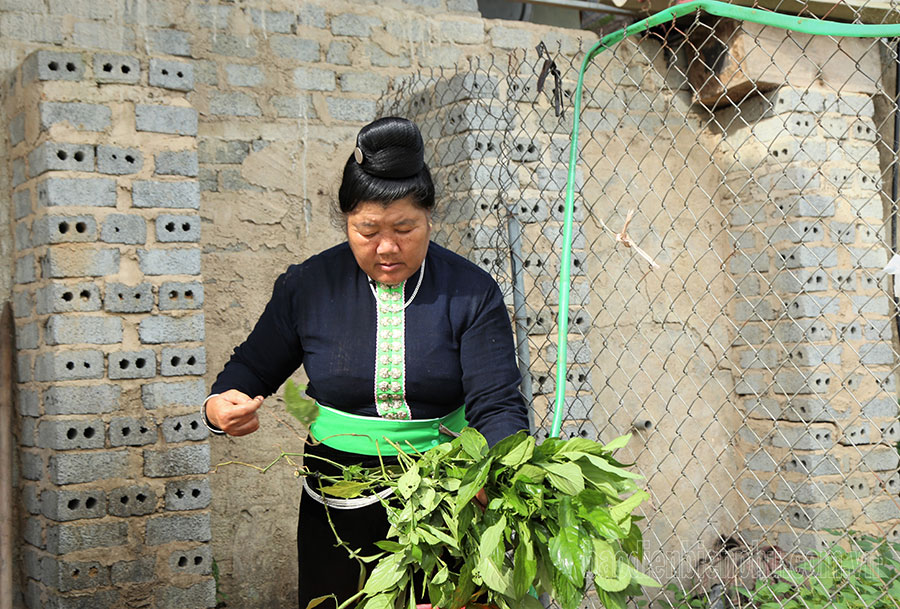
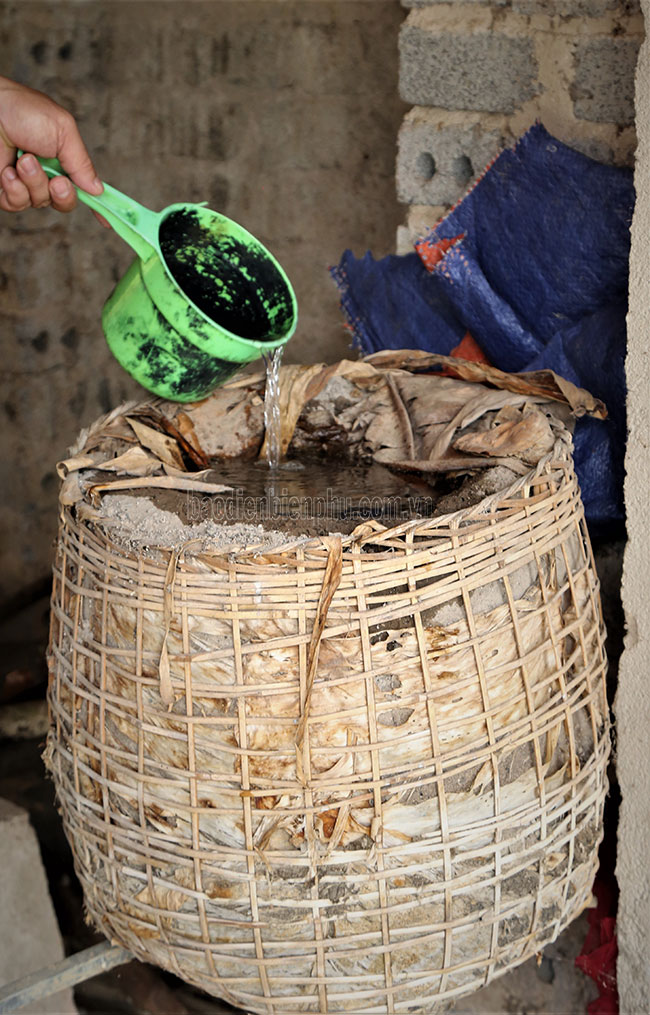
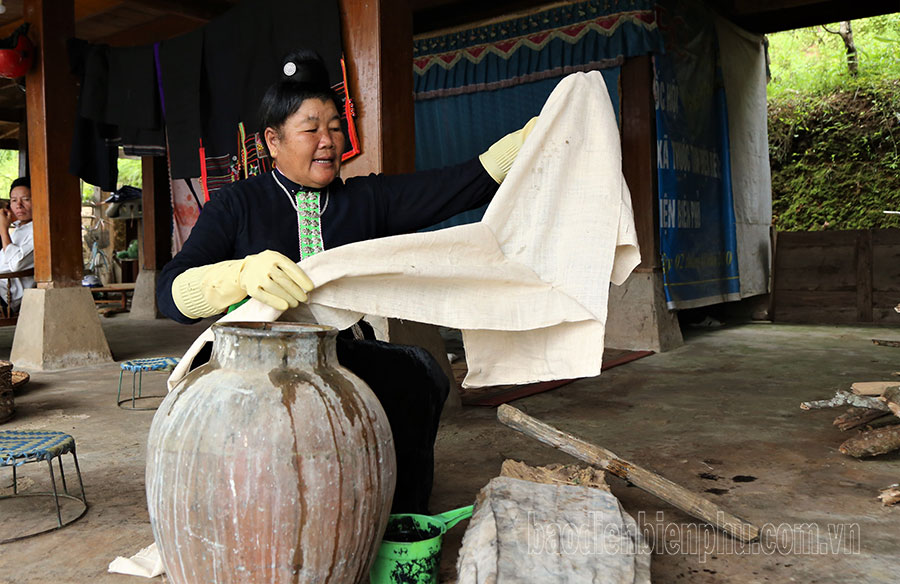
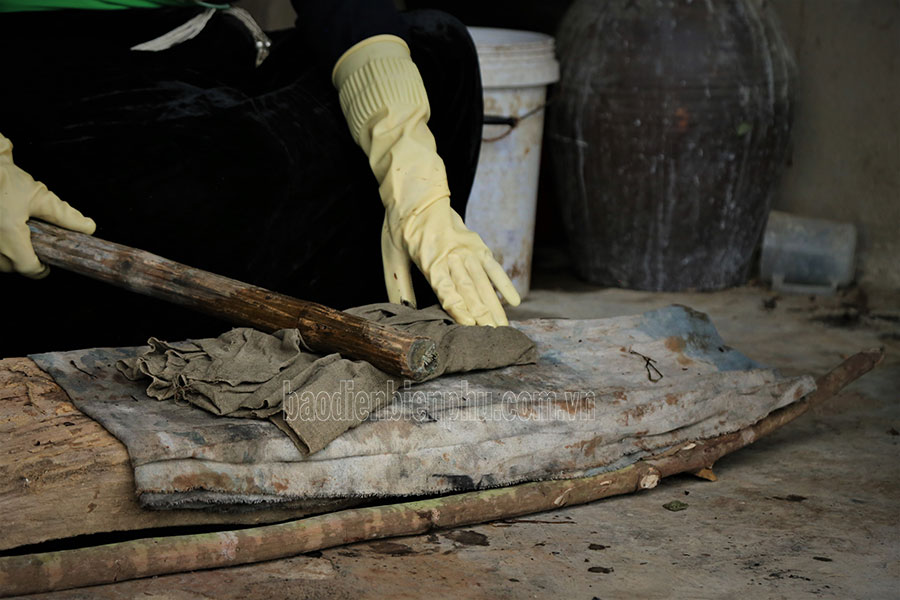
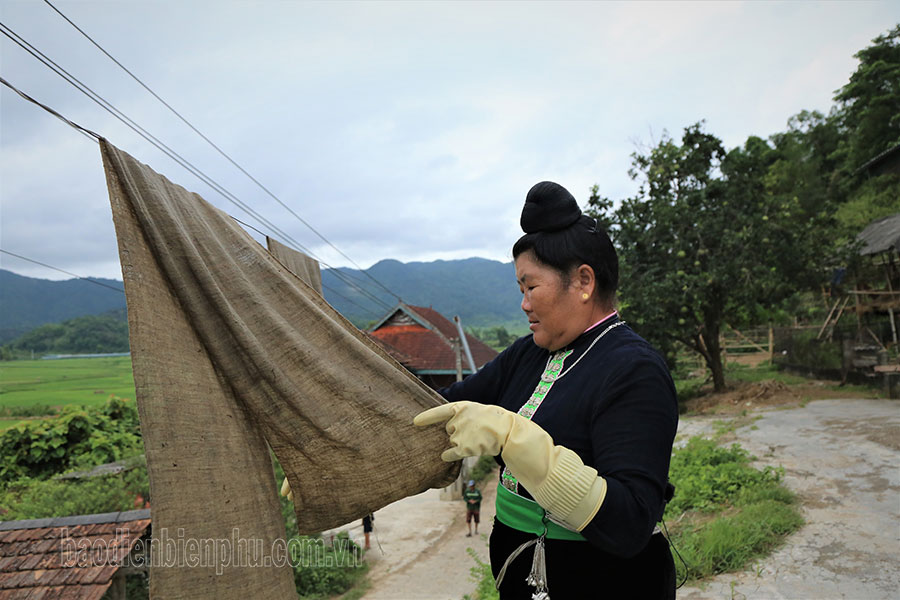
Around July and August each year, when indigo plants grow in clumps along the streams, women and mothers would go along the streams to collect indigo leaves, wash them thoroughly, soak them for 3-4 days, and then strain the liquid. This indigo liquid would be mixed with water from wood ash (water flowing through a basket of wood ash) in a specific ratio (2 parts indigo liquid to 1 part wood ash), and stored in earthenware jars. After mixing the dye, pieces of white cloth were placed in the jar and shaken thoroughly. The cloth was then removed, wrung out, and beaten to allow the color to penetrate deep into the fibers. This was the first step; the cloth did not need to be washed but was immediately dried. From the second day onwards, the dyed and beaten cloth would be washed and dried. This process took 7 days, until the cloth had a beautiful color that would not fade when washed.
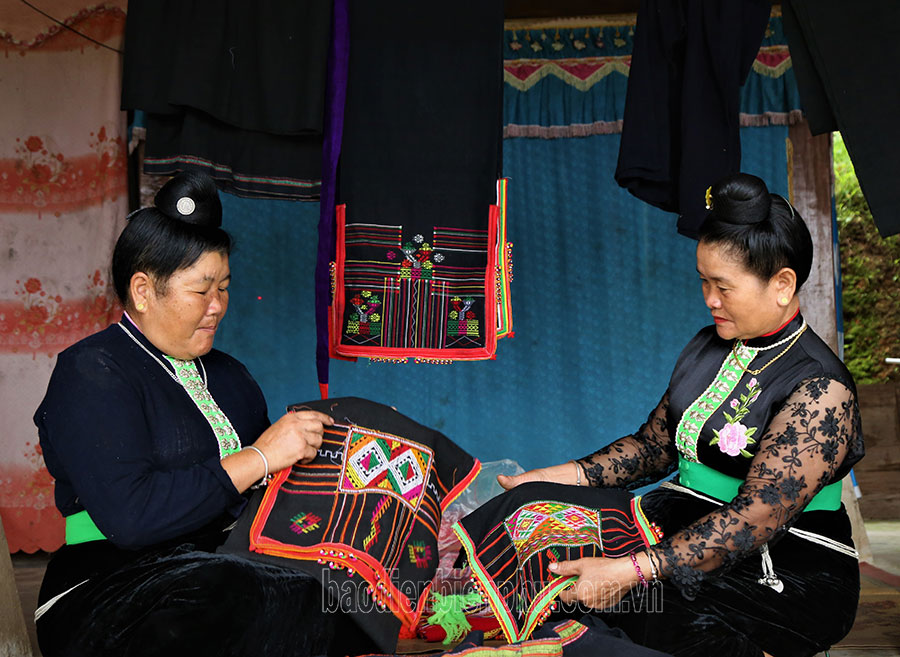
It's clear that dyeing indigo fabric involves many steps and takes almost two weeks to complete. Each year, women only dye the fabric for two months. After dyeing in September and October, which is a period of leisure time for farmers, women from different generations of the family gather around the fireplace on the porch, chatting and sewing or embroidering.
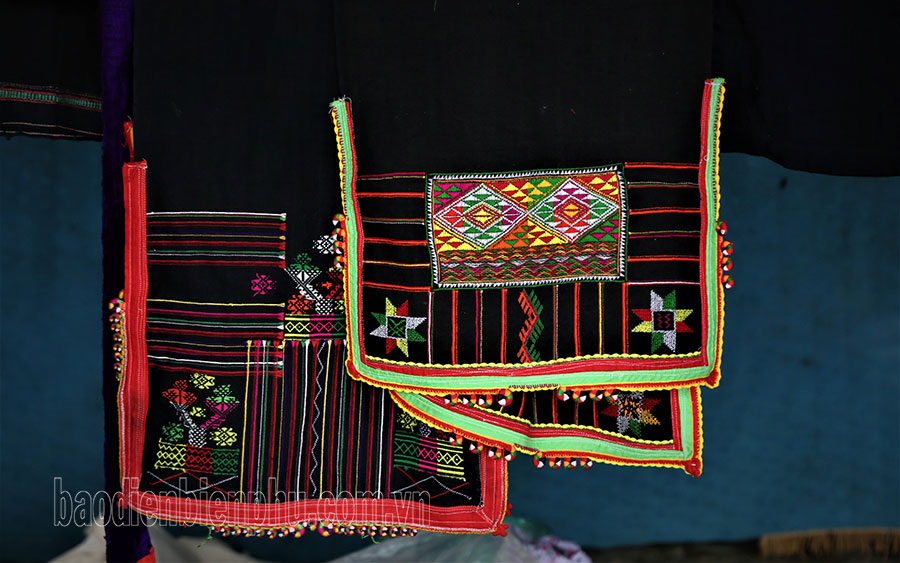
Each piece of indigo fabric will be cut, sewn, and embroidered with patterns and motifs into familiar products indispensable in cultural and spiritual life such as scarves, belts, shirts, etc. Under the skillful and hardworking hands of the women, the colorful and eye-catching patterns and motifs on the dark indigo fabric stand out even more, clearly depicting the long-standing cultural traditions and characteristics of the Thai Che Can ethnic group.
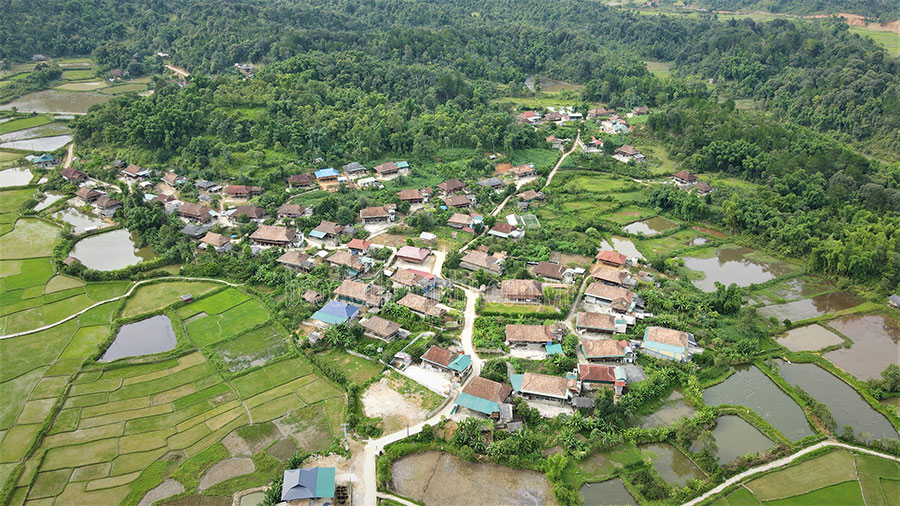
Che Can, in Muong Phang commune, is an ancient Thai cultural village, with traditional stilt houses and cultural features preserved through generations.
Traditional crafts are also preserved in Che Căn, including indigo dyeing, a type of fabric dyed with natural preparations that gives it a distinctive black color.
In the past, knowing how to dye fabric, embroider, and sew clothing and household items was one of the main criteria for Thai women to get married.
Typically, women only dye their fabric once a year, around July or August, when indigo plants grow in clumps along the streams. The women in the village go to harvest them to make indigo dye for their fabrics.
To create fabric dye, indigo leaves are first washed, soaked for 3-4 days, then the residue is removed and the liquid is strained...
…Then it is mixed with ash water (water that flows through a basket containing kitchen ash) in a ratio of 2 parts indigo water to 1 part ash water and stored in large jars for later use.
Each piece of white cloth was placed into the dye vat and shaken thoroughly.
To ensure that each thread of fabric absorbs the color evenly without smudging, the women soak the fabric, wring out the water, and then use a pestle or a piece of wood to beat it.
Completing a batch of fabric dyeing is very time-consuming. On the first day, the dyed fabric is air-dried. From the second day onwards, the dyed and beated fabric is washed and then air-dried. This process takes 7 days, and the process is complete when the fabric is evenly colored and does not fade after washing.
After creating the distinctive indigo fabrics, September and October are periods of leisure time for farmers. By the fireplace, under the eaves of their houses, the women will gather to sew and embroider on the indigo cloth.
The vibrant, eye-catching patterns embroidered on the dark indigo fabric beautifully portray the skill, sophistication, meticulousness, and tradition of Thai women in this region.



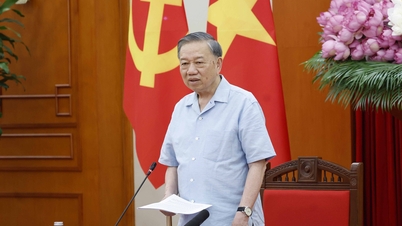
![[Photo] General Secretary and President To Lam presides over a meeting on preparations for the review of one year of operation of the three-tiered government system.](https://vphoto.vietnam.vn/thumb/1200x675/vietnam/resource/IMAGE/2026/06/02/1780391821195_a1-bnd-4595-9717-jpg.webp)
























































Comment (0)