

Located in the heart of the Southwest region of Vietnam, Vinh Long boasts unique culinary values of the delta. The distinctive products from hundreds of traditional craft villages, intertwined with the culture of the local communities, blend seamlessly with nature, seasons, and community spirit, creating a unique identity for the region's produce. The province's "culinary map" is incredibly rich, diverse, and appealing for visitors to explore.
My Long rice paper, Son Doc puffed rice cakes
Along Provincial Road 885, in the section passing through Luong Phu commune, stalls selling grilled rice paper hang side by side, beckoning tourists to enter the My Long rice paper making village. For the locals, this is a familiar snack, while for many who are far from home, it evokes memories of their childhood.

According to the elders, My Long rice paper has a history of over 100 years, formed when migrants from Central Vietnam came to settle this land, skillfully combining rice with coconut milk – a readily available ingredient in the coconut region – to create a unique and unmistakable flavor. Ms. Nguyen Thi My Le said: “My Long grilled rice paper has a salty-sweet taste, you can eat it endlessly without getting tired of it. Every day I grill 100-200 pieces and hang them up; they sell very well.” For many families, grilling rice paper not only provides income but also helps preserve the craft passed down from their ancestors. Because it depends on the sunshine, My Long rice paper cannot be mass-produced. Each batch is made in stages, selling out as soon as it's ready, keeping the rice paper fragrant and rich, not greasy, and also helping the makers maintain their reputation with customers.
While My Long rice paper boasts the rich, fragrant flavor of coconut milk, Son Doc puffed rice (from Hung Nhuong commune) captivates diners with its unique softness, chewiness, and sweet taste. To maintain the village's reputation, the bakers are especially careful from the ingredient selection stage: the glutinous rice must be pure, without any admixture of regular rice; and it is soaked for 1-2 nights to ensure the rice is chewy and not hard or tough.
 |
| Coconut heart pancakes attract diners from near and far. Photo: PHUONG THUY |
The Tet (Lunar New Year) atmosphere in this region seems to arrive earlier, with the rumbling of machinery blending with the lively sounds of laughter and conversation. With over 20 large and small bakeries, the entire Son Doc puffed rice cake village is truly entering its biggest production season of the year. Each worker at the bakery handles various stages, from sticky rice preparation and kneading to rolling and drying the cakes, creating a bustling work rhythm. According to Ms. Nguyen Thi Dep, operating the cake-cutting machine looks simple but requires quick hands and skill. "If you're not careful, the cakes will stick to the edges and be ruined," she says.
Not stopping at traditional glutinous rice crackers, Son Doc cracker village also produces fatty rice crackers, noodle-shaped rice crackers, banana-wrapped noodle-shaped rice crackers, etc. This product diversification helps the village adapt better to market demands and creates more jobs for local workers. Mr. Nguyen Van Thiet (Hung Nhuong commune) said that his facility currently has 4 products that have achieved OCOP 3-star status, receiving support in terms of machinery, brand building, and expanded sales through e-commerce channels.
Since being recognized as a National Intangible Cultural Heritage, Son Doc puffed rice cakes are not only a traditional Tet (Lunar New Year) dish but have also become an experiential tourism product, where visitors can personally knead and bake the cakes and share stories of preserving the craft with the local people, thereby gaining a deeper understanding of the value of labor and the culture of the traditional craft village.
Sticky rice cakes and candied fruits for a sweet spring
On the province's "culinary map," Tra Cuon sticky rice cake is a familiar name. From the center of Tra Vinh ward, following National Highway 53 towards Ba Dong beach for about 10km, a series of signs and production facilities on both sides of the road signal that tourists have arrived at the Tra Cuon sticky rice cake making village. The village was recognized by the People's Committee of Tra Vinh province (formerly) at the end of 2011, with about 30 establishments and households in Vinh Kim, Hung My, and Chau Thanh communes maintaining regular operations. Each day, each establishment supplies 100-200 sticky rice cakes. During peak holidays and Tet (Lunar New Year), this can reach tens of thousands of cakes, creating jobs for hundreds of rural workers and contributing to the stability of local livelihoods.
 |
| Cuisine is not just about food; it's about flavors that evoke a whole realm of memories. Photo: THAO TIEN |
Ms. Nguyen Thi Diem Phuc, owner of Hai Ly sticky rice cake facility (Vinh Kim commune), said that her facility's three-colored, spinach, and four-season sticky rice cakes have achieved OCOP 3-4 star ratings and are popular with consumers nationwide. "My family sells about 200 cakes a day. To maintain our reputation for quality, we only use glutinous rice, mung beans, bananas, salted eggs, pork fat, spinach leaves, etc., without using artificial coloring, ensuring food safety and hygiene," Ms. Phuc shared.
Along with sticky rice cakes (bánh tét), candied fruits (mứt) are an indispensable part of every spring festival. In the final days of the year, many traditional candied fruit villages are bustling with activity. At a tamarind candied fruit production facility in Trung Hiep commune, Ms. Vo Thi Kim Anh, the owner, said that it remains a flagship product every Tet season. Instead of the traditional plastic packaging, in recent years the facility has switched to packaging in 250g, 500g, and 1kg jars to suit consumer tastes and facilitate storage. "Buyers now care more about hygiene and packaging, so we have to be meticulous from the selection of ingredients to packaging," Ms. Kim Anh shared. Ingredients such as tamarind, kumquat, and star fruit are always guaranteed fresh, contributing to the market for local agricultural products.
A common characteristic of jam-making establishments is that they maintain traditional processing methods and flavors, limit additives, and preserve the natural sweet and sour taste of local fruits. In a market flooded with mass-produced, cheap jams and preserves, artisanal jams face intense competition. It is precisely this simplicity and the story behind the craft that helps this sweet treat maintain its place. Many establishments proactively improve their techniques and invest in machinery for jam making and drying to increase productivity and ensure food safety.
Four seasons of sweet and fragrant fruits
One of the province's strengths is its rich, garden-style cuisine, closely linked to local produce. Considered the "coconut capital" with approximately 120,000 hectares, accounting for more than half of the country's coconut growing area, the province boasts a diverse range of coconut combinations with other ingredients, along with creative preparation methods, resulting in hundreds of unique and appealing coconut dishes. In particular, Cau Ke waxy coconut is famous for its many delicious dishes: waxy coconut with milk and ice, waxy coconut smoothie, waxy coconut ice cream, and unique variations such as waxy coconut noodle soup, waxy coconut beef curry, waxy coconut flan, sticky rice with waxy coconut strands, and waxy coconut stewed with Muscovy duck…

 |
| Green tea can be used to make jam and cooked in many delicious dishes. Photo: PHUONG THUY |
Along with waxy coconuts, the pomelo variety from Dong Thanh ward is well-known. Although pomelos can be grown in many places, the soil in the former Binh Minh area is particularly suitable, resulting in superior fruit quality. This will be a unique advantage – a "privilege" that the people of Vinh Long cherish and preserve. Uncle Ba Bao (Dong Hung 2 hamlet) said that thanks to learning the technique of early flowering, pomelos have had a bumper crop and good prices in recent years, with harvesting starting on the second day of Tet (Lunar New Year) and continuing until the end of April. Pomelos can be used to make jam, crushed ice, braised fish, sour soup… a variety of dishes. If sour pomelos are a gift from nature, sweet pomelos are the result of a journey that Mr. Huynh Van Cap (Mr. Nam Cap) has been researching for over a decade. He is currently the Director of the Dong Thanh Sweet Pomelo Cooperative with 25 members and an area of 21 hectares.
Vinh Long is also known as the "sweet potato capital" of the Mekong Delta. From Provincial Road 908, follow the Muoi Thoi canal for about 7-8km into Tan Duong hamlet to find the "Muoi Thoi" sweet potato growing area. Tan Quoi sweet potatoes, famous throughout the Mekong Delta and even reaching Saigon, have been a distinctive area of about 400 hectares along the banks of the Muoi Thoi canal. Some families have been involved in sweet potato cultivation for hundreds of years. From pumpkin-shaped sweet potatoes to "paper-white" sweet potatoes, they now mainly cultivate Japanese purple sweet potatoes. Binh Tan sweet potatoes are also used to prepare delicious dishes and have become popular in people's daily lives. From the tubers to the shoots, through the skillful hands of the locals, all parts of the sweet potato vine can be transformed into delicious dishes on the daily dinner table.
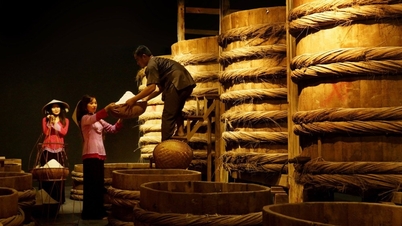
From the custom of "eating according to the seasons," the abundance of culinary specialties from the Mekong Delta's waterways, such as Bình Minh pomelo, Tam Bình mandarin oranges, Bình Hòa Phước rambutan, Mỹ Hòa tofu skin, sand mangoes, fish sauce, etc., reflects the people's deep connection with the gentle Mekong River.
When visiting a place, experiencing its cuisine is a way to better understand the people and culture. Cuisine in tourism has been elevated to an art form, creating a unique character for each region. Over time, the province has undertaken many activities to promote and introduce its cuisine to enhance the effectiveness of tourism. Culinary culture is expressed in the way food is prepared and enjoyed, in the authentic style of the local people.
Ms. Duong Dieu Hien - CocoHome (An Binh commune) shared: “CocoHome is characterized by eco-tourism in the countryside, so we focus on rural dishes, and sour bần hot pot is our most distinctive dish. The Mekong Delta region has many bần trees growing naturally, and when ripe, the bần has a fragrant aroma and a refreshing sour taste. Combined with river fish, it creates a very unique dish. We always strive to give our guests the most rustic and close-to-nature experience possible.”
PHUONG THUY - THAO TIEN
Source: https://baovinhlong.com.vn/van-hoa-giai-tri/202602/sac-mau-ban-do-am-thuc-vinh-long-c4f07a9/

![[Photo] General Secretary and President To Lam and his wife begin their official visit to Thailand.](https://vphoto.vietnam.vn/thumb/1200x675/vietnam/resource/IMAGE/2026/05/27/1779881249412_anh-man-hinh-2026-05-27-luc-18-10-51.png)




























































Comment (0)