Along Le Duc Tho Street in An Hoi Tay ward (formerly Go Vap district, Ho Chi Minh City), a stretch of less than 3 km boasts six churches situated close together. These bell towers stand side-by-side amidst the bustling streets, creating a unique scene in Ho Chi Minh City. Behind this lies the story of a "religious neighborhood" formed by the migration of Catholics from North Vietnam to the South in 1954 .
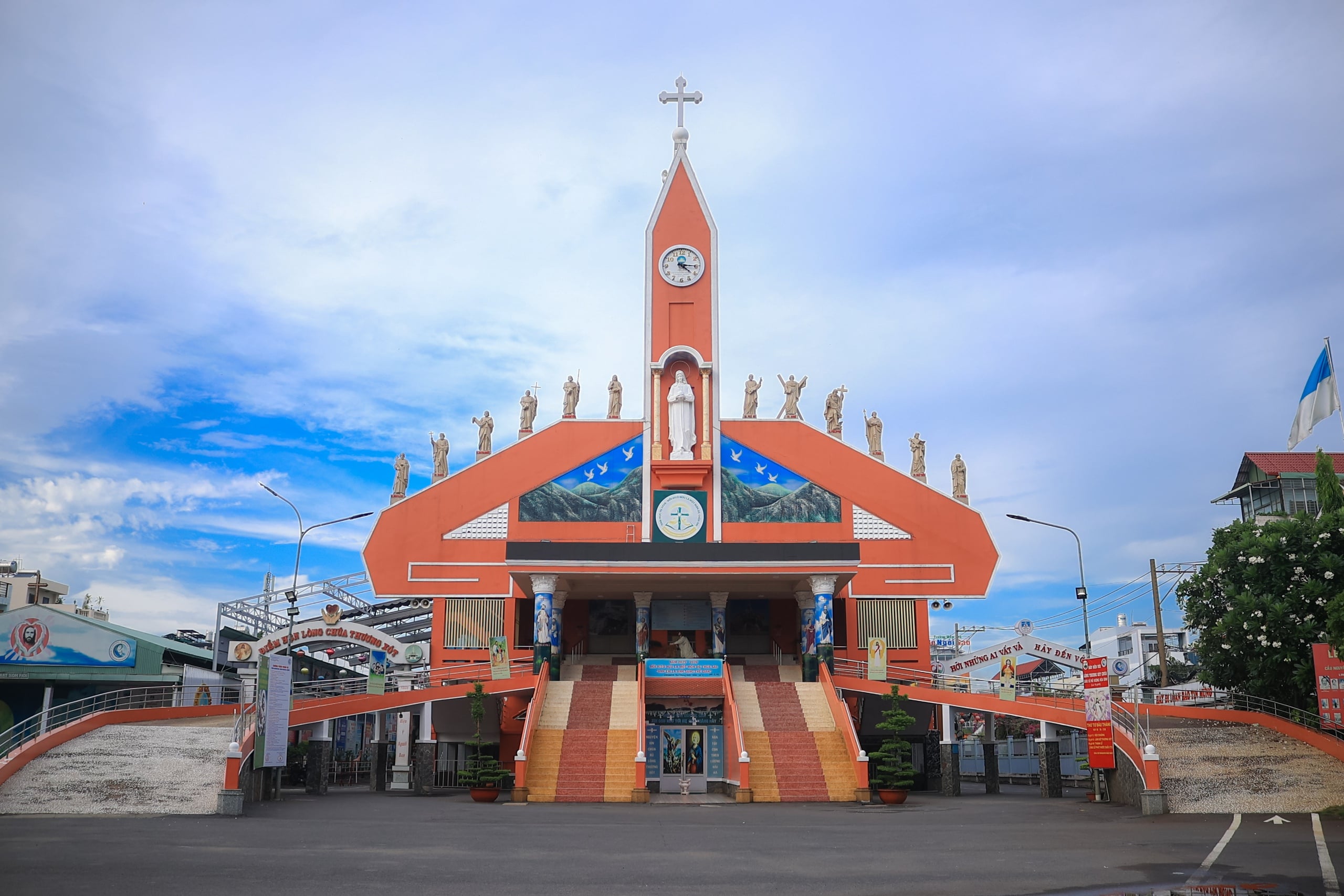
The grounds of the Church of Our Lady Queen of Peace span over 5,000 square meters, offering a spacious, green, and solemn atmosphere.
PHOTO: HA THUONG
Six churches on Le Duc Tho Street and the imprint of the Catholic migrant community.
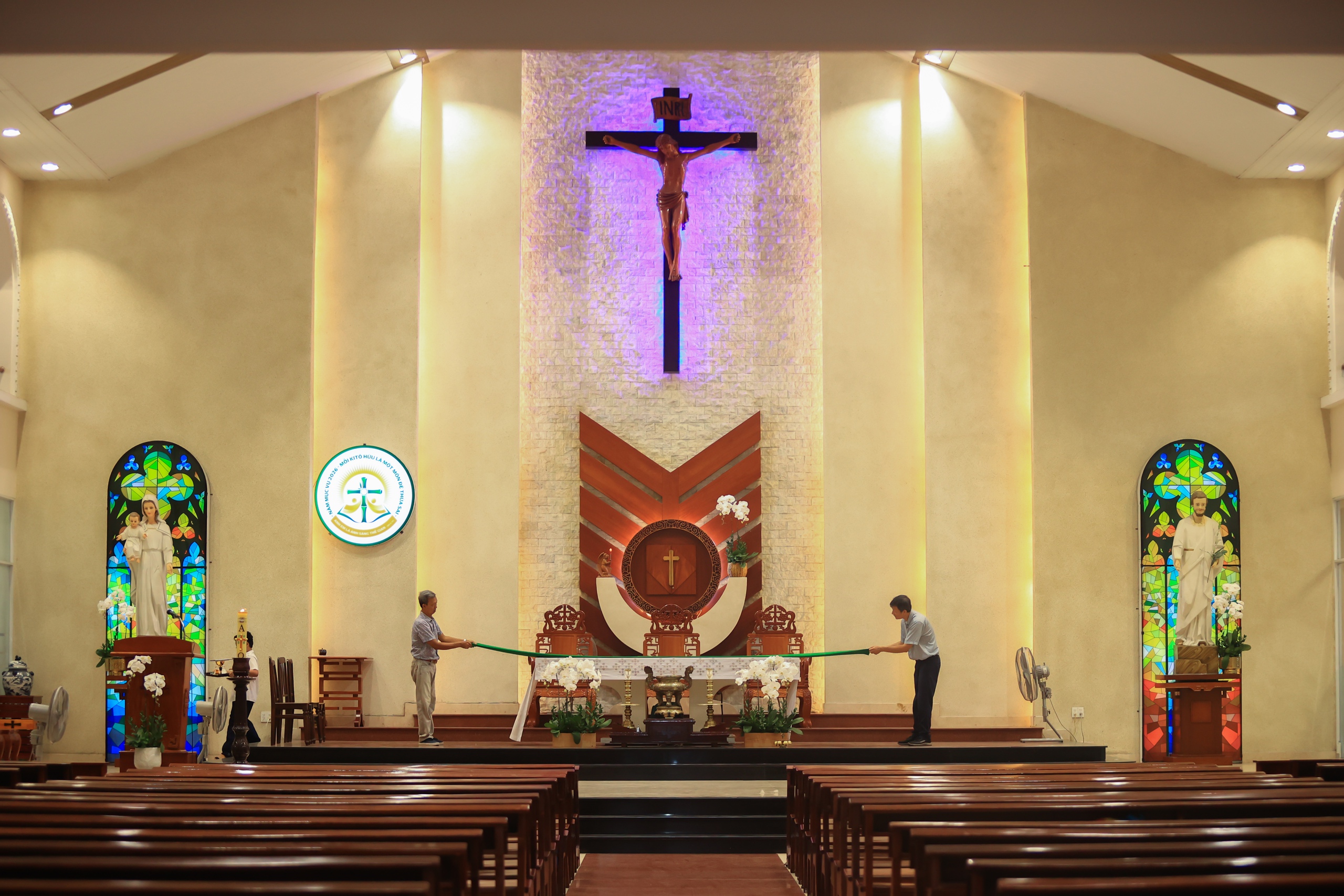
According to the Archdiocese of Saigon, among the churches on Le Duc Tho Street, the Church of Our Lady Queen of Peace (belonging to the Queen of Peace Parish, at 1416 Le Duc Tho) is considered the largest structure with an area of over 5,000 m² .
The church's origins lie in a simple dwelling place for about 20 Catholic families who migrated to the pineapple-growing area under the administration of the Archbishop of Saigon in 1963. That area later became known by the locals with the simple name "pineapple camp".
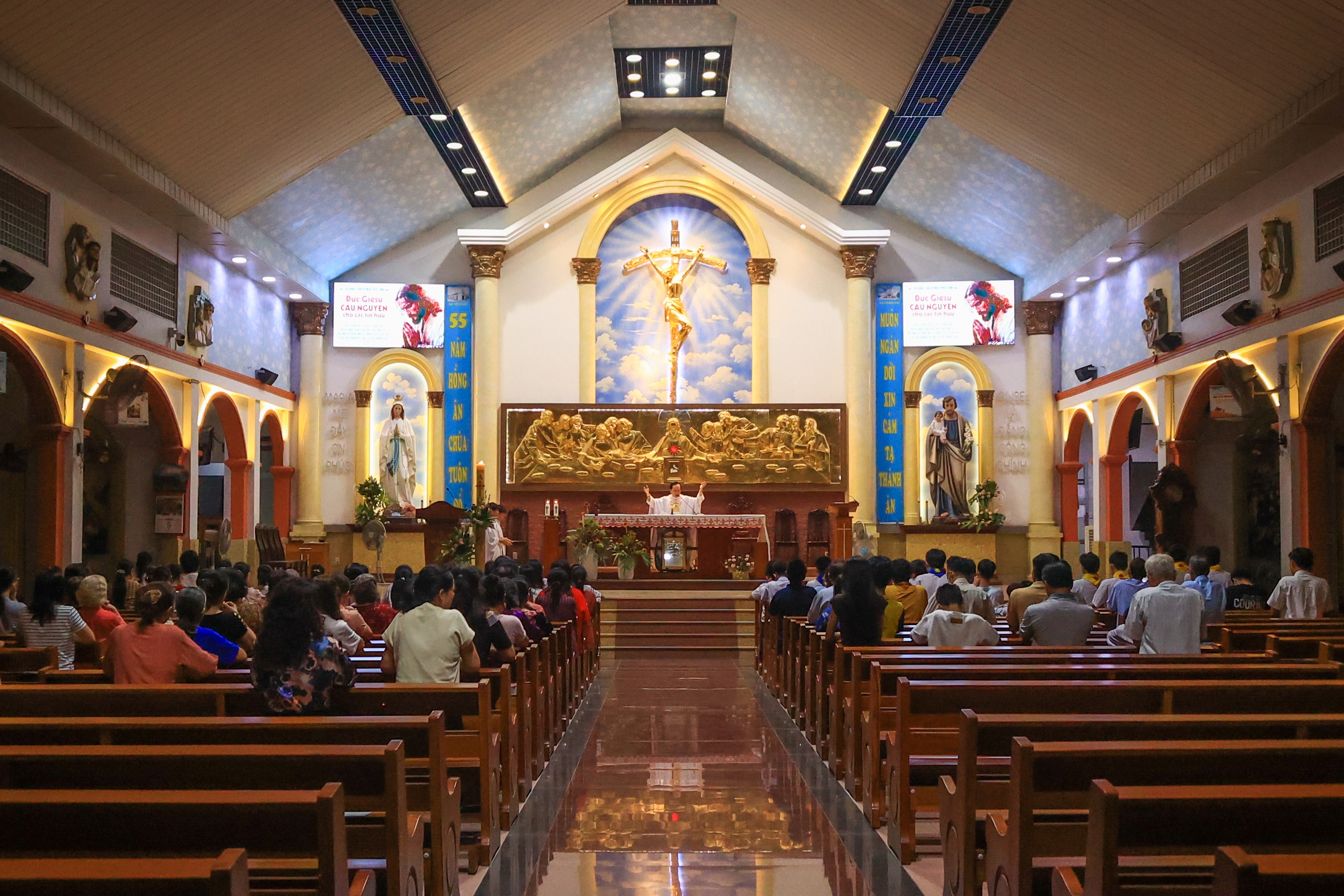
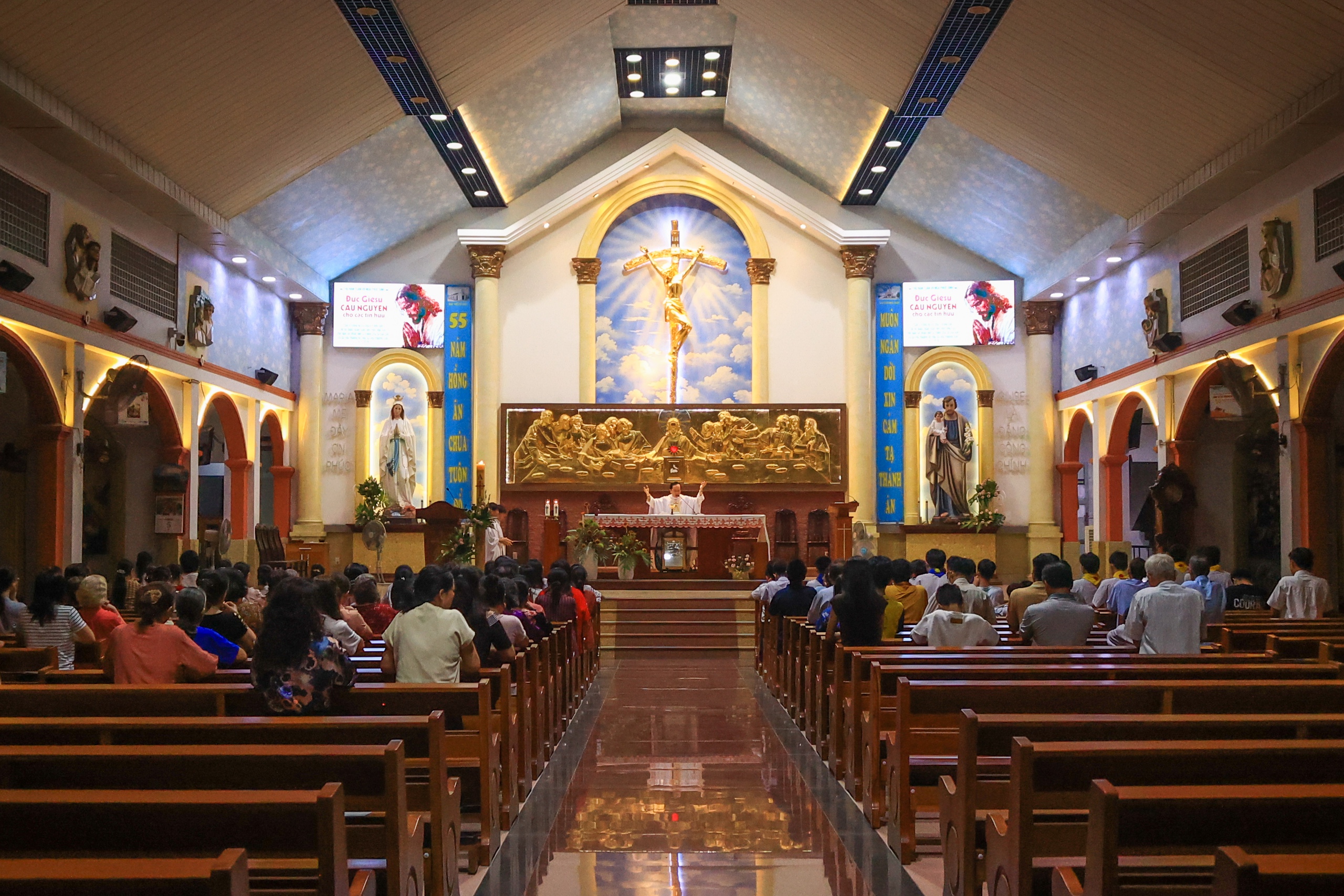
Inside the Church of Our Lady Queen of Peace
PHOTO: HA THUONG
From a makeshift structure with a corrugated iron roof in a still largely undeveloped area, the church gradually expanded with the growth of the parishioners and was upgraded to a more spacious and impressive building in 2018. More than six decades later, it remains a spiritual anchor for many generations of residents.
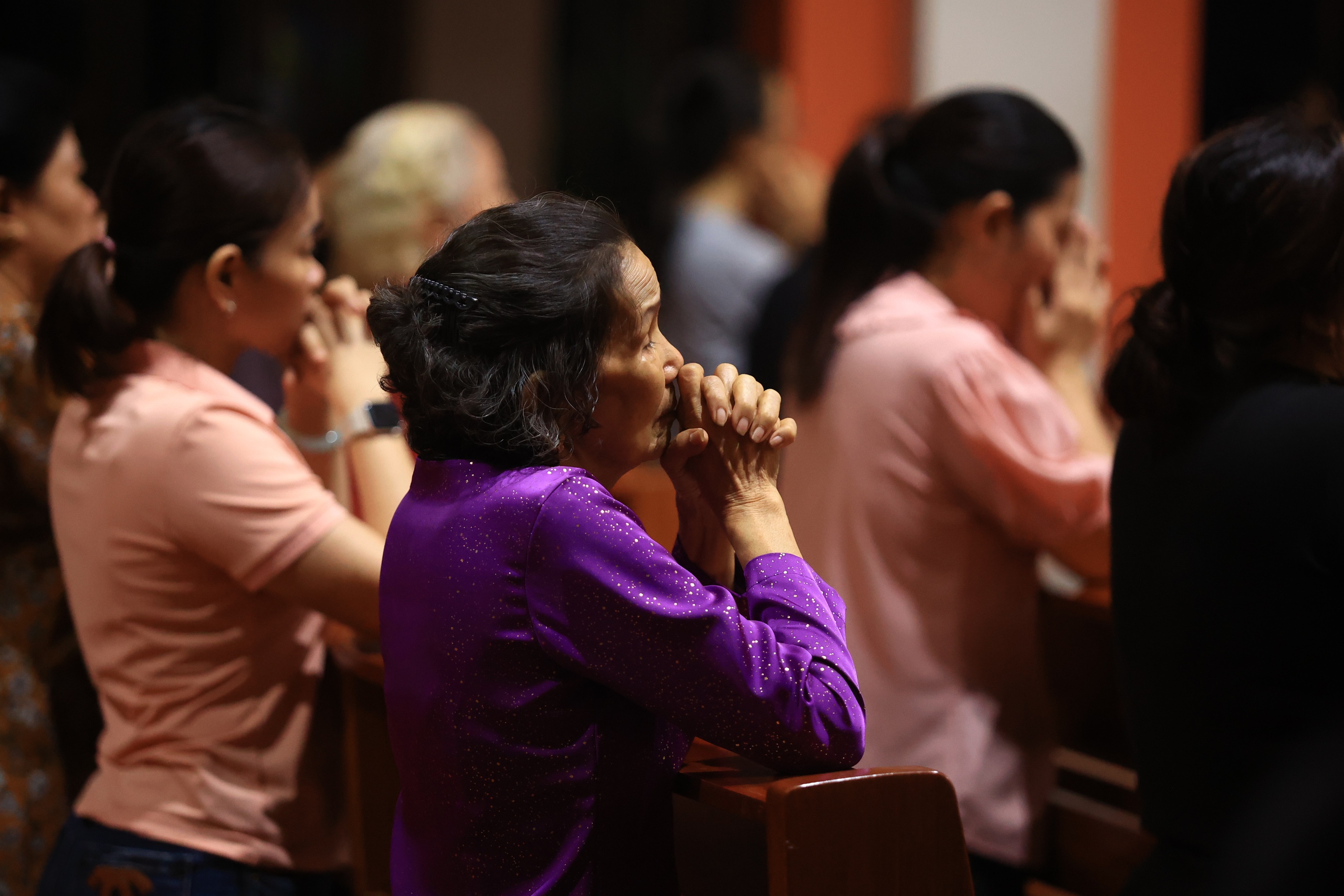
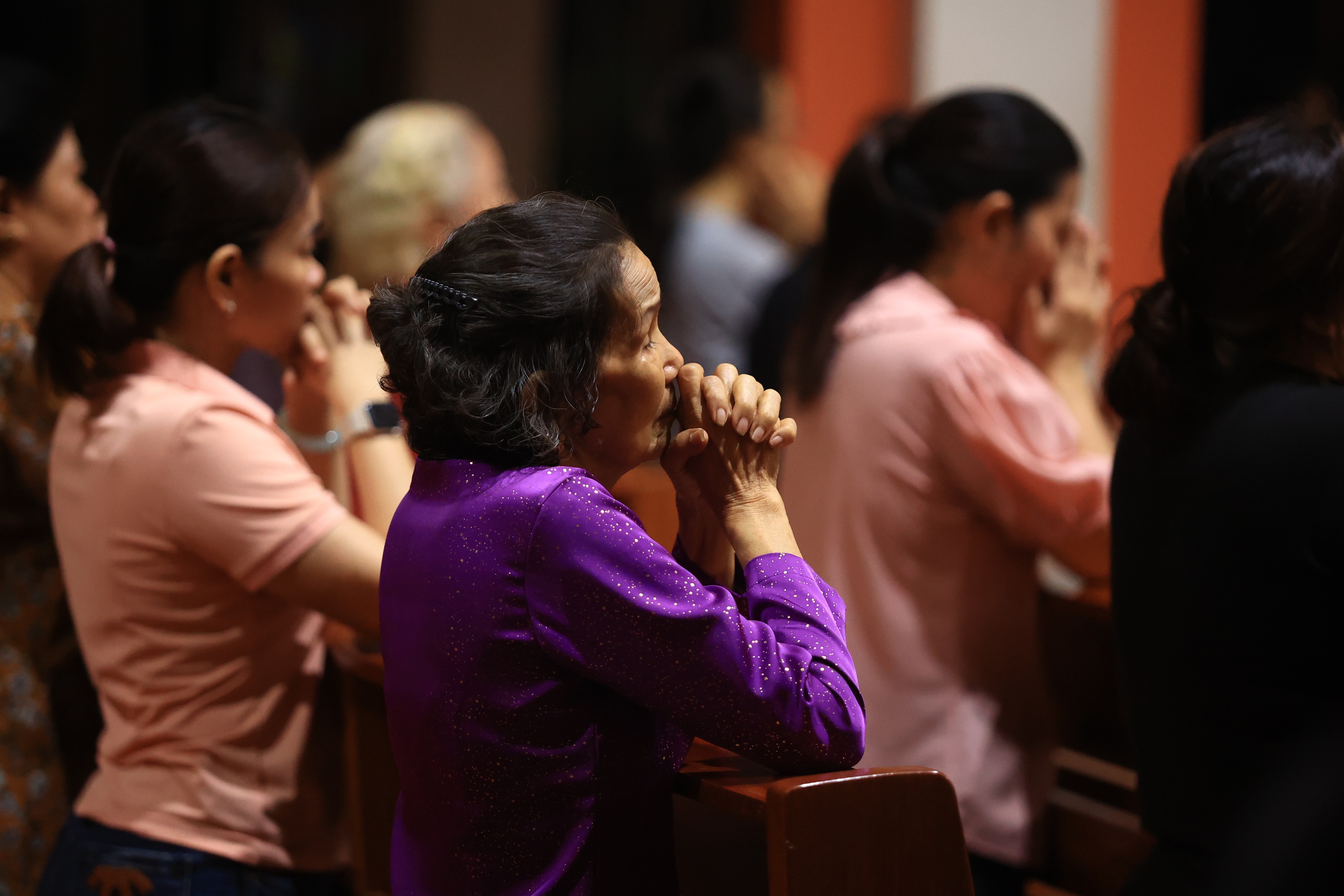
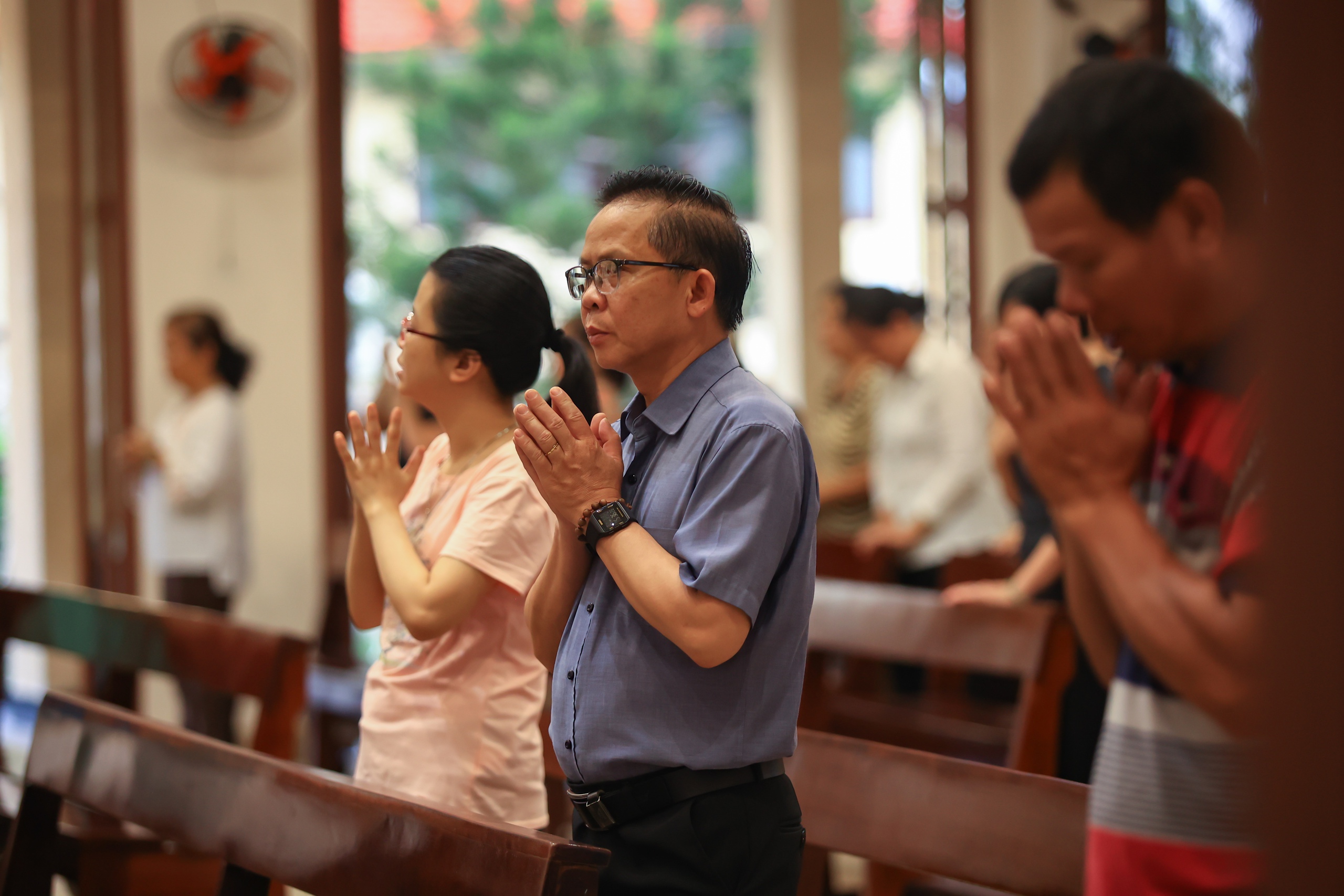
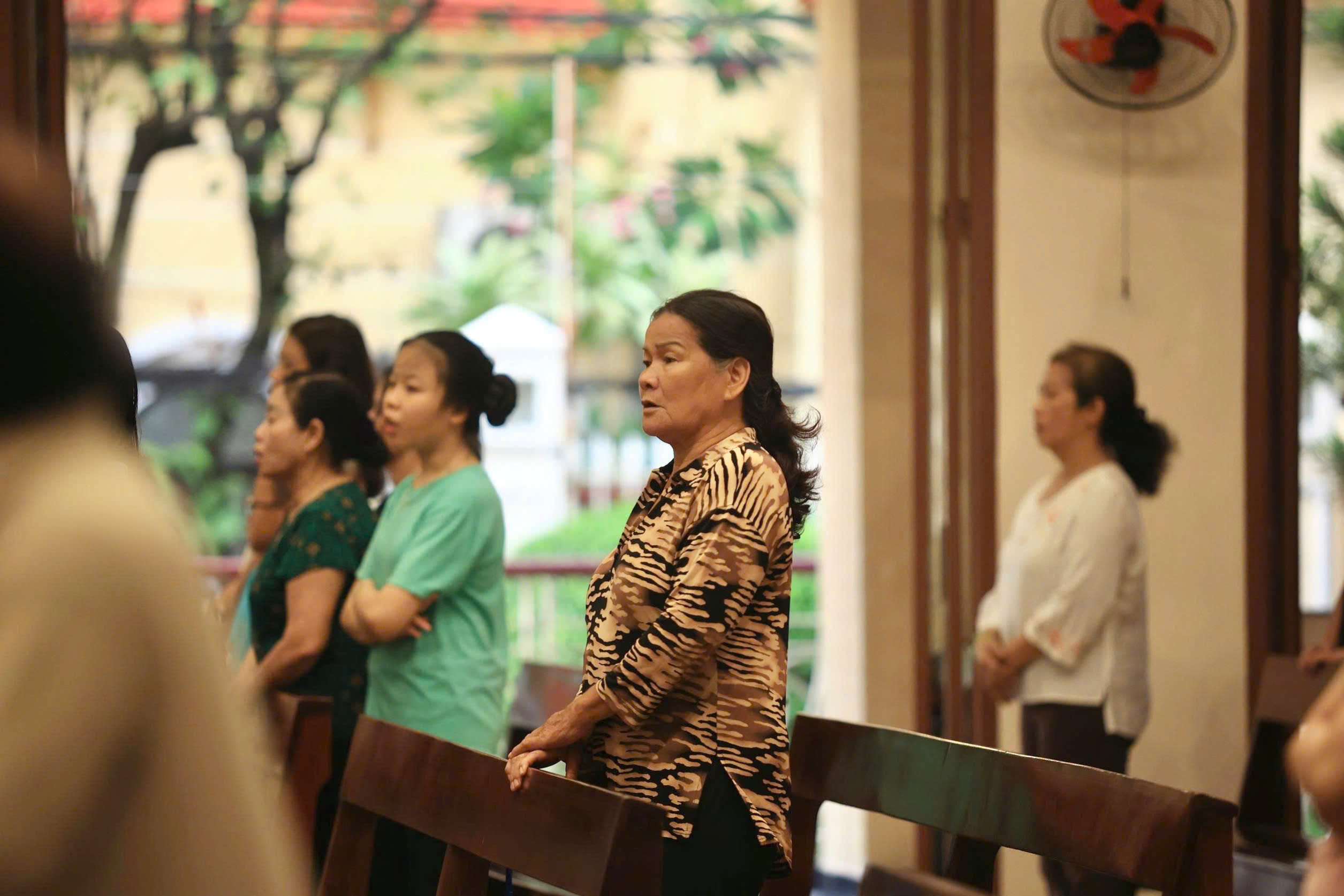
Parishioners attend Mass at Our Lady Queen of Peace Church.
PHOTO: HA THUONG
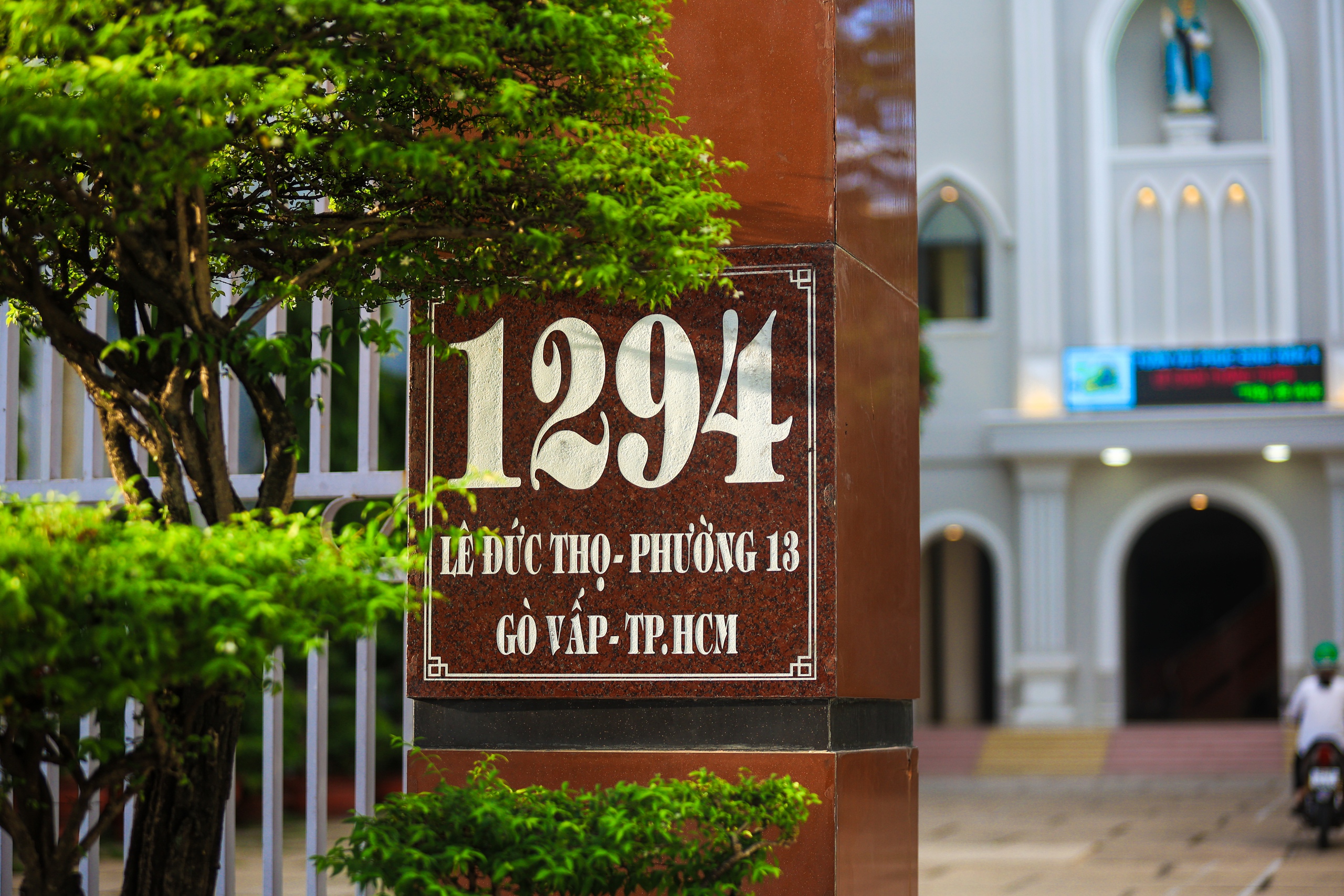
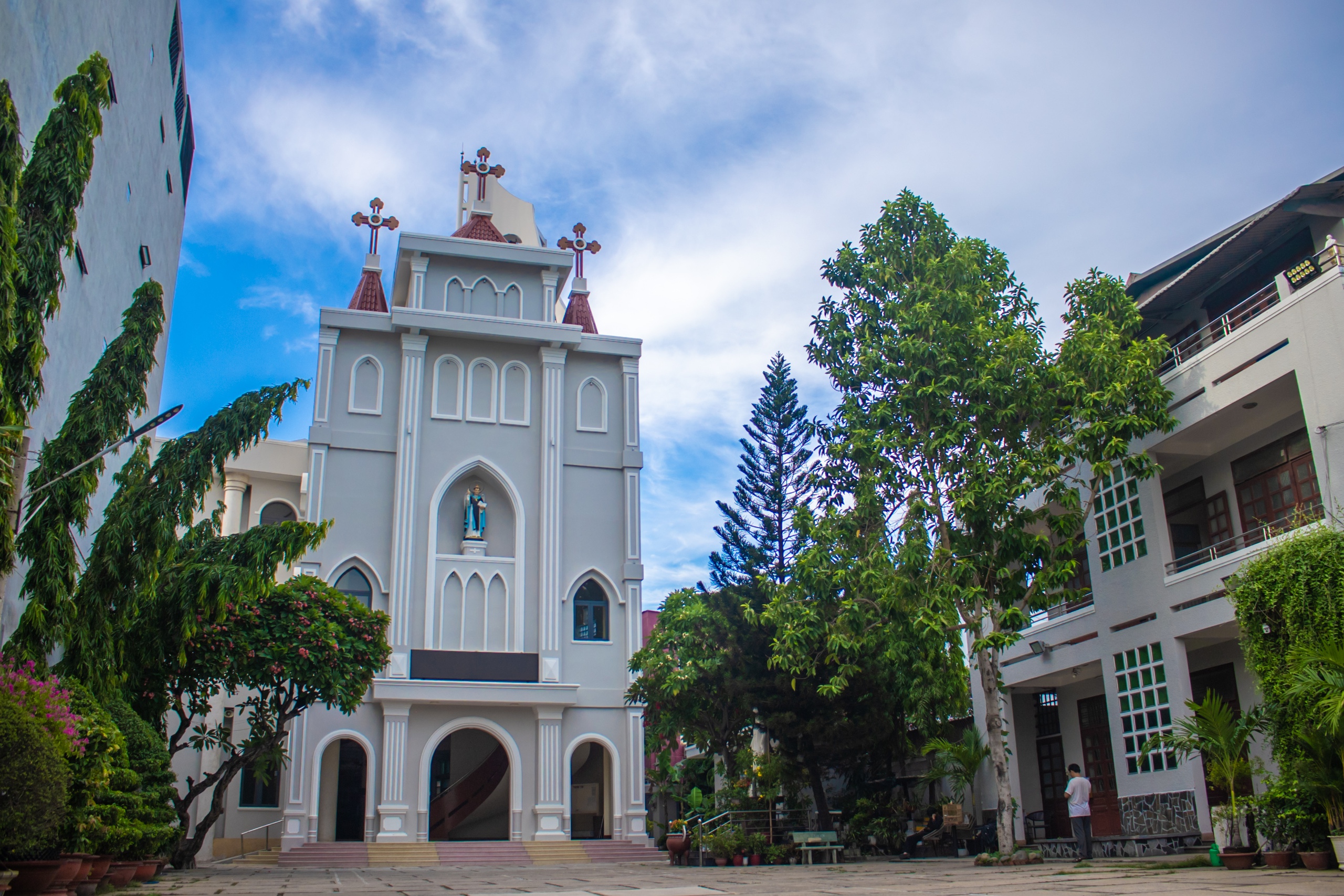
About 750 meters away is Lam Son Church (belonging to Lam Son parish, at 1294 Le Duc Tho). The formation of this parish began with a small shrine to Saint Vincent built in 1957 where parishioners gathered to pray daily.
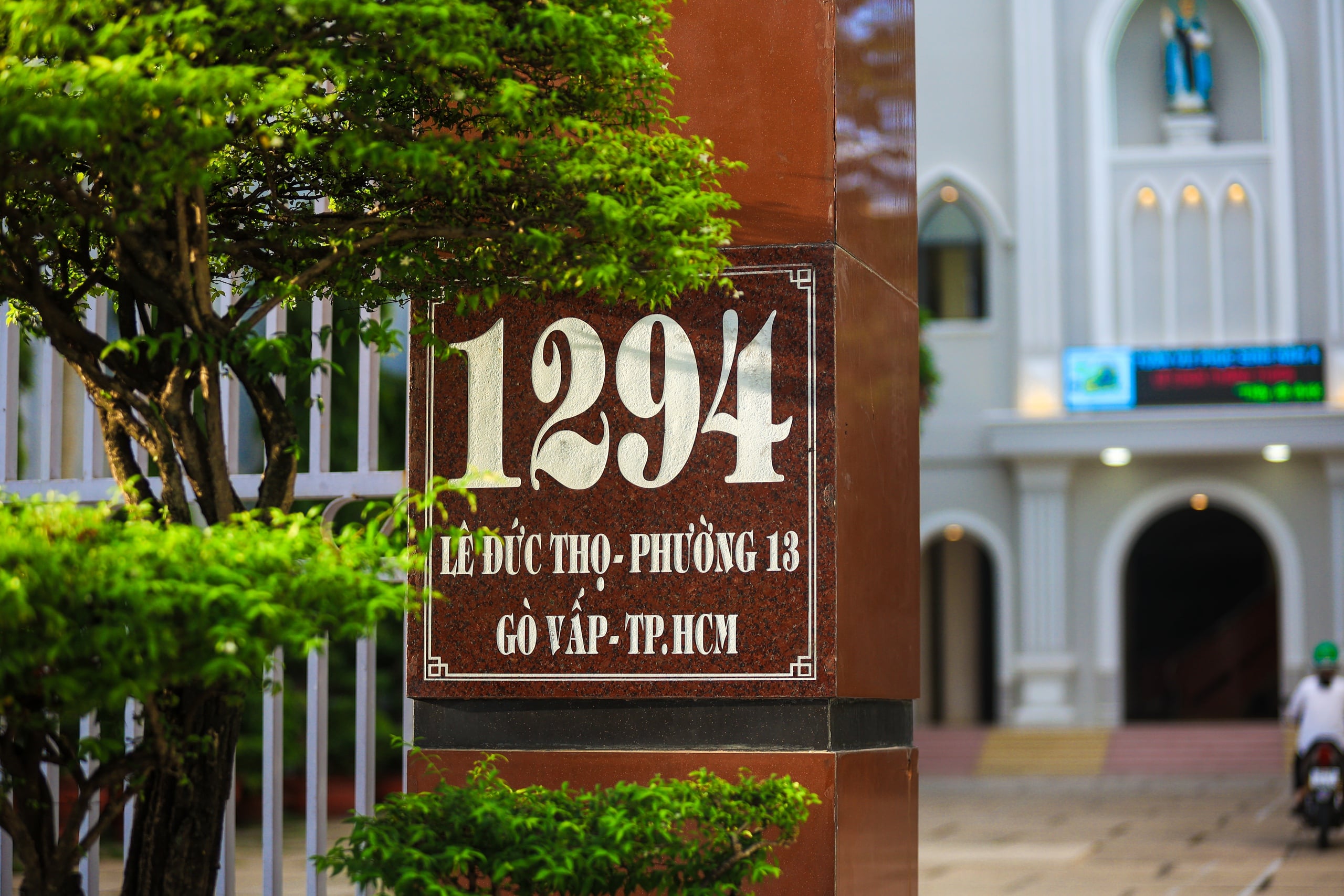
Lam Son Church is located right on Le Duc Tho Street and is frequently visited by local residents for prayer and religious services.
PHOTO: HA THUONG
As life gradually stabilized, Father Peter and the parishioners pooled their resources, and with the support of land from many neighboring households, expanded the grounds to over 2,000 square meters .
Due to difficult economic conditions, the entire parish persevered in saving for a decade before they had enough funds to build the new church. In December 2004, the first stone of the project was officially laid under the chairmanship of Cardinal John Baptist Pham Minh Man.
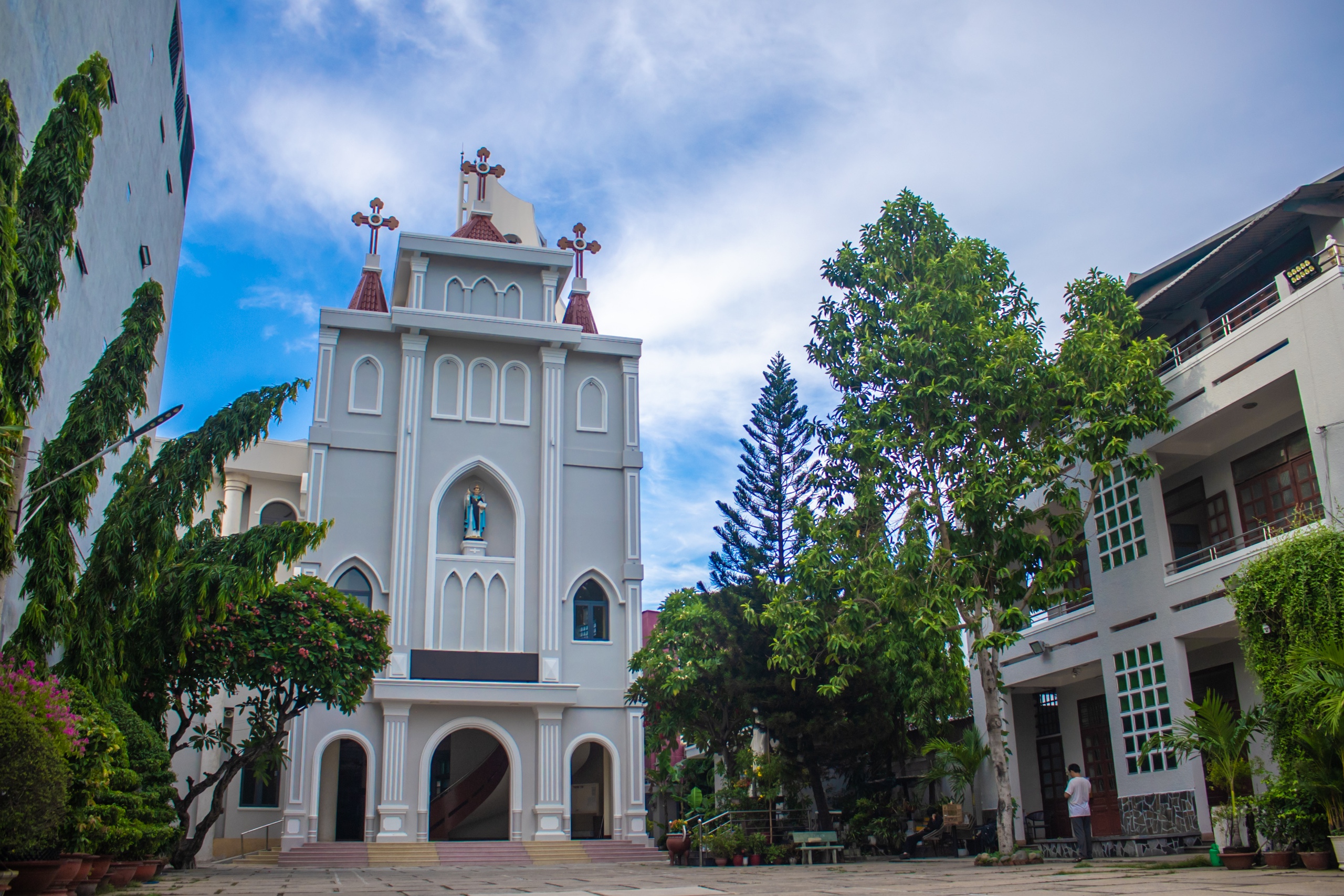
In 2004, the foundation stone was laid for the new church of Lam Son parish.
PHOTO: HA THUONG
Tucked away in alley 1075 is Lang Son Church (belonging to Lang Son parish). Located amidst a bustling residential area today, the church was once the initial place of worship for many parishioners before the formation of nearby churches.
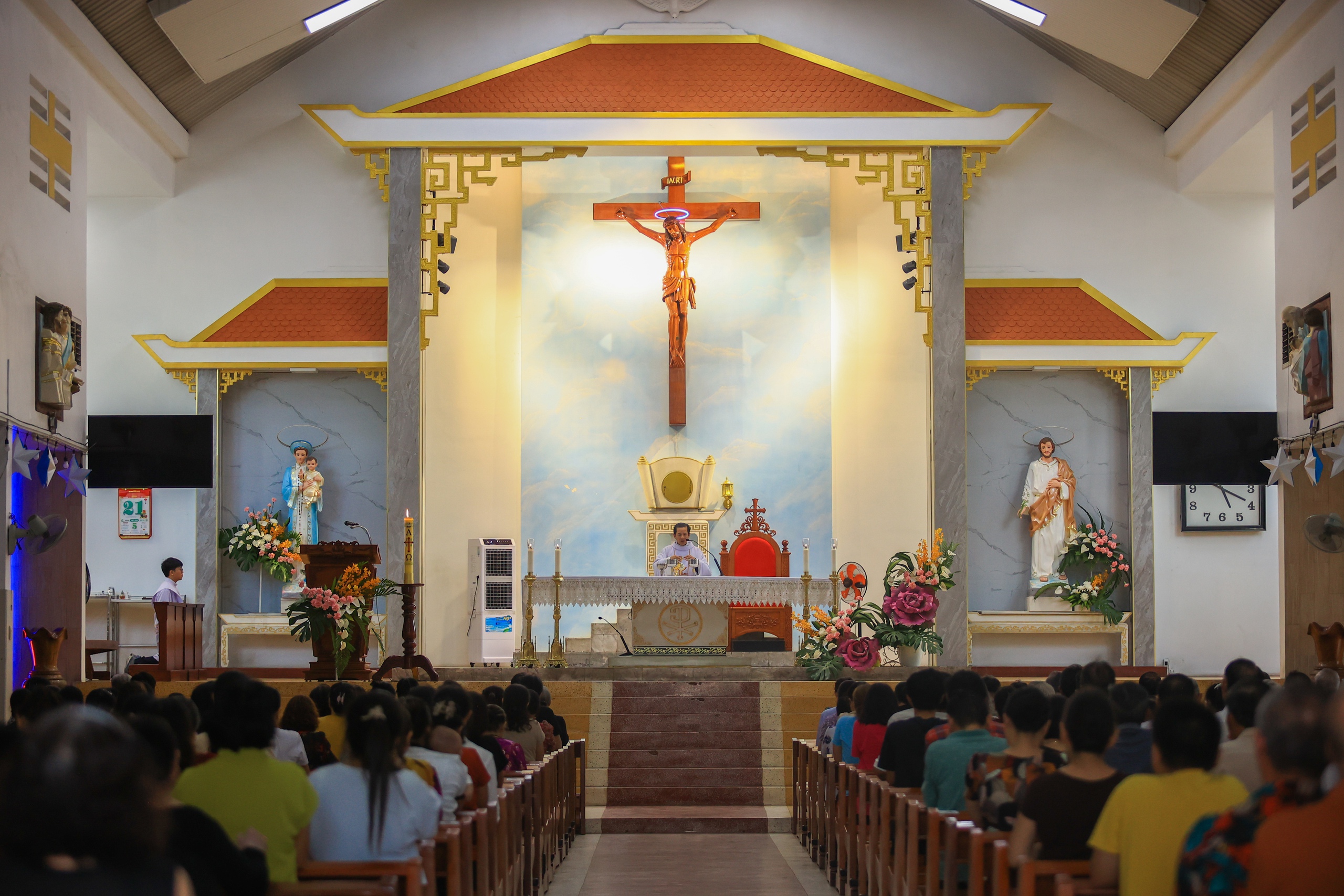
The church in Lang Son is packed with parishioners whenever a service is held.
PHOTO: HA THUONG
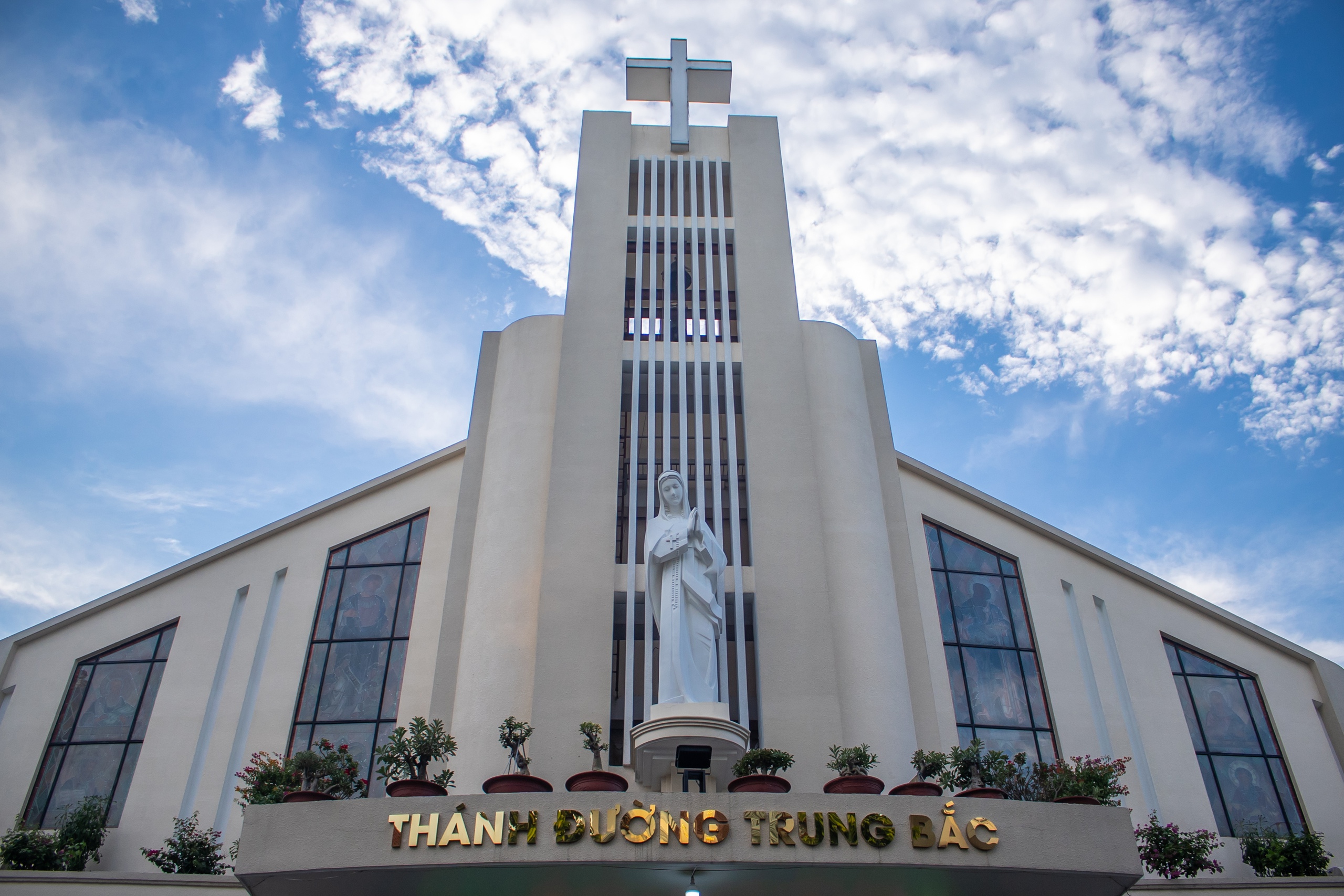
Not far from there, the Trung Bac Church (at 884/1 Le Duc Tho) stands out with its cross and statue of the Immaculate Conception, the patron saint of the church, atop it.
We entered the church, where the blue stone wall of the sanctuary and the crucifix placed in the center served as a reminder of faith and community unity. The white marble altar and the tabernacle carved with wheat stalks created a solemn yet welcoming atmosphere.
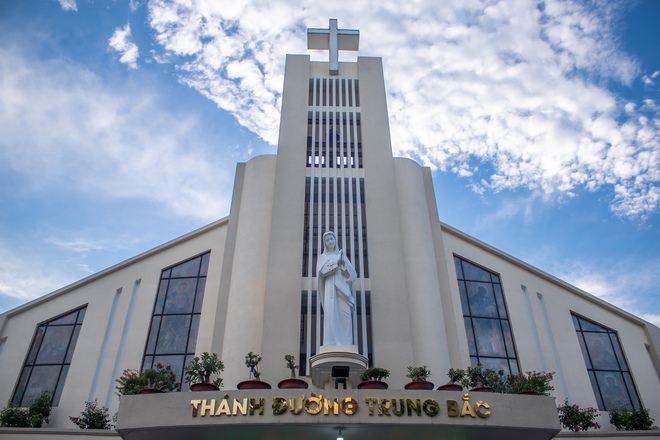
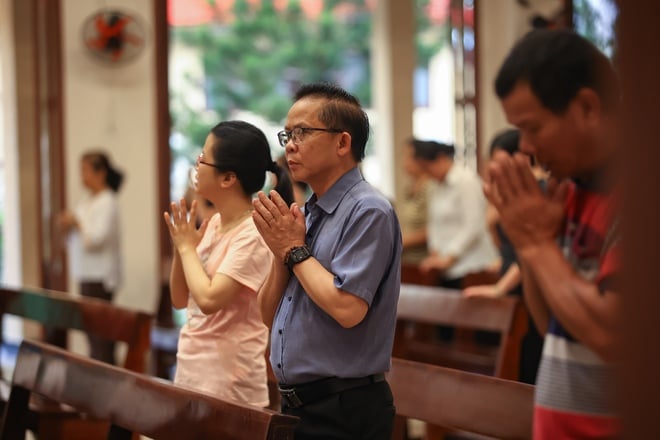
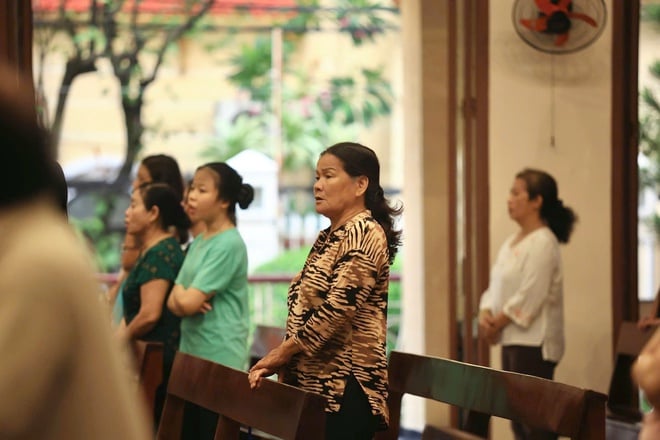
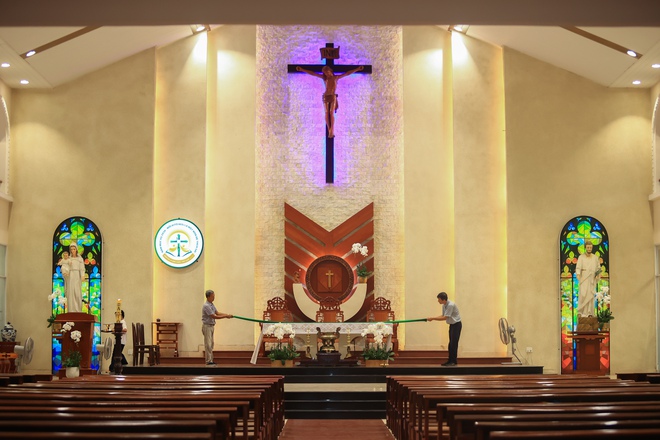
Trung Bac Church on Le Duc Tho Street (formerly Go Vap District, Ho Chi Minh City)
PHOTO: HA THUONG
In alley 36 Le Duc Tho Street, there is Hoang Mai Church (belonging to Hoang Mai parish), which was established in 1954 when Father Joseph Vu Ngoc Tan and a group of parishioners from the North settled there and built a simple thatched church.
Today, alongside the new, spacious church, the parish also maintains "Hoang Mai 1 Shelter" to care for elderly people who have been associated with the parish throughout their lives. This is not only a charitable activity but also a way for the community to preserve the bonds of affection that have been nurtured over many generations.
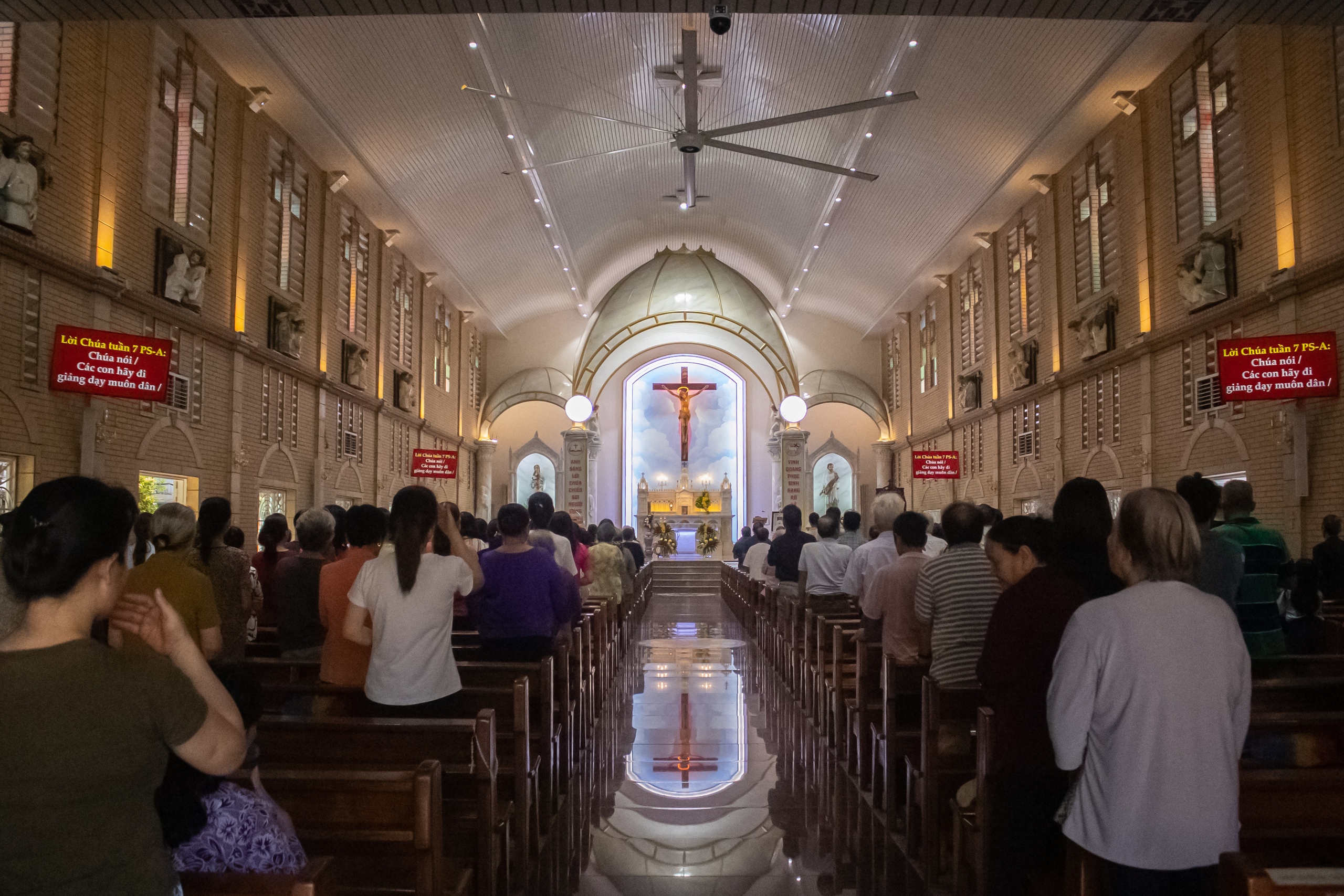
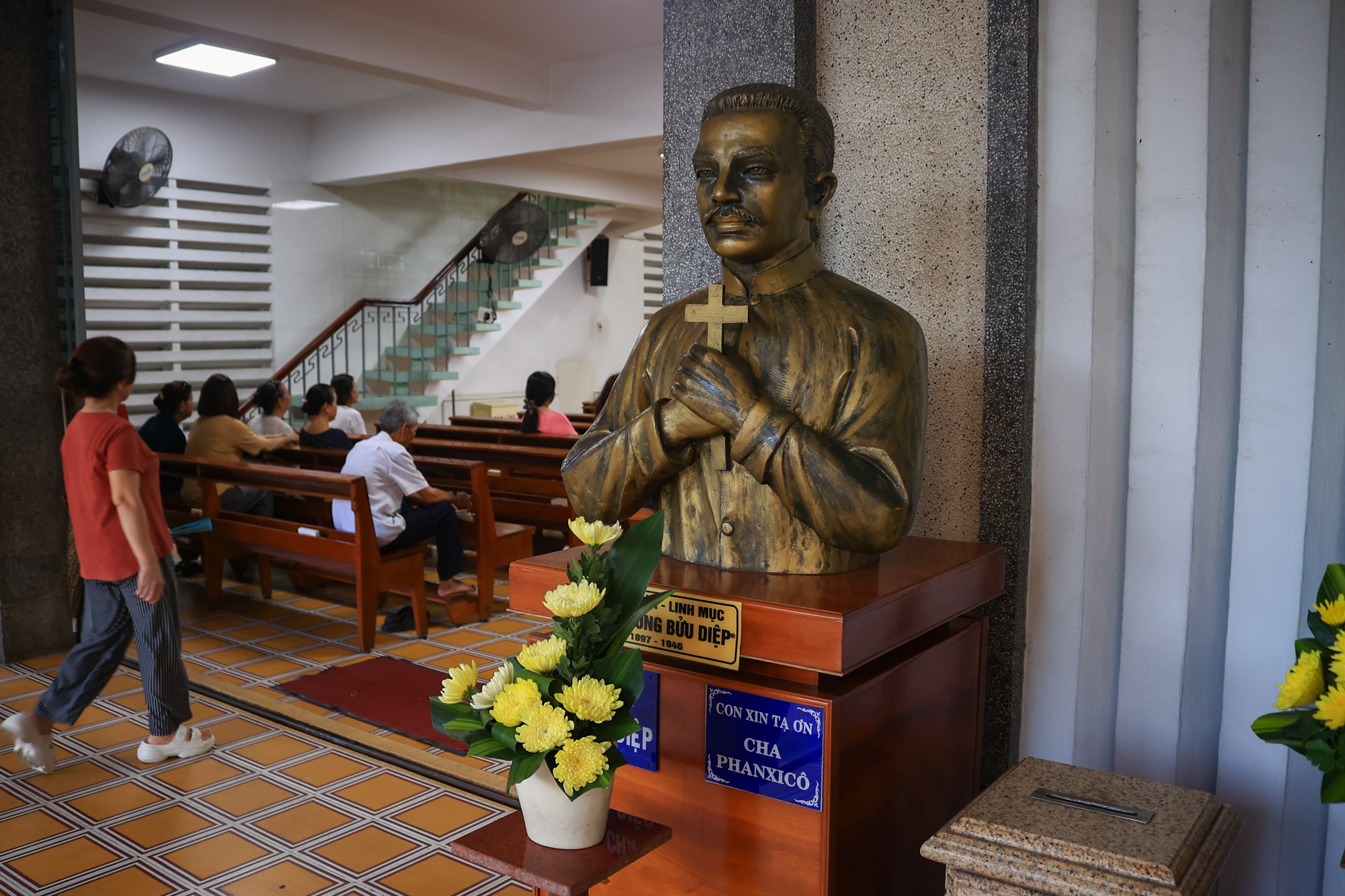
Inside Hoang Mai Church
PHOTO: HA THUONG
Concluding our exploration of this unique Le Duc Tho street is Tan Hung Church (at 2/43 Le Duc Tho). Despite its modest size and lack of preserved historical documents, it remains a spiritual anchor for the people in the surrounding area.
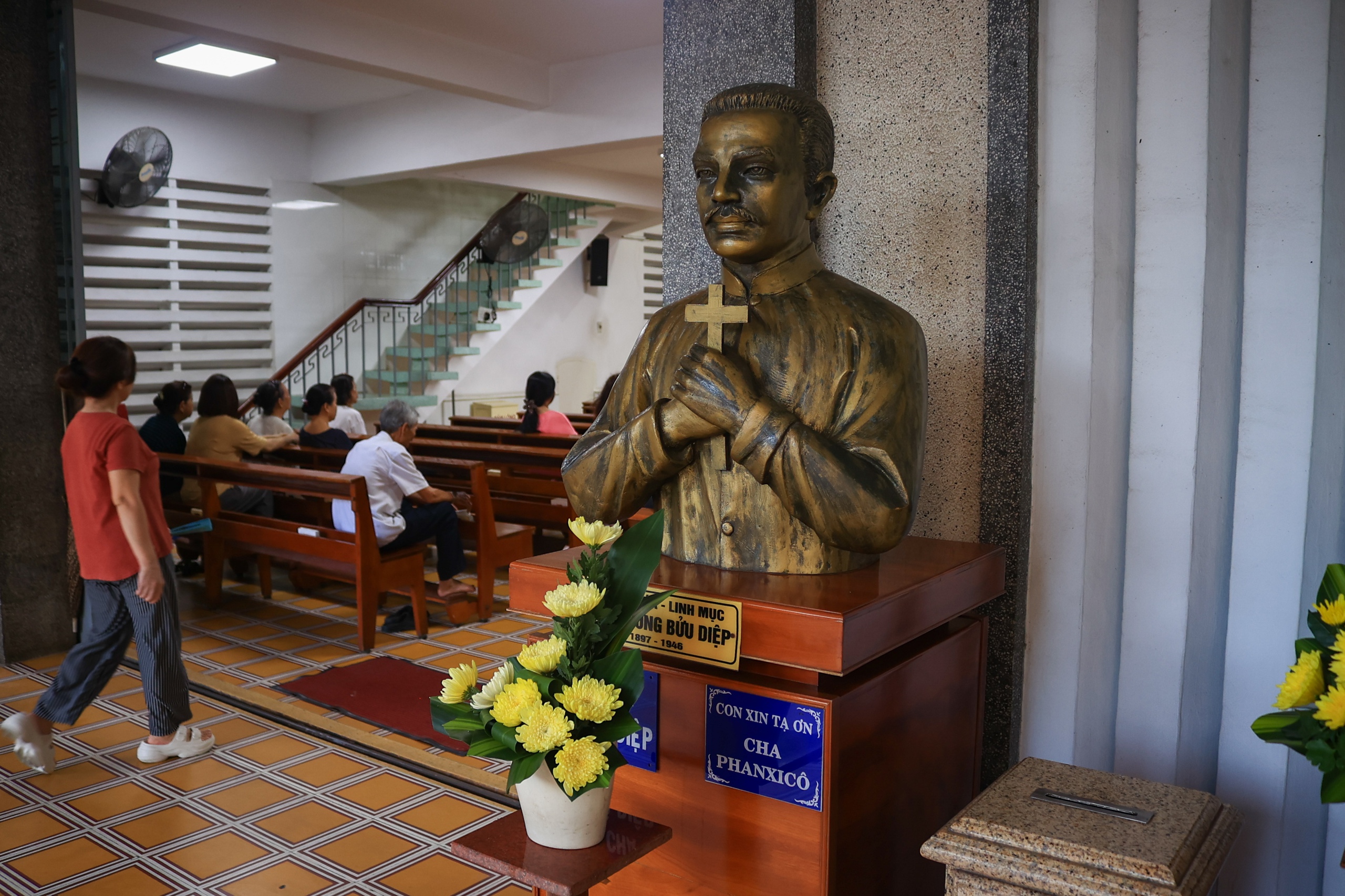
Tan Hung Church is located deep within a small alley, surrounded by a peaceful residential area.
PHOTO: HA THUONG
Why are there six churches on just one street?
Explaining the presence of many churches on the same street to a reporter from Thanh Nien newspaper , Father Ignatius Nguyen Quoc Bao, parish priest of Our Lady Queen of Peace, said that the origin stems from the migration wave of 1954.
"When Catholic groups migrated from the North to the South, they sought out the Go Vap area, which at that time was still mostly farmland, trenches, and quite wild. Wherever each group settled, they established a parish. In just a few years, numerous parishes were formed almost simultaneously," recounted Father Ignatius Nguyen Quoc Bao.
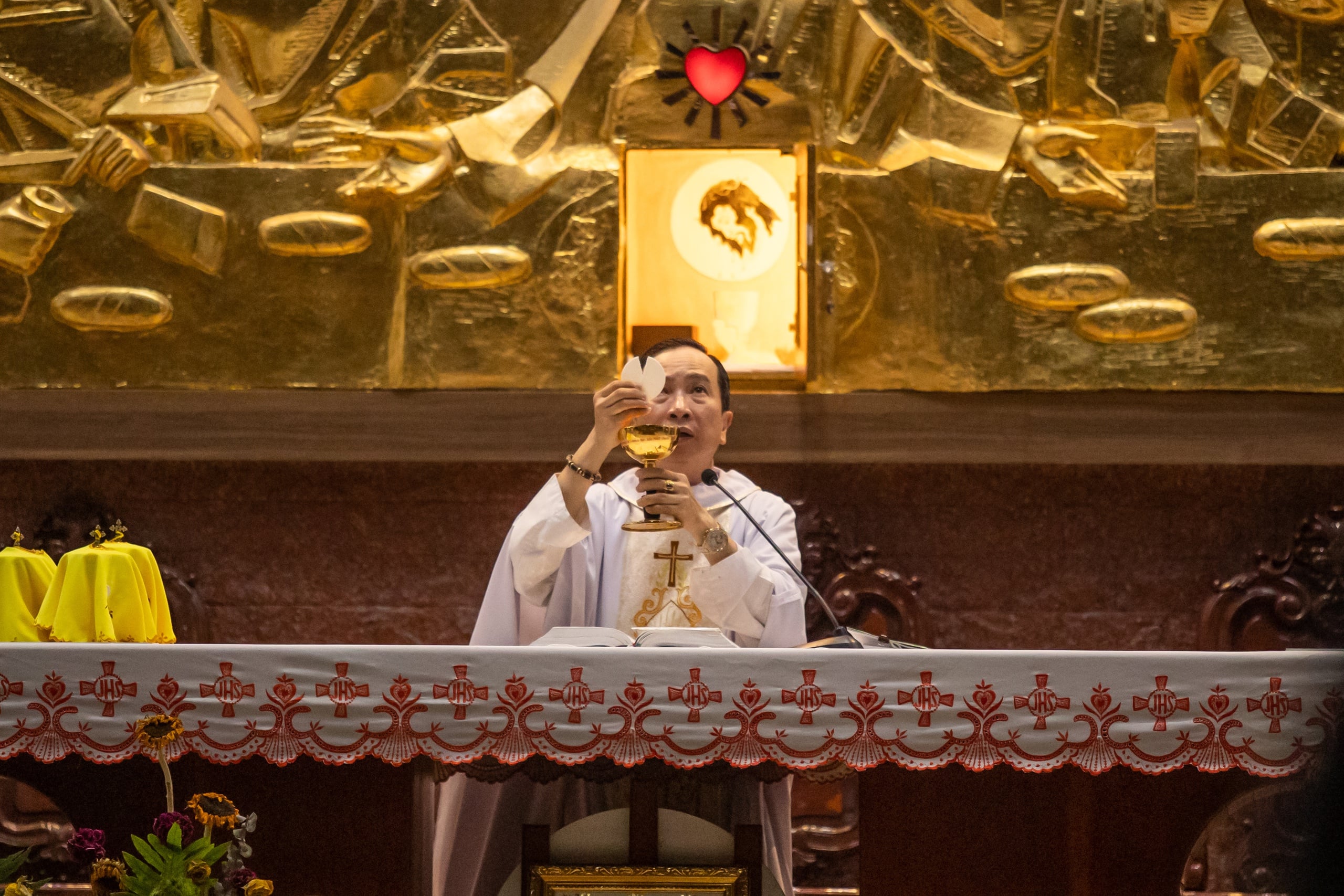
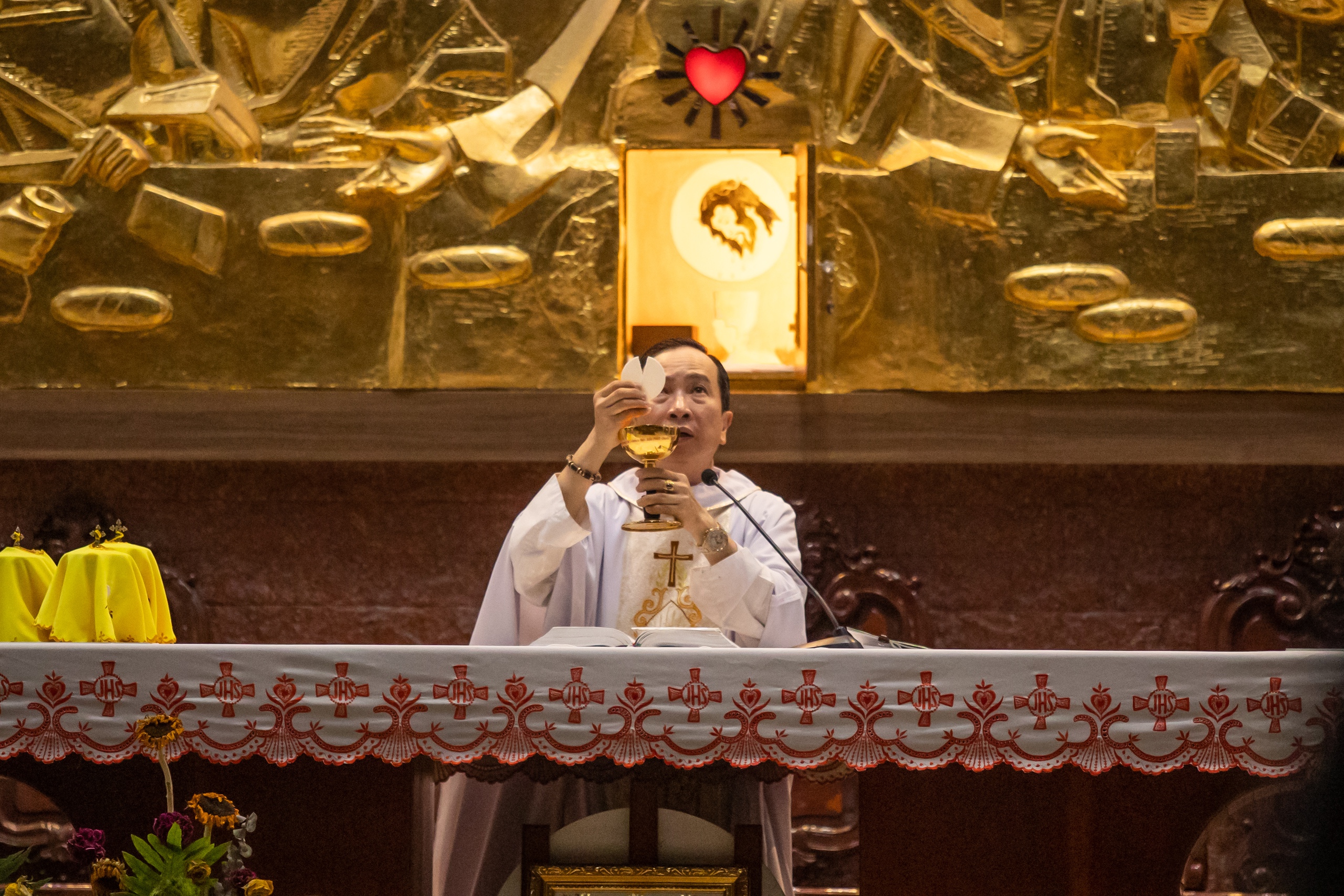
Father Ignatius Nguyen Quoc Bao presided over the ceremony at Our Lady Queen of Peace Church.
PHOTO: HA THUONG
According to Father Ignatius, this area was once known by the familiar name "the Catholic village," because almost all of its inhabitants at the time were Catholic. Over time, the population fluctuated, with people coming and going, changing the demographic structure, but the imprint of a land deeply rooted in religion remains.
The parishes here have always maintained close relationships. Parishioners regularly support and visit each other in their lives; the priests also maintain friendly connections across generations.
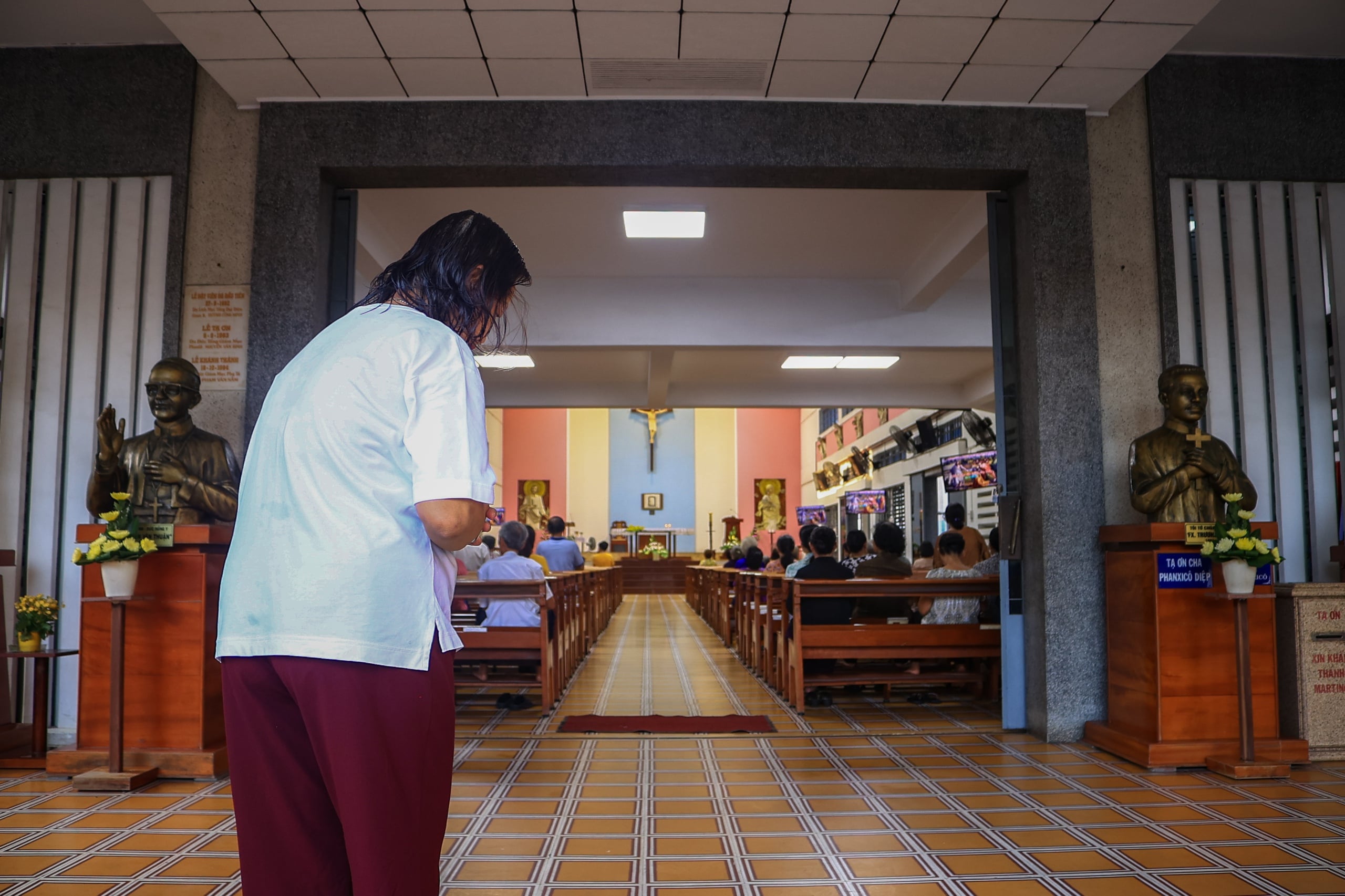
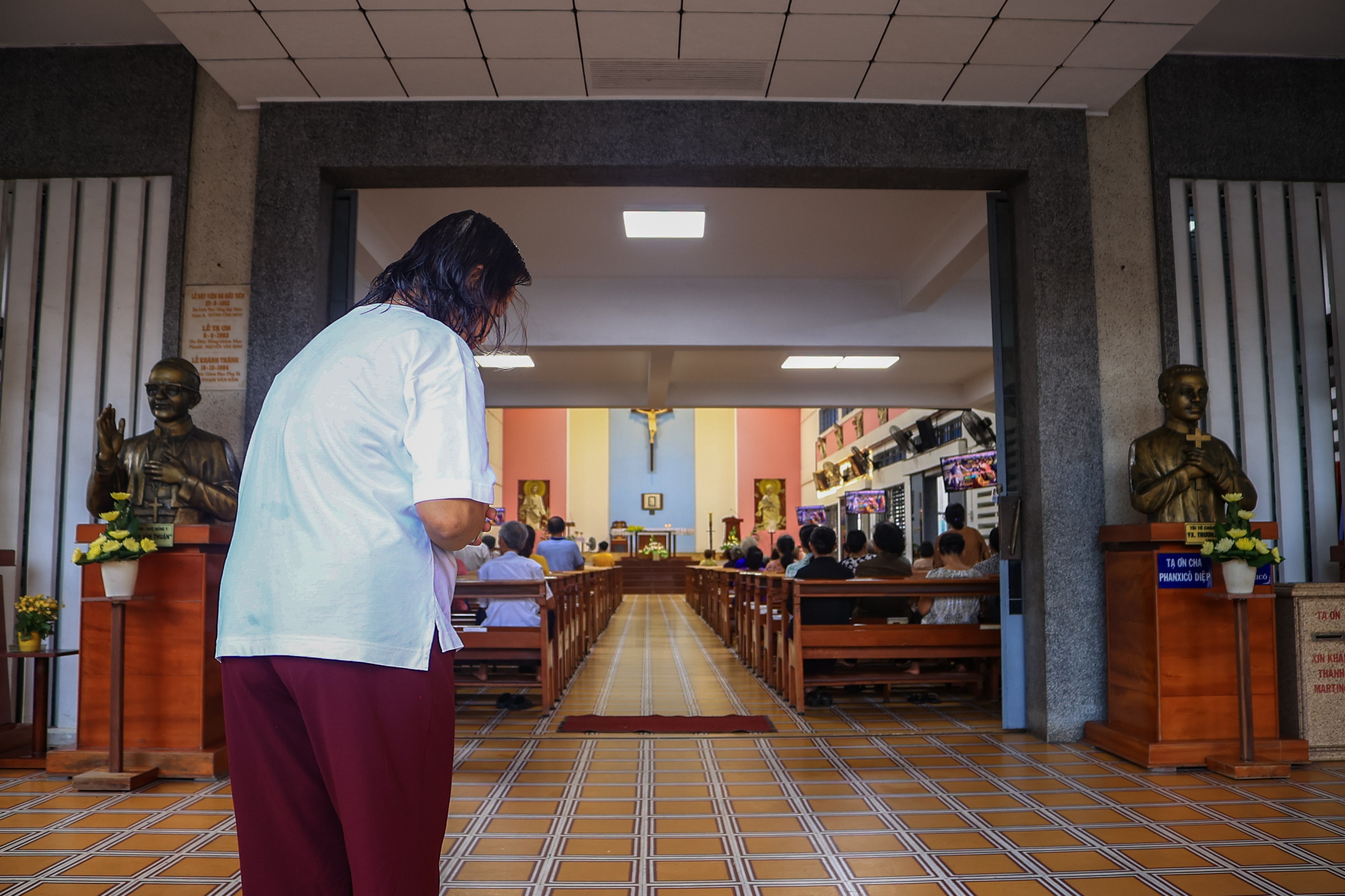
People pay their respects before entering the church.
PHOTO: HA THUONG
Born and raised on Le Duc Tho Street, Mrs. Luong Thi Mai (54 years old, a parishioner of Hoang Mai parish) still vividly remembers the special atmosphere of the "religious neighborhood" of Go Vap in the past.
"Although each church has its own service times and activities, the parishioners always care about and inquire about each other. The most joyful times are during Christmas or the anniversary of the parish's founding; it's not necessary for everyone to be a parishioner of that particular church, everyone still comes to visit, have fun, and congratulate each other," Mrs. Mai said with a smile.
Source: https://thanhnien.vn/doc-dao-con-duong-o-tphcm-co-den-6-nha-tho-185260523235813817.htm





![[Photo] The heat at the fireworks display site on the opening night of the Da Nang International Fireworks Festival 2026](https://vphoto.vietnam.vn/thumb/1200x675/vietnam/resource/IMAGE/2026/05/27/1779889741485_ndo_br_z7872039145157-fecaba5112f39e8352544099d7ef4738-5140-jpg.webp)

![[Photo] The courage of new recruits of Brigade 144 on the training ground.](https://vphoto.vietnam.vn/thumb/1200x675/vietnam/resource/IMAGE/2026/05/27/1779881651341_anh-man-hinh-2026-05-27-luc-18-32-52.png)








































![[Photo] The courage of new recruits of Brigade 144 on the training ground.](https://vphoto.vietnam.vn/thumb/402x226/vietnam/resource/IMAGE/2026/05/27/1779881651341_anh-man-hinh-2026-05-27-luc-18-32-52.png)
















Comment (0)