

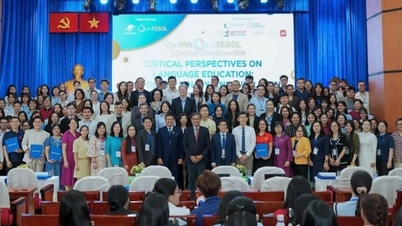
On the morning of March 25th, at the headquarters of the Ho Chi Minh City Union of Science and Technology Associations, the Ho Chi Minh City Linguistics Association and the Ho Chi Minh City Association for Research and Teaching of Literature organized a scientific seminar titled "Implementing the Curriculum and Textbooks for Literature in the Context of Implementing Resolution No. 71-NQ/TW (Resolution 71) on Breakthroughs in Education and Training Development".
The unified textbook is not the only teaching material.
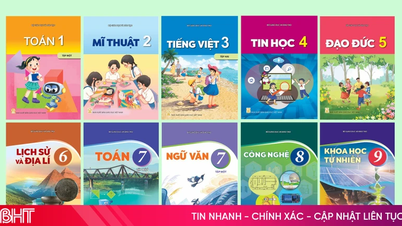
Associate Professor Dr. Nguyen Thanh Thi, Chairman of the Ho Chi Minh City Association for Research and Teaching of Literature, stated that starting from the 2026-2027 school year, the entire country will use one set of textbooks instead of three as currently, including the Literature subject from primary to high school. However, whether it's one set or three sets of textbooks, the main purpose remains to equip students with knowledge and comprehensively develop their abilities and qualities.
Resolution 71 introduces several new points, including the requirement to provide free textbooks to all students by 2030; a strong shift towards modern, active educational methods, enhancing self-learning, creative experiences, and guiding students towards independent thinking and problem-solving skills… and especially the application of artificial intelligence (AI) in teaching and assessment.
According to Associate Professor Bui Manh Hung, Senior Lecturer in the Faculty of Literature at Ho Chi Minh City University of Education - General Editor of the Vietnamese Language and Literature textbook series "Connecting Knowledge with Life", the analysis and evaluation of the curriculum and teaching orientation for Literature aims to help teachers adapt to the context of a unified textbook series.
According to him, if the Ministry of Education and Training makes revisions, it should not be a "reform of innovation," but rather a more coherent and consistent refinement of the 2018 Literature curriculum to align with the spirit of Resolution 71; it should not be rebuilt based on AI development achievements, because AI applications belong to the organization of teaching and learning.
For him, textbooks are tools for organizing teaching and learning activities and developing students' competencies according to the curriculum requirements. Teachers need to understand that the unified textbook is not the only teaching material, in order to avoid returning to a time when teaching relied solely on textbooks. This will allow students to see the diversity in approaches, gain a more complete understanding of Vietnamese language and literature knowledge, and choose appropriate explanations, etc. However, the core requirements to be achieved are reading, writing, speaking, and listening.

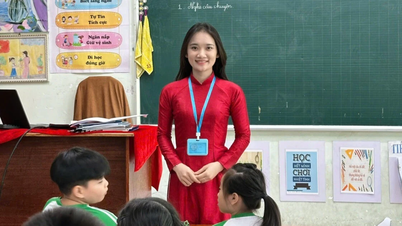
Associate Professor Bui Manh Hung presented the direction for teaching Literature in the new context.
The compilation of a unified set of textbooks must adhere to the following criteria: directly serving the requirements of the curriculum; being suitable for students; possessing distinctive and representative value in terms of text type and genre; reflecting the achievements in national thought, literature, and culture; demonstrating patriotism; and possessing humanistic values, etc.
Issues such as environmental protection, gender equality, human rights, children's rights, and international integration, which were not previously raised, are now urgent matters that require attention.
AI has entered the classroom and the home.
Master's degree holder Tran Le Duy, lecturer at the Faculty of Literature, Ho Chi Minh City University of Education, and co-author of the Literature textbook series "Creative Horizons," believes that AI has truly entered the classroom and we must learn how to embrace it.
AI excels in processing, speed, and technical support, but it cannot replace humans in areas such as life experiences, emotions, judgment, and educational abilities.
When "playing" with AI, we easily encounter "Hallucination," a phenomenon where AI generates false, untrue, or unverified information but presents it fluently, confidently, and seemingly logically. AI can "fabricate" facts, citations, author names, events, figures, or arguments that users believe to be true. This is one of the biggest limitations of AI generation.
He interacted with AI from input to output and outlined five principles for writing AI prompts for teachers:
1. Tell the AI the exact task, summarize it, create questions, call activities, etc.
2. Clearly state the subject, class, students, purpose, and pedagogical approach;
3. Provide the excerpt, prompt, criteria, or input information directly;
4. Specify the format of the answer: paragraph, table, outline, team, length, and style;
5. Limitations are required; do not fabricate or report anything you are unsure of.
Overall, he suggested that specific context, data, and guidance should be provided to "guide" AI away from going astray and making random judgments.
This issue has attracted a lot of teachers to learn about it. But one teacher's comment puzzled me: her child, in 8th grade, spends all day "chatting" with AI. Recently, the child gave a presentation on "The Little Prince." The AI assisted with the presentation, and the information was completely wrong, yet the classmates nodded in approval and praised it.
Hearing this story reminded me of the problem of video game addiction, which has been and continues to be a major concern in many countries.
When children become addicted to video games, they often exhibit restlessness, frequently bite their nails, and many become overly sensitive. They frequently argue and fight over trivial matters.
Many countries have opened centers for game addiction treatment, such as the US, UK, Australia, Japan, China, and South Korea. If the situation of "addiction to confiding in AI" like that 8th-grade student is still prevalent, then it's dangerous. While waiting for the government to issue regulations to curb this "addiction to confiding in AI" among young people, parents should take precautions to protect their children.
In late April 2017, on the 14th birthday of billionaire Bill Gates' youngest daughter, Phoebe, several local newspapers reported that one of Bill Gates' parenting principles was to forbid his children from using mobile phones before the age of 14. Furthermore, phones were not allowed during family dinners, and their use before bedtime was also restricted.
We should also consider this approach to parenting, especially now that AI has entered the classroom and the home.
Source: https://nld.com.vn/sach-giao-khoa-ngu-van-va-ai-19626032518585592.htm





















































































Comment (0)