


Development has not kept pace with its potential.
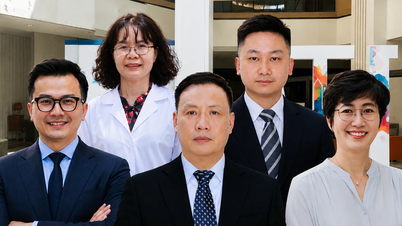
According to Professor, Dr. Chu Hoang Ha, Vice President of the Vietnam Academy of Science and Technology, biotechnology is one of the strategic technology fields that the Party and State pay special attention to. Many important policies and guidelines have been issued to promote the development of science and technology in general, and biotechnology in particular, such as Resolution No. 36-NQ/TW, Resolution No. 57-NQ/TW, along with the legal system on science and technology, technology transfer, and intellectual property; and the Government 's mechanisms and policies for the development of strategic technologies.
However, practical implementation reveals numerous difficulties and obstacles, especially as Vietnamese biotechnology is currently facing several bottlenecks. These include legal frameworks and management mechanisms that have not kept pace with the rapid development of technology; many new fields such as gene editing, cell therapy, immunotherapy, biological drugs, and synthetic biology still lack specific regulations for research and commercialization.
Furthermore, the research and production infrastructure that meets international standards is lacking and weak, especially preclinical centers, GLP-certified laboratories (Good Manufacturing Practice), and GMP-certified production facilities for the development of drugs, vaccines, and high-tech products.
High-quality human resources in this field are also limited; domestic enterprises lack the capacity to master core technologies, resulting in many research findings not being transformed into commercially valuable products. Notably, the large gap between the Vietnamese biotechnology market and the world clearly reflects the disparity in scientific and technological levels, commercialization capacity, and investment levels.
Currently, the global biotechnology market is estimated to reach approximately US$1.8 trillion in 2025, with the majority of its value concentrated in high-tech fields such as biopharmaceuticals, diagnostic and precision medicine products, and advanced technologies like gene therapy, cell therapy, and regenerative medicine—fields with very high scientific content and added value.
Leading countries such as the US, China, Europe, Japan, and South Korea have invested systematically for decades to form a complete ecosystem from research to commercialization, thereby dominating the global market. Meanwhile, Vietnam's biotechnology market is only worth about $1.5 billion, representing a very small proportion both globally and in its gross domestic product (GDP).
Making biotechnology a driving force for economic development.
With numerous policies, mechanisms, and potential, Vietnam can achieve breakthroughs in the field of biotechnology if it has a well-structured, long-term development roadmap closely linked to market demand.
Professor and Doctor Chu Hoang Ha believes that with a population of over 100 million and a large number of international tourists, Vietnam's biotechnology sector has the potential to become a strategic economic sector in the next 10-20 years, not only meeting domestic needs but also expanding into tourism, healthcare, and biomedical services in the region. Priority should be given to investing in a comprehensive research infrastructure that meets international standards, establishing centers capable of seamlessly integrating research and commercialization.
Alongside this is the development of high-quality human resources in an interdisciplinary direction, capable of mastering core technologies and participating in global value chains. Another important direction is to focus on areas with advantages such as medicinal plants, tropical agricultural biotechnology, vaccines, microbiology, and biomedical science, thereby creating products with unique characteristics and the ability to compete internationally.
Vietnam needs to perfect its mechanisms and policies to strongly encourage businesses to invest and develop an innovation ecosystem, as well as to quickly build a flexible legal framework that is close to international standards, including mechanisms for testing new technologies to both control risks and promote research and commercialization. International cooperation should be strengthened in the direction of acquiring and mastering technology, gradually forming biotechnology products and businesses with Vietnamese brands that are competitive in the region and globally.
To maximize resources, the Vietnam Academy of Science and Technology has identified areas of biotechnology with high potential for value creation, aligned with the country's practical needs and strategic technological trends. Priority will be given to areas such as microbial preparations, next-generation vaccines, diagnostic biological products, and biomedical products serving public health care.
Fundamental technologies such as OMICs, systems biology, artificial intelligence in biology, gene editing, cell therapy, synthetic biology, and precision medicine will be invested in with a long-term focus to create breakthroughs in research capacity and mastery of core technologies; strong investment will be made in modern research centers, internationally standardized laboratory systems, preclinical and clinical research facilities, as well as biological data infrastructure and Vietnamese human genetic data.
In reality, Vietnam possesses significant advantages in biodiversity and indigenous medicinal resources. Therefore, alongside basic research, focusing on developing an innovation ecosystem, strengthening linkages between training, research, and businesses according to international standards to promote the commercialization of research results, and closely integrating with the needs of localities will contribute to making biotechnology a true driving force for socio-economic development in the coming period.
Source: https://nhandan.vn/san-xuat-san-pham-sinh-hoc-canh-tranh-quoc-te-post964132.html
![[Image] Hanoi's urban life under the challenge of a "scorching hot" environment](https://vphoto.vietnam.vn/thumb/1200x675/vietnam/resource/IMAGE/2026/05/25/1779706979265_nang-nong-t5-2026-minh-duy-7-4636-jpg.webp)
![[Image] Close-up view of the interchange connecting the two expressways and Long Thanh Airport.](https://vphoto.vietnam.vn/thumb/1200x675/vietnam/resource/IMAGE/2026/05/25/1779703378210_ndo_br_z7863716673926-224453a31600126cce10622af6290afd-4549-jpg.webp)














































































Comment (0)