

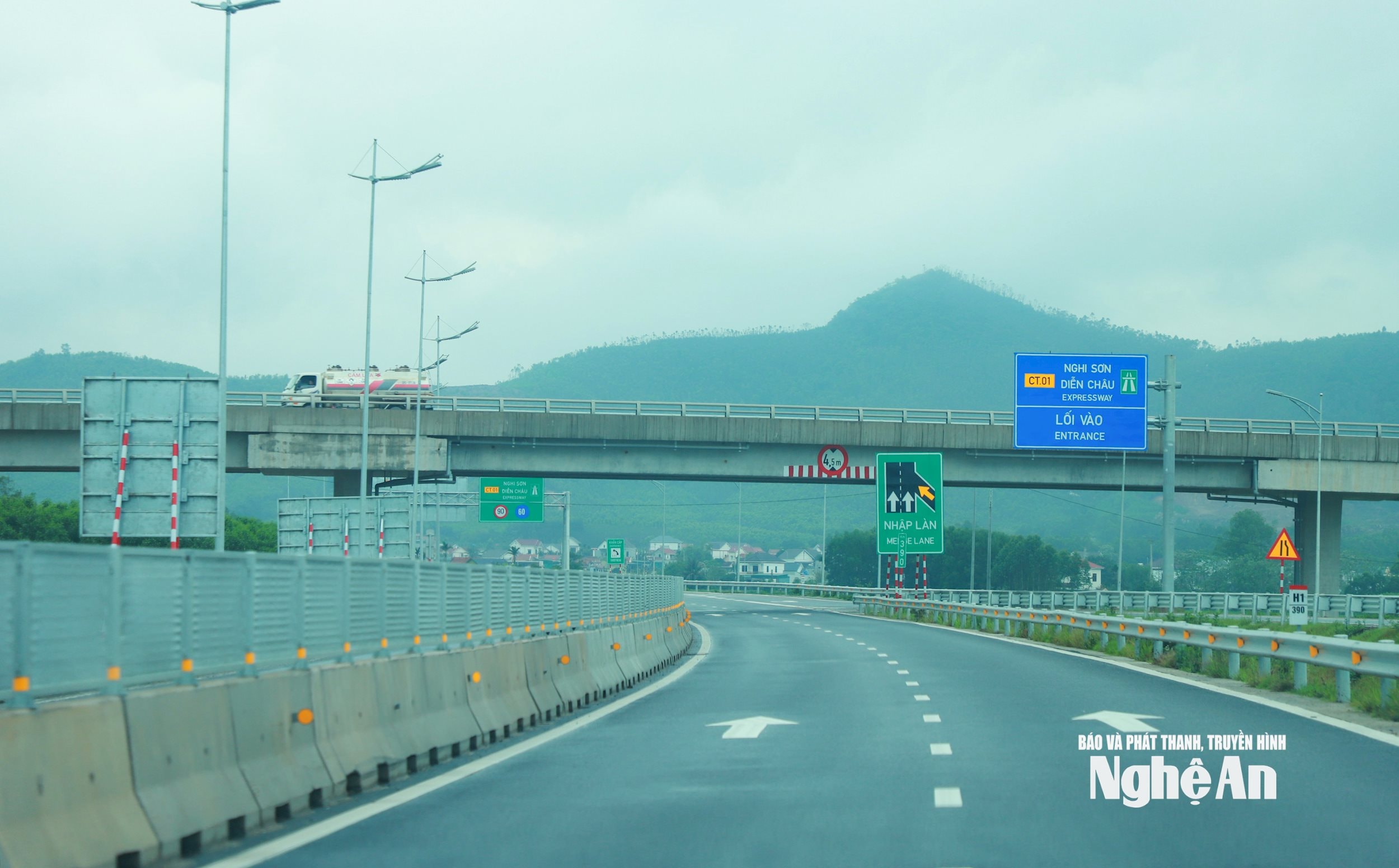
At the same time, several other state-invested North-South expressways will also begin collecting tolls, including: Mai Son - National Highway 45, National Highway 45 - Nghi Son, Vinh Hao - Phan Thiet, and Phan Thiet - Dau Giay.
In accordance with Notice No. 01/TB-BXD dated January 8, 2026, from the Ministry of Construction , the Vietnam Road Administration has recently assigned relevant project management boards to take the lead in directing contractors to urgently complete the data linkage between toll collection stations and synchronize the back-end systems.
This is an important basis for organizing the evaluation of the operational performance (KPI) of the expressway toll collection system in accordance with regulations and for conducting trial runs, serving as a prerequisite for official toll collection on state-invested expressways.
According to the approved plan, the North-South expressway projects invested by the State will collect tolls for a period of 7 years, directly managed and implemented by the Vietnam Road Administration. After this period, the competent authority will consider the appropriate infrastructure exploitation and management plan for each development phase.
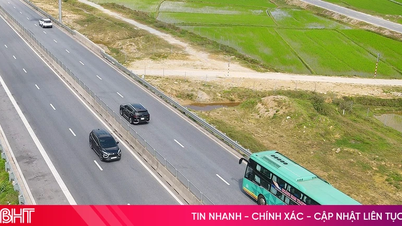
Previously, toll collection on expressways only applied to projects invested under the public-private partnership (PPP) model, and not to expressways invested with public capital.
However, the Road Law, effective from January 1, 2025, has added a provision allowing the collection of tolls from vehicles traveling on expressways owned by the State, which is directly managed and operated by the State as the representative owner.
Specifically, Article 50 of the Road Law stipulates that the State collects tolls for the use of expressways on routes invested by the State in the form of public investment, as well as routes invested in under other forms but whose contracts have ended and have been transferred to the State.
The government collects tolls not for profit, but to generate funds for maintenance, repair, and investment in the development of new expressways.
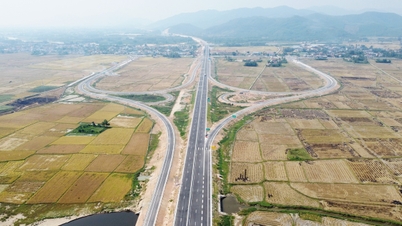
The Eastern North-South Expressway passing through Nghe An province has two component projects: the Nghi Son - Dien Chau section and the Dien Chau - Bai Vot section, with a total length of 99.3 km. Of this, the length passing through Nghe An province is 87.9 km, including 43.5 km of the Nghi Son - Dien Chau section and 44.4 km of the Dien Chau - Bai Vot section.
Thus, when the Nghi Son - Dien Chau expressway component project officially begins collecting tolls, the entire Eastern North-South expressway route through Nghe An province will be subject to toll collection in accordance with regulations. Previously, the Dien Chau - Bai Vot expressway officially began collecting tolls on January 5, 2025, as it was invested in under the public-private partnership (PPP) model.
Government Decree No. 130/2024/ND-CP stipulates 5 groups of subjects liable for tolls and 10 groups of subjects exempt from tolls on expressways owned by the State, which are directly managed and operated by the State as the representative owner.
The subjects liable for highway tolls are divided into 5 groups as follows:
a) Group 1 includes the following types of vehicles: vehicles with fewer than 12 seats, trucks with a load capacity of less than 2 tons; and public passenger transport buses;
b) Group 2 includes the following types of vehicles: vehicles with 12 to 30 seats; trucks with a load capacity from 2 tons to less than 4 tons;
c) Group 3 includes the following types of vehicles: vehicles with 31 seats or more; trucks with a load capacity from 4 tons to less than 10 tons;
d) Group 4 includes the following types of vehicles: trucks with a load capacity from 10 tons to less than 18 tons; container trucks with a capacity of less than 40 feet;
d) Group 5 includes the following types of vehicles: trucks with a load capacity of 18 tons or more; container trucks with a capacity of 40 feet or more.
The categories of people exempt from highway toll fees are divided into 10 groups as follows:
- Ambulance.
- Fire trucks of the Fire and Rescue Police force and fire trucks of other forces mobilized for firefighting duties have priority signals as prescribed by law.
- Vehicles used for national defense include vehicles with license plates: Red background, white embossed letters and numbers, equipped with specialized equipment for national defense (including: tanker trucks, crane trucks, vehicles transporting armed forces on marches, understood as passenger cars with 12 or more seats, covered transport vehicles with seats installed in the cargo area, control vehicles, military inspection vehicles, specialized vehicles for transporting prisoners, rescue vehicles, satellite communication vehicles, and other specialized vehicles serving national defense), and vehicles on urgent duty using one of the priority signals as prescribed by law in case of emergency.
- Specialized vehicles of units belonging to the organizational system of the People's Public Security Force include:
a) Traffic police patrol cars have the following characteristics: a rotating light on the roof and the words "TRAFFIC POLICE" printed on both sides of the car;
b) The 113 police car has the words "POLICE 113" printed on both sides of the vehicle;
c) Mobile police vehicles have the words "MOBILE POLICE" printed on both sides of the vehicle;
d) Transport vehicles equipped with seats in the cargo area used by the People's Public Security forces on duty;
d) Vehicles transporting prisoners, rescue vehicles, and other specialized vehicles of the People's Public Security Force;
e) Special vehicles (satellite communication vehicles, bulletproof vehicles, counter-terrorism and riot control vehicles, and other specialized vehicles of the People's Public Security Force);
g) Vehicles of the police force on urgent duty use priority signals as prescribed by law.
5. Vehicles specifically used for funeral services, including:
a) Vehicles with specialized structures for funeral services (including: hearses, refrigerated trucks for storing and transporting corpses);
b) Vehicles involved in funeral services (including: passenger vehicles accompanying the hearse, trucks carrying flowers, vehicles for carrying portraits) are vehicles used solely for funeral activities and have vehicle registration certificates in the name of the funeral service provider. The funeral service provider must submit a written commitment to the electronic payment service provider stating that these vehicles will only be used for funeral activities (specifying the number of vehicles and license plates for each type).
6. The convoy was escorted by traffic police vehicles.
7. Vehicles of the defense forces participating in exercises, troop movements, and transporting weapons and equipment are escorted by specialized military vehicles.
8. Motor vehicles of the Public Security and National Defense forces shall use the nationwide road toll tickets as stipulated in Clause 2, Article 8 of this Decree.
9. Vehicles used for dike maintenance; vehicles performing emergency flood and storm prevention and control duties as directed by competent authorities.
10. Vehicles used for transporting medicines, machinery, equipment, supplies, and goods to disaster-stricken areas or areas affected by epidemics, as stipulated by law regarding emergency situations during major disasters or dangerous epidemics.
Source: https://baonghean.vn/sap-thu-phi-cao-toc-nghi-son-dien-chau-10322305.html




![[Photo] National Assembly Chairman Tran Thanh Man working with the Standing Committee of the Law and Justice Committee](https://vphoto.vietnam.vn/thumb/1200x675/vietnam/resource/IMAGE/2026/05/21/1779378929214_ndo_br_1-4610-jpg.webp)
![[Photo] General Secretary and President To Lam presides over a working session with the Central Policy and Strategy Committee on the development of the materials industry.](https://vphoto.vietnam.vn/thumb/1200x675/vietnam/resource/IMAGE/2026/05/21/1779359935432_a3-bnd-3129-1412-jpg.webp)









































































Comment (0)