

Surveys along several streets in Ho Chi Minh City, such as Vo Van Kiet (Binh Phu ward), Le Duc Tho (An Hoi Dong ward), and Pham Van Dong (Hiep Binh ward), show that durian is being sold in abundance at prices as low as 40,000-50,000 VND per kilogram. This price has prompted many passersby to stop and inquire about purchasing it, as it is half the price compared to the same period last year.
According to small traders, during the same period last year, Ri6 durian retailed at around 80,000-120,000 VND per kilogram. Some premium varieties at high-end fruit stores sometimes reached 130,000-200,000 VND per kilogram.
Ms. Hong, a small business owner on Pham Van Dong Street, used to mainly sell watermelons and pomelos, but seeing that durian prices were so low this year, she decided to try selling them.
According to her, Ri6 durian from Dong Thap province is quite popular in Ho Chi Minh City because of its yellow flesh, small seeds, and sweet, creamy taste. In addition, the durians are uniformly sized and visually appealing, making them attractive to consumers.
Not only traditional markets, but many supermarket chains are also simultaneously lowering durian prices to attract customers. At some sales points in Ho Chi Minh City, Ri6 and Monthong durians are commonly sold at 65,000-69,000 VND per kilogram, significantly lower than the same period last year.
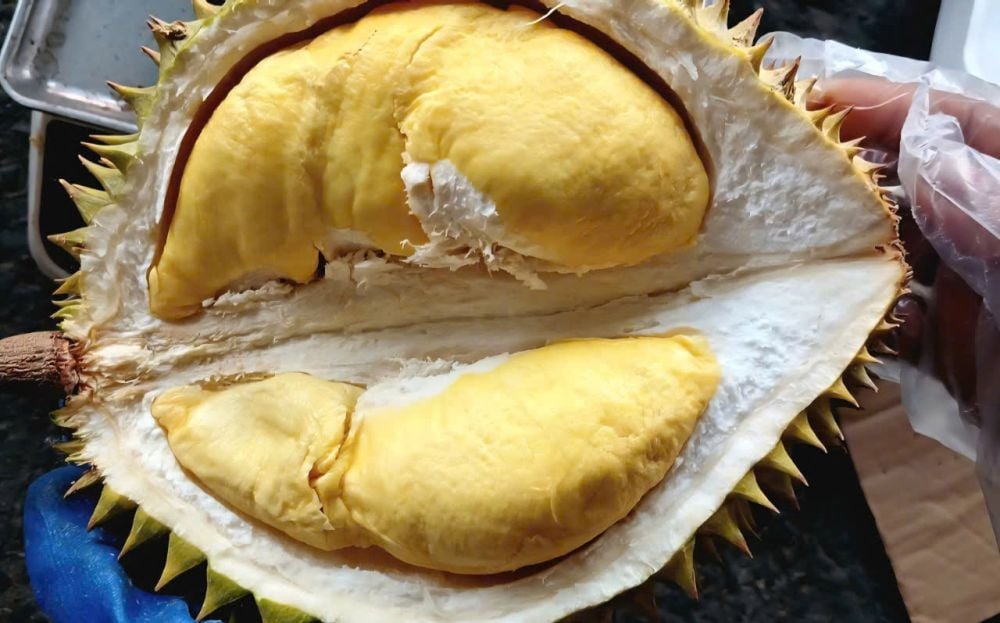
This year's market is unusual not only because of the low prices. Many small traders say this is a rare occasion where grade A and B durians (4-5 flesh compartments), which were previously mainly for export, are appearing in abundance in shops, local markets, and supermarkets.
At her fruit shop on Le Duc Tho Street, Ms. Pho said that she imports 700 kg to one ton of old Binh Phuoc (now Dong Nai ) durian every day to sell to retail customers and small wholesalers.
"In previous years, I mainly sold low-quality or cracked ripe fruit because the good quality fruit was expensive, and most of it was exported. This year, it's rare to see many high-quality A and B grade products being sold in the market at prices that ordinary people can afford," she said.
Many traders have also shifted strongly towards the domestic market as exports have slowed down. Mr. Hoang, a durian buyer in the Mekong Delta, said that in previous years at this time, he mainly supplied goods to export companies. But since the beginning of May, many export orders have been delayed, so he has increased his stockpiling to sell to domestic buyers.
"Previously, I would harvest about 5-10 tons a day to sell to export businesses, but this time I'm mainly supplying customers in Ho Chi Minh City, Hanoi, and Da Nang," he said.
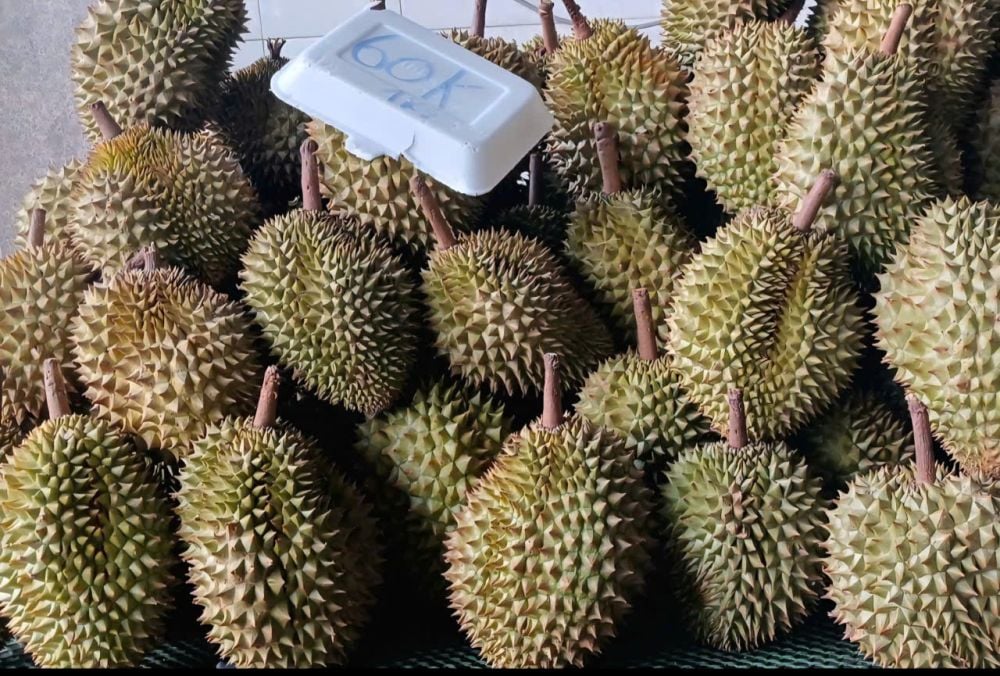
According to the Vietnam Fruit and Vegetable Association, the sharp drop in durian prices recently is mainly due to a slowdown in exports to China at a time when supply is high during the harvest season. In addition, the prolonged inspection time has led many businesses to limit purchases, further driving prices down.
In recent days, the market has shown signs of recovery as customs clearance has become smoother thanks to enhanced testing capacity, according to Mr. Vo Tan Loi, Chairman of the Dong Thap Durian Association.
Durian prices are starting to rise again due to declining supply in many regions, according to the Vietnam Fruit and Vegetable Association. The durian season in the Mekong Delta is nearing its end, while the Southeast region is preparing for a new season. At the same time, Thai durian is also entering the final stages of its main season, leading to a decrease in competitive supply in the Chinese market.
"This is an opportunity for Vietnamese durian to regain market share in China," said Mr. Dang Phuc Nguyen, General Secretary of the Vietnam Fruit and Vegetable Association.
According to vnexpress.net
Source: https://baodongthap.vn/sau-rieng-re-chua-tung-co-o-tp-ho-chi-minh-a241084.html
![[Image] Hanoi's urban life under the challenge of a "scorching hot" environment](https://vphoto.vietnam.vn/thumb/1200x675/vietnam/resource/IMAGE/2026/05/25/1779706979265_nang-nong-t5-2026-minh-duy-7-4636-jpg.webp)

![[Image] Close-up view of the interchange connecting the two expressways and Long Thanh Airport.](https://vphoto.vietnam.vn/thumb/1200x675/vietnam/resource/IMAGE/2026/05/25/1779703378210_ndo_br_z7863716673926-224453a31600126cce10622af6290afd-4549-jpg.webp)










































































Comment (0)