

A shock from America
The lawsuit stemmed from the rapid increase in market share of Vietnamese pangasius and basa fish in the US market at the end of 2000. Within just a few years, export volume to this market increased from 260 tons in 1998 to 3,000 tons in 2000, reaching approximately 8,000 tons in 2001. With a selling price $0.8-$1 per pound cheaper than local catfish, Vietnamese catfish quickly gained popularity among American consumers. As a result, the total value of catfish sales in the US decreased from $446 million in 2000 to $385 million in 2001.
Under this pressure, the US Congress passed HR.2964, allowing only American catfish to be called "catfish," excluding pangasius and basa from this familiar name. Subsequently, on June 28, 2002, the CFA officially filed a lawsuit against 53 Vietnamese businesses for dumping in the US market. The US Department of Commerce (DOC) and the US International Trade Commission (ITC) imposed anti-dumping duties on Vietnamese pangasius ranging from 36.84% to 63.88%. Pangasius exports to the US plummeted, many businesses struggled, and fishermen faced hardship.
Overcoming difficulties leads to growth.
Despite the severe impact, the lawsuit became a catalyst, forcing those involved in the industry to change their production mindset, market approach, and development methods. Many businesses quickly invested in upgrading technology, diversifying products, and expanding their markets to countries outside the US. Fishermen gradually joined the production-processing-consumption chain, reducing small-scale, fragmented, and spontaneous farming practices to ensure product quality.
Mr. Doan Toi, General Director of Nam Viet Group, recalled: “The catfish and basa lawsuit served as a wake-up call. Businesses realized that to succeed in the long run, they must work together, professionally, transparently, and with standardized processes. This shock prompted businesses to invest more systematically in farming areas and processing plants, improving product quality to compete in any market worldwide .”
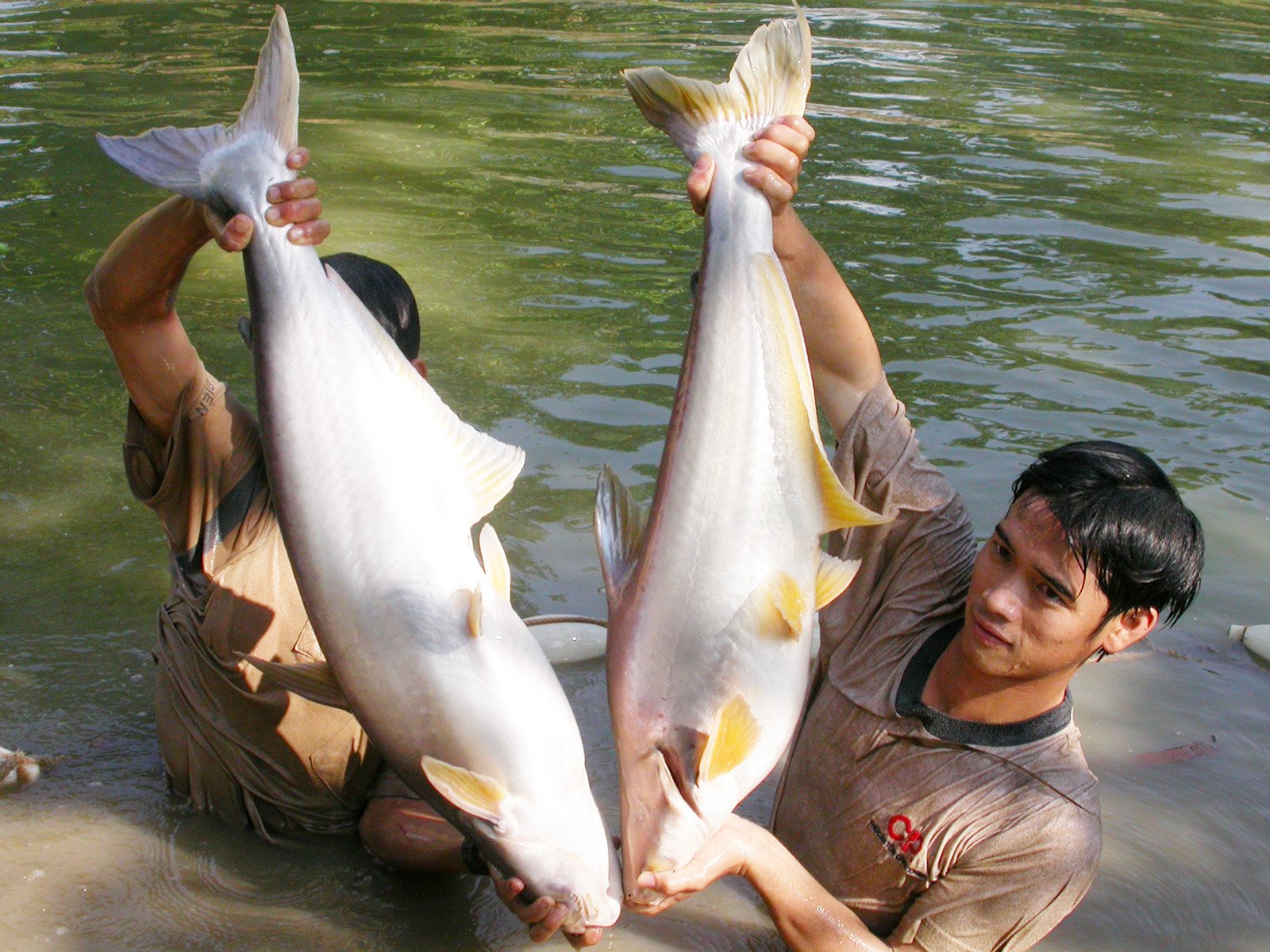
Raising broodstock catfish for artificial reproduction aims to ensure a reliable supply of fingerlings. Photo: MINH HIEN
Mr. Le Trung Dung, Vice Chairman of the An Giang Fisheries Association (AFA), emphasized: “25 years ago, we didn't have much experience in international legal matters. Thanks to this lawsuit, we learned how to cooperate, share information, and respond together. The big lesson is to proactively monitor the market, provide early warnings, and prepare a legal framework to protect the rights of our members.”
For fish farmers, the lessons were equally profound. Mr. Nguyen Van Hai, a long-time pangasius farmer in Vinh Thanh Trung commune, recounted: “Back then, fish prices plummeted, and farmers faced hardship. I realized that we couldn't continue farming haphazardly anymore; we had to cooperate with businesses, sign contracts for guaranteed purchase, and apply VietGAP and GlobalGAP standards. Thanks to that, pangasius products were able to reach further markets.”
Great lessons
Pangasius catfish is currently a key national product. Each year, the Mekong Delta region cultivates 5,800 hectares, producing 1.4-1.6 million tons and exporting to 146 countries and territories. This achievement is the result of the combined efforts of five key stakeholders: the State, businesses, fishermen, scientists, and banks.
The lawsuit provided valuable lessons. For businesses, relying on a single market is no longer feasible; diversification of export markets is necessary, along with transparent accounting practices, adherence to international law, increased investment in deep processing, brand building, and the development of green, clean, and convenient products are crucial. For fishermen, participation in supply chains and cooperation with businesses are essential for stable output. Simultaneously, adherence to safe farming practices and import market criteria is essential, shifting from mass production to quality-focused production.
For the government and associations, it is necessary to establish an early warning mechanism for potential lawsuits, strengthen international legal capacity, build a legal support fund, and promote economic diplomacy. The government has learned many lessons from the pangasius case and applied them to other industries such as shrimp and steel when facing similar lawsuits in the international market.
Looking back over 25 years since the lawsuit, Vietnam's pangasius industry has matured, becoming a multi-billion dollar industry with a firm foothold on the global seafood map. The lawsuit, while challenging, was also a turning point that helped businesses, fishermen, and the government change their mindset and improve their capabilities, enabling Vietnamese pangasius not only to survive but also to expand globally.
Source: https://baoangiang.com.vn/sau-vu-kien-ca-tra-them-vung-buoc-a462133.html
![[Image] 20 islands in the Spratly Islands special administrative region hold early elections.](https://vphoto.vietnam.vn/thumb/1200x675/vietnam/resource/IMAGE/2026/03/08/1772949669607_img-20260308-112026-90-jpg.webp)
![[Photo] Meeting of the Standing Committee of the National Assembly Party Committee with the Standing Committee of the Government Party Committee on the First Session of the 16th National Assembly](https://vphoto.vietnam.vn/thumb/1200x675/vietnam/resource/IMAGE/2026/03/10/1773107502031_ndo_br_thu-tuong-pham-minh-chinh-va-chu-tich-qh-tran-thanh-man-dong-chu-tri-hoi-nghijpg-jpg.webp)























![[Image] Vietnam's diverse colors on its journey of innovation](https://vphoto.vietnam.vn/thumb/1200x675/vietnam/resource/IMAGE/2026/03/09/1773041390813_anh-man-hinh-2026-03-09-luc-14-28-17.png)






























































Comment (0)