

Many universities are publicly posting lists of students with outstanding tuition fees online, causing outrage among students who consider it insensitive and embarrassing.
A few days ago, the University of Finance and Marketing's publication on its website of a list of nearly 2,500 students who owe tuition fees for 2023 attracted attention.
In fact, many universities do the same, such as the University of Industry and Trade of Ho Chi Minh City, Can Tho, the University of Social Sciences and Humanities, the University of Transport Technology, Dong Nai, etc. Depending on the university, the list may be titled "tuition debt," "tuition payment reminder," or "banned from exams due to tuition debt." Even some graduating classes still have information about students being reminded of their outstanding debts online.
According to the students, this has been going on for a long time, but now many people are aware of the risks of having their personal information "exposed" online, leading to frustration.
On online forums, the topic attracted thousands of interactions and discussions. The majority believed that schools publicly disclosing lists of students with outstanding tuition fees, including their names, hometowns, and classes, was insensitive and caused embarrassment and self-consciousness among their peers.
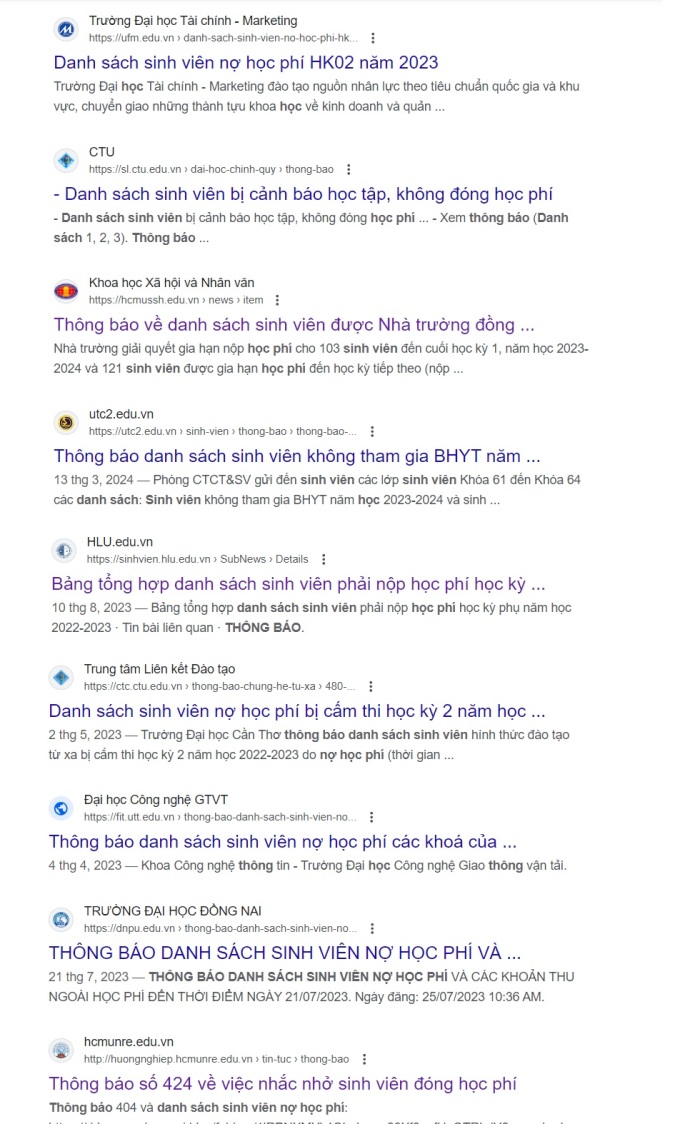
Numerous universities have publicly posted lists of students who owe tuition fees and are requesting extensions. (Image: Screenshot)
Minh Huyen, a final-year university student, said she was upset by the widespread discussion about the incident online. She explained that her family back home had an unexpected emergency, preventing them from paying her tuition fees for the past semester.
"I also work part-time, earning about 3-4 million VND per month, but after all that, rent and living expenses are gone," Huyen said.
Thanh Hong, a student at Ho Chi Minh City University of Industry and Trade, believes that anyone in this situation would feel ashamed. According to Hong, "every family has its own circumstances," and many students have to cover their own tuition and living expenses. Being in debt for tuition is something no one wants, so it's even easier to feel embarrassed and insecure when it's publicly posted.
"The school can send messages, emails, or alerts to students' individual accounts. After one or two times without receiving a response, students can ask their academic advisor or class head to investigate the cause and take appropriate action," Hong suggested.
Meanwhile, Hoang Phuoc, a final-year student at the University of Finance and Marketing, believes that students' personal information has been compromised, potentially leading to future risks.
Associate Professor Quan Thanh Tho, Deputy Head of the Department of Computer Science and Engineering, Ho Chi Minh City University of Technology, Vietnam National University Ho Chi Minh City, believes that when information about students' birth dates, hometowns, and classes is posted online, malicious actors can exploit it to commit fraud.
"It's also possible that their personal information is being exploited to register for loan apps," he said, giving an example.
In principle, according to Mr. Tho, personal information is considered sensitive and should not be stored or used without the owner's permission. If the school obtains student consent to use personal data for academic management, it must ensure at least two requirements are met: the data must not be used for other purposes and must not be shared with third parties.

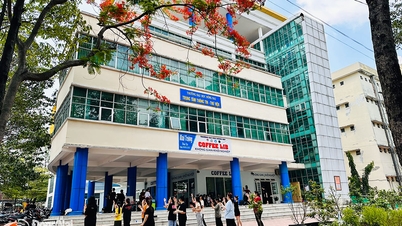
Parents pay tuition fees for students at Ho Chi Minh City University of Industry and Trade, September 2023. Photo: HUIT
Pham Thai Son, Director of the Admissions and Communications Center at Ho Chi Minh City University of Industry and Trade, admitted that his university and many others still publish lists of students with outstanding tuition fees, those requesting extensions, and those subject to academic disciplinary action (warnings, expulsion) on their websites. Much of the students' information is publicly available, including student IDs, classes, majors, hometowns, dates of birth, and even bank account numbers.
He stated that the school has an internal system where each student has an account to register for courses, view timetables, grades, tuition fees, and receive school announcements. However, many students do not regularly update their information.
"When the list is posted publicly, students can then compare or remind each other to comply, so many schools still maintain the habit of posting the entire list on the website. However, this is not the right approach," he commented.
According to Dr. Nguyen Trung Nhan, Head of Training Department, Ho Chi Minh City University of Industry, speed and efficiency may be the reasons why many schools do this. However, in the current context where personal information is freely available online and can lead to many risks, this approach is incorrect and can harm students.
Dr. Nhan believes that schools still have many ways to remind students, such as through their personal accounts or academic advisors. In serious cases, such as expulsion, the school must send notification letters to the family.
Master Pham Thai Son said the school did not intentionally publish the list of tuition debtors to demand payment or to intimidate, but was unaware of the consequences.
"Therefore, the school definitely needs to change its methods of notifying and managing students," he said.
Le Nguyen
*Student's name has been changed
Source link


![[Photo] Prime Minister Pham Minh Chinh presides over a meeting on private sector economic development.](/_next/image?url=https%3A%2F%2Fvphoto.vietnam.vn%2Fthumb%2F1200x675%2Fvietnam%2Fresource%2FIMAGE%2F2025%2F12%2F20%2F1766237501876_thiet-ke-chua-co-ten-40-png.webp&w=3840&q=75)


































































































Comment (0)