

The smile of a "man of the forest"
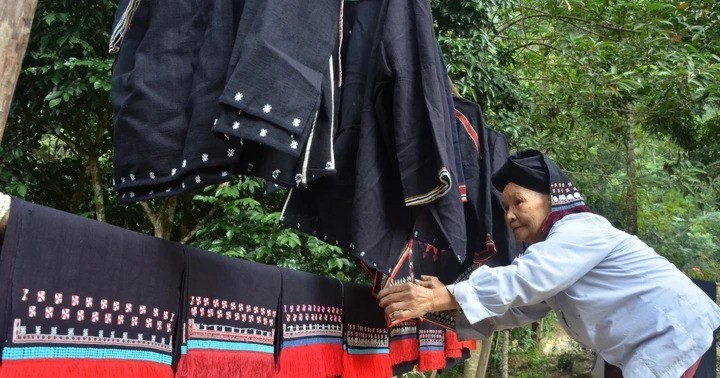
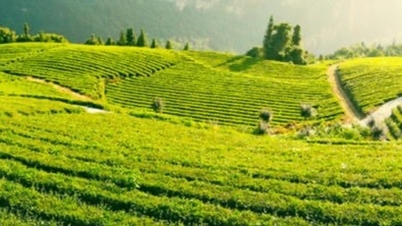
Visiting Sung village this season is not only about the fragrant aroma of ancient Shan Tuyet tea from the windy hillsides, but also about a pristine space that still retains its slow pace of life. It's a place where even strangers are greeted with a warm smile. We came to Sung village partly out of curiosity, and partly because of the heartfelt advice of Comrade Dinh Cong Bao, former Secretary of the Da Bac District Party Committee (formerly Hoa Binh province). He said: "Go to Sung. That place still preserves the cultural identity of the Dao ethnic people. There are many wonderful things there! The whole village nestles under the canopy of the primeval forest, where people and nature seem to blend into one..."
Filled with a strange sense of excitement, we returned to Cao Son commune, now part of Phu Tho province after the merger. Comrade Luong Van Thi, Secretary of the Commune Party Committee, greeted us with enthusiastic stories: Sung hamlet is a "gem" amidst the vast green mountains. Here, the Dao ethnic people still preserve their centuries-old cultural traditions. This is the foundation for the commune to focus on developing community tourism. Previously, the old Cao Son commune had a specialized resolution on "developing community tourism in Sung hamlet." To this day, it remains a groundbreaking direction. Curious about the seemingly unusual name, the Secretary of the Commune Party Committee smiled warmly and explained: In the 1960s and 70s, before the dam was built to construct the Hoa Binh hydroelectric power plant, Sung hamlet was the highest inhabited point in the old Da Bac district. Because of its high altitude and difficult access, the only way to reach the village is by walking along forest trails and climbing steep mountain slopes until your knees ache. Perhaps that's why the village was named "Swelling Village" (Hóa Sưng). The name both evokes hardship and encapsulates a unique characteristic found nowhere else.
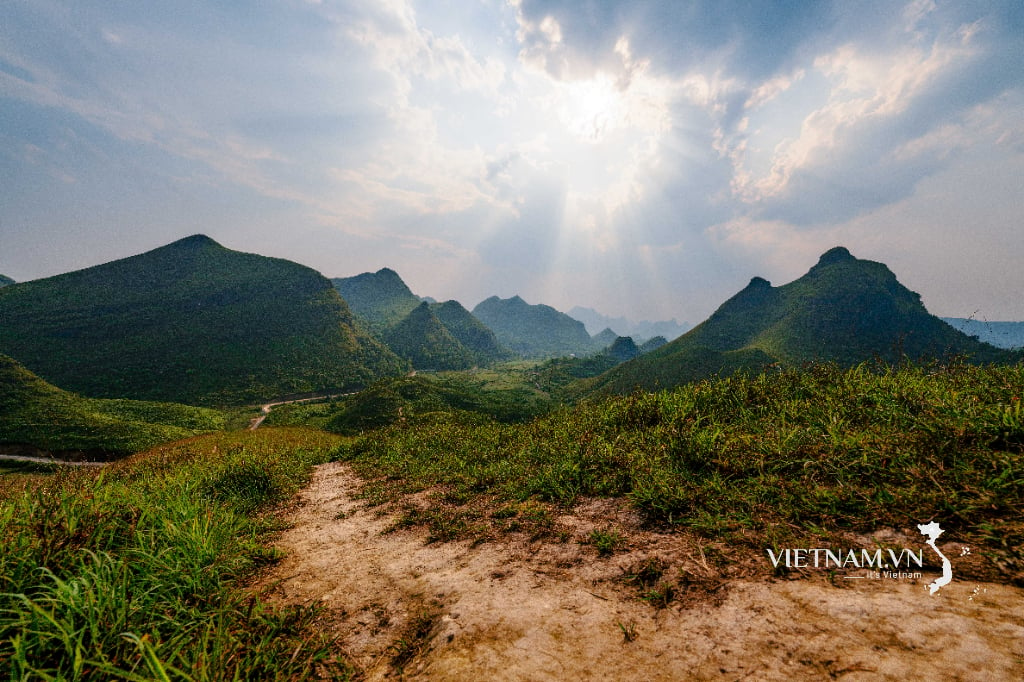
That's a story from the past; today, the village still lies at the foot of Mount Biều, perpetually shrouded in clouds. Getting to Sưng now is no longer a winding forest path, a steep mountain slope. Instead, there's a concrete road leading directly to the center of the village. Following that concrete road, we climbed the slopes of Mount Biều to meet the Dao ethnic minority people under the canopy of the primeval forest. It was just as the stories told by those who came before us. Reaching Sưng, we saw its beauty and the preservation of many unique cultural traditions passed down from ancient times. We were greeted with the smile of Lý Sao Mai – the most beautiful girl in the village – and a firm handshake from people we'd never met before, yet felt like we'd known each other. It was truly heartwarming!
Peaceful under the canopy of the ancient forest
Village head Ly Van Nghia said: "The village has 75 households and 364 inhabitants. Now, some houses are involved in community tourism, offering homestays to guests, like the houses of Ly Van Thu, Dang Van Nhat, and Dang Van Xuan... But actually, no one here is a stranger. Once you arrive, you're already familiar. Guests can enter any house and be welcomed like family. We are people who live in the forest, and we're always happy when guests come!"
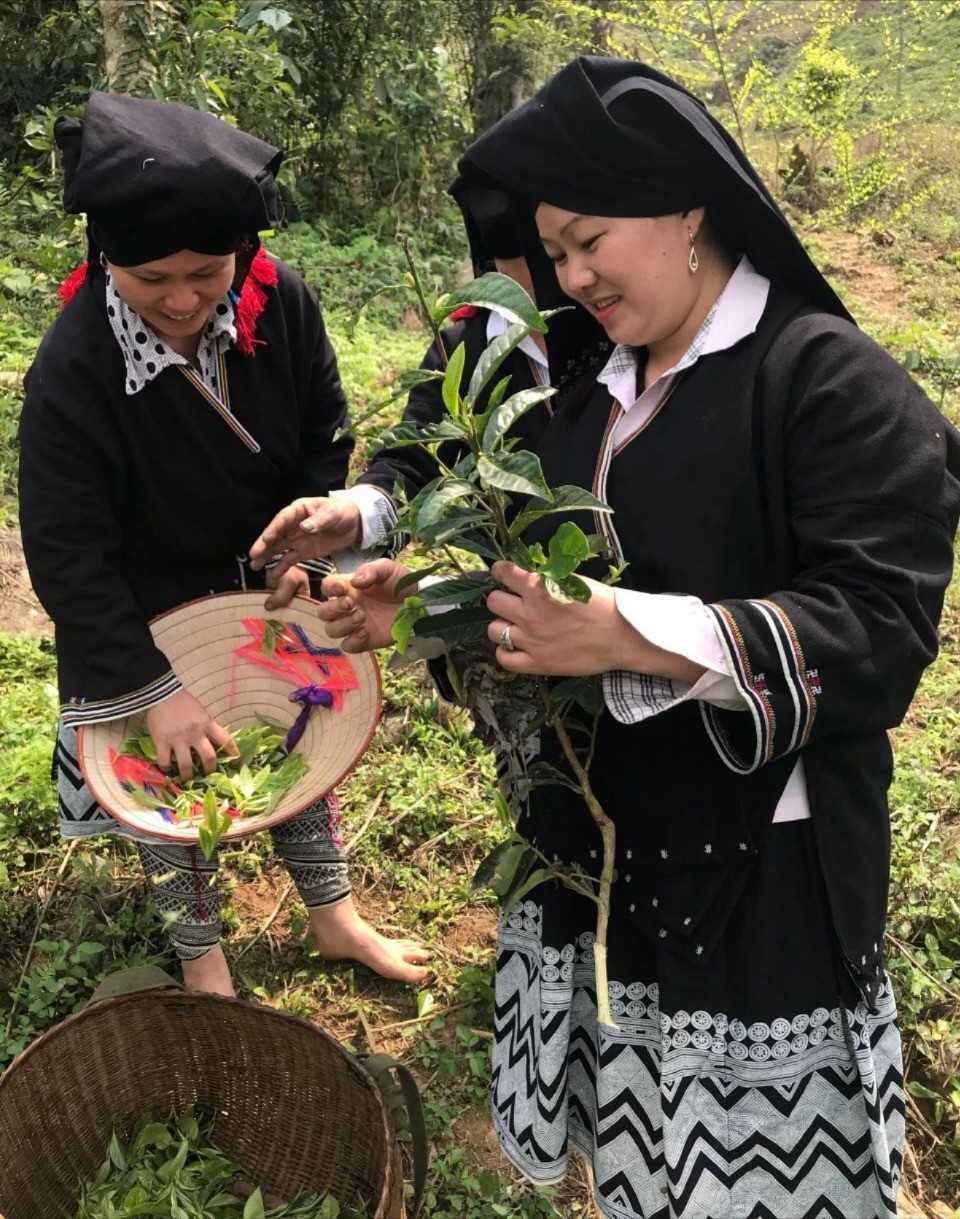
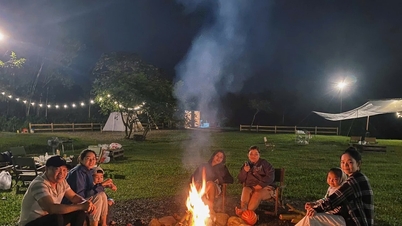
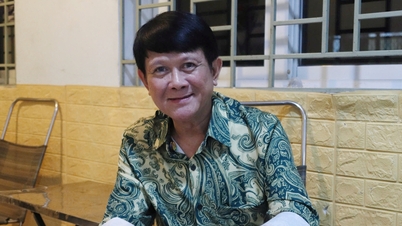
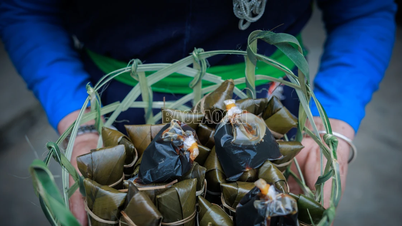
Following the directions, we stayed at the house of Mr. Ly Hong Si, the most respected person in the village. He is considered a "living history book" of the Dao community here. After a warm evening meal, we sat by the crackling fire, pouring cups of Shan Tuyet tea brewed from young shoots picked from the top of Bieu Mountain. He said: "This type of tea is hundreds of years old, processed using traditional methods passed down by the ethnic people. It's not found everywhere." Sitting next to him, Ly Sao Mai added: "In Sung village this season, besides the white blossoms of Shan Tuyet tea and Gió flowers, there are also vibrant yellow mustard flowers after the harvest; terraced rice fields that are as beautiful as paintings during the rainy season; and delicious dishes like sour meat, free-range chicken, deer wine, and mountain rice... All are made by the locals themselves, so they still retain the sweet and wholesome taste of the mountains and forests."
Under the firelight, stories of life in the peaceful Dao village flowed like a continuous stream. In the stories, we listened as Mr. Ly Van Hinh, one of the oldest people in the village, recounted tales of life as "forest dwellers" with all the respect and pride.
"From the mountains come people."
Like many places, for the Dao ethnic people in Sung hamlet, the forest is not something to be cut down. The forest is the source of life. Since ancient times, their ancestors have established customary laws to teach their descendants, considering forest protection as a moral principle. Therefore, the pristine forest surrounding the hamlet has been preserved intact for hundreds of years, never having been harmed. This is evidenced by the towering, centuries-old trees that provide shade for the houses. And not far away, at the beginning of the hamlet, there is a large Dipterocarpus tree, barely larger than two people can embrace. There are also large, shady Cassia trees.
Having witnessed and experienced many ups and downs in this small village, Mr. Ly Hong Si said: "For the Dao ethnic people, wherever the forest is lost, so too is the original culture. But wherever the forest remains and is preserved, the cultural traditions passed down from our ancestors are still intact. It's that simple! That's why the people of Sung live at a slow pace. Not because they are backward, but because they know contentment, appreciate what they have, and live in harmony with nature. Life in Sung village is not noisy or competitive. Instead, there are nights spent gathered around the fire, cups of wine filled with human connection, and affectionate glances exchanged like brothers and sisters in a family. Every month, hundreds of visitors, mostly foreigners, come to Sung village. They come to rediscover the feeling of living and breathing in a cool, green, and peaceful environment." Here, the melodious chirping of birds, the mist that blankets the paths every morning, and the wildflowers blooming throughout the four seasons... all of these things make one slow down, enough to notice the things one often misses. Returning to Sưng is about falling in love with life again.
We left Sung village while the peak of Bieu mountain was still half-asleep, amidst the vast forest of ancient trees, the wind whispering through the leaves. A strangely peaceful feeling. A place you'll never forget once you've set foot there. Sung is such a place. There, people live slowly, deeply, in harmony with the forest. There, there are still hearts quietly preserving the old-growth forest as if it were their own breath.
Source: https://baolaocai.vn/song-cham-o-ban-sung-post648530.html


![[Photo] General Secretary and President To Lam presides over a meeting with the Central Organizing Committee.](https://vphoto.vietnam.vn/thumb/1200x675/vietnam/resource/IMAGE/2026/06/03/1780482764658_a1-bnd-4741-3342-jpg.webp)
![[Photo] Secretary of the National Assembly Party Committee, Chairman of the National Assembly presides over the meeting of the Standing Committee and Executive Committee of the National Assembly Party Committee.](https://vphoto.vietnam.vn/thumb/1200x675/vietnam/resource/IMAGE/2026/06/03/1780480353201_ndo_br_bnd-2585-jpg.webp)
![[Photo] First session of the 14th Congress of the Vietnam Trade Union](https://vphoto.vietnam.vn/thumb/1200x675/vietnam/resource/IMAGE/2026/06/03/1780465947883_ndo_br_img-3852-jpg.webp)






































![[Video] Sunset at Lap An Lagoon – Where the sun sets over the fishing nets](https://vphoto.vietnam.vn/thumb/1200x675/vietnam/resource/IMAGE/2026/05/31/1780192137701_beach-landscape-sea-water-nature-grass-745871-pxhere-com.jpeg)

































Comment (0)