

Oat milk is a popular plant-based milk made by grinding oats with water. It is lactose-free, suitable for vegans, and has a slightly sweet flavor and a smooth, creamy texture.
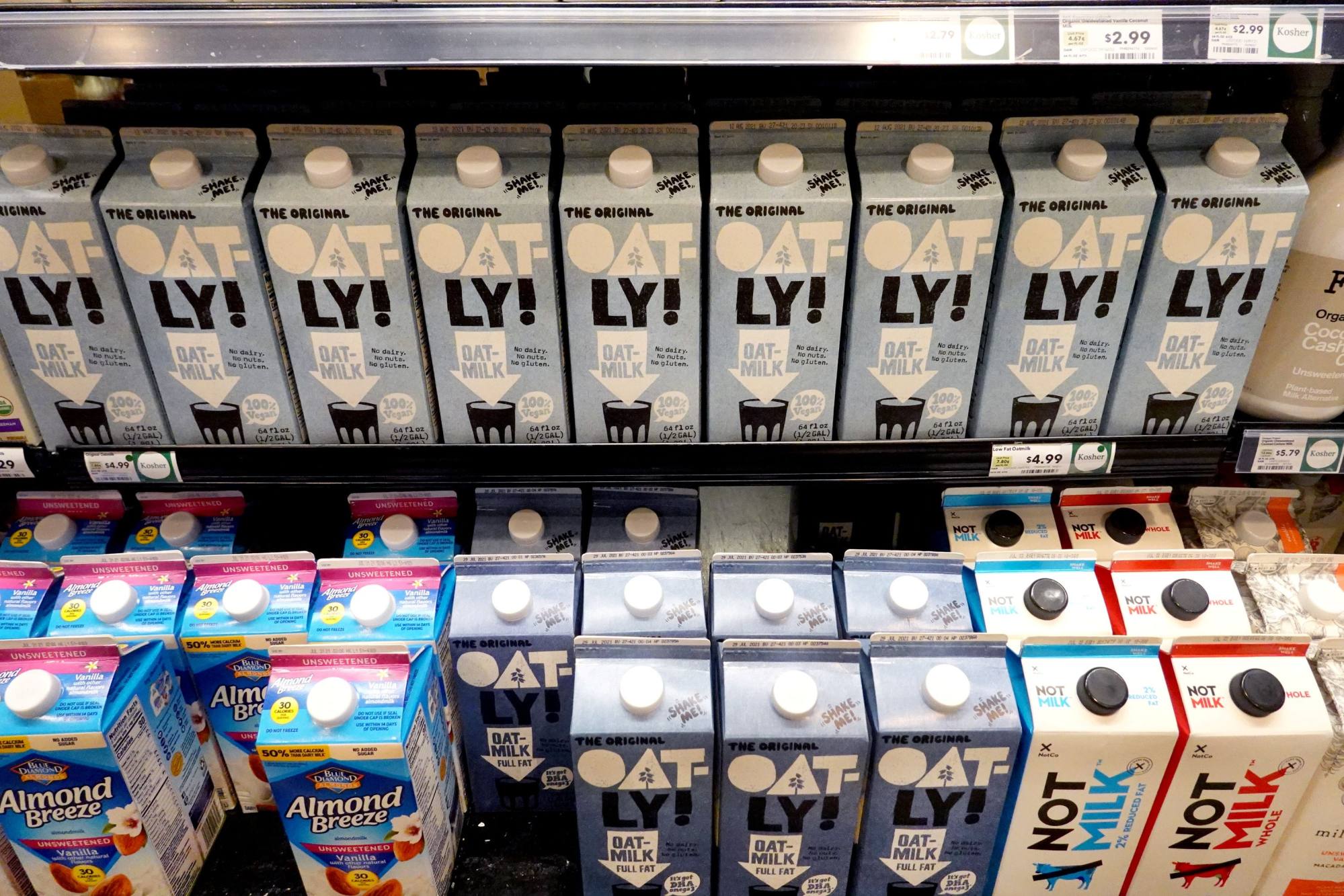
Oat milk - Illustration
Oat milk is commonly used in beverages such as lattes, cappuccinos, and smoothies.
Safe for people with kidney stones.
Oat milk may be a better option than other plant-based milks for people with kidney stones. Those with kidney stones are often advised to follow a low-oxalate diet – a substance that binds with calcium in urine, leading to kidney stones.
If you are already at high risk for kidney stones, a diet high in oxalates may further increase this risk.
Oat milk has significantly lower oxalate levels than other popular plant-based milks like almond milk or cashew milk, making it a safer option for those at risk of kidney stones.
Lactose-free and suitable for vegetarians.
Cow's milk contains a type of sugar called lactose, which can cause digestive problems for many people. Approximately 30 million people in the United States are lactose intolerant. Those with this condition do not produce enough of the enzyme lactase – which is necessary to break down lactose for proper absorption by the body.
People with lactose intolerance may experience digestive symptoms such as diarrhea and bloating after drinking milk or eating foods containing lactose. If you have this condition, you should choose lactose-free milk.
Oat milk is naturally lactose-free, making it safe for people who need to avoid dairy products.
Oat milk is not of animal origin, so it is suitable for both vegetarians and vegans.
Cow's milk is commonly used in many dishes and recipes, so oat milk or other plant-based milks are good alternatives for those following a vegetarian or vegan diet.
Provides more nutrients when fortified.
Oat milk is not naturally rich in vitamins and minerals. However, many oat milk products are fortified, meaning that nutrients are added during processing to make the product more nutritious.
Oat milk can be fortified with nutrients such as vitamin B12, vitamin D, and potassium. Fortified oat milk can be especially helpful for vegetarians, who are prone to deficiencies in calcium, B12, and vitamin D.
Choosing fortified oat milk is a simple way to boost your vitamin and mineral intake while still adhering to a vegan diet.
Nutritional value of oat milk
One serving (approximately 180g) of unsweetened oat milk contains:
Calories: 108
Fat: 6.19 g
Carbohydrates: 11.48 g
Fiber: 1.8 g
Protein: 1.69 g
Iron: 0.59 mg
Oat milk also provides a small amount of fiber, which is important for digestive health. Fiber helps maintain regular bowel movements and promotes the growth of beneficial bacteria in the gut.
Additionally, oat milk contains a small amount of iron; one cup of oat milk provides approximately 6% of the daily value (DV) of iron. Iron plays a vital role in transporting oxygen throughout the body, supporting growth, energy and hormone production, and brain development.
Unfortified oat milk is not a good source of vitamins and minerals, except for iron. However, one cup of fortified oat milk can provide 20% or more of the daily value (DV) for vitamin B12, riboflavin, phosphorus, and calcium.
Calcium is essential for nerve and muscle function, hormone production, and bone health. Vitamin B12 supports red blood cell production, brain function, and metabolic regulation. If you want to increase your intake of vitamins and minerals, consider oat milk products that are fortified with micronutrients.
Source: https://tuoitre.vn/sua-nao-an-toan-voi-nguoi-bi-soi-than-20250301221834757.htm


![[Photo] Prime Minister Pham Minh Chinh presides over a meeting on private sector economic development.](/_next/image?url=https%3A%2F%2Fvphoto.vietnam.vn%2Fthumb%2F1200x675%2Fvietnam%2Fresource%2FIMAGE%2F2025%2F12%2F20%2F1766237501876_thiet-ke-chua-co-ten-40-png.webp&w=3840&q=75)




























































































Comment (0)