

Global trends
According to the World Meteorological Organization (WMO)'s 2023 Global Climate Assessment Report, 2023 was recorded as the hottest year on record, with global average temperatures 1.45 degrees Celsius higher than pre-industrial levels.
Furthermore, rising sea levels, biodiversity loss, air and water pollution, and land degradation are seriously threatening environmental security, public health, and the foundation for socio- economic development.
In this context, restructuring the economy towards reducing greenhouse gas emissions, increasing the use of renewable energy, and promoting sustainable production and consumption has become an inevitable trend, helping countries effectively adapt to climate change and mitigate long-term environmental risks.
Pressure from the international community and global agreements has created a strong legal framework and political commitment to promote the transition to a green economy. The Paris Agreement on climate change (2015) set a target of keeping the global average temperature from rising more than 1.5-2 degrees Celsius above pre-industrial levels, and required countries to develop roadmaps for reducing greenhouse gas emissions through Nationally Determined Contributions (NDCs).
Furthermore, the United Nations' Sustainable Development Goals (SDGs) for 2030 also emphasize the link between economic development and environmental protection, efficient resource use, and social equity. Many countries have concretized this commitment through policies such as carbon taxes, emissions regulations, promoting green finance, and encouraging green technology innovation.
Furthermore, ESG (environmental, social, and governance) standards are increasingly becoming mandatory in international investment and corporate governance, putting pressure on economies to move towards more sustainable development models.
Green growth offers long-term and sustainable benefits to the economy. Not only does it help minimize negative environmental impacts, but this growth model also opens up many new economic development opportunities through the expansion of green industries such as renewable energy, organic agriculture, environmental treatment technologies, and the circular economy.
According to the International Labour Organization (ILO) Green Employment Outlook report, the transition to a green economy could create more than 24 million new jobs globally by 2030, while reducing the risk of job losses in highly polluting industries.
Furthermore, green growth helps countries enhance their international competitiveness by improving resource efficiency, boosting innovation, and reducing the costs of responding to future climate change.
Implementation practices in Vietnam
Against the backdrop of increasing globalization and climate change, Vietnam has demonstrated a strong commitment to sustainable development and green growth. Specifically, the Government has issued the National Strategy on Green Growth for the period 2021-2030, with a vision to 2050, under Decision No. 1658/QD-TTg dated October 1, 2021.
This strategy sets out four key objectives: (1) Reducing the intensity of greenhouse gas emissions per GDP; (2) Greening economic sectors through technological innovation and production models; (3) Greening lifestyles and promoting sustainable consumption throughout society; and (4) Building a synchronized and effective institutional and policy system to promote green growth.
In addition, ministries, sectors, and localities have concretized the national strategy by issuing provincial-level green growth action plans and integrating green content into socio-economic development plans.
By the end of 2023, according to a report by the Ministry of Planning and Investment, more than 40 localities nationwide had developed green growth action plans, with many key provinces implementing groundbreaking green transformation projects.
Several examples illustrate the positive shift towards a green economic model in Vietnam. In the renewable energy sector, Ninh Thuan and Binh Thuan provinces have become centers for solar and wind power development, thanks to favorable natural conditions and investment incentives. By 2023, the total solar power capacity in Ninh Thuan had reached nearly 2,500 MW, accounting for a large proportion of the country's renewable energy structure.
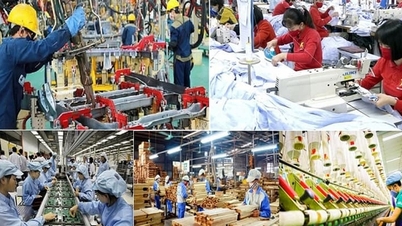
In agriculture, many agricultural processing businesses in the Mekong Delta have applied biomass energy from rice husks, sugarcane, and straw to replace fossil fuels, contributing to reduced emissions and lower production costs. In light industry, the textile and footwear industries – key export sectors – have also adopted cleaner production standards, water reuse, and wastewater treatment according to international standards to meet the stringent environmental requirements of markets such as the European Union and the United States.
However, the implementation of green growth in Vietnam is still facing many challenges.
Firstly, green investment capital is limited, especially in localities and small and medium-sized enterprises, making it difficult to transform technology and production processes.
Secondly, environmentally friendly production technologies in Vietnam are still outdated and expensive, leading to barriers to access and large-scale implementation.
Thirdly, public and business awareness of green growth is still uneven; many businesses still do not consider it a long-term growth driver but only a short-term compliance cost.
Finally, the institutional and policy framework supporting green growth lacks coherence, overlaps, and has not created sufficiently strong incentive mechanisms, especially regarding green credit, carbon taxes, and emission pricing.
To realize the goal of green growth, it is necessary to implement many systemic solutions simultaneously, most notably the improvement of institutions and policies for sustainable development.
Specifically, the State needs to build a robust and comprehensive legal framework that facilitates economic activities linked to environmental protection, such as issuing preferential tax, credit, and land policies for businesses investing in clean technology, renewable energy, and circular production.
Simultaneously, establishing and enforcing strict environmental standards also contributes to reorienting production and consumption behavior towards greater sustainability. Alongside this, the development of green finance is an indispensable pillar. It is necessary to promote instruments such as green bonds, green credit, and green investment funds, while integrating environmental, social, and governance (ESG) criteria into the banking and financial institutions to create a stable flow of capital for environmentally friendly projects.
Besides policies and funding, raising public awareness is also a meaningful long-term solution. Integrating education on green growth and sustainable development into the curriculum, along with widespread communication campaigns, will help change consumer behavior towards green consumption, resource conservation, and waste reduction.
Furthermore, green growth also requires Vietnam to expand international cooperation, especially in accessing high technology, attracting foreign direct investment into green sectors, and learning from the environmental management experiences of advanced countries.
Extensive participation in global environmental agreements and regional initiatives will contribute to enhancing Vietnam's capacity to respond to transboundary challenges such as climate change, energy crises, and water security.
Therefore, green growth can only become a reality through the harmonious coordination of policies, financial resources, technology, the social community, and international cooperation, thereby aiming for an efficient, environmentally friendly, and equitable economy for all generations.
Source: https://nhandan.vn/tang-truong-xanh-con-duong-phat-trien-ben-vung-post872362.html


![[Photo] Reception to welcome General Secretary and President To Lam and his wife on their State visit to the Philippines](https://vphoto.vietnam.vn/thumb/1200x675/vietnam/resource/IMAGE/2026/06/01/1780295488620_vna-potal-chieu-dai-chao-mung-tong-bi-thu-chu-tich-nuoc-to-lam-va-phu-nhan-tham-cap-nha-nuoc-toi-philippines-8798060-7855-jpg.webp)


![[Photo] General Secretary and President To Lam and the President of the Philippines hold talks.](https://vphoto.vietnam.vn/thumb/1200x675/vietnam/resource/IMAGE/2026/06/01/1780286997787_anh-man-hinh-2026-06-01-luc-11-09-43.png)


![[GALLERY] 5 email habits that boost work efficiency](https://vphoto.vietnam.vn/thumb/402x226/vietnam/resource/IMAGE/2026/06/01/1780291585408_g-1-png.webp)



![[GALLERY] Many electronics companies thought to be American are actually Chinese.](https://vphoto.vietnam.vn/thumb/402x226/vietnam/resource/IMAGE/2026/06/01/1780285884046_t-9-png.webp)







































































Comment (0)