

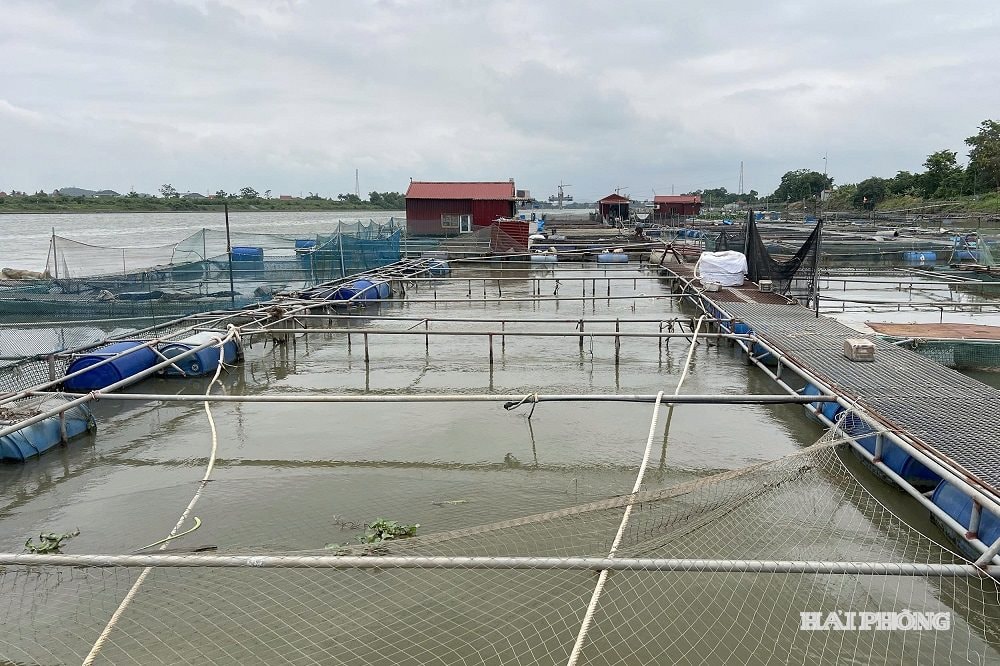
Many farming households have not been licensed.
In recent years, cage fish farming on rivers in Hai Phong city has developed strongly, concentrated mainly in the following rivers: Luoc, Kinh Thay, Thai Binh, Kinh Mon, Cam, Bach Dang, Van Uc, and Lach Tray, with hundreds of cages for aquaculture. Households mainly raise catfish, snakehead, carp, tilapia, and red snapper…
According to statistics from July 2025, the entire city has a total of approximately 40 new communes and wards with aquaculture activities using cages and rafts on the river. Of these, 10 communes and wards in eastern Hai Phong (formerly belonging to Tien Lang, An Lao, Vinh Bao, and Thuy Nguyen districts) have 34 households engaged in cage and raft farming on the river, with 151 cages and 96 rafts.
In western Hai Phong, there are approximately 30 communes and wards (belonging to 9 districts, towns, and cities formerly part of Hai Duong province) with 662 households engaged in cage and raft farming on the river, with about 8,756 cages in total. Of these, 8,173 cages are currently in operation; the fish production from cage farming reaches approximately 26,000 tons per year.
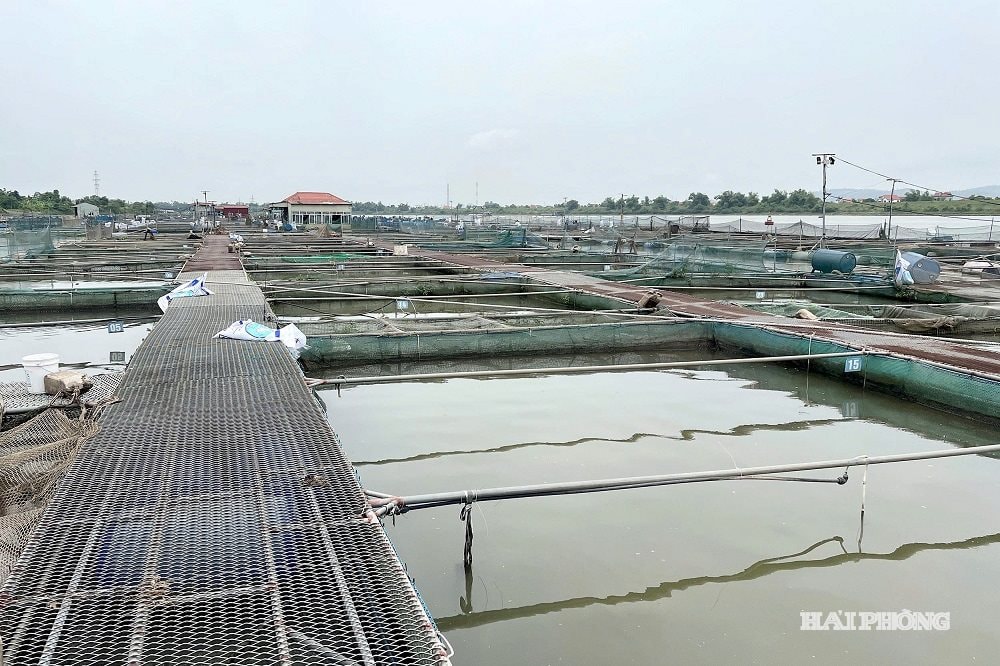
The development of cage farming on rivers brings high economic efficiency to the people, contributing to changing the economic structure in rural areas. However, this activity has also given rise to some shortcomings that hinder local government management and sustainable development.
In particular, cage fish farming on rivers is spontaneous, lacking necessary legal procedures, failing to meet local government regulations, and lacking specific planning for farming areas. Therefore, cage fish farming on rivers affects waterway safety, cargo transport routes, and poses a potential risk of environmental pollution.
According to the Department of Agriculture and Environment, all cage aquaculture facilities have not yet been granted certificates of registration for cage aquaculture as stipulated in point d, clause 1, Article 38 of the 2017 Fisheries Law (registration is required for cage aquaculture and the main aquaculture species); approximately 90% of cage fish farming facilities on rivers have documents from the Inland Waterway Authority regarding the water area for aquaculture related to the scope, location of the channel and the protection corridor of the inland waterway.
Furthermore, some households raising fish in cages/rafts on the river have installed fish cages exceeding the permitted area by the Vietnam Inland Waterways Authority, especially in width measured from the riverbank. Some households have installed lights improperly and do not maintain nighttime signal lights for sufficient duration. Some households have failed to collect and dispose of dead fish according to proper procedures, using them as feed for other fish cages, causing environmental pollution...
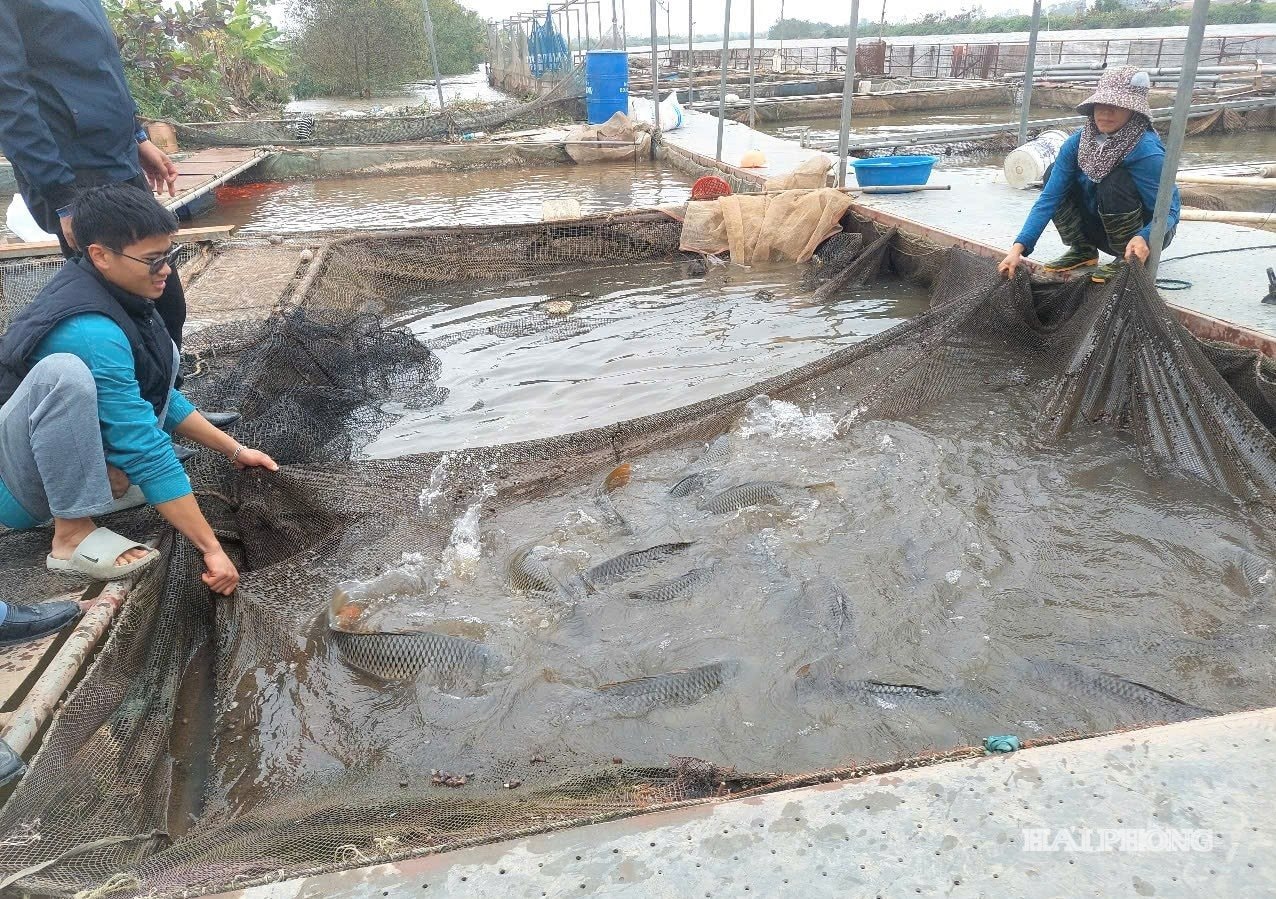
Addressing "hot spots"
To address the shortcomings in cage and raft fish farming on the river, the city has established a permanent inter-agency task force chaired by the Department of Agriculture and Environment, with the participation of the Department of Construction, the City Police (Waterway Police Department), and other relevant units to unify the management of water surfaces and inspect inland waterway traffic safety; coordinate with localities to focus on reviewing and handling "hot spots" of aquaculture encroaching on waterways, while promoting propaganda and guidance to raise people's awareness in complying with regulations on aquaculture on the river.
Organize the relocation and rearrangement of aquaculture cages and rafts that are anchored and affect the scope and location of inland waterways and their protection corridors; strictly handle violations according to regulations; and encourage people to sign commitments on "Safe aquaculture - no encroachment on waterways - protection of the ecological environment".
In addition, the Department is coordinating with other departments and agencies to improve inter-agency coordination mechanisms, including developing a project entitled "Investigation and assessment of the potential, current status, and development orientation of cage aquaculture on rivers in Hai Phong city" to serve as a basis for identifying areas for developing cage aquaculture on rivers that meet state management requirements and as a basis for allocating water surface for cage aquaculture on rivers to fishermen in the city.
In addition, the Department of Agriculture and Environment regularly coordinates with the City's Disaster Prevention and Search and Rescue Command Board to issue documents to localities to direct, guide, and strengthen inspection, evaluation, and guidance for cage fish farming households in implementing disaster prevention plans.
In the long term, the Department of Agriculture and Environment advises the City People's Committee to promptly issue regulations establishing technical corridors and areas for cage aquaculture, clearly defining the minimum distance (according to each river) between cage aquaculture areas and shipping lanes depending on the lane class and vessel density. Boundary markers and warning buoys should be placed to mark the boundaries of permitted cage aquaculture areas; clearly delineate priority areas for aquaculture development, areas for waterway transportation, and ecological-tourism-landscape buffer zones. A safe waterway transportation corridor should be established according to regulations, with boundary markers and signs indicating prohibited and restricted aquaculture areas.
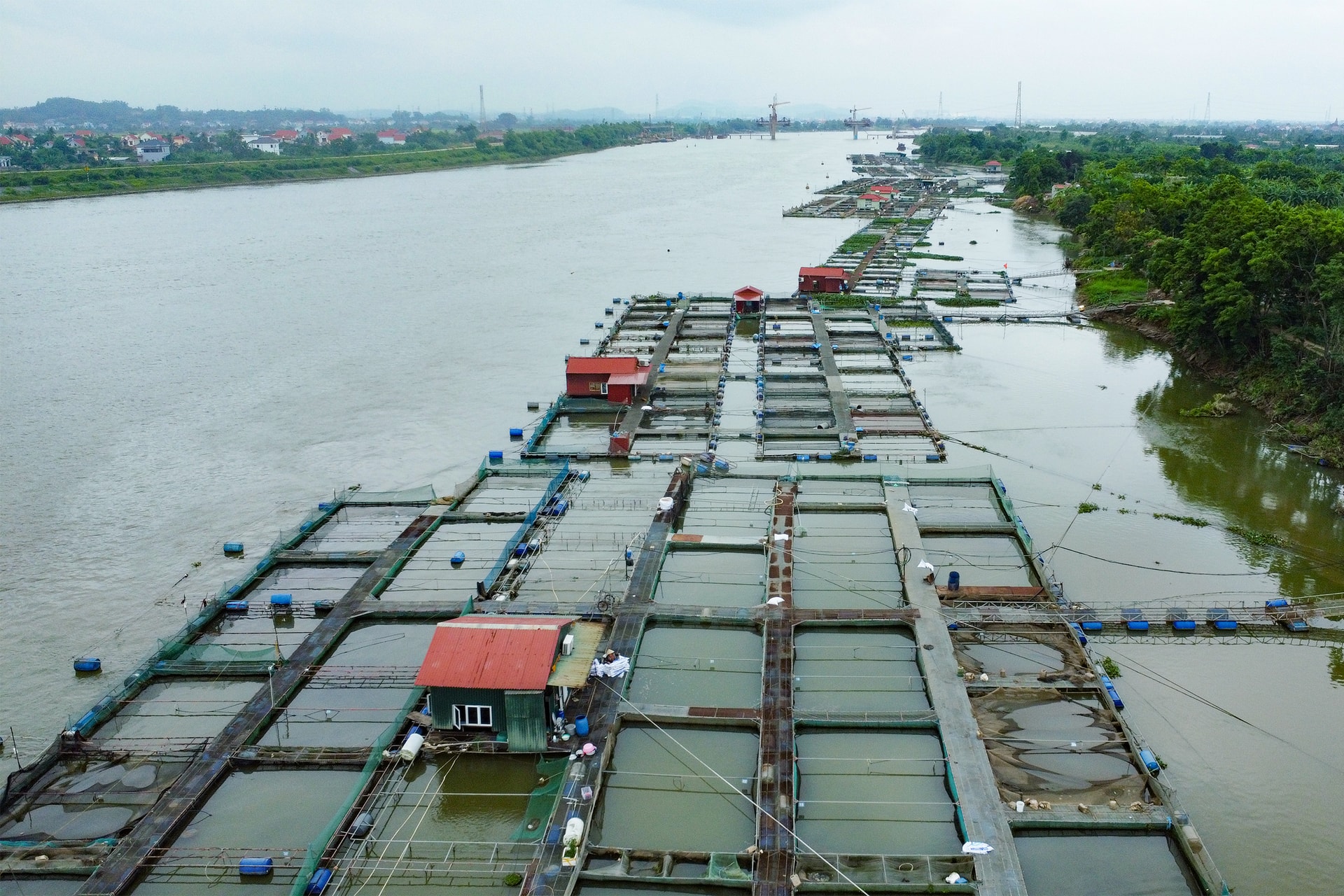
The city is focusing on reviewing, updating, and integrating aquaculture zone planning into the overall spatial planning of the city's rivers and inland waterways.
In addition, GIS technology and overlaid mapping can be used to uniformly manage water areas, defining safe aquaculture planning boundaries for both production and transportation.
The city strives to complete the master plan for aquaculture water surface areas linked to inland waterway transport by 2030; 90% of cage aquaculture areas on the river will be granted "Certificates of Registration for Cage Aquaculture"; there will be no more encroachment or obstruction of inland waterway transport routes; and the number of collisions between ships and boats related to aquaculture activities on the river will be reduced by 90%.
Hai Phong has over 1,000 km of rivers, canals, and waterways under traffic management, including vital routes such as the Cam River, Bach Dang River, Lach Tray River, Van Uc River, Kinh Thay River, Thai Binh River, and Kinh Mon River... These waterways serve both freight transport and tourism, and are areas where people develop aquaculture.
Source: https://baohaiphong.vn/lap-lai-trat-tu-vung-nuoi-thuy-san-long-be-544333.html




















![[Photo] Reception to welcome General Secretary and President To Lam and his wife on their State visit to the Philippines](https://vphoto.vietnam.vn/thumb/1200x675/vietnam/resource/IMAGE/2026/06/01/1780295488620_vna-potal-chieu-dai-chao-mung-tong-bi-thu-chu-tich-nuoc-to-lam-va-phu-nhan-tham-cap-nha-nuoc-toi-philippines-8798060-7855-jpg.webp)
















































Comment (0)