

School staff suffer many disadvantages.
I learned that Ms. D., a contracted cafeteria worker at a primary school in Da Lat City, is responsible for cooking meals for boarding students. A single mother with two young children, Ms. D. also earns extra income by selling grilled rice paper snacks to tourists at Xuan Huong Lake in the evenings.
On the last day of the year, seeing that her name and the names of her colleagues in the catering team were not on the school's supplementary income list, Ms. D. felt tearful, sad, and worried about where she would find the money to cover her family's expenses and those of her young children during the upcoming Tet holiday. For Ms. D., Tet had become a source of anxiety and dread.
Meanwhile, Mr. LB (47 years old), a security guard at an ethnic boarding school in Lam Dong province, has no wife or children and hasn't returned to his hometown in Ha Tinh for Tet (Lunar New Year) for over 10 years. Mr. B. says he's gotten used to celebrating Tet alone in the spacious school grounds.
Although contract workers are not on the list of those receiving additional income, the school provides him with some financial support. This helps alleviate some of the sadness and loneliness Mr. B. feels during the Lunar New Year holiday, being alone far from home, as he feels he is not "left out" of the company's joy and has some extra money to cover his expenses.
According to Government Decree 68 of 2000, positions such as security guards, catering staff, and janitors in kindergartens, primary schools, and ethnic boarding schools... have been switched to a contract-based employment system.
Although they received a fixed salary as per their contract, the lack of additional year-end income was agreed upon when signing the employment contract. However, the low salary, barely enough to cover daily living expenses, puts school staff at a significant disadvantage.
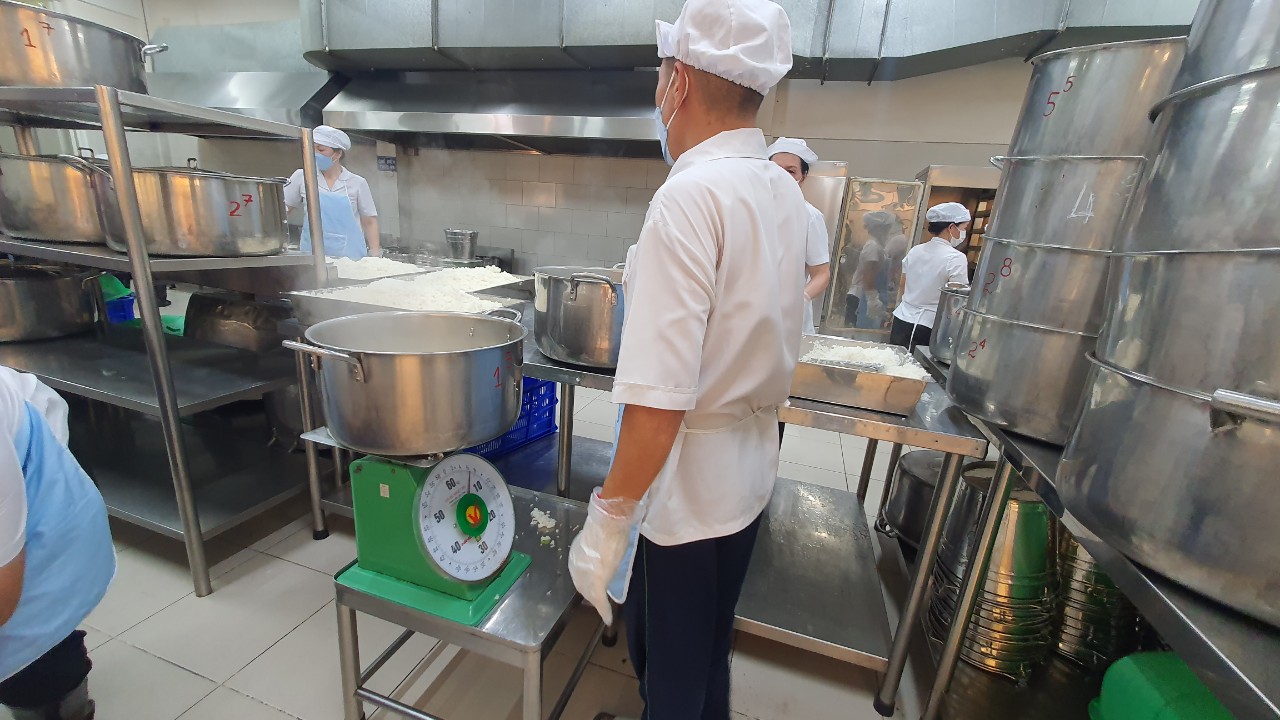
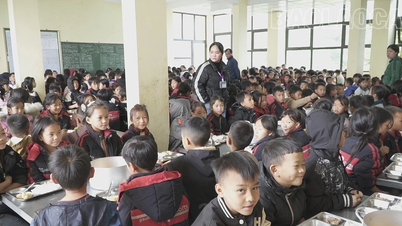
A school cafeteria worker in Ho Chi Minh City prepares meals for students.
From a management perspective, it's also difficult to include contract workers in the list of additional income recipients in the internal spending regulations for collective welfare benefits. This is because the school administration fears the risk of budget shortfalls; not to mention the challenge of balancing salaries and bonuses fairly and reasonably among different job positions.
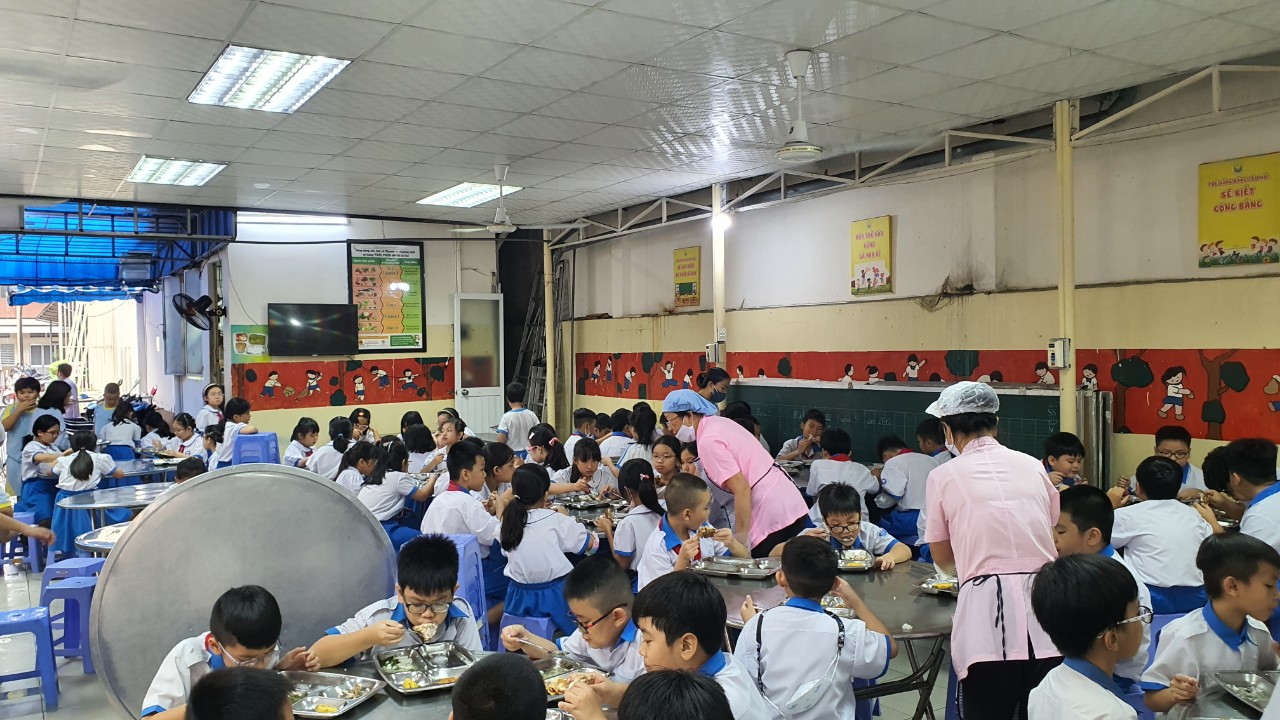
The cafeteria staff serves meals to the students.
In theory, it would be difficult to resolve the issue of paying extra income to school workers during the Lunar New Year holiday. Even the labor union would find it difficult to allocate funds specifically for this purpose, as union funds are essentially contributions from all members and cannot be prioritized. Furthermore, the salary of a newly graduated teacher is lower than the monthly fixed salary of a regular employee.
Therefore, flexibility and creativity are required here, embodying the spirit of "mutual support" from the school. Some schools encourage staff and teachers with additional income at the end of the year to contribute a small amount and use it to distribute to individuals in difficult circumstances during Tet (Lunar New Year), which is a good approach. Alternatively, the school can provide support from its welfare fund.
In some places, schools mobilize other resources such as requesting support from higher-level trade unions and benevolent social organizations with the aim of ensuring that all union members in the school have a warm spring season, both materially and emotionally, in camaraderie with their colleagues.
Spring arrives, bringing joy and hope for the new year. We hope that schools will be truly flexible and humane in calculating how to distribute additional income to employees in difficult circumstances within their organizations, so that everyone can fully enjoy the joy of the new year. This is also an important factor in creating a happy school for everyone.
Source link


![[Photo] Prime Minister Pham Minh Chinh presides over a meeting on private sector economic development.](/_next/image?url=https%3A%2F%2Fvphoto.vietnam.vn%2Fthumb%2F1200x675%2Fvietnam%2Fresource%2FIMAGE%2F2025%2F12%2F20%2F1766237501876_thiet-ke-chua-co-ten-40-png.webp&w=3840&q=75)









































































Comment (0)