

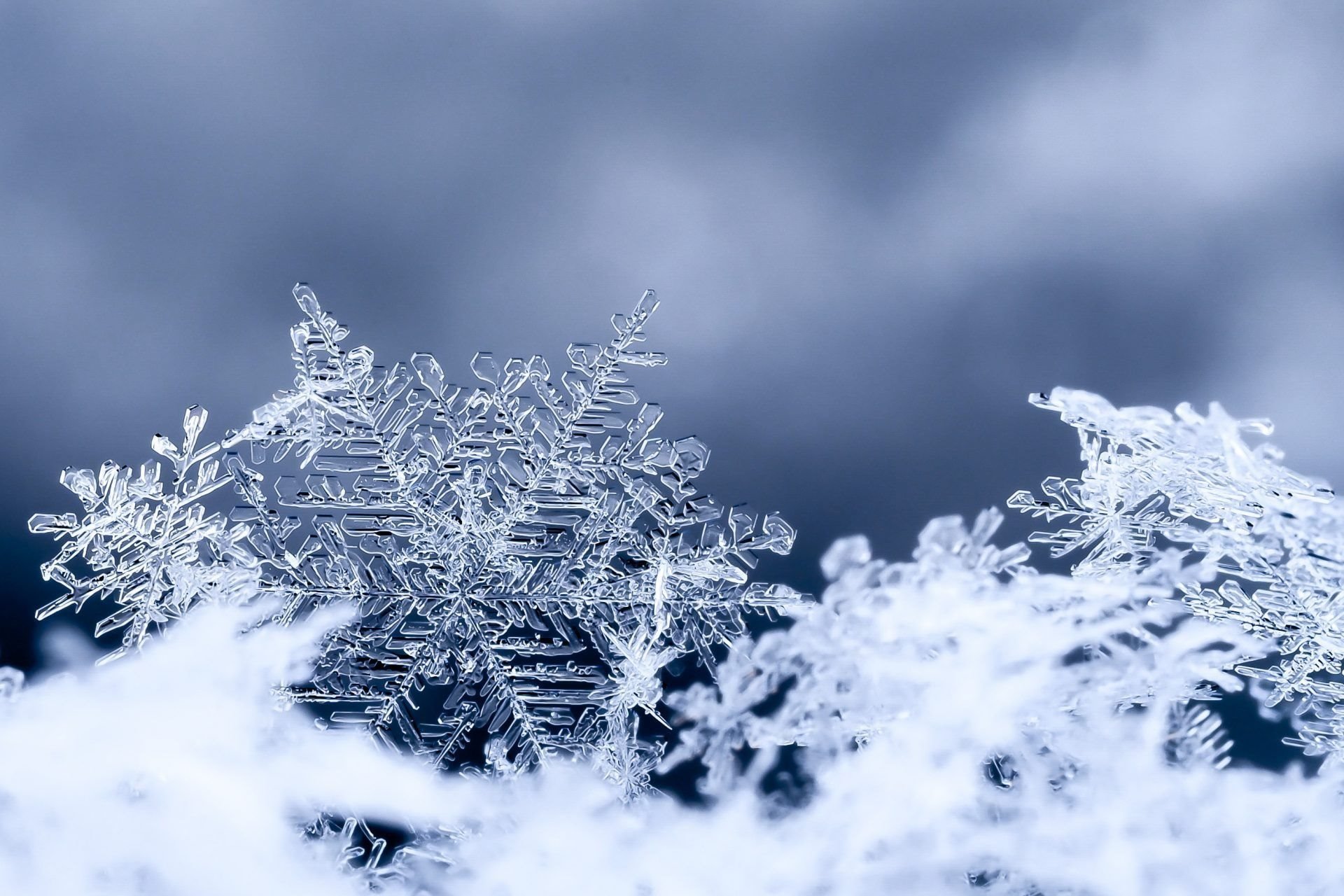
What gives snow its shape and color?
In high-altitude regions, the lower the temperature, the greater the chance of snow formation. However, the exact temperature for snow formation is not a fixed value, as it depends on various factors such as humidity, pressure, and air composition. Generally, however, snow formation is possible when temperatures fall below freezing point (0°C).
Snow crystals come in a variety of beautiful shapes. They typically have a multi-directional, iridescent structure with large snowflakes and smaller crystal branches. Each snow crystal can have a unique shape, but they usually exhibit symmetry and repeat a specific pattern. This occurs because the snow crystal formation process takes place under specific atmospheric conditions and factors such as humidity, temperature, and pressure.
The white color of snow is due to a phenomenon called light reflection. When sunlight strikes snow crystals, the light rays are reflected and scattered within the crystals. This process occurs repeatedly in the snow, resulting in the light being scattered in many different directions. As a result, we see snow as white, because white is a combination of all wavelengths in the sunlight spectrum that are reflected and scattered uniformly.
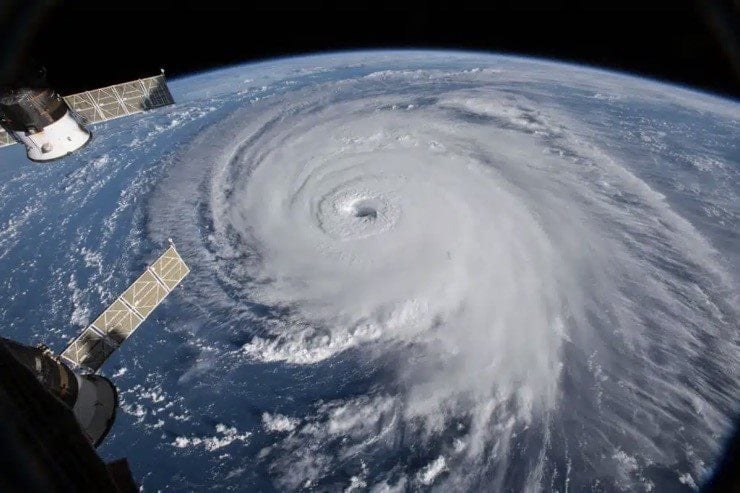
What criteria are used to classify storm intensity levels?
Hurricane intensity levels are typically assessed based on a variety of criteria, the two most important of which are wind speed and air pressure. The criteria commonly used as global standards for hurricane intensity classification are as follows:
Maximum wind speed: This is one of the most important factors in assessing the strength of a hurricane. Wind speed is measured in mph (miles per hour) or km/h (kilometers per hour). Hurricanes are classified into different categories based on the average maximum wind speed over a given period.
Minimum Air Pressure: Air pressure within a hurricane is also a crucial indicator of its strength. Air pressure is measured in hert-pascals (hPa) or in Hg (inches of mercury). Hurricane intensity levels can be determined based on the minimum air pressure at the eye of the storm.
Impact level: A storm is also assessed based on its potential impact on affected areas. This includes the potential for flooding, high waves, heavy rainfall, and the potential for damage to people and property.
Size and Structure: Hurricane intensity levels can depend on the size of the storm and its internal structure. Factors such as the radius of the storm zone with strong winds, the storm zone with low pressure, and cloud stratification can also be considered in hurricane intensity assessment.
Storm assessment and classification systems can vary depending on the country or organization responsible.
The most commonly used hurricane classification system is the Saffir-Simpson system, named after the two scientists Herbert Saffir and Robert Simpson. This system classifies hurricanes into five categories based on maximum wind speed and potential destructive power. Below is a detailed description of the hurricane categories in the Saffir-Simpson system:
Level 1 - Mild Storm: Maximum wind speed: 74-95 mph (119-153 km/h). Minimum air pressure: > 980 hPa. Impact: Causes minor damage, such as fallen trees, damaged rain awnings, and significant damage to small vessels.
Level 2 - Moderate Storm: Maximum wind speed: 96-110 mph (154-177 km/h). Minimum air pressure: 965-979 hPa. Impact: Causes significant damage to trees, houses, and infrastructure. May damage roofs and pose a hazard to small boats.
Level 3 - Severe Storm: Maximum wind speed: 111-129 mph (178-208 km/h). Minimum air pressure: 945-964 hPa. Causes significant damage to civil structures, homes, and boats. Trees are uprooted, potentially causing inland flooding and extensive agricultural damage.
Level 4 - Very strong storm: Maximum wind speed: 130-156 mph (209-251 km/h). Minimum air pressure: 920-944 hPa. Impact: Causes severe damage to wind-resistant structures, homes, ships, and infrastructure. Causes localized flooding and negatively impacts the lives of residents.
Level 5 - Extreme Storm: Maximum wind speed: ≥ 157 mph (≥ 252 km/h). Minimum air pressure:
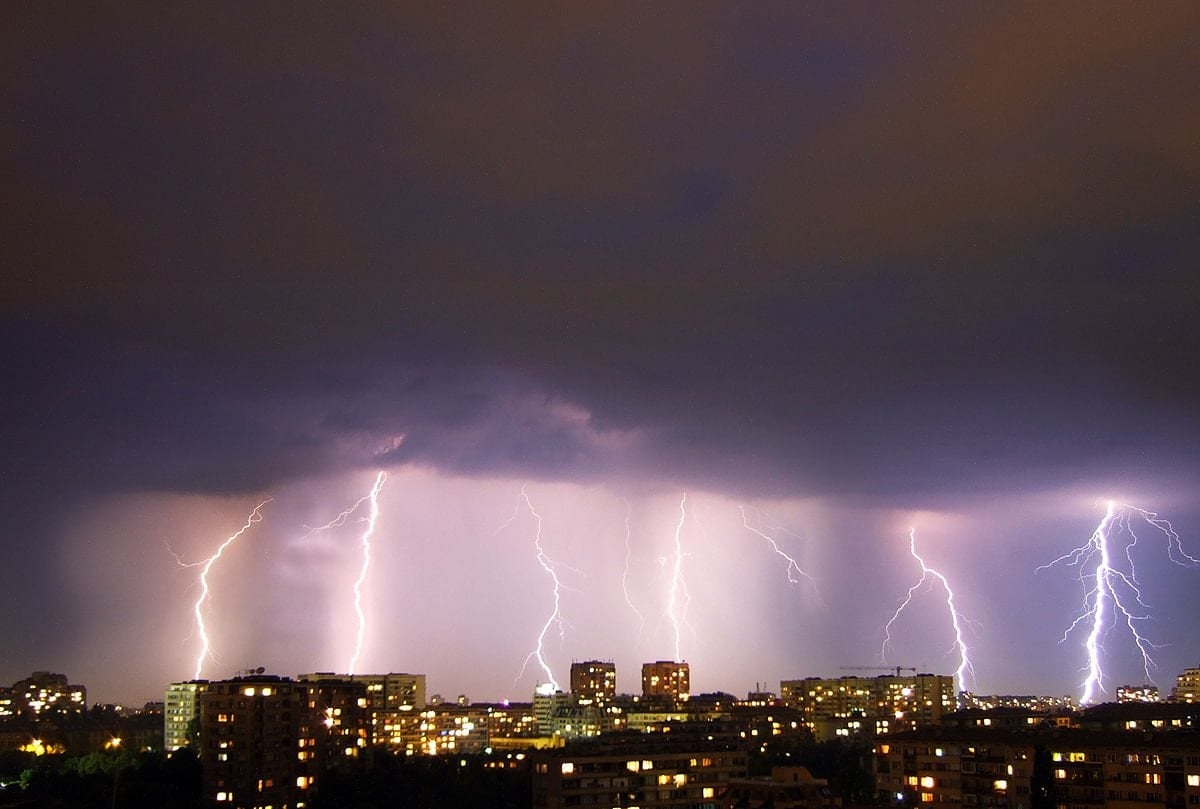
Why do we hear thunder, lightning, and thunder?
Lightning, thunder, and lightning are natural phenomena involving the generation and transmission of electromagnetic energy in the air.
Thunder is the sound produced when there is a rapid reaction between electrical charges in the air. During a storm, particles in the clouds interact and create an electrical charge within the cloud. When this charge becomes too strong, it can create a conductive path from the cloud to the ground. The polarization between these different charged regions leads to the development of an electrical current from the cloud to the ground, called lightning. As lightning travels through space, it heats the air surrounding the electrical path and creates a structure of hot gas that can produce a loud sound, known as thunder.
Lightning is a phenomenon of luminescence in the air when a strong electric current passes through it. When a lightning bolt travels between clouds and the ground, the electromagnetic energy creates a small spark in the air surrounding the electrical path. This spark produces a strong, luminous light, called lightning. Lightning occurs very quickly and usually lasts only a moment.
Both lightning and thunder occur due to natural electrical phenomena. When an electric charge passes through the air, it encounters resistance and creates a strong current. The conductive path creates thunder and lightning, and as the energy of lightning travels through the air, it heats the surrounding air and produces sound and light.
To prevent the harmful effects of lightning on life, the following measures can be taken:
Avoid going outside during thunderstorms: When there is a storm warning or thunderstorm, limit your time outside your home or residence, especially in open spaces such as golf courses, beaches, or grasslands. Seek safe shelter such as indoors, in a covered building, or in a car.
Avoid standing near conductive objects: Limit contact with conductive objects such as power lines, utility poles, communication poles, or large metal objects during thunderstorms. Electromagnetic radiation from these objects can increase the risk of being struck by lightning.
Avoid dangerous locations: Avoid standing near high places such as treetops, power poles, bridge supports, or mountain peaks during thunderstorms. This reduces the risk of being struck by lightning, as high places attract lightning.
Seek safe shelter: If caught in an open space with no shelter, find a safe place. Avoid lying or curling up on the ground, as these are positions where lightning can conduct electricity.
Limit the use of electrical devices: During thunderstorms, limit the use of electrical devices such as mobile phones, computers, music players, or other digital devices. These devices can become contact points for lightning and pose a danger.
Use a lightning protection system: In buildings or constructions, a suitable lightning protection system should be used to reduce the risk of lightning strikes. This system includes lightning rods and a grounding system to safely route the electrical current from the lightning strike to the ground.
Stay informed about weather forecasts: Monitor weather forecasts to be aware of the possibility of thunderstorms. When a storm warning or thunderstorm warning is issued, follow the instructions and recommendations from the authorities. This will help you prepare better and avoid unnecessary dangers.
Learn first aid: Master the basics of first aid in case someone is struck by lightning. Knowing how to perform RCP (cardiopulmonary resuscitation) and use an AED (automatic external defibrillator) can save the life of a lightning strike victim in an emergency.
Install a grounding system: In homes and buildings, a grounding system should be installed to reduce the risk of lightning strikes and limit damage. The grounding system will safely route the electrical current from the lightning strike to the ground.
Understanding safety information: Learn and grasp safety rules regarding lightning, thunder, and lightning. Learn about safety principles during thunderstorms or lightning-related weather. Share this safety knowledge with your family and those around you to help prevent the harmful effects of lightning.
While it's impossible to completely eliminate the risk, adhering to precautionary measures can minimize the chance of being struck by lightning and provide greater safety for lives. Always listen to government agencies and weather experts for accurate information and timely guidance.
Source: https://daidoanket.vn/thac-mac-quanh-ta-ky-6-10292882.html

![[Photo] The heat at the fireworks display site on the opening night of the Da Nang International Fireworks Festival 2026](https://vphoto.vietnam.vn/thumb/1200x675/vietnam/resource/IMAGE/2026/05/27/1779889741485_ndo_br_z7872039145157-fecaba5112f39e8352544099d7ef4738-5140-jpg.webp)


![[Photo] The courage of new recruits of Brigade 144 on the training ground.](https://vphoto.vietnam.vn/thumb/1200x675/vietnam/resource/IMAGE/2026/05/27/1779881651341_anh-man-hinh-2026-05-27-luc-18-32-52.png)






























































![[Photo] The courage of new recruits of Brigade 144 on the training ground.](https://vphoto.vietnam.vn/thumb/402x226/vietnam/resource/IMAGE/2026/05/27/1779881651341_anh-man-hinh-2026-05-27-luc-18-32-52.png)



























Comment (0)