

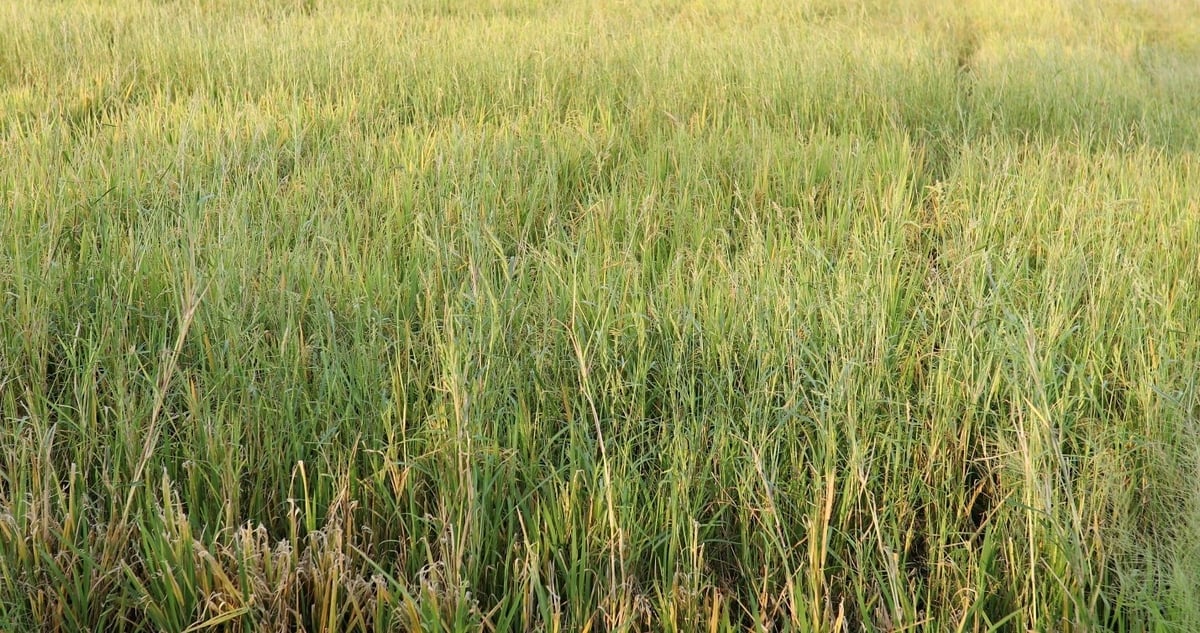
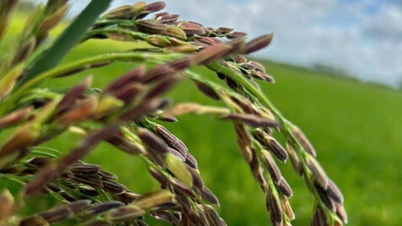
Weeds are invading rice fields in the Mekong Delta. Photo: Hoang Uyen.
In rice cultivation, besides pests, diseases, and other harmful organisms, weeds are a frequent, dangerous threat and the biggest headache for farmers. Weeds are considered one of the main causes of reduced rice yields, creating a major challenge in agricultural production.
The harmful effects of weeds in the fields.
Weeds directly compete with rice plants for nutrients, water, light, and growing space, while also creating favorable conditions for pests and diseases to develop, reducing yield and quality of agricultural products. The vigorous growth of weeds not only affects the photosynthesis process of rice plants but also increases labor costs and reduces profits.
Besides competing with rice for food, weeds also provide shelter for many pests and diseases that attack rice plants. Furthermore, at high densities, weeds create a favorable environment for rats to hide and breed, causing serious damage and resulting in crop yields.
Furthermore, weed seeds mixed in during harvesting will reduce the quality of rice for both commercial and export markets. Therefore, ineffective weed control increases production costs for pest control, thereby reducing the economic efficiency of rice farmers.
According to statistics in rice-growing countries in Asia, weeds can reduce rice yield by up to 60%, with sedges causing over 50% of the damage ( Nguyen Manh Chinh and Mai Thanh Phung, 1999 ). Weeds can even cause almost total yield loss if farmers do not implement any weed control measures. In particular, weeds such as barnyard grass and foxtail grass grow faster than rice, easily overwhelming the main crop.
Difficulties in managing weeds in the fields.
In Vietnam, weed management remains a major challenge for rice farmers. Farmers currently face many difficulties in controlling weeds, having to spray repeatedly, which is time-consuming and costly with little effectiveness.
More seriously, in acidic soils, weed control is very difficult, requiring farmers to spray more than 3 times per crop, yet the results are not as desired. In addition, mixing many types of herbicides and spraying multiple times hinders rice plant development and increases the risk of poisoning. If the rice is poisoned, farmers need to apply additional fertilizer, increasing cultivation costs.
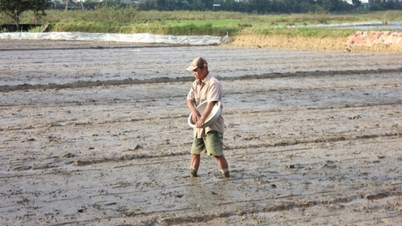
Mr. Truong Van Son, who currently cultivates over 6 hectares of rice fields in Long Phu district, Soc Trang province, shared the difficulties he is facing in weed management: “I am preparing the land; in a few days, I will start sowing rice for the upcoming summer-autumn crop. At the beginning of each season, farmers in my area have a headache dealing with weeds.”
Mr. Son added that in his area, they usually don't treat weeds at the beginning of the season because there isn't enough water. Treating weeds later creates many challenges because current solutions cannot completely manage the weeds, even after spraying 2-3 times; many weeds are left behind, reducing rice yield.
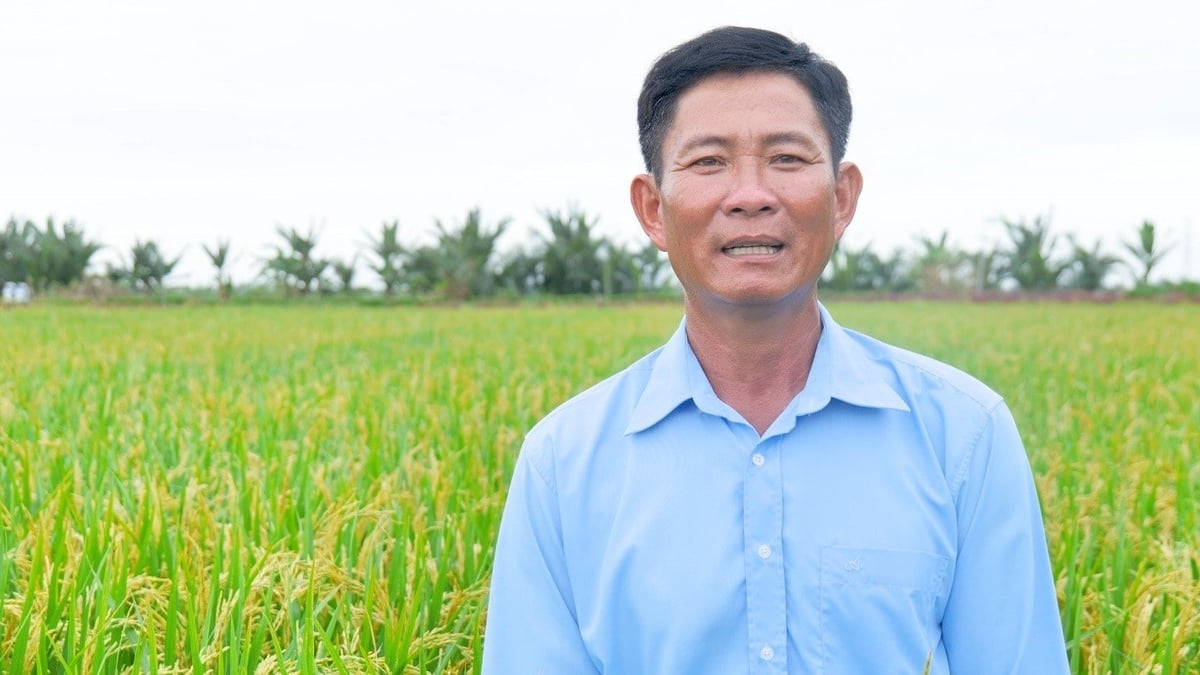
Mr. Truong Van Son, a farmer from Long Phu district, Soc Trang province, shares his difficulties in managing weeds. Photo : Hoang Uyen.
Like Mr. Son, Mr. Nguyen Van Nhanh, a farmer in Vinh Vien town, Long My district, Hau Giang province, also has many worries about weeds. Mr. Nhanh said that the land where he grows rice is acidic soil, making weed management very difficult. Every season, he has to spray 2-3 times, mixing many different herbicides to achieve even a temporary solution. The frequent spraying costs a lot of money for chemicals and labor, and he has to apply additional fertilizer, which is both time-consuming and costly, resulting in low profits.
Weed control is becoming increasingly difficult because weeds have developed resistance, even to older active ingredients on the market. Therefore, farmers still need highly effective weed control solutions targeting three groups of weeds, that are flexible in all soil, water, and temperature conditions, while ensuring safety for the environment and people, saving costs, and increasing income in rice cultivation.
Source: https://nongnghiep.vn/thach-thuc-cua-nong-dan-trong-quan-ly-co-dai-บน-ruong-lua-d746329.html


![[Photo] Prime Minister Pham Minh Chinh presides over a meeting on private sector economic development.](/_next/image?url=https%3A%2F%2Fvphoto.vietnam.vn%2Fthumb%2F1200x675%2Fvietnam%2Fresource%2FIMAGE%2F2025%2F12%2F20%2F1766237501876_thiet-ke-chua-co-ten-40-png.webp&w=3840&q=75)































































Comment (0)