

New, sustainable livelihoods for the people.
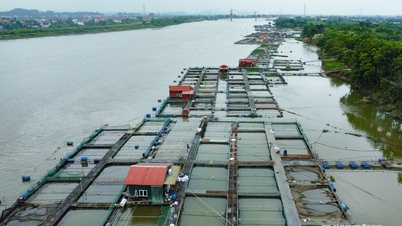
Taking advantage of its large surface area from the hydroelectric reservoir, Tien Phong commune ( Phu Tho province) has developed cage fish farming for many years. Previously, people mainly grew corn, cassava, and bamboo, with a few developing forestry, but with very low yields. Since the formation and development of cage fish farming, it has significantly contributed to improving people's lives and helping them escape poverty.
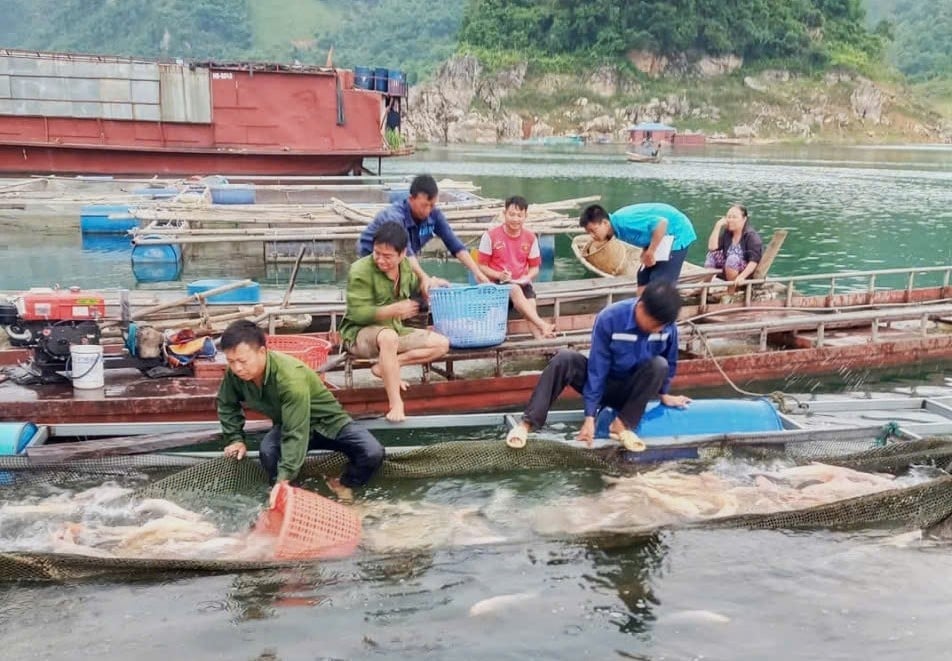
Locals are delighted to harvest their fish from the cages, a model that provides stable livelihoods and improves people's lives. Photo : Trung Dung.
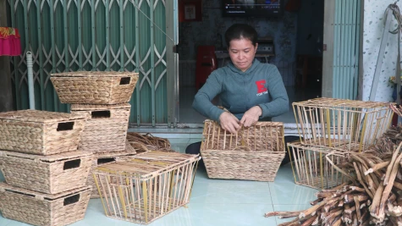
Mr. Bui Van Cong's family is one of the pioneering households involved in cage fish farming. He said that before this model was implemented, his family faced many difficulties. "We were very poor back then, we had to go into the forest to find bamboo shoots and make brooms from reeds to sell for money. Life was hard, and income was unstable," Mr. Cong shared.
Through agricultural extension programs and support from the local government, he began to learn about and switch to cage fish farming. Since then, his family's economy has gradually stabilized and improved. Currently, Mr. Cong has 6 cages raising main fish species such as snakehead fish, black carp, and catfish – high-value specialty fish.
According to Mr. Cong, the fish's food source mainly consists of small fish and shrimp caught in the wild, so their growth is slower compared to those raised on industrial feed. However, thanks to the natural food source, the fish meat is tastier and more popular in the market. For each breeding cycle, his family usually stocks 8-10 fish per kilogram, and it takes 15-18 months to reach harvest weight.
Cage fish farming on the lake not only helps people escape poverty but also creates momentum for economic development, contributing to building a stable life and increasing the economic value of the locality.
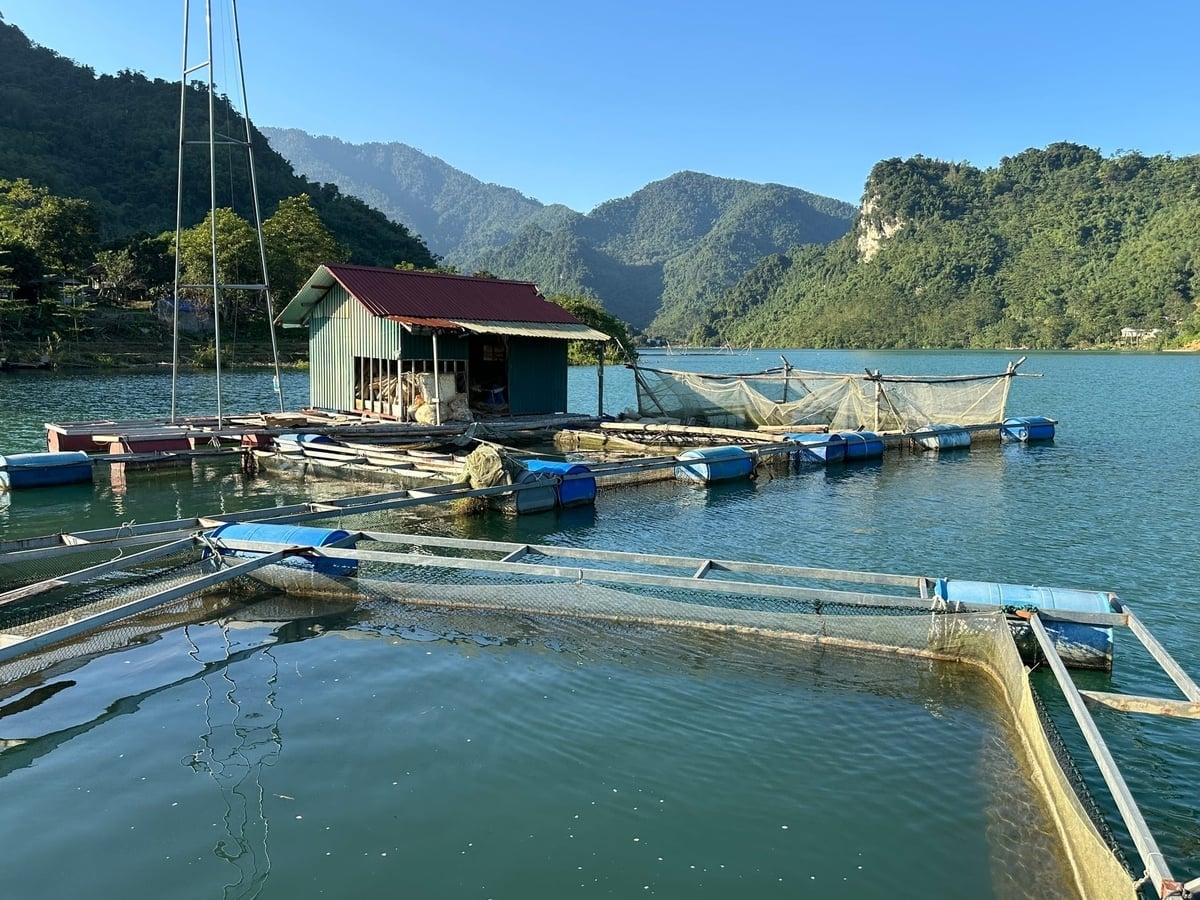
The cage fish farming model on the Da River has helped people in Tien Phong commune rise out of poverty, creating stable and sustainable livelihoods. Photo: Trung Dung.
Having been involved in cage fish farming for many years, Mr. Xa Van Chien (Tien Phong commune) said that his family used to work in agriculture and as freelancers with unstable incomes, and were classified as a poor household. However, upon recognizing the potential of cage fish farming, Mr. Chien boldly borrowed capital to invest.
"Every month, the local authorities send aquaculture engineers to inspect, guide, and train farmers on disease prevention, care, and cage management. This helps reduce fish diseases and improve productivity and quality," Mr. Chien shared.
Speaking with a reporter from the Agriculture and Environment Newspaper , Ms. Ban Kim Quy, Chairwoman of the People's Committee of Tien Phong commune (Phu Tho province), said that the entire commune has about 110 households raising fish in cages on the lake, with more than 1000 fish cages, bringing stable income to the people. The cage fish farming model contributes to creating jobs and sustainably reducing poverty for ethnic minorities in the area.
“Developing aquaculture on reservoirs has many advantages such as large water surface area, and water sources are less affected by domestic wastewater, livestock waste, agricultural waste, and industrial waste. In addition, there are abundant local feed sources such as corn, potatoes, cassava, grass, fish, and shrimp, which helps farmers reduce feed costs and increase product quality and selling price,” Ms. Quy said.
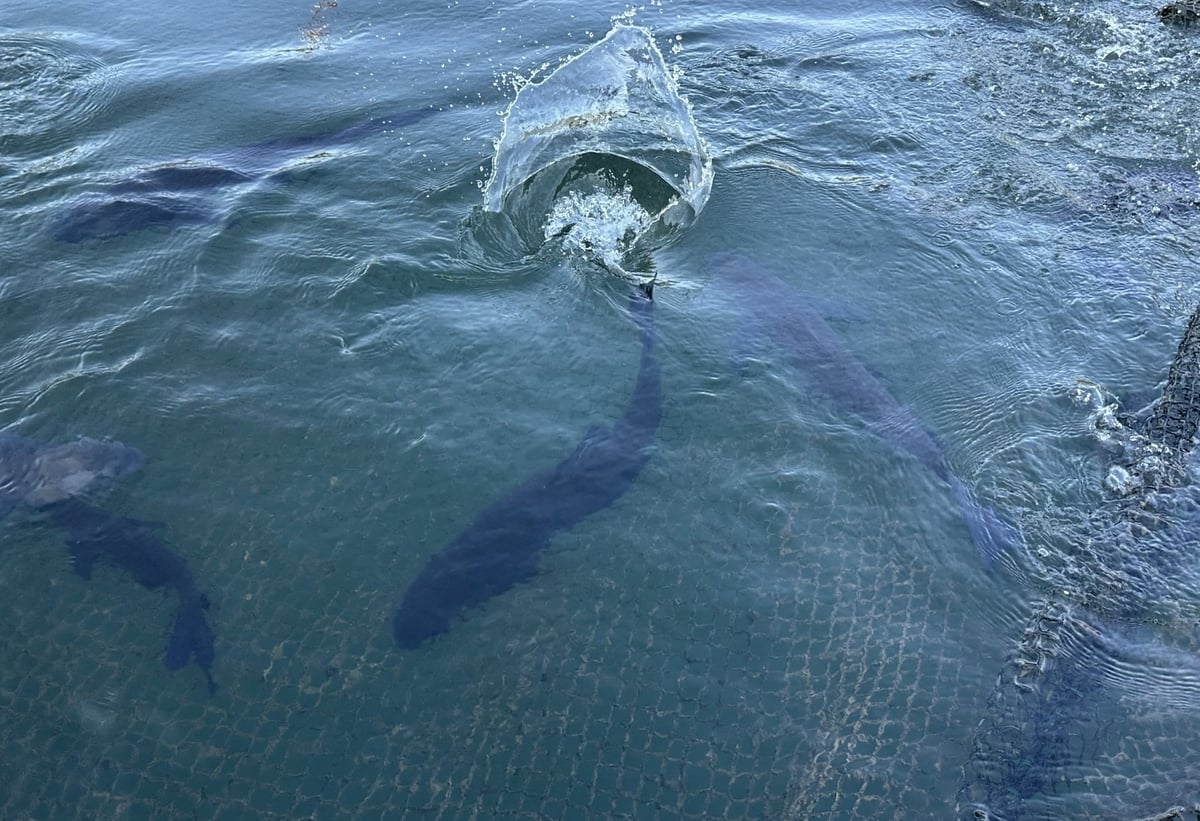
The fish in the cages thrive thanks to the clean water environment, minimizing the risk of disease. Photo: Trung Dung.
Building a brand for Da River fish.
The quality of fish raised in the Hoa Binh hydroelectric reservoir has been proven. Word of mouth has spread, and whenever it's time for harvest, Mr. Cong's family's fish are mainly sold wholesale to large distributors who then transport them to Hanoi and neighboring provinces for consumption.
"Besides selling to traders, I also sell my products through social media platforms, increasing customer reach and enhancing product value. By reducing intermediaries, the price of fish from farmers to consumers is reasonable," Mr. Cong shared.
Cage fish farming on Hoa Binh Lake has transformed the lives of many people in Tien Phong district. Besides individual fish farmers, some families have boldly invested in cage fish farms, creating jobs for workers.
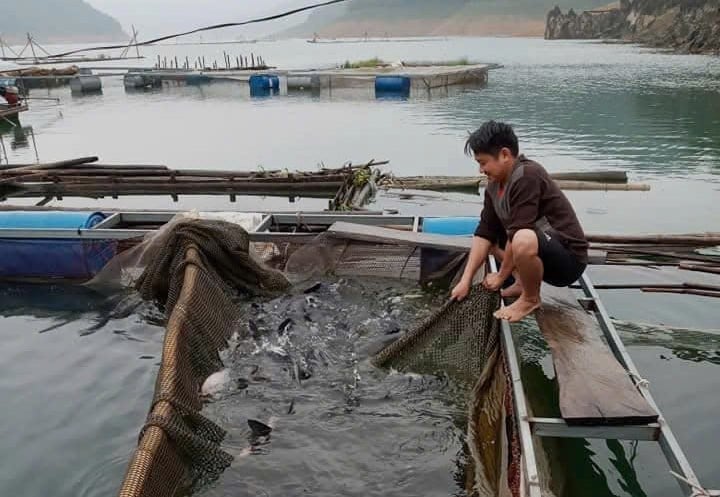
The cage fish farming model creates stable jobs for local people, contributing to sustainable poverty reduction. Photo: Trung Dung.
It is known that since 2014, Hoa Binh province (now Phu Tho province) issued Resolution No. 12 and Decision No. 10, introducing policies to support capital, technology, and encourage investment. As a result, from 2015 to 2022, the number of fish cages increased by more than 115%, and the harvest yield increased by an average of 40% per year, with valuable fish species such as snakehead fish, spotted catfish, black carp, and sturgeon.
To enhance economic value, Hoa Binh province (now Phu Tho province) issued the "Da River Fish - Hoa Binh" certification and built product consumption linkage chains in many localities. Some fish farming facilities have built brands and chain stores in Hanoi, creating trust in quality and promoting sustainable development.
In particular, the national target program for sustainable poverty reduction in the period 2021-2025 has invested 1 billion VND in a project to diversify livelihoods and develop poverty reduction models. Among these, two models of raising grass carp and American catfish (black catfish) in cages have been implemented. These models contribute to helping people escape poverty and become wealthy.
Source: https://nongnghiepmoitruong.vn/vuon-len-thoat-ngheo-nho-nuoi-ca-long-d787296.html













































































Comment (0)