

From policy to practical implementation in the fields.
The lush green rice fields stretching from the Long Xuyen Quadrangle to the key rice-producing communes and wards of An Giang vividly reflect a new direction: high-quality rice production, reduced emissions, and green growth. With the strong determination of the agricultural sector and the synchronized efforts of the entire system, An Giang is considered one of the localities effectively implementing the "Sustainable Development of One Million Hectares of High-Quality, Low-Emission Rice Cultivation in the Mekong Delta by 2030" project.
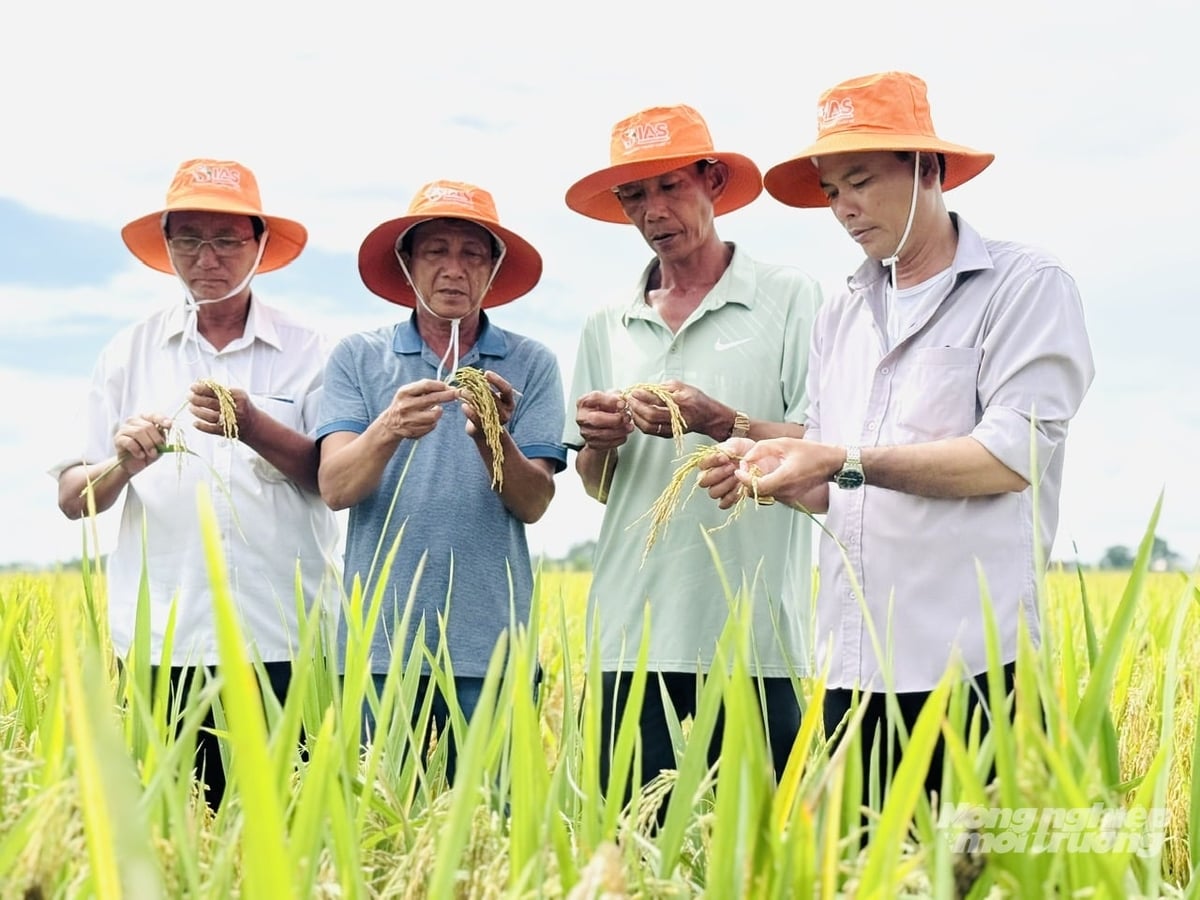
Farmers in An Giang province are applying sparse sowing and alternating wet and dry irrigation methods in their rice fields participating in the "One Million Hectares of High-Quality Rice, Reduced Emissions" project. Photo: Le Hoang Vu.
According to the plan for 2025, An Giang province will implement the project on 142,255 hectares of rice, with a target of reaching 351,362 hectares by 2030. By the 2025 autumn-winter crop season, the implementation results had exceeded many of the set targets. The area applying 3 criteria (water restriction 1-2 times, reduced fertilizer, reduced pesticide use) reached 150,551 hectares, applying 4 criteria (including reduced seed) reached 108,753 hectares, and applying all 5 criteria (including straw collection) reached 43,433 hectares.
It is noteworthy that these criteria are not just "written on paper" but have become new farming habits for farmers. Sparse sowing, using certified seeds, alternating wet and dry irrigation (AWD), reduced fertilizer and pesticide use, and proper straw disposal after harvest have made farming easier and significantly reduced costs.
Participating in the low-emission rice production model for three seasons (winter-spring, summer-autumn, and autumn-winter 2024-2025), Mr. Nguyen Van Hoa, a farmer from Chau Phu commune, shared: “Initially, I was worried because with sparse sowing and reduced fertilizer, I feared the rice wouldn't yield well. But following the technical guidelines, the rice plants are healthy, with fewer pests and diseases. For three consecutive seasons, costs have decreased by more than 4 million VND per hectare, while yields remain high, and profits have clearly increased.”
Mr. Hoa is not alone; many other farmers say that producing rice using emission-reduction processes makes the rice fields more sustainable, the soil more porous, and reduces water and air pollution. In particular, collecting straw instead of burning it in the fields has contributed to reducing greenhouse gas emissions and improving the rural environment.
The results of the 2025 demonstration model show that in An Giang (formerly), production costs decreased by an average of 4.12 million VND/ha; fresh rice yield was 0.78 tons/ha higher than the control plot; and profits increased by more than 9.3 million VND/ha. These are convincing figures, creating confidence for farmers to boldly replicate the model.
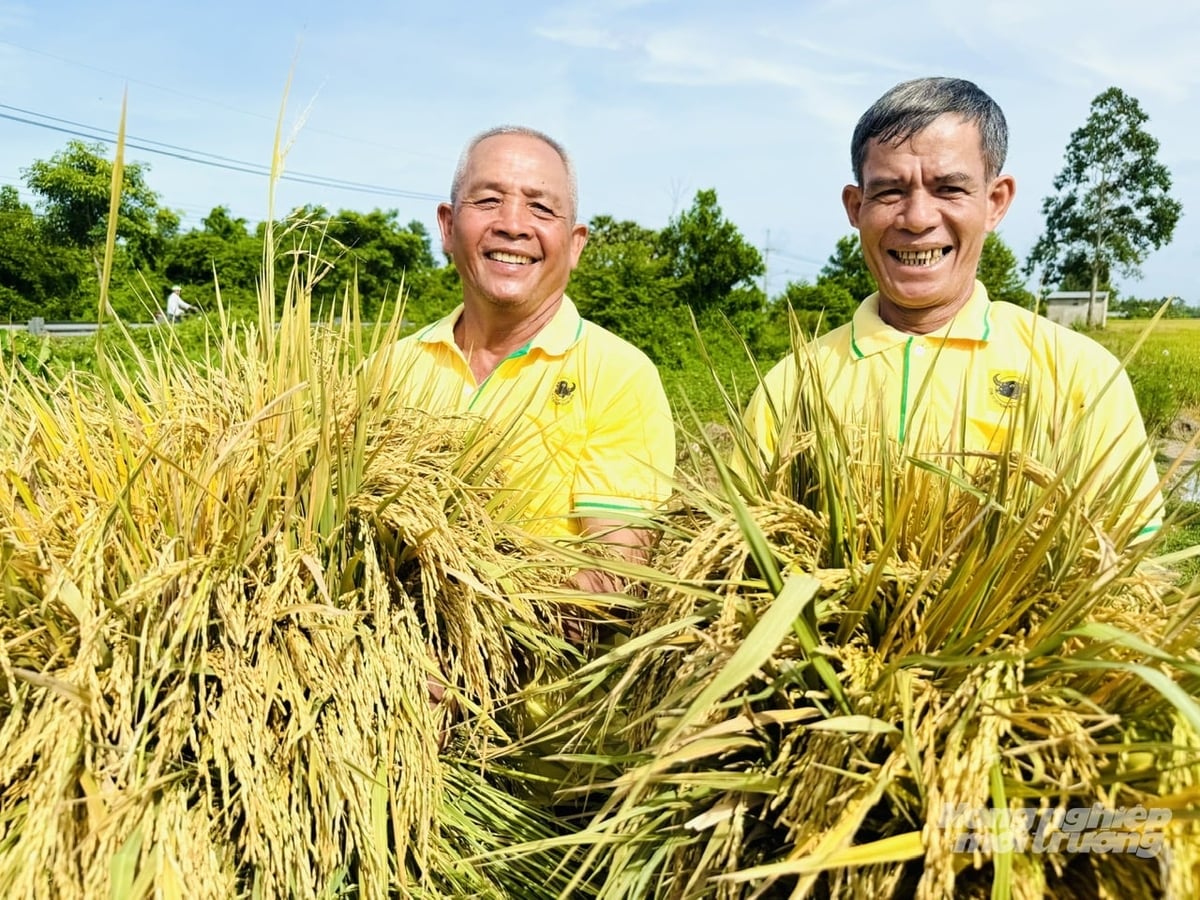
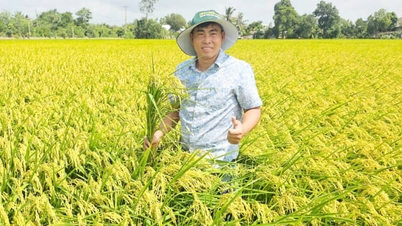
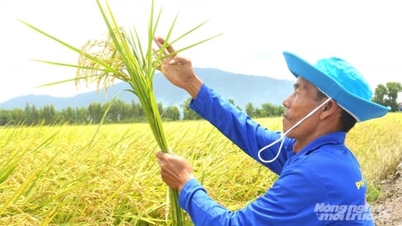
High-quality rice fields in An Giang province are developing uniformly and experiencing reduced pest and disease problems thanks to the application of environmentally friendly farming practices. Photo: Le Hoang Vu.
The role of cooperatives as a "driving force"
One of the highlights of the Project in An Giang is the role of cooperatives in organizing production and linking consumption. Vina Cam Cooperative in Hon Dat commune, An Giang province, is considered a typical model of rice production with reduced emissions linked to the circular economy .
Mr. Tran Minh Tam, Director of Vina Cam Cooperative, said: By participating in the Project, the cooperative organized farmers to produce uniformly according to the process, reducing seeds and fertilizer, using drones to spray pesticides and collect straw. As a result, input costs decreased by 10-15%, and members' profits increased by 5-7 million VND/hectare per crop.
Beyond production, Vina Cam also signs consumption linkage agreements with businesses, ensuring its members have a secure market for their products. After harvesting, straw is collected and sold to processing units, increasing income while reducing emissions and limiting the burning of straw that causes pollution.
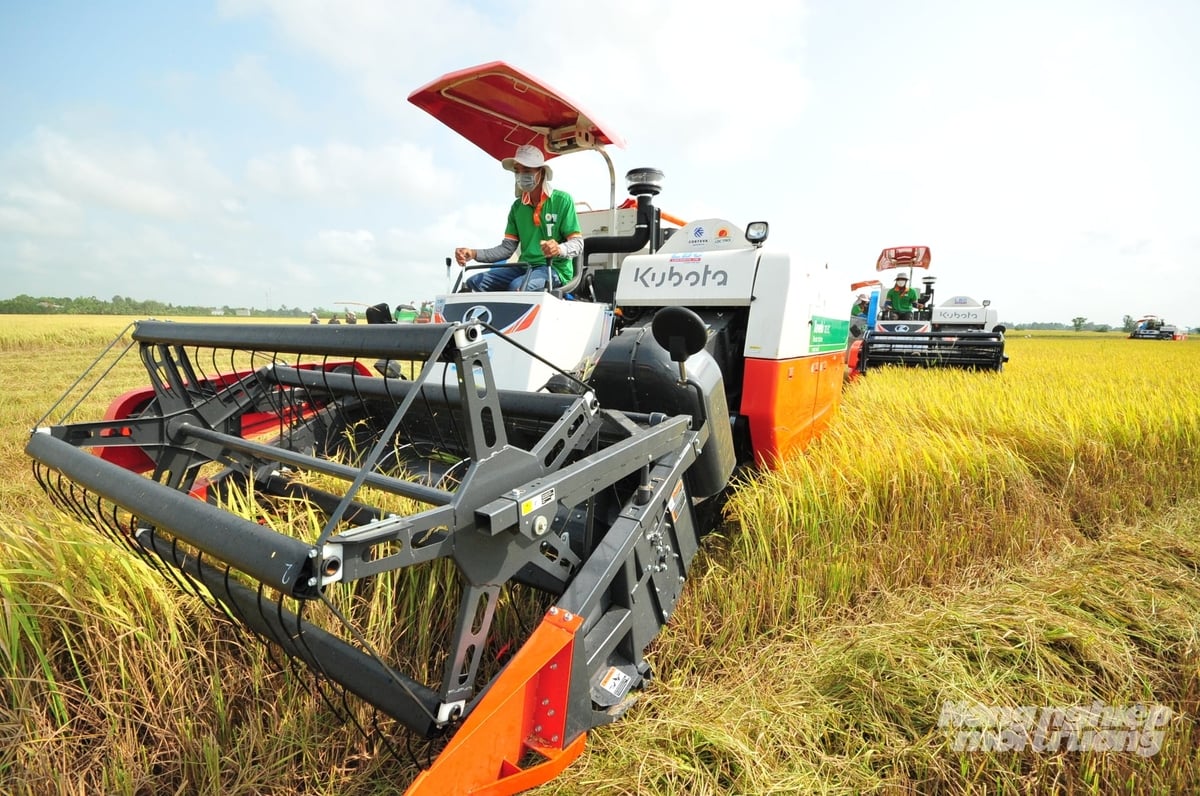
Cooperative societies and rice farmers reduce emissions through supply chain linkages, helping farmers lower costs and increase profits. Photo: Le Hoang Vu.
Currently, the province has approximately 41 businesses participating in linkages with farmers and cooperatives within the framework of the Project, with the participation rate of cooperatives reaching 23.6%. This is an important foundation for building large raw material areas to meet the requirements of the export market.
Producing high-quality rice and reducing emissions not only brings immediate benefits to farmers but also opens doors for An Giang rice in the international market. Controlling cultivation processes, keeping production logs, and ensuring traceability help products better meet the stringent standards of high-end markets.
Besides the advantages, the project still faces many difficulties such as the lack of synchronized irrigation infrastructure, the low rate of straw collection, and the inadequate distribution links to potential markets. However, with the consensus of farmers and the determination of the agricultural sector, these "bottlenecks" are gradually being overcome.
Ms. Nguyen Thi Le, Deputy Head of the An Giang Department of Crop Production and Plant Protection, said: In the coming time, the province's agricultural sector will focus on implementing the Project in depth, aiming for quality, reducing costs and increasing income for farmers.
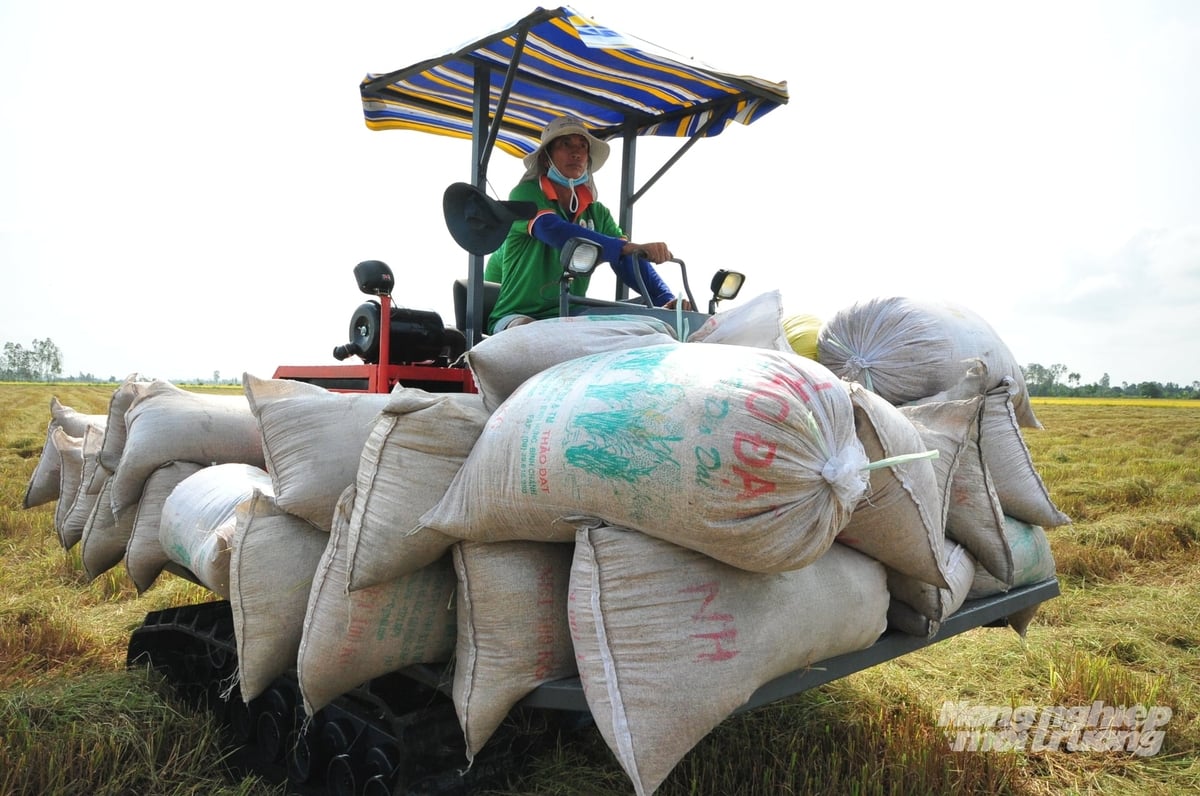
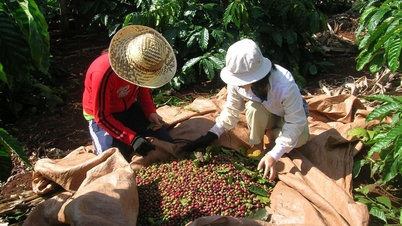
Rice harvesting in production areas participating in the "One Million Hectares of High-Quality Rice, Reduced Emissions" project, aiming to build a sustainable An Giang rice brand. Photo: Le Hoang Vu.
An Giang will continue to expand the area applying sustainable farming practices, invest in improving irrigation infrastructure to effectively implement alternating wet and dry irrigation; enhance the capacity of cooperatives; promote mechanization, digital transformation, and traceability. At the same time, the province will strengthen efforts to attract businesses to link production and consumption, and build brands of high-quality, low-emission rice for export.
With a clear roadmap and proven results in the fields, the project to cultivate 1 million hectares of high-quality, low-emission rice in An Giang is affirming its correct direction. Not only does it contribute to environmental protection, but it also enhances the value of rice grains, leading to sustainable agricultural development in An Giang in the context of deep integration.
Source: https://nongnghiepmoitruong.vn/nong-dan-an-giang-doi-cach-lam-cho-ra-hat-lua-tang-them-gia-tri-d790310.html


![[Photo] Prime Minister Pham Minh Chinh attends the Conference on the Implementation of Tasks for 2026 of the Industry and Trade Sector](/_next/image?url=https%3A%2F%2Fvphoto.vietnam.vn%2Fthumb%2F1200x675%2Fvietnam%2Fresource%2FIMAGE%2F2025%2F12%2F19%2F1766159500458_ndo_br_shared31-jpg.webp&w=3840&q=75)





















































Comment (0)