

Currently, press agencies are granted autonomy and self-accounting, operating under a business model and in accordance with Decree No. 60/2021/ND-CP regulating the financial autonomy mechanism of public non-business units (the Decree came into effect on August 15, 2021).
Financial autonomy goes hand in hand with accountability, fostering dynamism and self-reliance in management. This autonomy from the outset has motivated leaders of media organizations to be proactive and actively engage in bringing their journalistic products to market, thereby enhancing their management capabilities.
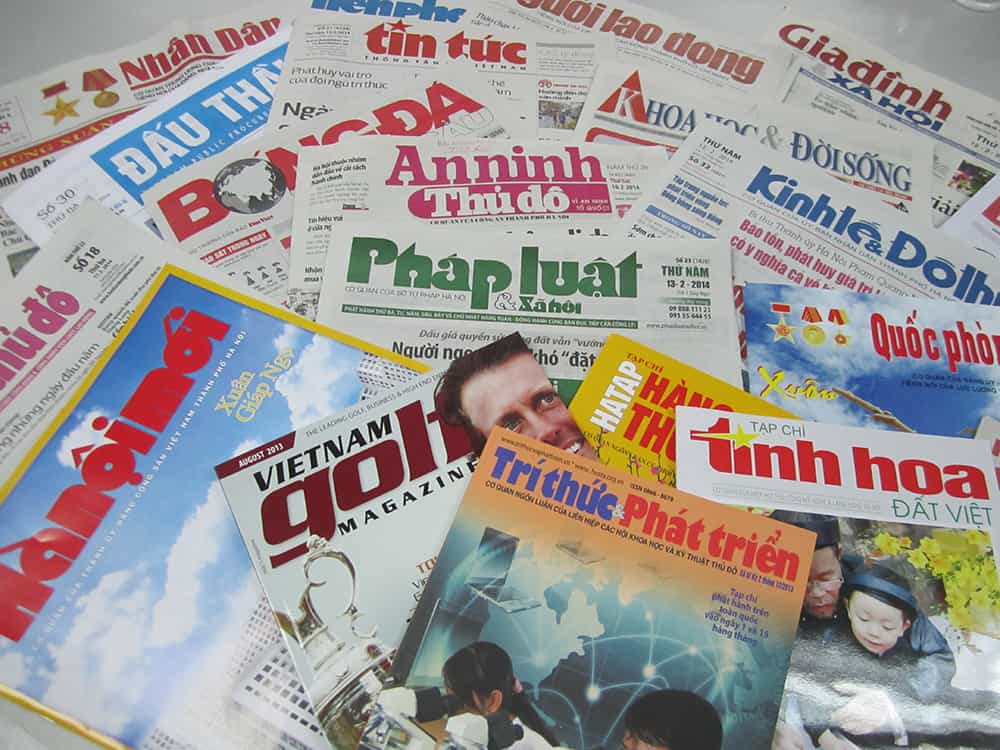
Financial autonomy for scientific journals: challenges and solutions. (Illustrative image)
Many media organizations rely on this mechanism to develop multi-platform, multi-media, multi-service journalism, develop numerous journalistic products on digital platforms, and change the way digital content is produced and communicated. This helps expand the number of customers and enhance the public experience.
With their autonomy, media organizations have independently structured their operations, managed their work, and employed staff according to their financial capabilities. These media organizations operate according to their own principles and objectives, while simultaneously needing to "satisfy" market and business demands to generate revenue to sustain themselves. Their main sources of revenue come from advertising, newspaper/magazine sales, fees for publishing scientific articles, and event collaborations. Some media organizations also fulfill commissioned propaganda programs from the government , ministries, departments, and local authorities.
Over the past period, the scientific journals of the Vietnam Union of Associations have done a good job of disseminating specialized knowledge and acting as a bridge for social consultation and critique from a large number of scientists. These publications have made a significant contribution to raising public awareness, rapidly bringing scientific advancements into production and daily life, and contributing to combating negative practices. However, reality shows that financial autonomy also poses considerable challenges for scientific journals.
Journalist Tran Thi Giang, Deputy Editor-in-Chief and Editorial Secretary of the magazine "Automation Today," stated that, to date, few magazines are able to cover their expenses, or only at a minimum level. This leads to a shortage of truly skilled journalists. A lack of financial resources results in a lack of a range of necessary conditions for producing high-quality journalistic products and for the digital transformation of journalism.
Journalist Tran Thi Giang analyzed that, for the implementation of the financial autonomy mechanism to be effective, these journalistic products need to attract readers who are interested in in-depth research, and the information provided must keep pace with the development of knowledge and the level of public awareness in that society. However, if scientific information is too academic and theoretical, it will narrow the readership, meaning that the circulation will be limited. Innovating the content of journalistic products needs to be accompanied by effective distribution.
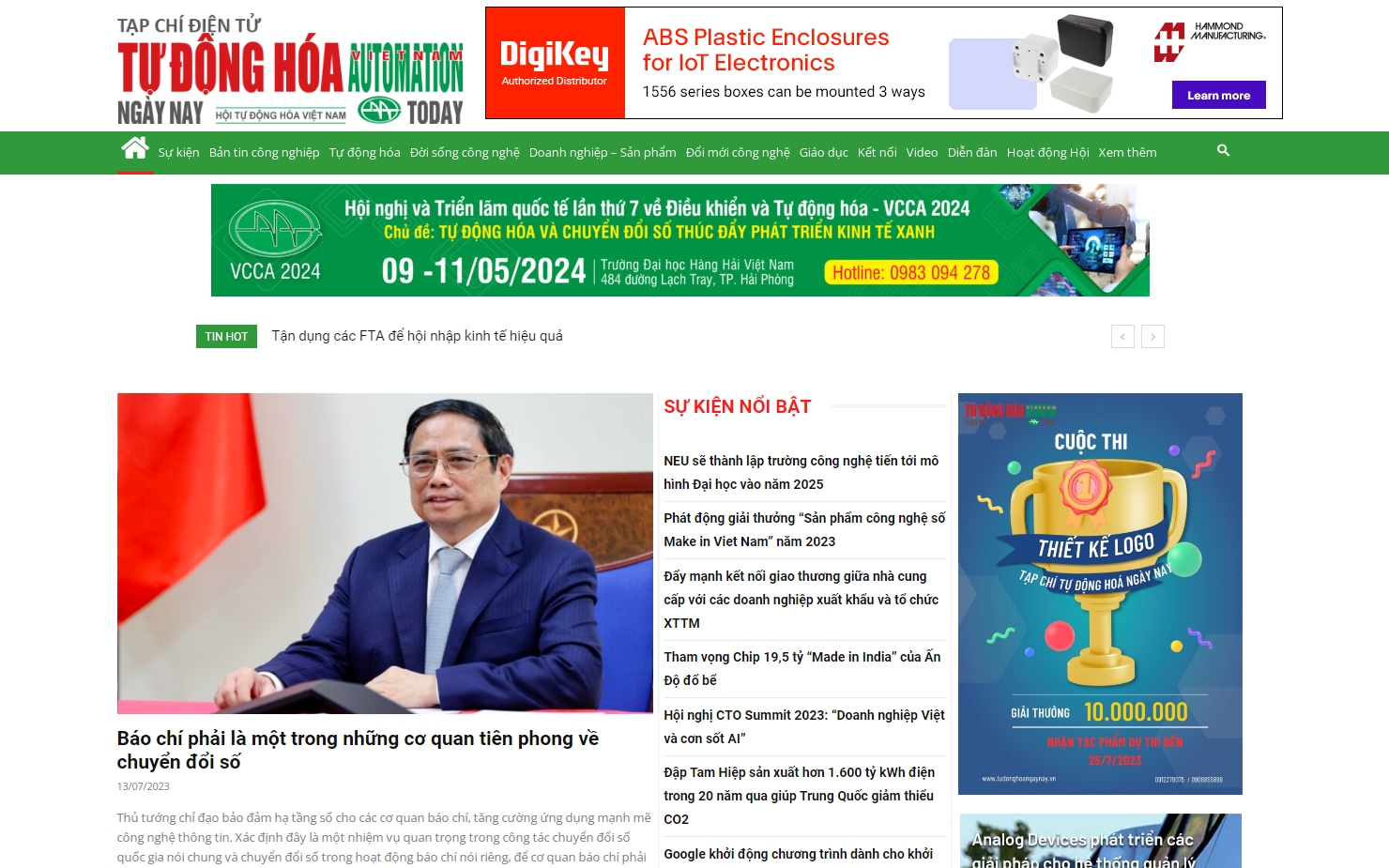
Today's Automation magazine is constantly innovating its methods and increasing its appeal.
“To produce high-quality, impactful journalistic work and fulfill the social responsibility of journalism, one of the requirements for journalists is to be proactive and creative in their work. This means listening to the pulse of life, identifying issues of public interest to find compelling topics and good information. But alongside professional competence, professional ethics, political integrity, and adherence to professional principles are also necessary to avoid mistakes and misconduct,” shared journalist Tran Thi Giang.
In reality, investing in content to increase the reach of the magazine's brand and its accompanying publications generates added-value revenue. In newsrooms without a dedicated communications department, even without a specific policy, each reporter and journalist, driven by a commitment to the survival of the newsroom, will shoulder a dual responsibility: performing their professional duties while simultaneously engaging partners and the community to share and improve communication methods, thereby creating a stronger impact and greater informational effectiveness.
Many magazines have made innovations in developing and improving content quality along with expanding distribution channels. For example, at the Health and Environment Magazine, the editorial board recognized that by leveraging the power of technology, the 4.0 revolution, and the reach of social media, they could reach a wider readership, thereby creating a new customer base and expanding advertising revenue.
According to journalist Pham Thi My, Editor-in-Chief of the Health and Environment Magazine, for each media outlet to be financially independent and operate effectively, it is necessary to clarify policies related to business activities both inside and outside the newspaper; at the same time, maintaining the practice of commissioning articles from newspapers to disseminate policies and paying for such dissemination is essential to ensure fairness and affirm the role of the press.
“To reduce the burden on the press, it is necessary to promptly issue new decrees regulating the autonomy mechanism of public service units in the field of information and communication; allowing press and publishing agencies to pay salaries like state-owned enterprises. At the same time, consideration should be given to reducing the corporate income tax of press and publishing agencies from the current 20% to around 5-10%, to reduce the tax burden, increase income for employees, and help press agencies,” shared journalist Pham Thi My.
Source

![[Photo] The General Secretary attends the groundbreaking ceremony for the construction of the Truong Ha Primary and Secondary Boarding School.](/_next/image?url=https%3A%2F%2Fvphoto.vietnam.vn%2Fthumb%2F1200x675%2Fvietnam%2Fresource%2FIMAGE%2F2026%2F01%2F28%2F1769604498277_vna-potal-tong-bi-thu-du-le-khoi-cong-xay-dung-cong-trinh-truong-pho-thong-noi-tru-tieu-hoc-va-trung-hoc-co-so-truong-ha-8556822-jpg.webp&w=3840&q=75)
![[Photo] Commemorating the unwavering friendship between Vietnam and Laos](/_next/image?url=https%3A%2F%2Fvphoto.vietnam.vn%2Fthumb%2F1200x675%2Fvietnam%2Fresource%2FIMAGE%2F2026%2F01%2F27%2F1769518372051_ndo_br_1-jpg.webp&w=3840&q=75)


![[Photo] National Assembly Chairman Tran Thanh Man meets with former leaders of the National Assembly from various periods.](/_next/image?url=https%3A%2F%2Fvphoto.vietnam.vn%2Fthumb%2F402x226%2Fvietnam%2Fresource%2FIMAGE%2F2026%2F01%2F28%2F1769601014034_anh-man-hinh-2026-01-28-luc-18-50-04.png&w=3840&q=75)


![OCOP during Tet season: [Part 3] Ultra-thin rice paper takes off.](/_next/image?url=https%3A%2F%2Fvphoto.vietnam.vn%2Fthumb%2F402x226%2Fvietnam%2Fresource%2FIMAGE%2F2026%2F01%2F28%2F1769562783429_004-194121_651-081010.jpeg&w=3840&q=75)


![OCOP during Tet season: [Part 2] Hoa Thanh incense village glows red.](/_next/image?url=https%3A%2F%2Fvphoto.vietnam.vn%2Fthumb%2F402x226%2Fvietnam%2Fresource%2FIMAGE%2F2026%2F01%2F27%2F1769480573807_505139049_683408031333867_2820052735775418136_n-180643_808-092229.jpeg&w=3840&q=75)
![OCOP during Tet season: [Part 1] Ba Den custard apples in their 'golden season'](/_next/image?url=https%3A%2F%2Fvphoto.vietnam.vn%2Fthumb%2F402x226%2Fvietnam%2Fresource%2FIMAGE%2F2026%2F01%2F26%2F1769417540049_03-174213_554-154843.jpeg&w=3840&q=75)



Comment (0)