


On May 30th, Ho Chi Minh City University of Culture, in collaboration with Vietnam Digital Library Joint Stock Company (ViLIB), organized a scientific conference on the theme: “Digital Transformation of Libraries: Challenges and Opportunities”.
Digital transformation has become an inevitable global trend, profoundly impacting all aspects of economic, cultural, educational, and social life. Resolution No. 57-NQ/TW dated December 22, 2024, of the Politburo (13th term) on breakthroughs in the development of science, technology, innovation, and national digital transformation affirmed the particularly important role of digital data, digital infrastructure, and digital knowledge in the sustainable development of the country.
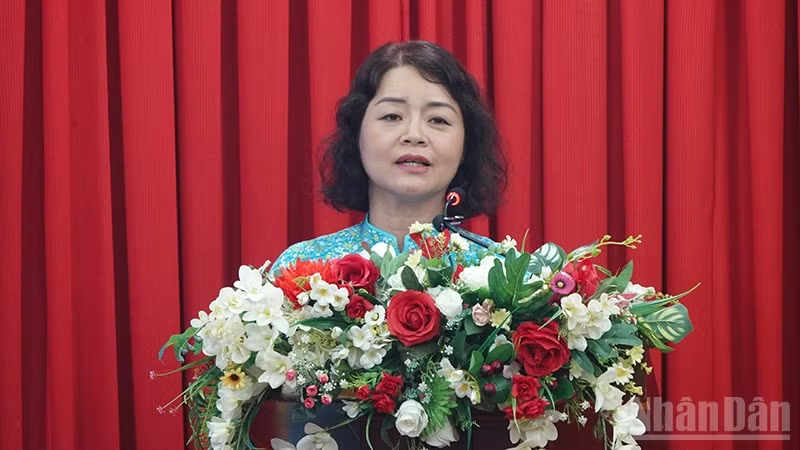
Along with Resolution No. 57-NQ/TW, the implementation of Resolution 80-NQ/TW dated January 7, 2026, of the Politburo on the development of Vietnamese culture in the new period and Directive 04-CT/TW dated March 17, 2026, of the Party Central Committee on strengthening the Party's leadership over publishing activities in the new situation, continues to require the modernization of library operations, expanding people's access to knowledge, enhancing information dissemination, and building a digital cultural environment in line with the development trends of a knowledge-based society.
According to the Organizing Committee, the workshop was organized to create a scientific forum for researchers, managers, experts, lecturers, researchers, and organizations working in the fields of library, publishing, and technology to exchange, analyze, and clarify theoretical and practical issues arising in the current digital transformation of libraries.
At the same time, the workshop aims to propose feasible solutions that will contribute to promoting the development of Vietnam's library system towards a modern, interconnected, and sustainable direction.
At the workshop, delegates focused on discussing topics such as: digital knowledge infrastructure, digital library technology and models, digital transformation of libraries in the development of reading culture and learning society, challenges in governance, copyright and human resources in digital library transformation, policies, implementation practices and experiences in developing digital library transformation.
Presenting his paper at the conference, Associate Professor, Dr. Nguyen The Dung, from the Ho Chi Minh City University of Culture, stated that one of the important opportunities for the development of digital libraries in Vietnam today is the alignment between the national digital transformation policy and the digital transformation of the cultural and library sectors.
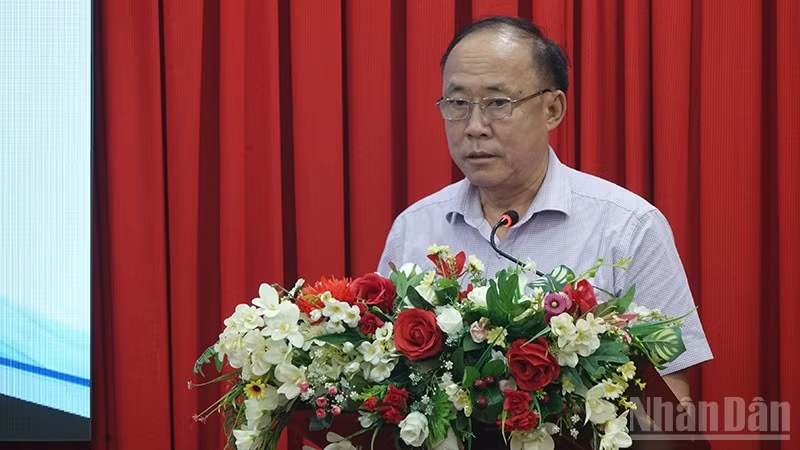
In the context of the Party and State identifying digital transformation as the driving force for the development of the digital economy, digital society, and digital citizens, libraries have favorable conditions to transform and develop digital libraries, implement operational methods, and meet the needs of library users in the digital environment.
“The relatively synchronized formation of policies, guidelines, and institutions has created favorable conditions for the development of digital libraries at the sectoral and national levels. This is an important basis for libraries to build development strategies, promote the digitization of information resources, strengthen interoperability and cooperation, and gradually form a digital library ecosystem that effectively serves the learning, research, and knowledge access needs of society,” said Associate Professor, Dr. Nguyen The Dung.
Mr. Vinh Quoc Bao, Deputy Director of the Ho Chi Minh City General Science Library, believes that in the context of post-merger development and the operation of a two-tiered local government model, accelerating digital transformation has become a prerequisite and cannot be delayed. Only with a sufficiently strong digital platform can the Ho Chi Minh City General Science Library effectively manage, support, and provide services to the entire extensive system of ward and commune libraries.
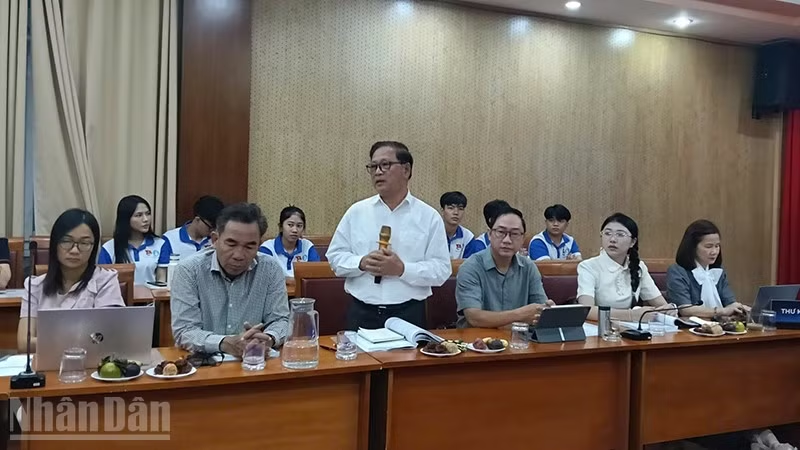
Digital transformation, in this case, is not simply a technological trend but an essential administrative management solution for the new model of government.
“In our digital transformation journey to meet new requirements, we continue to improve our information system with software capable of integrating diverse data, meeting international data standards to enhance information exchange and sharing between systems; building a portal connecting the entire public library system and related organizations; and developing a shared digital platform for the public library system to optimize resources and convenience for users.”
"In particular, there will be a greater focus on improving the IT capabilities of library staff, as this has been identified as the weakest link currently," Mr. Vinh Quoc Bao further shared.
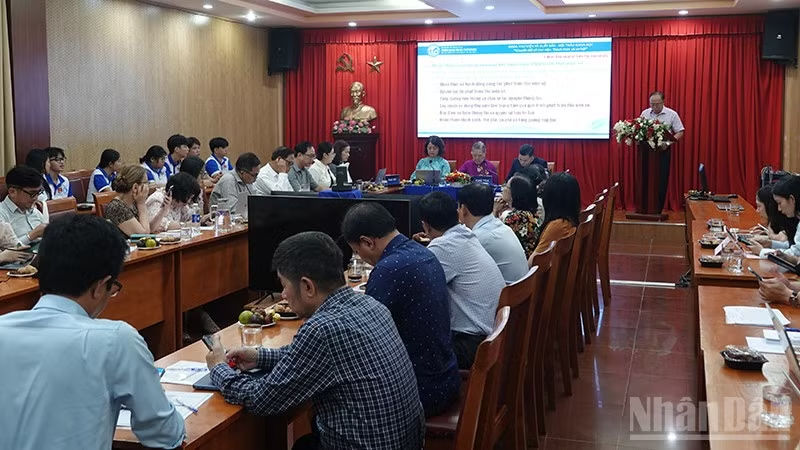
At the workshop, Mr. Le Hoang, Director of the Ho Chi Minh City Book Street Company, highlighted the difficulties in implementing digital libraries. According to Mr. Le Hoang, publishing houses, libraries, and readers form a closely linked ecosystem in their operations. Information resources, especially books, are an extremely large and convenient source of input for library activities.
"However, currently less than half of publishing units have implemented digital transformation, and investing in building digital platforms and managing unlicensed e-books remains difficult and complex, significantly impacting the digital transformation of libraries," Mr. Le Hoang emphasized.
Nevertheless, Mr. Le Hoang remains hopeful about the future development of digital libraries, as books remain an inexhaustible treasure trove of knowledge, fueled by the never-ending flow of human creativity. Furthermore, like a fundamental principle of life, people must read to develop themselves. This is an endless need, leading us to anticipate the sustainable development of reading culture and digital libraries in the future.
Source: https://nhandan.vn/thach-thuc-va-co-hoi-trong-chuyen-doi-so-thu-vien-post965879.html
![[Image] Nearly 125,000 Hanoi students completed the Literature exam for the 10th grade entrance exam.](https://vphoto.vietnam.vn/thumb/1200x675/vietnam/resource/IMAGE/2026/05/30/1780117233041_ndo_br_thiet-ke-chua-co-ten-2-png.webp)


















![[Video] 2 candidates violate exam regulations on the first day of the 10th grade entrance exam in Hanoi.](https://vphoto.vietnam.vn/thumb/402x226/vietnam/resource/IMAGE/2026/05/30/1780156540244_dung01-11-24-36099still011-png.webp)




































































Comment (0)