


However, the same phrase is explained on the "Writing Every Day" page as follows: "Deeply rooted and firmly established, the Chinese characters are 深根固蒂, in which [...] 'root' means the root of the tree [...], 'de' means the flower stalk or fruit stem, the transitional part between the trunk or branch of the tree and the flower or fruit. In Nguyen Gia Thieu's *Lament of the Concubine*, there is a line: 'The lamp flickered in the room last night / The cluster of twin flowers remains undimmed.' 'Twin flowers' here means a cluster of flowers sharing a common stem, growing from the same stem (with 'tịnh - 並' meaning common, combined), usually two flowers growing from one stem. The idiom 'deeply rooted and firmly established' (also said 'deeply rooted and firmly established') literally means the roots of the tree are deeply ingrained, the flower stalk is firmly established, figuratively referring to something that is deeply rooted and difficult to change, such as deeply rooted bad habits or deeply rooted beliefs."
I consulted Viet Chuong's "Dictionary of Vietnamese Idioms, Proverbs, and Folk Songs" ( Dong Nai Publishing House, 1998) and found that the author also defines "de" as "stem." I searched for his article on "Deeply Rooted and Solid," but couldn't find it. Therefore, through this "Casual Conversations on Words and Meanings" column, I would greatly appreciate it if you could explain to me and the readers clearly: ultimately, does "de" mean "fruit stem" or "tree root," and why is there such a difference in understanding? Do you retract your explanation or still maintain your opinion?
Thank you very much.
Answer: As reader Le Hoa Binh wrote, we (under the pen name Hoang Tuan Cong) have previously explained the phrase "Thâm căn cố đế" (deeply rooted and firmly established). In fact, this is just one of many errors we corrected in our book "Idioms in Pictures" (compiled by Nguyen Thi Huong Ly, illustrations by Nguyen Quang Toan, Kim Dong Publishing House - 2020). Specifically, the section on "Thâm căn cố đế" explains: "Thâm căn: Deeply rooted. A tree with roots that penetrate deep into the ground will be very stable. Đế: The lower part, to keep an object standing. Cố đế: The foundation that has existed for a long time."
In the article "Idioms in Pictures" containing too many errors (Nguoi Lao Dong Newspaper, May 3, 2021), we have corrected the following:
The character 柢 (đế) here means "root," not a base that "holds things firmly"; the character 固 (cố) means "firm" or "steadfast," not "long-standing" or "existing"; "cố đế" 固柢 means "firm roots," not "a base that has existed for a long time." The Chinese idiom "深根固柢" (shēn gēn gù dì) means "deep roots, unshakeable."
Reference: The book "Dictionary of Vietnamese Idioms and Proverbs" for students (Nguyen Phuong Nga - Thanh Nien Publishing House, 2022) repeated the error of "Idioms in Pictures," explaining in the section "Deeply Rooted": "đế: base, the part that keeps an object standing." (We will have a separate article to correct other errors in this dictionary).
Returning to the issue raised by reader Le Hoa Binh.
In fact, it's not just "Writing Every Day" or Viet Chuong's "Dictionary of Vietnamese Idioms, Proverbs, and Folk Songs" that explains "đế" as "stem," "fruit stem," or "fruit knob." Numerous other dictionaries and documents offer similar explanations:
- The Dictionary of Vietnamese Idioms and Proverbs (Vu Dung - Vu Thuy Anh - Vu Quang Hao - Culture Publishing House, 2000) explains: "deep roots and strong stalks. Meaning: Once deeply ingrained and firmly rooted, difficult to shake."
- Vietnamese Dictionary of Words and Phrases (Prof. Nguyen Lan - Ho Chi Minh City General Publishing House, 2006): “deep roots and strong stems (root: strong; stem: strong; flower stalk: strong. Literal meaning: deep roots, strong stems).”
- Vietnamese Dictionary (Le Van Duc - Khai Tri Bookstore, 1970): "deep roots and strong stems".
- Dictionary explaining Chinese-origin idioms (Như Ý - Nguyễn Văn Khang - Phan Xuân Thành ( Education Publishing House - 2014): “Deeply rooted and enduring: Root: Can; Co: firm, long-lasting; De: stem/trunking”.
Thus, almost all current documents interpret "đế" as "fruit stem." However, the number of documents agreeing on one interpretation is not the sole basis for determining semantic correctness. For our part, we maintain our opinion that "đế" means "root"; and "cố đế" 固柢 or 固蒂/蔕 both mean "strong root," not "a long-standing base," nor does "cố đế" mean "firm stem." The Chinese idiom "Thâm căn cố đế" 深根固柢 should still be understood literally as "Deep roots, strong foundation."
Why are there two different interpretations, and why must "đế" 蒂 (or 蔕) still be understood as "root"? Mr. Le Hoa Binh and our readers are invited to read the next article in the "Casual Conversations on Words" section in the upcoming issue.
Hoang Tuan Cong (Contributor)
Source: https://baothanhhoa.vn/tham-can-co-de-nbsp-de-la-cuong-hay-la-re-bai-1-288109.htm

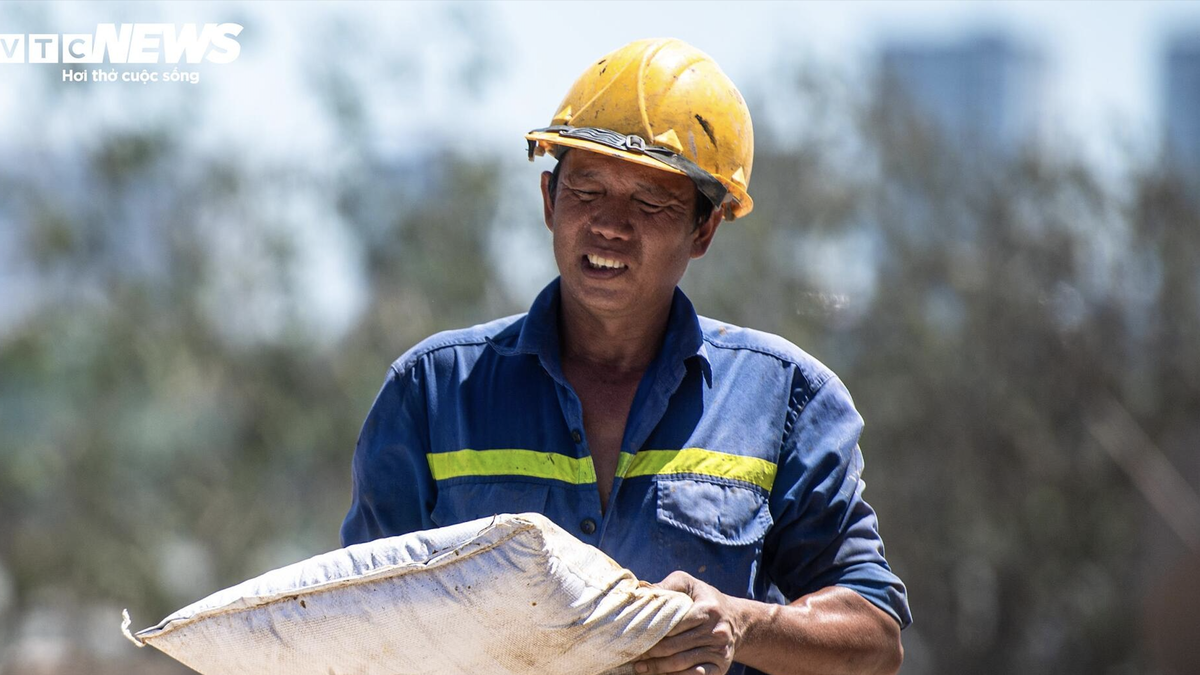
![[Image] Hanoi's urban life under the challenge of a "scorching hot" environment](https://vphoto.vietnam.vn/thumb/1200x675/vietnam/resource/IMAGE/2026/05/25/1779706979265_nang-nong-t5-2026-minh-duy-7-4636-jpg.webp)


![[Image] Close-up view of the interchange connecting the two expressways and Long Thanh Airport.](https://vphoto.vietnam.vn/thumb/1200x675/vietnam/resource/IMAGE/2026/05/25/1779703378210_ndo_br_z7863716673926-224453a31600126cce10622af6290afd-4549-jpg.webp)















































































Comment (0)