

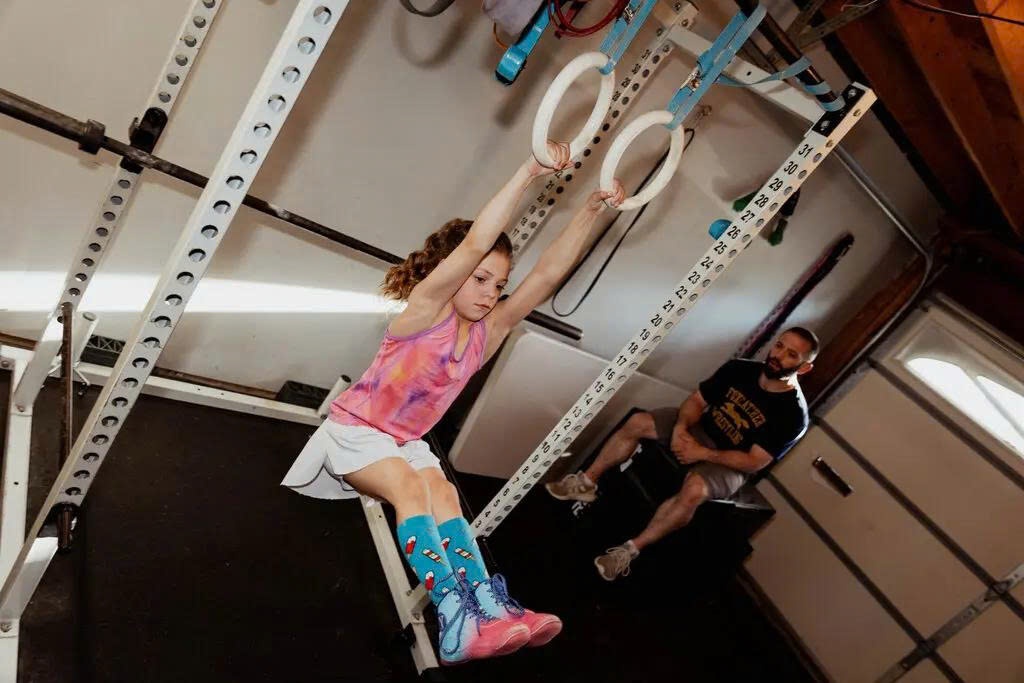
Lucy Milgrim (10 years old) rubbed chalk on her palms, placed her pink high-top shoes on the gym floor. Lucy bent her knees, pushed her hips back, and took several deep breaths. Then, when she heard her father shout "start," the 27 kg girl tensed her muscles and lifted the 66 kg weight.
"Finally, my fingers can touch each other!" the little girl said, demonstrating how tightly she was gripping the bar.
Lucy started building muscle at the age of 8 and holds 3 US national records in weightlifting. She is also a wrestling champion.
The 10-year-old "muscle prodigy" is also a social media star with a total of 232,000 followers (her Instagram and TikTok accounts are managed by her parents). Lucy's most famous Instagram video shows her lifting 82 kg at a weightlifting competition, setting a personal best, and has garnered 3.7 million views.
Danielle Friedman, a freelance writer for The New York Times , joined Lucy and her parents, Michelle and Brett Milgrim, to visit the small gym in their Long Island garage to observe one of Lucy's muscle-building sessions.
Lucy, a fourth-grade student, impressed everyone by effortlessly combining weightlifting with pull-ups and hoop exercises. Between sets, she bounced around the equipment, casually chatting about classmates who challenged her to lift them during recess, and her favorite warrior braid hairstyle.
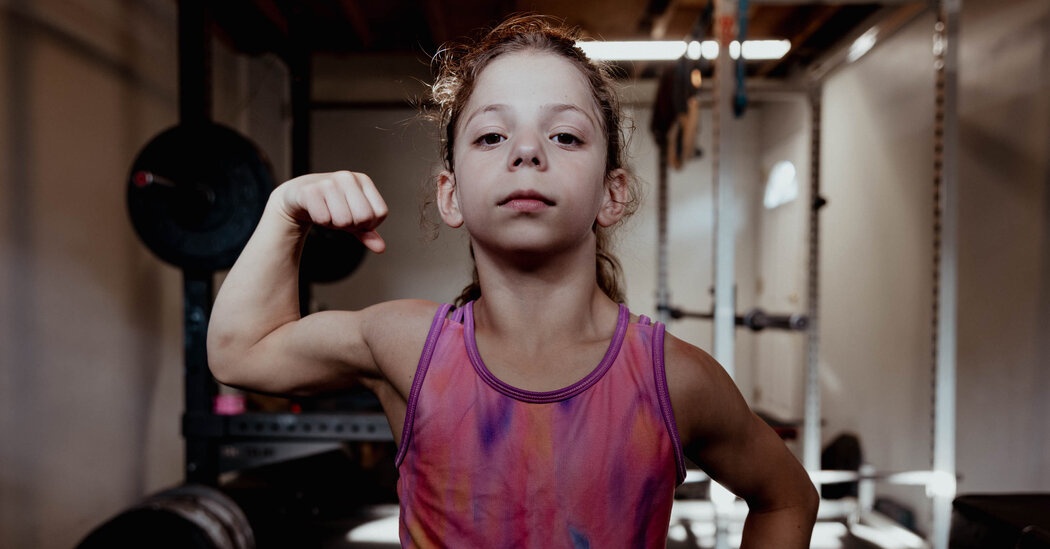 |
Lucy, 10 years old, holds three US national records in weightlifting. |
The new era of teenage bodybuilding.
Lucy says she became interested in weightlifting after watching her parents train in their home gym. She asked her father, a lawyer and wrestling coach, to train her. He agreed, knowing it could help his daughter become a stronger wrestler.
Lucy's father never had to push his daughter to train or lift heavier weights. "When she says she's going to do something, it's best to step aside and let her do it," Milgrim said.
Lucy is a prominent figure in the growing community of youth sports influencers, attracting a large following on social media.
Parents of elementary school and even preschool children are sharing videos of their kids lifting weights, pushing weighted sleds, performing swinging maneuvers, and showing off their strength in other ways.
"The fact that these accounts are attracting such a large following reflects the recent increase in strength training among children, and the fact that it hasn't yet become widespread. When people see a child lifting weights, with good technique and posture, it really amazes them," said Heather Faas, CEO of USA Powerlifting.
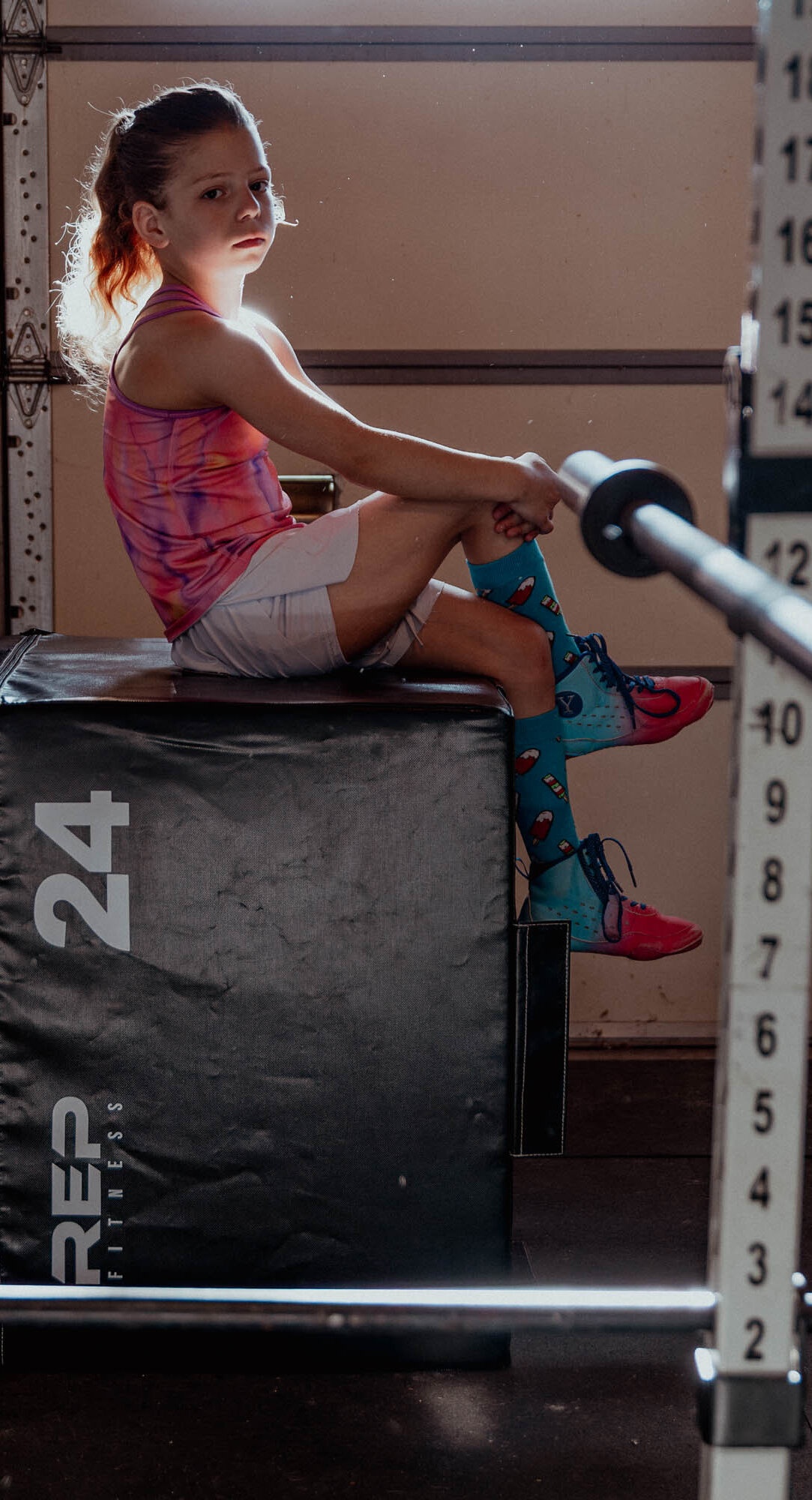  |
Lucy is one of a growing number of child weightlifting stars who have a significant influence on social media. |
Until about 20 years ago, medical professionals advised children against lifting heavy objects. According to Dr. Andrew Peterson, professor of pediatrics and orthopedics at the University of Iowa, this was primarily due to the misconception that lifting heavy objects could slow a child's growth by damaging the growth plate, the weakest part of the bone.
"They have taken a very strong stance against it," Peterson said. This view has spread to young coaches and gyms.
However, research has shown that strength training can be safe and beneficial for children, provided they are old enough to follow instructions and are closely supervised by a trainer regarding proper posture, technique, and progress.
A 2020 report by the American Academy of Pediatrics strongly recommended strength training for children and adolescents, not only to improve health and fitness but also to prevent and recover from sports injuries.
"We've known for quite some time that weight training is safe, but some traditional coaches are still a little hesitant about letting young children train. I think people are starting to realize that it's effective," said Dr. Peterson, co-author of the 2020 report.
Nowadays, more and more children are participating in strength training. Hyrox, the popular fitness race that combines both running and strength training, has recently expanded into a category for teenagers.
When USA Powerlifting first created the event for children aged 8 to 13 in 2015, only 10 children participated in the national competition. This year, 65 children will compete, and next year, the group plans to expand to 120 more spots to meet demand.
Ms. Faas said that children sharing their triumphs of strength on social media are helping to "break down stereotypes," showing that it can be safe and fun, as long as "adults take responsibility for creating a safe environment."
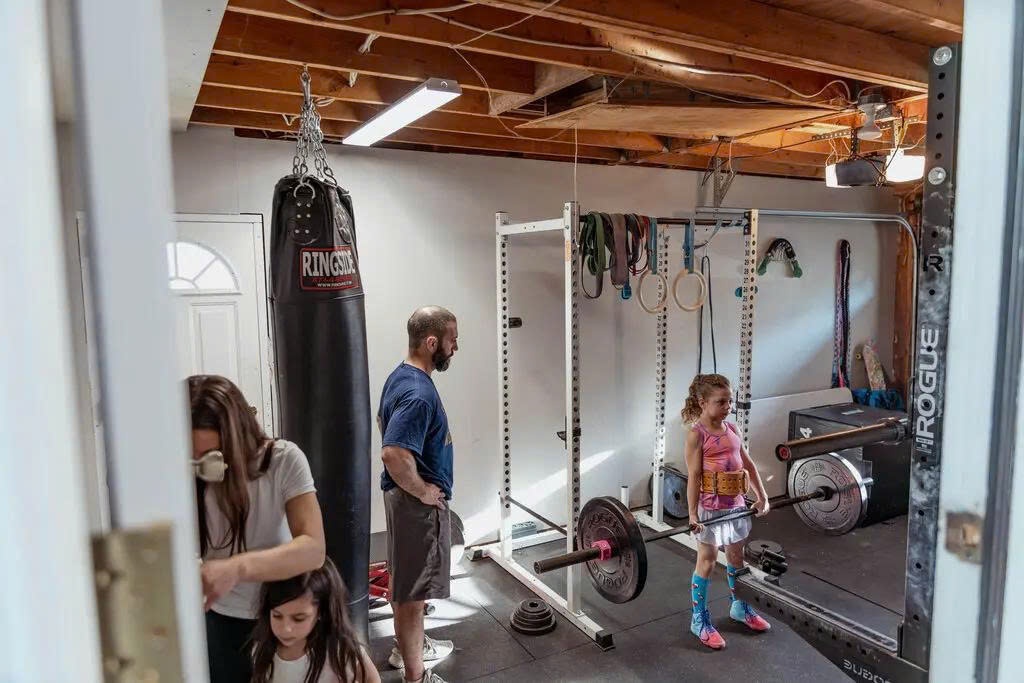 |
Lucy trains under close supervision from her father. |
Set boundaries
Sisters Winter (7 years old) and Sky Duboc (4 years old) have been practicing modified CrossFit (high-intensity strength and fitness) exercises since they were young.
The girls' parents, Franco and Michelle Duboc, own a CrossFit gym in Miami and run an Instagram account with over 120,000 followers. The page's content mainly consists of videos of their daughters performing exercises such as squats with weights, box jumps, pull-ups, and many other exercises.
When Winter was little, her parents would often put her in a portable crib while they exercised. But as she got a little older, she wanted to exercise with them and tried to imitate the exercises they were doing. Soon after, her parents bought her miniature versions of the exercise equipment they used.
When Sky was just a few years old and learning to walk, she also wanted to do the exercises her older sister did.
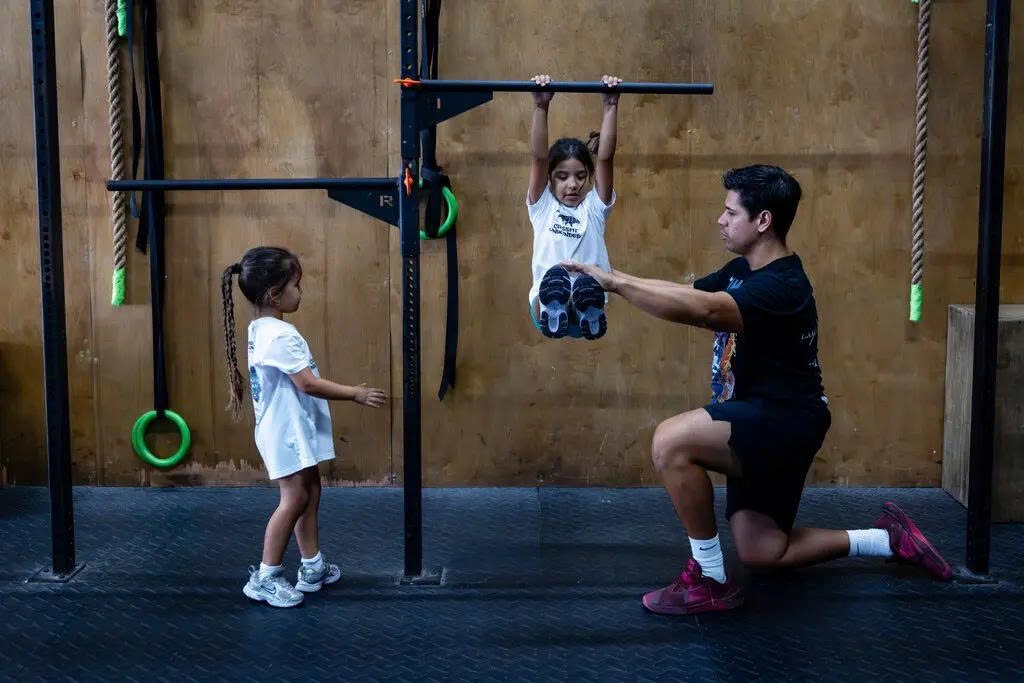 |
The Duboc sisters started training when they were just a few years old. |
In early 2026, the two sisters participated in a mini-version of the CrossFit Open, a competition held at CrossFit gyms worldwide. For 16 consecutive minutes, the two girls performed exercises including throwing a ball against a wall, box jumping, and pull-ups. Afterwards, their parents posted a video of the event, which garnered over 40,000 likes.
The Duboc couple said they created Instagram and TikTok accounts for their two daughters partly to convince other parents that they could bring their children to the gym with them.
Mr. Duboc said he often receives messages from parents asking about how to get their children involved. He also receives questions about whether the training is dangerous. He tries to answer as both a coach and a parent, emphasizing the importance of close supervision and attention to children's feelings. "If the children aren't happy, there's no point in forcing them to do something they don't like," he said.
Both the Milgrim and Duboc families said they approached their social media accounts cautiously, posting selectively and keeping details like follower counts or likes on posts private from their children. "That's something they did intentionally," said Mrs. Milgrim, a nutritionist.
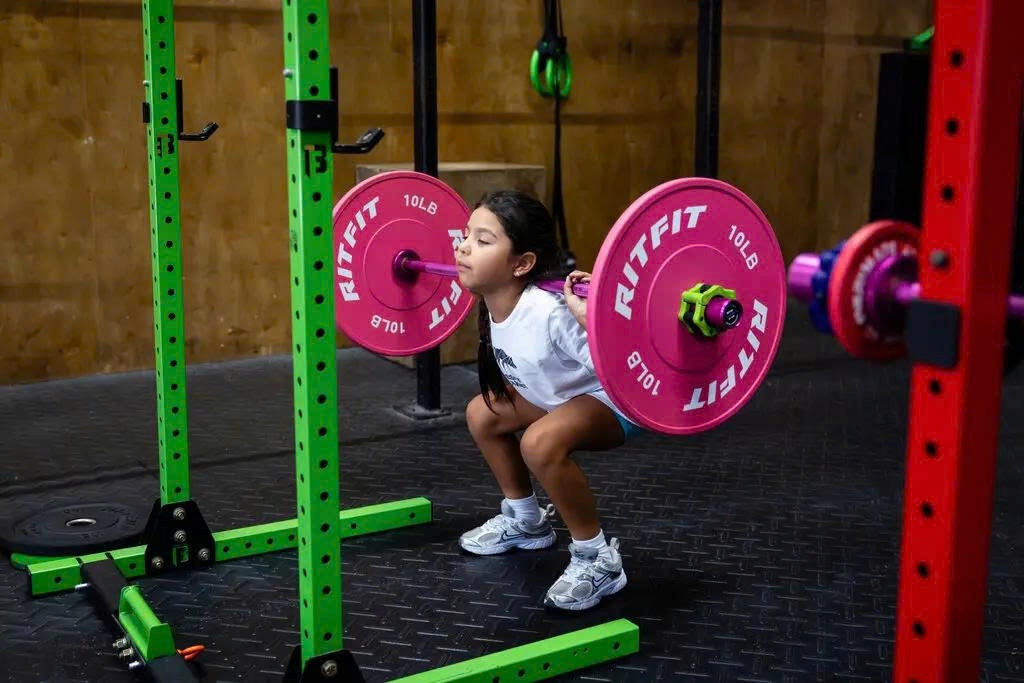 |
Kids who lift weights are changing the face of the fitness world. |
Both families said they would continue documenting training and achievements, as long as their children had healthy and positive feelings about it – meaning their children wouldn't become obsessed with social media accounts. Neither Lucy nor the Duboc sisters have access to social media or phones, and neither family plans to allow their children use them until they are teenagers. The families said they are adapting and are prepared to close accounts if they see them having a negative impact on their children.
These "muscle prodigies" also landed numerous advertising contracts, opening up opportunities beyond the gym. Lucy was sponsored by the wrestling apparel brand Combat X, and the Duboc sisters had advertising deals with the beverage company Jocko Fuel. In 2025, Sky appeared in a Dove Super Bowl commercial.
Mary Beth Finegan, a sports therapist in New York, says that to help children build healthy relationships with both sports and social media, parents need to closely monitor how those accounts affect their children's mental and emotional health and have open conversations about it. "They should be prepared to stop using social media if it becomes a source of stress," she added.
Brie Scolaro, a New York-based therapist who works with young athletes, says that sharing children's athletic achievements online isn't inherently bad, but "if parents notice it negatively impacts their child, and they see their child becoming obsessed with posting or getting likes," then that's a sign that it's time to consider pausing.
Source: https://znews.vn/than-dong-co-bap-khien-mang-xa-hoi-sung-sot-post1655973.html

![[Image] Shipbuilders exposed to steel and record-breaking heat.](https://vphoto.vietnam.vn/thumb/1200x675/vietnam/resource/IMAGE/2026/06/04/1780545781745_ndo_br_img-5402-4683-jpg.webp)
























































![[Video] Sunset at Lap An Lagoon – Where the sun sets over the fishing nets](https://vphoto.vietnam.vn/thumb/1200x675/vietnam/resource/IMAGE/2026/05/31/1780192137701_beach-landscape-sea-water-nature-grass-745871-pxhere-com.jpeg)






































Comment (0)