General Secretary and President To Lam demanded measurable progress in reducing administrative procedures, removing institutional bottlenecks, and perfecting legislation in key areas.
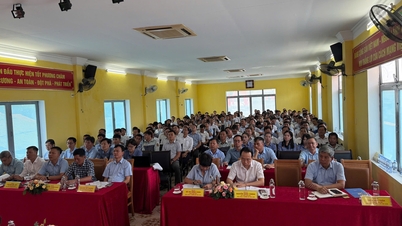
On the afternoon of June 22nd, in Hanoi , the Central Steering Committee on Institutional Improvement and Law Enforcement held its first meeting. General Secretary and President To Lam, Head of the Steering Committee, chaired the meeting.
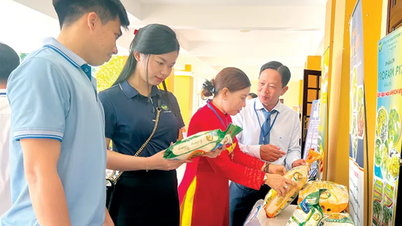
Supporting businesses in purchasing technology.
At the meeting, delegates provided feedback on four main areas: foundational documents for the Steering Committee's operations; thematic reports on mechanisms, policies, and major solutions to institutionalize the Party's guidelines and directions; reports on the situation and solutions for reviewing, amending, promulgating, and repealing legal regulations to reduce and simplify unreasonable administrative procedures and investment and business conditions in 2026; and the project "Research and propose amendments to the Criminal Procedure Code to meet the requirements of judicial reform in the new phase".
Regarding the thematic report on mechanisms, policies, and major solutions to institutionalize the guidelines and orientations on the development of the state economy according to Resolution No. 79-NQ/TW of the Politburo , the Steering Committee requested continued thorough understanding and unification of the new understanding of the state economy. Accordingly, the state economy must be a unified whole encompassing the state budget, public assets, land, resources, infrastructure, national reserves, state-owned enterprises, state-owned credit institutions, state capital in enterprises and public service units. The efficient use of state resources should be central to the process of institutional improvement; focus on removing bottlenecks to the nation's strategic resources; and create breakthroughs in the governance of state-owned enterprises.

General Secretary and President To Lam presides over a meeting of the Central Steering Committee on institutional reform and law enforcement. Photo: VNA.

Regarding the thematic report on mechanisms, policies, and major solutions to institutionalize the Party's guidelines and directions on the development of the foreign-invested economy, the Steering Committee requested the full and timely institutionalization of the Party's guidelines, focusing on building preferential mechanisms and support for investment that are specific, superior, and competitive, linked to implementation results and commitments on technology, research and development, technology transfer, training of Vietnamese human resources, the percentage of domestic added value, development of domestic suppliers, green transformation, and digital transformation. Policies to support Vietnamese enterprises in purchasing technology and receiving technology transfer from foreign-invested enterprises should also be perfected.
Regarding the Report on mechanisms, policies, and major solutions to institutionalize the Party's guidelines and directions on air pollution control in large cities, the Steering Committee requested a strong shift from a mindset of controlling each emission source to managing air quality according to objectives; developing a synchronized and modern environmental data system; building a mechanism for monitoring, evaluating, and early warning of pollution risks; and clearly defining the responsibilities of each sector, each locality, and each emission source.
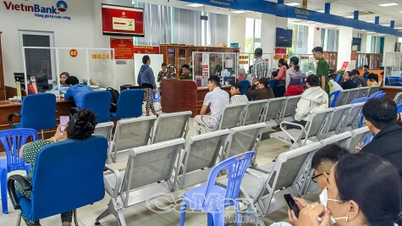
Strictly control the issuance of new administrative procedures.
Regarding the Report on the situation and solutions for reviewing, amending, promulgating, and repealing legal regulations to reduce and simplify administrative procedures and business conditions in 2026, the Steering Committee emphasized that administrative procedure reform is an important part of comprehensive institutional reform, contributing to correctly shaping the relationship between the state and the people and businesses in a constructive and service-oriented administration. Each unreasonable procedure and business condition that is reduced represents a barrier removed and an opportunity for development opened. Therefore, the Steering Committee requested that ministries and ministerial-level agencies consider the reduction and simplification of unreasonable administrative procedures and investment and business conditions as a regular and continuous task, not just a short-term campaign; shift from a pre-audit management mindset to a post-audit mindset based on risk management; and strictly control the issuance of new administrative procedures and investment and business conditions.
Regarding the project "Research and propose amendments to the Criminal Procedure Code to meet the requirements of judicial reform in the new phase," the Steering Committee requested that the amendments ensure the code truly remains one of the foundational laws, holding a central position in the legal system concerning the judiciary; clearly demonstrating the requirements for protecting justice, protecting human rights and citizens' rights, controlling state power, strengthening accountability, and ensuring the spirit of the rule of law.
Regarding implementation, from now until the end of 2026, General Secretary and President To Lam requested a focus on promptly completing and effectively operating the working mechanism of the Steering Committee and the coordination mechanism between agencies; thoroughly preparing major draft laws, resolutions, and projects to submit to the National Assembly, overcoming the situation of delays and backlogs in implementing guidelines; and creating measurable changes in reducing administrative procedures, removing institutional bottlenecks, and perfecting laws in key areas.
Following this meeting, the General Secretary and President requested that each member of the Steering Committee and each assigned agency immediately begin their work. The Standing Committee should develop a plan to monitor, supervise, and inspect the implementation of the meeting's conclusions, and periodically report to the Standing Committee on completed tasks, delayed tasks, difficult tasks, tasks beyond their authority, and tasks requiring resolution…
Unlocking resources for development
With a spirit of strong innovation, determined action, clear responsibility, and close coordination among members of the Steering Committee, ministries, departments, and localities, the General Secretary and President are confident that the Steering Committee will successfully fulfill its assigned responsibilities, contributing to creating new breakthroughs in institutions and laws, unlocking development resources so that institutions are no longer bottlenecks but become resources for development.
Source: https://nld.com.vn/thao-go-diem-nghen-the-che-196260622215052508.htm
![[Image] Schools organize meetings and introduce teaching models to students admitted to grade 10.](https://vphoto.vietnam.vn/thumb/1200x675/vietnam/resource/IMAGE/2026/06/25/1782368077271_ndo_br_z7970052192242-1ec8daeb77a6eed1a4e9f58c564ddd3e-jpg.webp)


![[Image] Ho Chi Minh City: Ma Lang area, Chicken-Rice Market about to change its appearance](https://vphoto.vietnam.vn/thumb/1200x675/vietnam/resource/IMAGE/2026/06/25/1782377698627_ndo_br_m1-jpg.webp)

![[Photo] General Secretary and President To Lam receives Palestinian Ambassador Saadi Salama](https://vphoto.vietnam.vn/thumb/1200x675/vietnam/resource/IMAGE/2026/06/25/1782365384740_a1-bnd-9423-8322-jpg.webp)