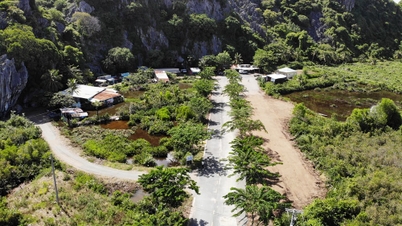
More than 10 years ago, Khoi Khe village in Phong Hai commune was a disadvantaged area. The people mainly grew corn and rice using traditional methods on barren hillside land, resulting in many hardships. Faced with this reality, the local Party committee and government determined that sustainable poverty reduction must begin with changing people's mindsets. Therefore, the policy of restructuring crop patterns was implemented, coupled with propaganda, technical guidance, and the development of specific models for people to follow.
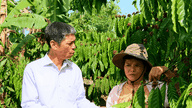
One of the pioneers in the cinnamon cultivation movement in Khoi Khe village is Mr. Ban Van Dinh, a Dao ethnic minority. Recalling the time when he and the government went to encourage people to switch crops, Mr. Dinh said: “Back then, people were only used to growing corn and rice, so when they heard that growing cinnamon meant waiting many years before harvesting, everyone was worried about how they would make a living. We had to patiently explain to them that if they wanted to escape poverty, they had to think long-term and save for the future.” After listening to the campaign, some households boldly converted their less productive crop areas to commercial cinnamon cultivation. People began to calculate the economic efficiency, focusing on applying techniques and establishing production linkages. Mr. Ban Van Nghia, one of the households that successfully switched to cinnamon cultivation, shared: “Previously, my family only grew rice using traditional methods, resulting in low income. After receiving guidance on techniques and new business approaches from commune officials, I switched to growing cinnamon combined with aquaculture, and as a result, my current income is much higher than before.”
 |
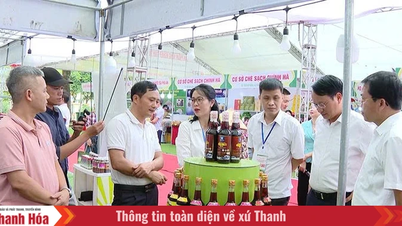
| Leaders of Bao Thang commune visited the chicken farming model of Ms. Tran Thi Huyen's family in Co Hai village. |



According to statistics, Phong Hai commune currently has over 2,500 hectares of cinnamon plantations, of which about 300 hectares are organic cinnamon meeting international standards, yielding an income of 150-200 million VND/hectare/year. Along with cinnamon, the locality also develops tea, bananas, and aquaculture in a commercial direction. Mr. Vu Trung Dung, Chairman of the People's Committee of Phong Hai commune, said: “The locality has determined that for sustainable development, we must shift from a backward agricultural production mindset to a mindset of developing an agricultural economy. Therefore, we have sent officials to the grassroots level to provide technical guidance, encourage people to change their methods, and build model projects for economic development. When these models prove effective, we replicate them so that people can follow suit. Thanks to this, many families have now escaped poverty sustainably. The poverty rate in the entire commune has decreased to just over 3%.”
In Bao Thang commune, many households have also boldly invested in developing modern poultry farming. Previously, most poultry farmers in Bao Thang commune had to import chicken breeds from the lowlands, which increased costs and posed a risk of disease outbreaks. Based on this reality, some households have proactively researched techniques and invested in producing their own breeding stock locally, a prime example being the family of Ms. Tran Thi Huyen in Co Hai village. From 2019 to the present, Ms. Huyen has gradually transitioned from small-scale chicken farming to mastering breeding techniques and operating a closed-loop farming model. Currently, her farm maintains approximately 6,000 parent chickens, supplying 70,000-80,000 chicks to the market each month. Ms. Huyen said: “To develop the economy sustainably, we must maintain our reputation through product quality. Therefore, I pay special attention to caring for and preventing diseases in my flock of chickens. All chicks are fully vaccinated before being sold to ensure quality. Having a reliable source of chicks not only helps me reduce costs and minimize disease risks but also brings high economic efficiency. After deducting expenses, my family earns a profit of 700-800 million VND per year, creating stable jobs for many local workers.”
Mr. Nguyen The Truong, Chairman of the Farmers' Association of Bao Thang commune, said: "It is noteworthy that people have changed their way of thinking in economic development. When people focus on product quality, proactively manage breeding stock, and access markets, economic efficiency is significantly improved."
The experience in Lao Cai shows that when Party committees and authorities know how to unleash the internal strengths of the people, guide them to change their production mindset, and effectively exploit local potential, even disadvantaged areas can create new impetus for development. This is also an important direction for many mountainous localities in Lao Cai province to continue building new rural areas, achieving sustainable poverty reduction, and improving the lives of ethnic minorities in mountainous regions.


Source: https://www.qdnd.vn/kinh-te/cac-van-de/thay-doi-tu-duy-san-xuat-o-vung-cao-lao-cai-1045646
![[Photo] Prime Minister Le Minh Hung presides over the thematic session on promoting science and technology development and innovation.](https://vphoto.vietnam.vn/thumb/1200x675/vietnam/resource/IMAGE/2026/06/23/1782207872934_ndo_br_dsc-1724-jpg.webp)