

Vietnam Doctors' Day on February 27, 2025, is very close to the 50th anniversary of the liberation of Phu Yen province, the complete liberation of the South, and the reunification of the country. Fifty years ago, during these days, the medical staff of the Phu Yen Green War Zone eagerly went to the front lines, carrying out the orders of the Forward Command Headquarters, led by Provincial Party Secretary Nguyen Duy Luan.
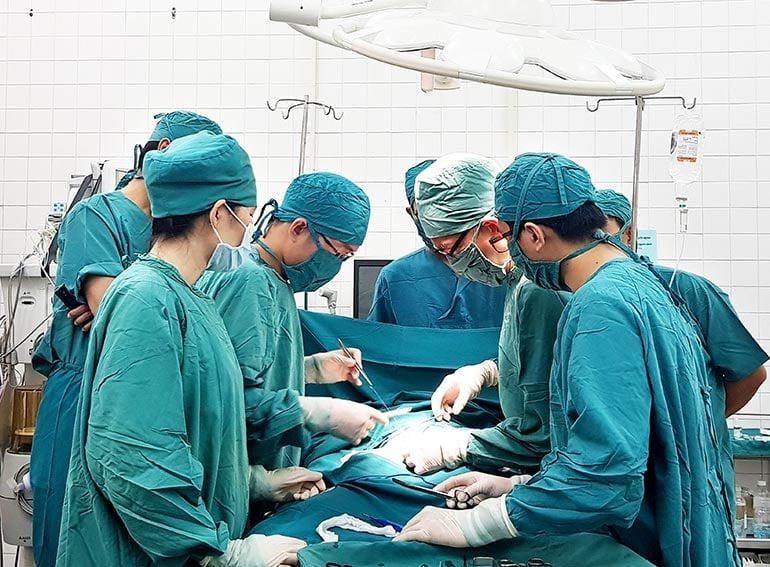 |
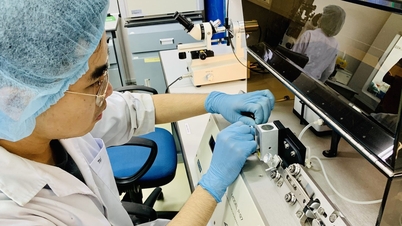
| The healthcare sector in Phu Yen is growing stronger in both quantity and quality, especially in the development of modern medicine. In the photo: A urological surgery at Phu Yen Obstetrics and Pediatrics Hospital. Photo: YEN LAN |
9 years of resistance against the French
After the August Revolution, when the French colonialists launched their invasion and temporarily occupied Nha Trang and Khanh Hoa province on October 23, 1945, the revolutionary government of Phu Yen province organized a Civilian Medical Committee, opening a hospital with 30 beds to receive, provide emergency care, and treat wounded soldiers defending the Ca Pass. In early 1946, the Civilian Medical Committee's hospital was transformed into the Phan Dinh Phung Military Clinic, at times increasing to 150-250 beds to provide timely treatment for wounded soldiers and civilians alike.
In February 1946, the 27th Division was established, stationed in Tuy Hoa town, and the Phan Dinh Phung Military Hospital became the division's military hospital. Military Region 5 reinforced Phu Yen with doctors Le Khac Quyen, Duong Ba Banh, and Truong Gia Tho, and established another military hospital in the provincial capital of Song Cau, headed by Dr. Duong Ba Banh. In March 1946, the central government reinforced Phu Yen with a surgical team led by Dr. Hoang Dinh Cau.
Besides the administrative system of the 27th Division and the 79th Regiment, there was also the Military Medical Clinic of the 84th Regiment located in Ban Nham, Ban Thach (Hoa Xuan commune, former Tuy Hoa district). To fulfill its role as the frontier province of the 5th Inter-regional Free Zone, the revolutionary government of Phu Yen province established the Provincial Health Department, appointing physician Pham Nhu Trac as its head. The province's health sector quickly trained personnel and expanded treatment facilities throughout the localities to meet the needs of treating wounded soldiers, preventing and curing diseases for the people throughout the province during the 9 years of resistance against the French.
Establish medical facilities throughout the battlefields.
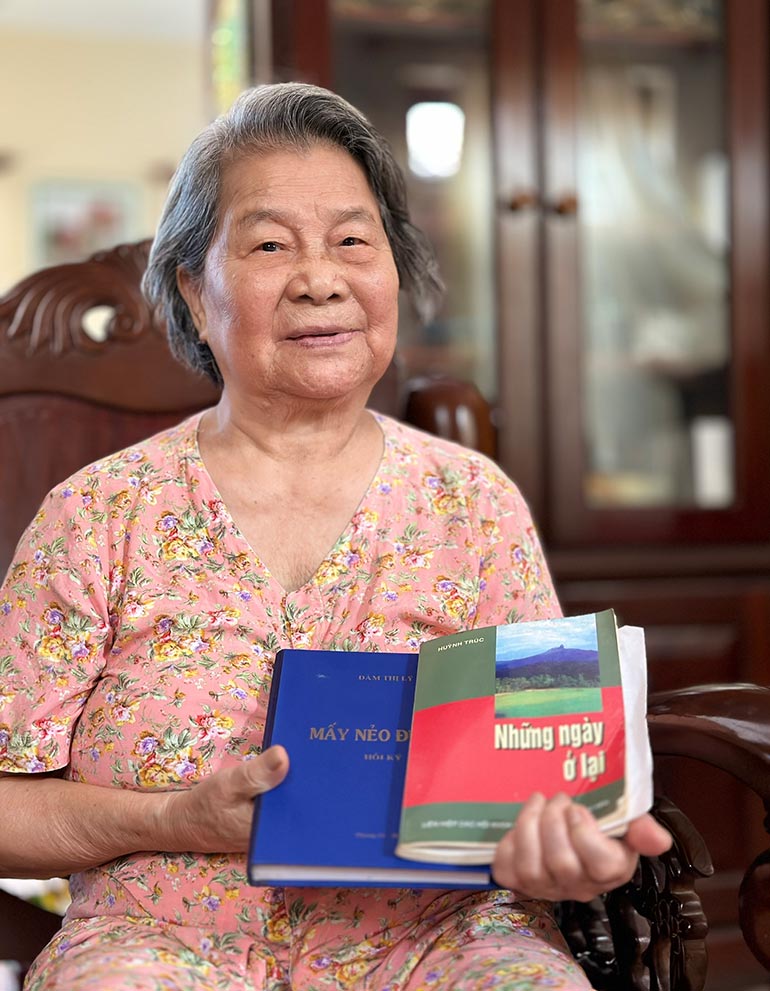 |
| Ms. Dam Thi Ly recalls the glorious years of participating in medical treatment during the war. Photo: PHAM THUY |
Entering the resistance war against the US, after Resolution 15 was issued, a delegation of over 30 cadres from Phu Yen were assigned by the central government to return to their hometown. Among them was a doctor, Chief Nurse Ly Kim Chau (Xuan). This doctor organized the first medical station in Phu Yen province at Ma Du (Phuoc Tan commune, Son Hoa district). Later, Military Region 5 assigned Medical Officer Nguyen Van Thi (Hai) to be the station chief. After the establishment of the National Liberation Front of South Vietnam (December 20, 1960), the Phu Yen Provincial Party Committee established the Health Committee in April 1961 at Ca Ton stream (Phuoc Tan commune), headed by Medical Officer Nguyen Van Thi.
Later, the central government and Zone 5 sent four medical teams to Phu Yen to meet the needs of treating wounded soldiers and civilians, many of whom were doctors from Phu Yen. Dr. Phan Cong (from Phu Yen) was assigned by the central government to the Health Department of Zone 6 in 1970. While on his way to the North for treatment, upon arriving in Phu Yen, he requested to stay and was appointed by the Zone 5 Party Committee to head the Truc Bach Clinic and later the head of the provincial civilian medical department. A generation of intellectual doctors from the North enthusiastically joined the battlefield, so the Phu Yen provincial leadership named the clinic Truc Bach to commemorate the capital in the great rear area of the North.
Besides the Truc Bach infirmary, all districts had medical stations. Phu Yen also established the Tien Phuong (frontline) infirmary, promptly receiving wounded and sick soldiers brought from the front lines, and established additional medical stations at the provincial level (provincial health level) such as the Ho Tay infirmary, the Song Ba infirmary, and field medical stations throughout the hot battlefields in various localities.
The medical workforce in Phu Yen, from the provincial level to the grassroots, has been strengthened in both quality and quantity. Phu Yen also sent medical personnel to the Health Department of Zone 5 for advanced training to meet work requirements. The province's medical training school was officially established in 1965 in Hoc Ke (Son Long commune, Son Hoa district). On April 10, 1972, Phu Yen established the Nursing Camp, the predecessor of the current Rehabilitation Hospital, in Trung Trinh village, Son Long commune.
On April 1, 1975, the flag of victory flew atop the Nhạn Tower, marking the liberation of Phu Yen province from enemy forces. Under the direction of the Provincial Military and Political Committee, the Provincial Civilian Medical Committee took over the hospital, the medicine warehouse, and other medical facilities, preserving and maintaining the assets, medicines, and medical equipment intact, and quickly deploying operations to promptly serve the wounded, the people, and even enemy prisoners of war.
White coats brave the gunfire.
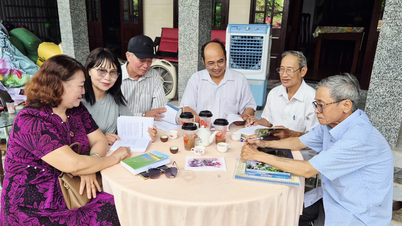
In 1966, after graduating from Hanoi Medical University, young doctor Huynh Thi Kim Hue (from Thua Thien - Hue province) was assigned to work in the Phu Yen battlefield. During a meeting of doctors from different generations, organized by the Department of Health on Vietnamese Doctors' Day, the former female doctor from the green zone shared: “I was assigned to treat wounded soldiers at the Tuy An District Clinic (code name Y13) until the end of 1972. This was a time of fierce enemy attacks, and Y13 had to constantly change locations, moving from An Linh to An Xuan and then down to An Nghiep… We were both treating patients and fleeing from enemy raids. Every 10 days or half a month, the enemy would raid, and we had to evacuate. I don't understand how we managed to survive amidst such heavy bombing and shelling,” recalled Dr. Huynh Thi Kim Hue.
As for Ms. Dam Thi Ly, in late October 1961, after successfully rescuing lawyer Nguyen Huu Tho, this nurse from Binh Kien, Tuy Hoa City, left her home to work at Ho Tay Clinic. Ms. Ly recalled: "During that period, hunger and lack of salt were commonplace. There was no rice, so we had to eat figs and other wild fruits instead of rice. While treating wounded soldiers, hearing about shelling and enemy raids and having to evacuate was a daily occurrence."
During the war against the Americans, surgeries on wounded soldiers were performed from day to night, under kerosene lamps with light-blocking devices to avoid detection by enemy aircraft. Food and medicine supplied from the North were scarce; in some surgeries, doctors only had scalpels, antibiotics, and homemade intravenous fluids, without a single drop of anesthetic!
Beyond treating patients, the medical staff actively engaged in agricultural production to provide additional food for the wounded and sick, as well as for themselves. Furthermore, wartime doctors and nurses were true soldiers, spending their youth in two wars of resistance, fighting to the death for the Fatherland. These medical professionals performed dual roles: caring for the wounded and sick while simultaneously participating in counter-insurgency operations and rescuing comrades amidst bombing raids. "In extremely difficult and arduous circumstances, we remained optimistic, fulfilled our assigned duties, and cheerfully treated and cared for the wounded and sick," said nurse Dam Thi Ly.
On the occasion of the 70th anniversary of Vietnamese Doctors' Day, looking back at history, throughout the two wars of resistance against French colonialism and American imperialism, the Phu Yen health sector silently contributed, becoming a solid rear base for our army and people. These doctors not only treated the wounded but also directly took up arms and fought, ready to sacrifice themselves for the Fatherland. In the smoke and fire of war, they were unsung heroes, people who wrote a silent epic amidst bombs and bullets. Many medical staff sacrificed their lives or parts of their bodies to protect the lives of the wounded and sick. They deserve to be honored, so that present and future generations will always remember their unforgettable contributions. They will live forever in the hearts of posterity as a symbol of a time of "fighting to the death for the Fatherland."
| Throughout the two wars of resistance, Phu Yen had nearly 2,500 people working in the health sector, including 275 martyrs, doctors who permanently laid down their lives on the battlefield; 192 wounded soldiers who sacrificed parts of their bodies for the ultimate victory; and 8 mothers awarded the title of Heroic Vietnamese Mother. On September 2, 2001, the Phu Yen health sector was honored to receive the title of Hero of the People's Armed Forces. |
PHAM THUY
Source: https://baophuyen.vn/94/326408/thay-thuoc-chien-khu-xanh.html

























































Comment (0)