

 |
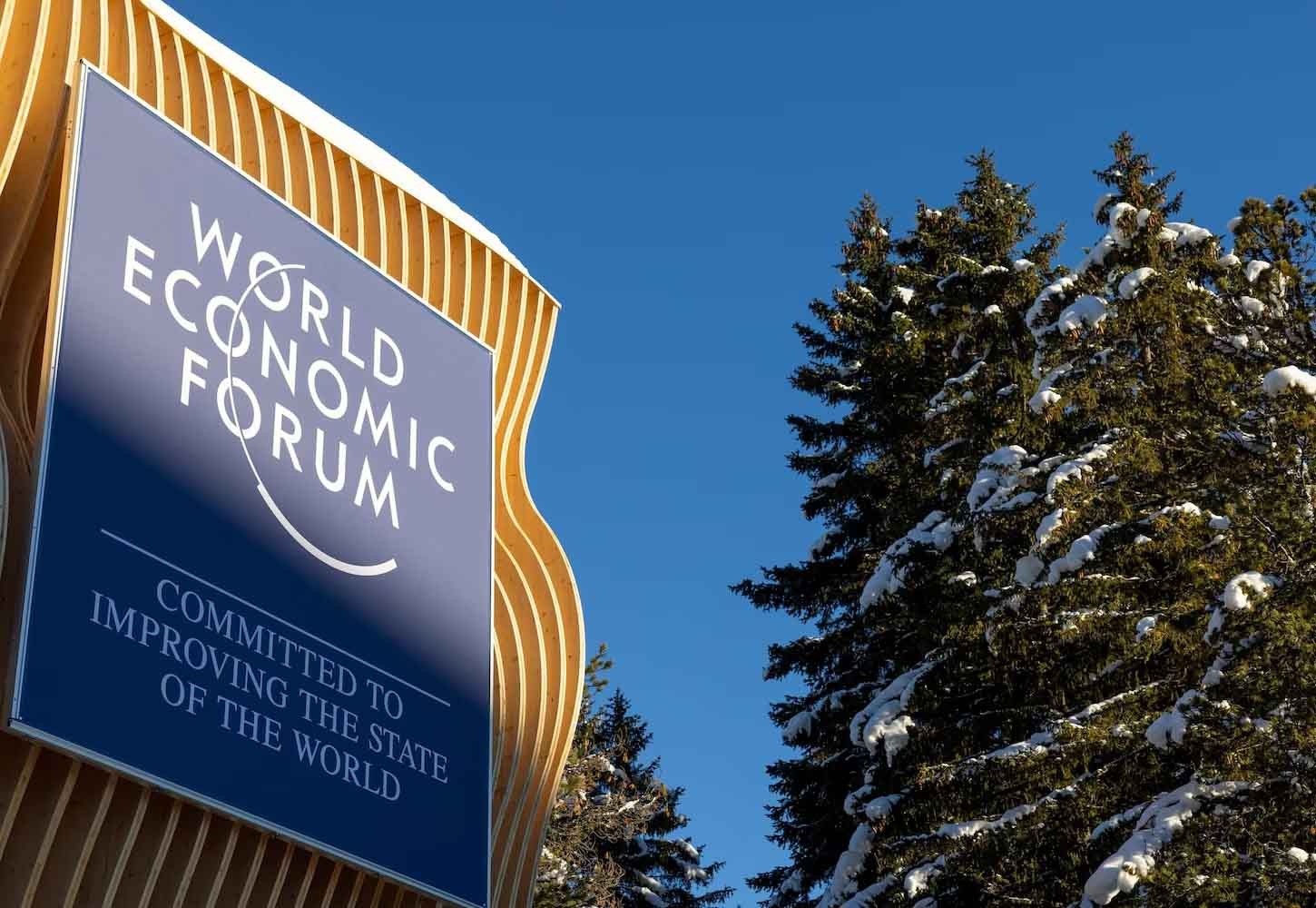
| At the 54th WEF Davos, participants upheld the overarching spirit of "openness and cooperation." (Illustrative image. Source: cnbctv18.com) |
Following the theme of "Cooperation in a Fragmented World" from 2023, this year's World Economic Forum (WEF 2024) in Davos, Switzerland, has chosen the theme "Rebuilding Trust".
This became the largest event since the Covid-19 pandemic, with the participation of nearly 100 high-ranking leaders from countries, international organizations, experts, and approximately 3,000 leaders from global corporations and businesses to discuss the global situation – which is being likened to "a fire that has been smoldering for a long time, but has now flared up fiercely."
"5 billion"
Since becoming a major event in the 1990s and 2000s, the WEF Davos forum has become a symbol of a borderless world, where politicians and business leaders work together towards a common goal of addressing pressing global issues.
The WEF Davos 2024 opens against a backdrop of global economic challenges, ranging from geopolitical tensions and interest rate risks to technological advancements. Oxfam International's latest annual report on wealth inequality, released ahead of WEF 2024, is striking because, while both reports share a similar figure of "5 billion," they reflect two contrasting facets of contemporary society.
According to the report, 5 billion people worldwide are getting poorer – while the top 5 billionaires have doubled their wealth in the past 3 years. Specifically, since 2020, the combined wealth of the world's five richest billionaires – Tesla CEO Elon Musk, LVMH owner Bernard Arnault, Amazon's Jeff Bezos, Oracle co-founder Larry Ellison, and investment billionaire Warren Buffett – has increased by 114% to $869 billion. Furthermore, data from the ILO, World Bank, Wealth-X, and Forbes shows that the top 1% of the world's wealthiest individuals now hold 43% of global financial assets.
Meanwhile, nearly 5 billion people worldwide are becoming poorer due to inflation, military conflicts, and climate change. At the current rate, it will take the world almost 230 years to eradicate poverty.
Oxfam also stated that nearly 800 million workers worldwide have been earning wages that have not kept pace with inflation over the past two years. This has resulted in an average loss of 25 days' income per year. Of the world's 1,600 largest companies, only 0.4% publicly committed to ensuring living wages for their workers and providing support for them.
The report revealed that seven of the world's ten largest publicly traded companies have CEOs or major shareholders who are billionaires. On January 15th, they called on governments to curb the power of these businesses by breaking them up, taxing extraordinary profits, taxing assets, and implementing more measures to control shareholding.
Oxfam estimates that the top 148 companies generated $1.8 trillion in profits, a 52% increase over the past three years. This resulted in huge payouts for shareholders, even as millions of workers faced a cost of living crisis.
According to Oxfam's interim director Amitabh Behar, "This inequality is not accidental. The billionaire group is making businesses that generate more wealth for them, at the expense of others."
Finding a way out for the world.
Continuing a tradition spanning over four decades, since 1971, in Davos – a beautiful town in the Swiss Alps – the 54th World Economic Forum (WEF) Davos will bring together the world's elite, upholding the overarching spirit of "openness and cooperation." This also marks the first true return of the WEF, where the world can once again focus on growth, rather than just economic recovery or business cycles.
Analysts believe this conference is crucial as economies, and even smaller businesses, are facing a complex environment. The dominant backdrop for this year's agenda is slowing global growth, with many economies grappling with high interest rates, geopolitical tensions and the aftermath of the pandemic, climate change, macroeconomic instability, and technological advancements transforming manufacturing and services.
WEF Managing Director Jeremy Jurgens forecasts global growth of 2.9% in 2024. “At least the economy is moving up. But the pace could have been much higher,” Jeremy Jurgens stated. A notable change this year is the surge in participation from Latin America and Asia, reflecting a “major shift in the global economy.”
Two major military conflicts and a shipping crisis mean this year's discussions will be very lively. WEF Executive Chairman Borge Brende said the focus of this year's conference will be high-level discussions on the conflict in the Middle East, the conflict in Ukraine, and Africa. He emphasized, "We want to bring the stakeholders closer together, to see how we can address these challenging issues."
For AI to benefit humanity
According to the IMF, nearly 40% of jobs worldwide could be affected by the development of artificial intelligence (AI). Ahead of the WEF 2024, IMF Managing Director Kristalina Georgieva noted that AI will both support and harm the workforce as it becomes increasingly widespread.
Office workers are considered to be at greater risk than manual laborers. The applications of AI lead to reduced labor demand, lower wages, and a shrinking of hiring. "In the most extreme cases, some jobs could disappear," Kristalina Georgieva predicts.
Developed countries are likely to be more severely impacted. Accordingly, jobs in developed countries are affected by AI by approximately 60%, emerging economies by 40%, and poorer countries by 26%. Some places lack the infrastructure or skilled workforce to exploit the benefits of AI, exacerbating inequality over time. Or, within the same economy, AI could create inequality and polarization in productivity and income between those who can utilize AI and those who cannot.
In most scenarios, AI could exacerbate overall inequality, a worrying trend that policymakers must proactively address to prevent the technology from further exacerbating social tensions.
However, in terms of benefits, according to Goldman Sachs, although workers may be affected, the widespread adoption of AI could ultimately help increase labor productivity and boost global GDP by 7% per year over the next 10 years. The challenge is, "We must ensure that AI benefits humanity through transformative change."
It is clear that the global issues that have heated up over the past year are positioning the world economy for a future that requires urgent action from all nations.
Source
![[Photo] General Secretary and President To Lam presides over a meeting with the Central Organizing Committee.](https://vphoto.vietnam.vn/thumb/1200x675/vietnam/resource/IMAGE/2026/06/03/1780482764658_a1-bnd-4741-3342-jpg.webp)
![[Photo] Secretary of the National Assembly Party Committee, Chairman of the National Assembly presides over the meeting of the Standing Committee and Executive Committee of the National Assembly Party Committee.](https://vphoto.vietnam.vn/thumb/1200x675/vietnam/resource/IMAGE/2026/06/03/1780480353201_ndo_br_bnd-2585-jpg.webp)

![[Photo] First session of the 14th Congress of the Vietnam Trade Union](https://vphoto.vietnam.vn/thumb/1200x675/vietnam/resource/IMAGE/2026/06/03/1780465947883_ndo_br_img-3852-jpg.webp)


























































![[Video] Sunset at Lap An Lagoon – Where the sun sets over the fishing nets](https://vphoto.vietnam.vn/thumb/1200x675/vietnam/resource/IMAGE/2026/05/31/1780192137701_beach-landscape-sea-water-nature-grass-745871-pxhere-com.jpeg)







































Comment (0)