

Within this line of thinking, physical education and sports are no longer a marginal field, but have become a practical part of the strategy for building a prosperous nation, a happy society, and a strong, upward-moving people.
Re-establishing the position of physical education and sports within the overall national development strategy.
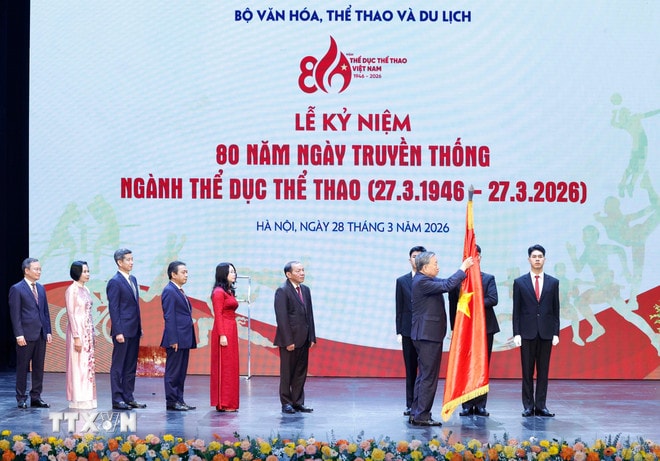
The speech was deeply impressive, not only in its appreciation of the 80-year journey of the sports sector, but also in its repositioning of sports within the overall national development mindset. From recalling President Ho Chi Minh 's vision with the simple yet profound truth, "A strong people makes a prosperous nation," to the current requirement to view sports in relation to the quality of human resources, national competitiveness, and the quality of life of the people, the speech transcended the confines of a commemorative occasion to become a very clear development message: if the country wants to progress, it must first care for the Vietnamese people to be healthier, more resilient, more disciplined, and more capable of striving for progress.
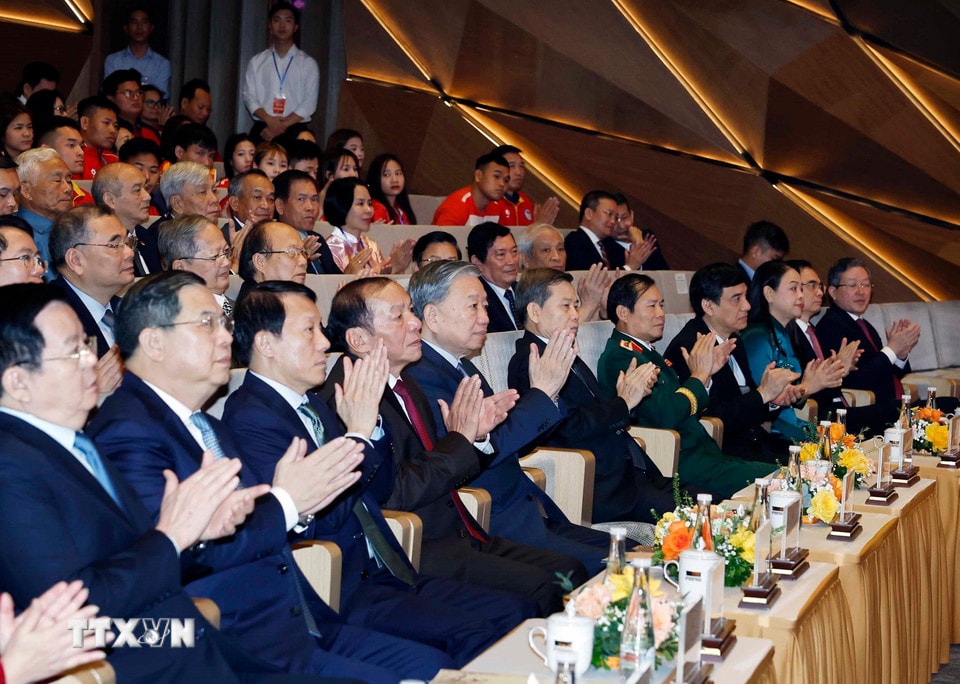
It is noteworthy that this message does not stand alone. Just a few days earlier, in his closing remarks at the 2nd Plenum of the 14th Central Committee, General Secretary To Lam emphasized the need to thoroughly understand the principles of development, maintain stability, make good use of resources, promote implementation, and direct all development achievements towards improving the material and spiritual lives of the people. When placing the two speeches side by side, a unified logic becomes very clear: from economics, politics, organizational structure to culture and sports, everything converges on one goal: human development and for the benefit of the people. Therefore, talking about sports at this time is essentially talking about the national development vision in the new era.
The first and most profound message in the speech on sports is that physical education and sports must be restored to their rightful place in the national development strategy. For many years, we have often viewed sports as a field of movement, extracurricular activities, competitive achievement, or at most, a part of cultural life. But the way the General Secretary framed the issue shows that physical education and sports must be viewed from a much broader perspective: it is the foundation for improving public health, a condition for improving the stature of the nation, a factor contributing to improving the quality of human resources, and an environment for forming character, willpower, resilience, discipline, honesty, and aspiration for advancement. A country that wants to develop rapidly and sustainably cannot just talk about growth, investment, or technology while forgetting the physical and mental state of its people. A nation cannot be strong if each individual within it is not healthy, resilient, does not have a habit of self-improvement, and does not possess the spirit to surpass themselves. This idea resonates strongly with the spirit of the 2nd Central Committee Conference, where the issue of substantive development is closely linked to the quality of life of the people, rather than merely focusing on superficial indicators.
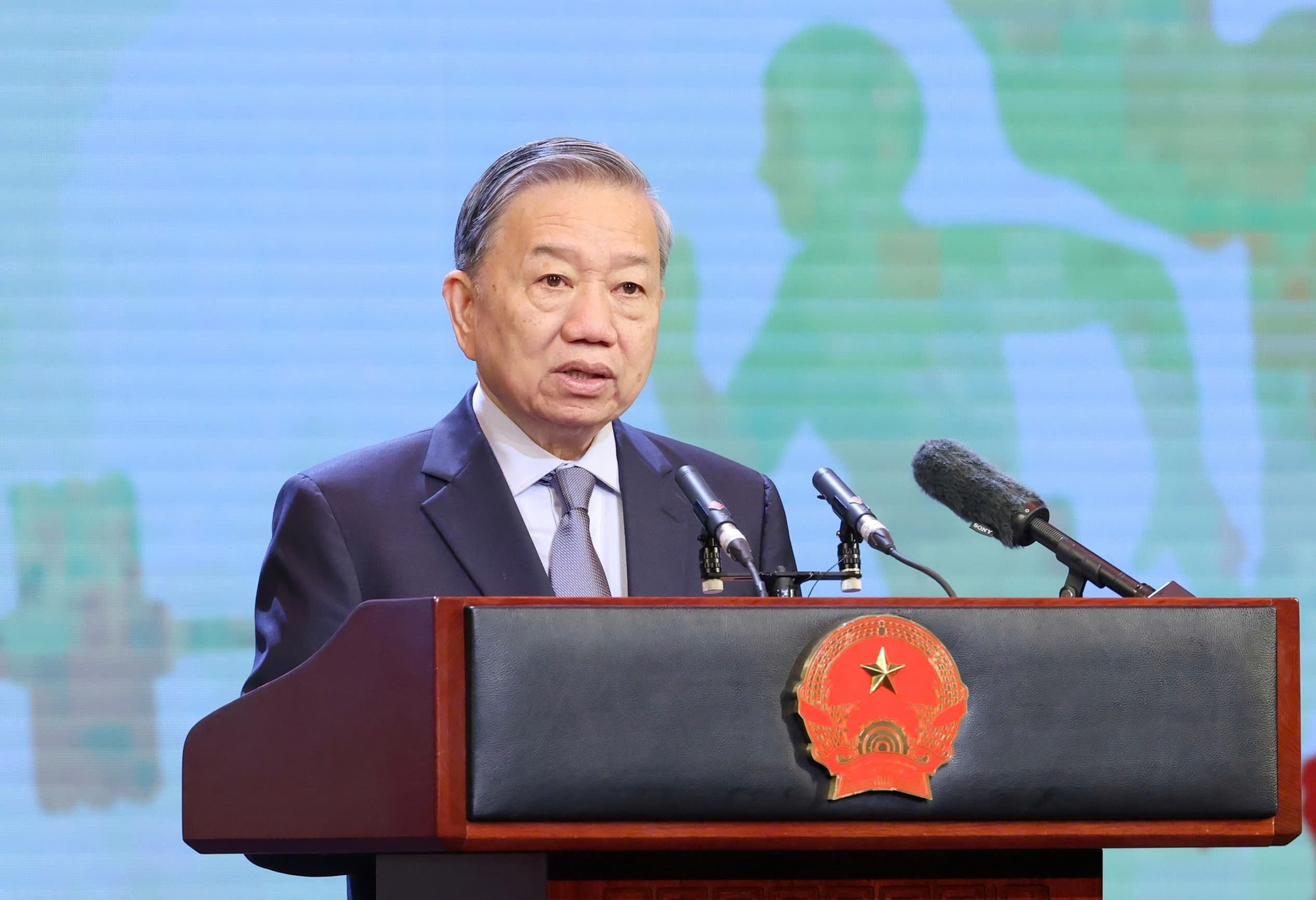
The second message is that for sports to thrive, it cannot rely solely on enthusiasm or short-term movements, but must begin with institutions, governance, and organizational capacity. In his speech, the General Secretary clearly emphasized that institutions must lead the way, paving the path for innovation, investment, socialization, modern management, transparent operation, and the full utilization of resources from the State, society, and the people. Here, the spirit of "speak less, do more, and see it through" is clearly concretized through institutional thinking. The General Secretary went into very specific details: the roles of the State and society, where public investment should be directed, the extent of socialization, the standards for infrastructure, the mechanisms for training coaches and athletes, the remuneration system, insurance, sports medicine, and career transition after competition should be designed, and how digital technology and the sports economy should be encouraged. That is the language of modern development management.
Sports must truly become a right, an opportunity, and a way of life for all citizens.
The third message is that sports must truly become a right, an opportunity, and a way of life for all citizens. This is perhaps the most humane part of the speech. The General Secretary not only spoke about increasing the number of people participating in sports, but also about building a "movement society," a "culture of daily physical training." In other words, the goal is not just to have a few more playgrounds or movements, but to create a sustainable transformation in lifestyles. It is very thought-provoking that the General Secretary did not limit the beneficiaries to those with means, but extended the scope to every family, every residential area, every school, every agency, every factory, every enterprise, every unit of the armed forces; from the plains to remote areas, border regions, and islands; from ordinary people to the elderly, people with disabilities, women, children, young workers, and migrant workers. This is not just a call for exercise. It is a concept of equity in development. When all citizens have the right to exercise, to train, and to access suitable sports spaces, then sports truly become a part of social welfare, quality of life, and human happiness.
From here, the speech opens with a very specific request for all levels of government and society as a whole: for the sports movement to have depth, it must start with seemingly small things that determine its sustainability, such as: planning land for community sports, ensuring that every residential area has space for exercise, building playgrounds, training grounds, walking paths, sports parks, supporting grassroots sports facilities, utilizing schools, cultural centers, parks, squares, and public bodies of water for appropriate physical and sports activities. In other words, it is impossible to expect people to live healthy lives if urban design, residential area planning, and community life organization do not allocate space for exercise. This is a very important suggestion, because it shows that sports is not just a matter for the sports industry, but is also directly related to urban planning, governance, social welfare, and community development.
The fourth message is that the roots of a strong sports system lie in schools and in the depth of national culture. When the General Secretary emphasized, "A nation that wants to be healthy must start with its children. A strong sports system must start in schools," that is a strategic positioning. Schools are not only places for teaching knowledge, but also places for shaping physical fitness, exercise habits, teamwork, perseverance, honesty, and self-confidence in the younger generation. If physical education continues to be neglected, if students still consider physical education a secondary lesson, if schools lack playgrounds, teachers, mechanisms for discovering talent, and a genuine environment for physical activity, then it is difficult to talk about building a generation of healthy, dynamic citizens with the resilience to face the new challenges of the times. Therefore, considering the upgrading of physical education and school sports as the root of the strategy for developing Vietnamese people is a message that is both correct, relevant, and has long-term significance.
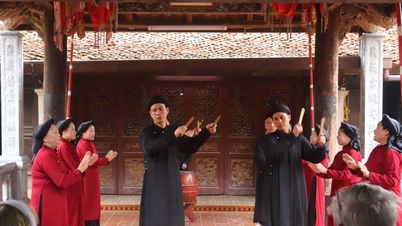
But what was particularly noteworthy in the speech was that this developmental mindset was inseparable from national identity. Besides school sports, the General Secretary also emphasized the preservation and development of traditional national sports and forms of physical activity associated with community culture. Tug-of-war, stick pushing, crossbow shooting, traditional wrestling, boat racing, human chess, traditional martial arts, folk games in festivals... in this perspective, these are not just games or competitions, but also cultural memories, a link between generations, a place to nurture the spirit of chivalry, love of homeland, and national pride. This is a very profound suggestion: building a modern Vietnamese person does not mean cutting off from tradition, but rather making tradition vibrant in modernity, making identity a resource rather than an exhibit. From this perspective, sports not only contribute to improving health but also contribute to protecting the soul of national culture.
Vietnamese sports must rise through a professional, scientific, honest, sustainable, and integrated path.
The fifth message is that Vietnamese sports must rise through a professional, scientific, honest, sustainable, and integrated path. The speech did not shy away from the aspiration for high achievements. On the contrary, the General Secretary clearly stated the requirements for building a roadmap for targeted investment in highly competitive sports, standardizing the talent discovery system, reforming the management mechanism of national teams, strengthening the links between school sports, grassroots sports, and elite sports, while ensuring the livelihood, education, vocational training, social security, and post-retirement transition for athletes. But more importantly, the General Secretary emphasized that high-performance sports must be built on a foundation of honesty, nobility, and respect for the rule of law. Only when sports are built on a foundation of honesty, standards, and dignity will each victory truly become a source of national pride.
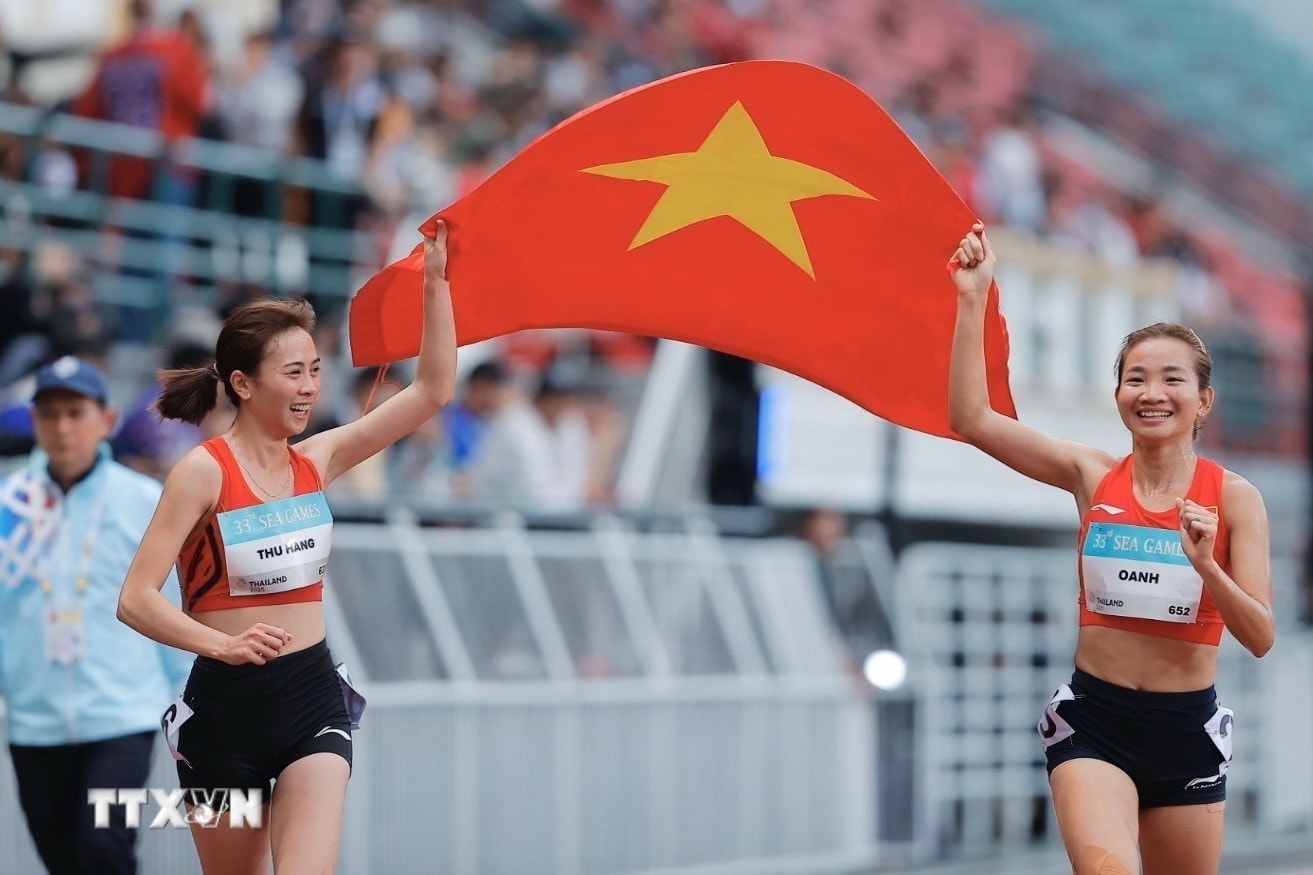
Following the same line of thinking, expanding the concept of sports towards a more comprehensive direction, encompassing both physical and mental activity, demonstrates a very modern perspective. As society changes, and the new pace of life demands concentration, reflexes, emotional control, logical thinking, and mental endurance, the concept of a healthy person must also be understood more holistically. Along with this comes the need to promote socialization with a clear direction and responsible standards; expanding international cooperation not only for competition but also for learning management, coaching science, sports medicine, event organization, sports economics, and how to build a national brand through sports. All of this shows that sports is no longer a closed field, but an open space for creativity, modern management, technology, economics, and people-to-people diplomacy. This is also a vivid manifestation of the spirit of the 2nd Plenum of the 14th Central Committee: making good use of resources, expanding cooperation, enhancing competitiveness, but maintaining a sustainable development orientation and prioritizing people.
It can be said that, from his speech at the 80th anniversary of the Traditional Day of Vietnamese Sports and Physical Education, General Secretary To Lam sent a powerful message: a country that wants to prosper must begin by caring for its people; a nation that wants to be strong must have healthy citizens with willpower, discipline, and a spirit of overcoming difficulties; a socio-economic system that wants sustainable development cannot overlook public health, physical education, sports culture, and the daily quality of life of the people. And when placed in relation to the General Secretary's closing speech at the 2nd Central Committee Conference, that message becomes even clearer: all institutional reforms, all determinations for growth, all requirements for implementation, ultimately, must aim towards a more prosperous and happy life for the people. Sports, therefore, does not stand on the sidelines of the national development strategy. Sports is right at the heart of that strategy. Because building a prosperous, civilized, and sustainably developed Vietnam first and foremost means building a nation that is healthy in body, mind, intellect, and aspiration for progress.
Source: https://daibieunhandan.vn/the-thao-manh-de-dan-toc-manh-10411589.html


![[Photo] General Secretary and President To Lam presides over a working session with the Central Policy and Strategy Committee on the development of the materials industry.](https://vphoto.vietnam.vn/thumb/1200x675/vietnam/resource/IMAGE/2026/05/21/1779359935432_a3-bnd-3129-1412-jpg.webp)
![[Photo] National Assembly Chairman Tran Thanh Man working with the Standing Committee of the Law and Justice Committee](https://vphoto.vietnam.vn/thumb/1200x675/vietnam/resource/IMAGE/2026/05/21/1779378929214_ndo_br_1-4610-jpg.webp)


![[Photo] General Secretary and President To Lam, Party and State leaders attending the 11th National Congress of the Vietnam Fatherland Front](https://vphoto.vietnam.vn/thumb/402x226/vietnam/resource/IMAGE/2026/05/12/1778554897970_cf48ede3-c862-4633-89a7-ff86d87cab94.jpeg)





![[Video] Hanoi plans to select two communes with 700,000 inhabitants to pilot the socialist model.](https://vphoto.vietnam.vn/thumb/402x226/vietnam/resource/IMAGE/2026/05/21/1779373741887_z7851174239346-8a83e741648b3fa19f4e711ad18c6234-jpg.webp)
















































Comment (0)