

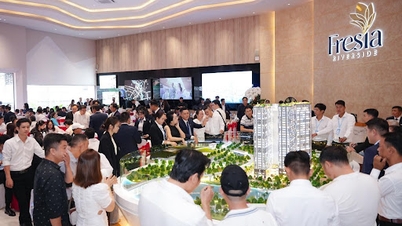
The era of land brokers and selling properties before completion is over.
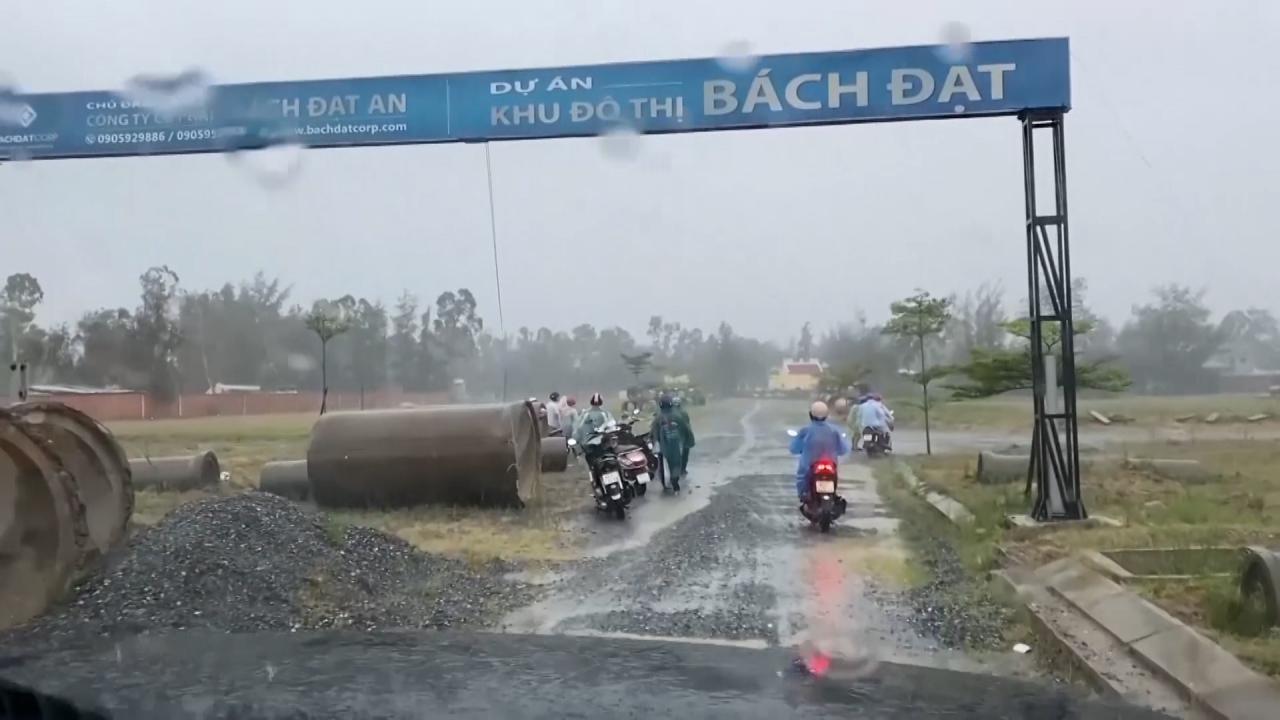
Approximately 200 public consultations held by provincial-level agencies to address problems arising from projects invested in by Bach Dat An Company are a typical example of the consequences of a period of "boom" in projects called urban development.
Up to this point, despite the best efforts of the authorities, the responsibility, and the ultimatum issued by the highest-ranking provincial leaders, it will likely take some more time to thoroughly resolve the Bach Dat An case.
Bach Dat An is not alone; many of the nearly 200 residential and urban development projects in the province, currently invested in by private enterprises, are facing problems to varying degrees.
No one has yet calculated (even an estimate) the extent of the damage to the State, the people, and businesses, but the enormous waste of resources, especially land resources, and the resulting social consequences are undeniable. And it will take many more years for authorities at all levels to resolve the aftermath of a time when projects were being launched everywhere with great fanfare!
The Land Law 2024 and the amended Real Estate and Housing Business Laws, effective from August 1, 2024, absolutely prohibit the subdivision and sale of land plots in all wards of all cities and towns.
At the same time, urban and housing construction projects are being strictly regulated from the licensing stage throughout the implementation process. In particular, there is a requirement for comprehensive and detailed public disclosure of the legal aspects, scale, and progress of the project.
Revoke projects that hoard land.
According to the 2024 Land Law, if project investors fail to put land into use or are behind schedule in land use compared to the schedule stated in the investment project, the investor may be granted an extension of no more than 24 months and must pay the State an additional amount equivalent to the land use fee or land lease fee for the extended period.
If the investor fails to put the land into use after the extended deadline, the State will reclaim the land without compensation for the land, assets attached to the land, and remaining investment costs.
According to experts' analysis, with the new legal regulations, there will soon be a strict "filtering" process for real estate investors and businesses; small businesses with limited financial resources, those engaging in opportunistic and unprofessional practices, will be eliminated from the game.
The practice of selling projects prematurely for profit will no longer have a place to thrive. This is because businesses are only allowed to launch projects after fulfilling all their obligations to the State and meeting the infrastructure requirements as stipulated by regulations.
The amended Real Estate Business Law also prohibits unlicensed, freelance real estate brokers (long known as "land speculators"). It aims to prevent situations where construction workers and vegetable vendors also engage in land trading, or the proliferation of real estate "agencies" spreading from rural areas to cities, a long-standing problem.
Urban thinking
From August 1st, 2024, the State will no longer grant permits for land subdivision projects in wards of cities and towns. Investors in land plot projects will be forced to focus on rural areas on the outskirts of towns and townships.
With significant limitations on development space, as well as stricter legal constraints on real estate business projects, analysts have predicted that land prices will rise sharply in the near future, disadvantaging low-income individuals with a genuine need for housing.
In particular, as long as the policy of "imposing high taxes on those who own many houses and land but do not use them effectively," as stipulated in Resolution 18 of the 13th Central Committee, has not been institutionalized by law, land speculation will likely remain attractive to many people.
Having suffered severe consequences from rampant urban development in recent times, Quang Nam province will undoubtedly learn many valuable lessons.
Among these, the most noticeable issues are the widespread and persistent neglect in many urban areas despite completed infrastructure; the fact that the majority of land buyers in projects do so primarily for speculative business purposes; the loss of agricultural land by residents while projects remain abandoned and unfinished for years; and the social issue of many households and individuals facing the urgent need for housing and livelihoods, yet finding land prices far beyond their reach.
Urbanization and urban development are inevitable trends. However, how and in what direction and roadmap to suit each stage of development is a problem that each locality needs to consider in order to most effectively utilize land resources in accordance with the Party's guidelines and harmoniously resolve social issues.
Notice that in the List of Investment Attraction Projects and Priority Investment Attraction Projects of Quang Nam Province for the period 2024 - 2025 (Decision No. 1221-QD/UBND, dated May 21, 2024, of the Provincial People's Committee), out of 233 projects in localities, there are 40 projects attracting investment in urban development, mostly in the form of market streets and urban residential areas (land plot business).
It is difficult to definitively say how many projects are truly necessary and urgent, what their intended purpose is (speculators or the housing needs of local residents), and even the input-output aspects of these projects. However, these are certainly issues that cannot be ignored, as localities in the province have all too well experienced and paid the price for land subdivision and sale projects.
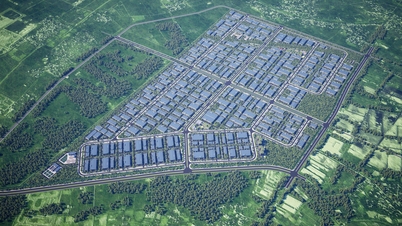
Another noteworthy prediction from experts, following the enactment of the three aforementioned land-related laws, is that industrial real estate will strongly attract domestic and foreign investors in the coming period.
The Quang Nam provincial planning has identified the development of over 10,000 hectares of industrial land from now until 2030. Practical experience has proven that industrial land has been and continues to be the most effective, profitable, and contributes the most to the local socio -economic development.
----------------------
Lesson 3: When agricultural land is "unleashed"
Source: https://baoquangnam.vn/thi-hanh-luat-dat-dai-2024-ky-vong-khoi-thong-nguon-luc-bai-2-dep-loan-thi-truong-bat-dong-san-3139127.html



































































Comment (0)