
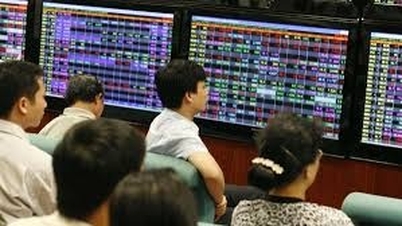
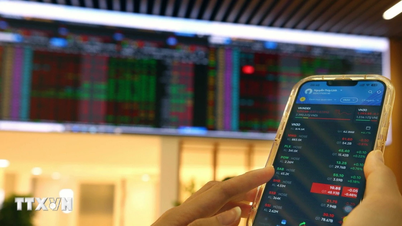
Investors monitor market developments. Photo courtesy of Hua Chung/TTXVN.
Despite initial cautious reactions, the foundation for foreign capital inflows and sustainable growth has been established. The removal of pre-trading margin requirements for foreign investors and the upgrade to FTSE status represent a historic turning point for the Vietnamese stock market. With new trading technologies, institutional reforms, and the impending activation of foreign capital, the VN-Index is expected to open up new growth opportunities from 2026 onwards.
To gain a better understanding of the developments in the Vietnamese stock market and expectations for Vietnamese stocks in 2026, a reporter from the Vietnam News Agency interviewed Mr. Nghiem Bao Nam, Head of Market Strategy Team, Nhat Viet Securities Joint Stock Company.
By 2025, what market bottlenecks had been resolved? How had these improvements impacted investor sentiment and cash flow?
Looking back at 2025, the historical turning point that helped the Vietnamese stock market "transform into a dragon" was the successful removal of the pre-funding requirement for foreign investors and institutions, realized through Circular 68/2024/TT-BTC and further refined by Circular 18/2025/TT-BTC (effective from May 5, 2025).
This long-standing "bottleneck" has hindered Vietnam in the eyes of international rating agencies. The new mechanism allows foreign organizations to place buy orders without needing 100% of the funds immediately, bringing the Vietnamese market closer to international practices and directly leading to FTSE Russell officially upgrading Vietnam to a Secondary Emerging Market on October 8, 2025.
Simultaneously, the transparency and oversight of the Vietnamese stock market have been elevated to a new level thanks to Circular 19/2025/TT-BTC, which mandates that public companies disclose information in English and conduct rigorous audits of their charter capital contribution history over the past 10 years, eliminating concerns about "fictitious capital" or information asymmetry that had previously discouraged foreign investment.
However, contrary to expectations of an immediate surge, the market and capital flow after the official upgrade news followed a "sell on news" pattern, with a corrective consolidation phase in Q4 2025. The euphoric sentiment of domestic individual investors quickly shifted to cautious profit-taking after the initial rapid increase at the beginning of the year. Capital flow did not spread en masse but rather diversified sharply, withdrawing from speculative stock groups and consolidating into the VN30 group and leading industry stocks with the potential to attract foreign capital. In reality, large capital flows from passive ETFs have not been disbursed immediately but require a technical lag (usually 6-12 months) to restructure portfolios, causing market liquidity to remain at a low to medium level in late 2025, creating a foundation for accumulation for a growth cycle in 2026.
Given the volatile market conditions in 2025 regarding liquidity, exchange rates, and foreign capital flows, how do you assess the government 's and regulatory agencies' policies aimed at stabilizing the market and increasing the attractiveness of both domestic and foreign capital? Which factors have proven most effective?
In 2025, effective governance resulted in many positive figures, such as continued growth in registered and disbursed foreign direct investment (FDI), reaching new record highs, the stock market reaching historical peaks, high credit growth projected at 18-20% for the whole year, and a 9-month gross domestic product (GDP) growth of 7.85%, nearing the target of 8%. To achieve these positive figures, the government and regulatory agencies have been flexible in enacting policies aimed at achieving high and stable economic growth.
Some notable activities include: Through the plan to upgrade the Vietnamese stock market, aiming to achieve FTSE Russell status in 2025 and MSCI in 2030, with specific steps to address technical barriers related to payment, custody, and legal matters. The plan has proven effective and closely aligned with its goals, as Vietnam was officially upgraded by FTSE in October 2025. This upgrade will help Vietnam attract a significant amount of capital into the market, while also enhancing the reputation of the Vietnamese stock market globally.
Government Decree No. 245/2025/ND-CP amends and supplements several articles of Government Decree No. 155/2020/ND-CP dated December 31, 2020, detailing the implementation of several articles of the Securities Law. This decree shortens the stock listing period from 90 days to 30 days. The regulations also shorten the process of listing and trading securities by 3-6 months compared to the current timeframe, enabling businesses to better utilize periods of favorable market conditions to mobilize long-term capital for business development.
The government has consistently pursued the goal of keeping interest rates low to stimulate economic growth. As of the end of November, the State Treasury had injected over 330 trillion VND into the market through the Open Market Operations (OMO) channel to support the liquidity of the banking system, helping to prevent lending interest rates from rising too sharply. Simultaneously, the State Bank of Vietnam also tested a 14-day foreign exchange swap (FX swap) channel in early December to support VND liquidity for the banking system during the year-end period.
The policies enacted are all geared towards supporting long-term development. However, in the short term, due to external factors and cycles, macroeconomic conditions still face some difficulties, such as continued exchange rate volatility and the withdrawal of foreign capital from the Vietnamese stock market. This trend will soon stop when Vietnam officially enters the FTSE Global Benchmark index in September 2026, and the economy will gradually stabilize after the unexpected tariff policy changes from the United States.
The policy that showed immediate effectiveness was Decree 245, which by the end of 2025 witnessed a wave of listings by companies such as VPX, VCK, HPA… taking advantage of the positive market trend in 2025 to raise capital for long-term growth needs.
According to him, what are the core solutions that need to be further promoted in 2026 to improve transparency, advance trading technology, enhance corporate governance capacity, and protect investors?
Based on the strategic goals and directions from regulatory agencies in 2026, to improve information transparency, regulatory agencies need to take measures to encourage businesses to accelerate the adoption of international accounting and sustainable development standards such as the International Accounting Standards (IAS) and the International Financial Reporting Standards (IFRS). Besides the adoption of international standards by businesses, regulatory agencies also need to strengthen supervision and impose strong penalties to deter and prevent violations related to information disclosure and stock price manipulation.
Regarding the promotion of trading technology, in 2025 the Vietnamese stock market will put into operation the KRX system, increasing order processing speed from 1 million to 3-5 million orders/day. In 2026 and 2027, the Central Counterparty Clearing (CCP) mechanism is also expected to be put into operation to separate settlement risk, minimize counterparty risk, and enhance the safety of the entire system.
Simultaneously, to protect investors and improve information transparency, regulatory agencies need to promote the public rating of businesses. This activity will help businesses access diverse sources of capital, while investors will also have easier access to information and be able to make comparisons when making investment decisions.
What prominent trends does he predict will drive the market in 2026, and what solutions should be prioritized to realize these expectations?
According to assessments from international analytical organizations, if the FTSE Emerging Market upgrade proceeds as planned (technical assessment in March 2026, upgrade announcement in September 2026), and the macroeconomic environment is favorable (interest rates of 5.6-6.0%, controlled exchange rate, EPS growth of 18-20%), the Vietnamese market could attract $6-8 billion in foreign capital through both active and passive flows.
In a favorable scenario, the VN-Index could target the 1,800-2,000 point range in 2026 thanks to four factors: strong foreign capital inflows after the upgrade, new trading technology from KRX creating market depth, a strong corporate profit growth cycle, and stable macroeconomic policies.
The Vietnamese stock market is entering a new chapter: more stable, more standardized, and more deeply integrated.
The period from 2026 to 2030 will be a pivotal time as Vietnam receives capital inflows for market upgrades, improved technology standards, and enhanced risk management, ushering in a new growth cycle for the market and for securities companies that seize opportunities at the right time.
Particularly in 2026, with the continued focus on boosting domestic consumption and investment, along with the goal of double-digit GDP growth, we may see a wave of IPOs from many large companies combining foreign capital. The increasing number of investors entering the market will necessitate more accessible tax solutions, and the systems and products need to be convenient to facilitate new investors' entry.
Thank you, sir!
Source: https://baotintuc.vn/kinh-te/thi-truong-chung-khoan-viet-nam-cho-cu-bat-2026-20251219084343911.htm






![[Photo] First session of the 14th Congress of the Vietnam Trade Union](https://vphoto.vietnam.vn/thumb/1200x675/vietnam/resource/IMAGE/2026/06/03/1780465947883_ndo_br_img-3852-jpg.webp)






















































![[Video] Sunset at Lap An Lagoon – Where the sun sets over the fishing nets](https://vphoto.vietnam.vn/thumb/1200x675/vietnam/resource/IMAGE/2026/05/31/1780192137701_beach-landscape-sea-water-nature-grass-745871-pxhere-com.jpeg)












































Comment (0)