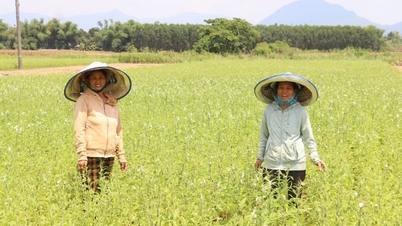
In the bustling city during the twelfth lunar month, people are shopping, making the most of every hour to prepare for the three days of Tet (Lunar New Year). Everyone wants to buy as much food as possible to stock up, especially pork brought from the countryside to the city.
Amidst the hustle and bustle, I remember my mother, and the poor village in the days leading up to Tet. I especially remember the pieces of salted pork wrapped in banana leaves and hanging over the family fire, reserved for the whole family to enjoy during Tet.
Without those fragrant, smoke-filled slices of pork wrapped in banana leaves, to be eaten gradually until the full moon of the first lunar month, the Tet holiday of our childhood would have been so meaningless.
In my innocent childhood memories, my mother started preparing for Tet (Lunar New Year) from mid-October. As usual, after the ancestral worship ceremony in my hometown, the families in my neighborhood would pool their money to place a deposit on a pig from another family in the neighborhood.
Pigs raised on sweet potato leaves cooked with bran and banana stalks have very flavorful meat. Usually, four people share one pig, with each family getting one leg. Wealthier families with more members might share two legs.

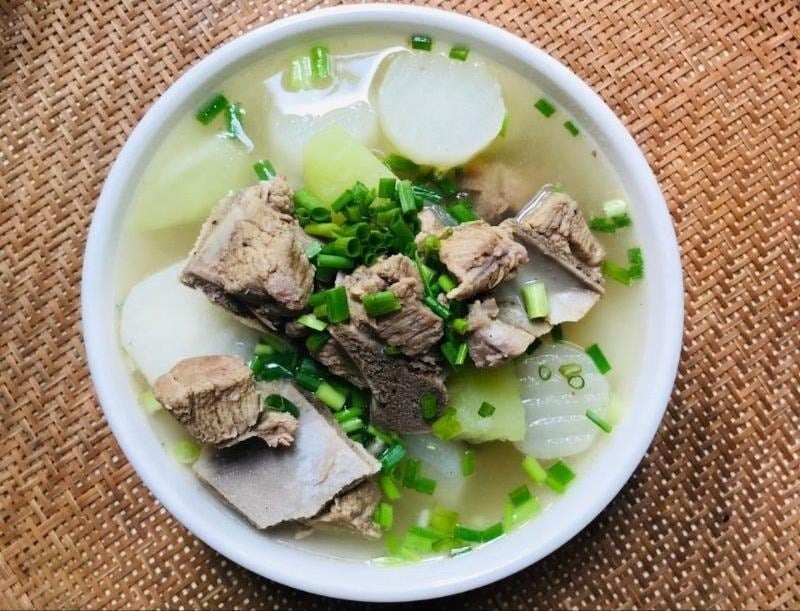
Each portion contains both bone and meat, as well as pork trotters. During Tet (Vietnamese New Year), my mother often makes a banana blossom soup with the bones and trotters. This banana blossom soup, with its distinctive grape-like color, is not something everyone knows or eats everywhere.
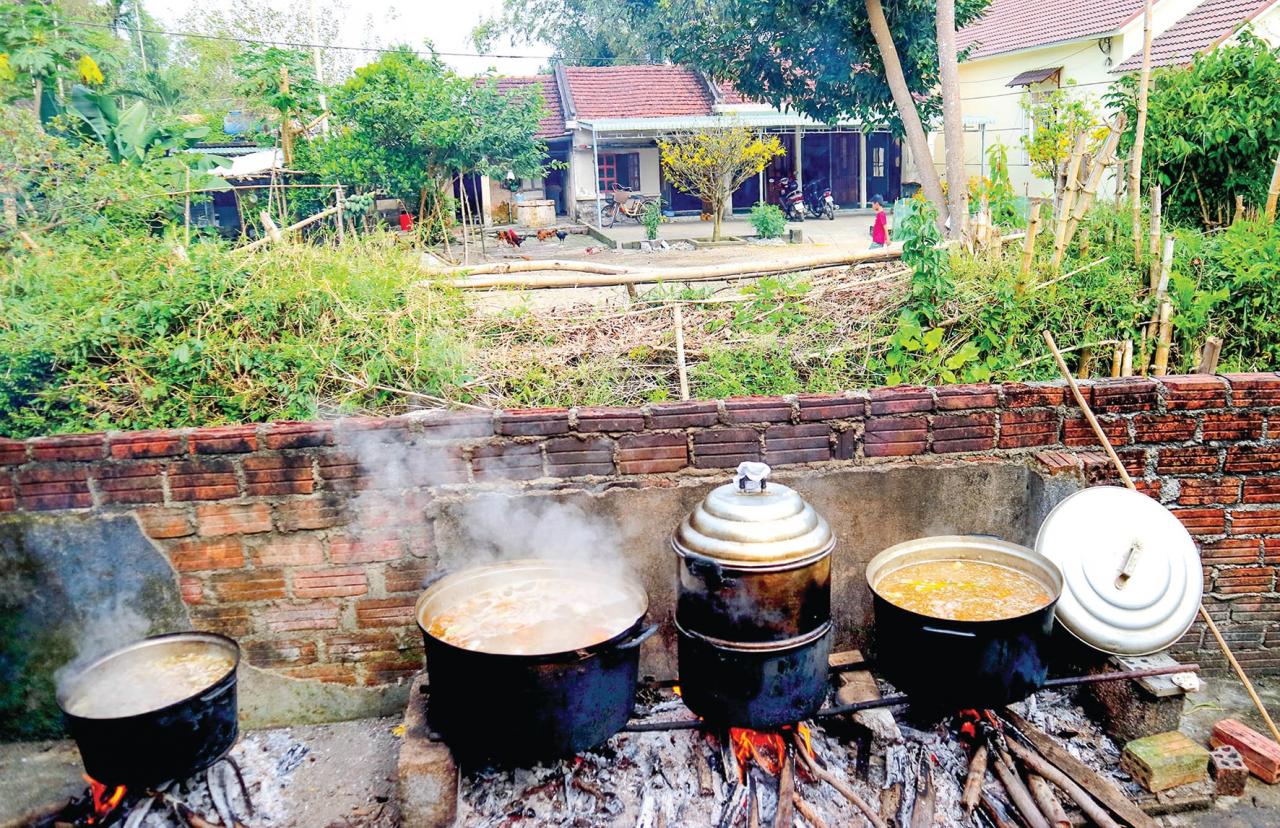
After the meat was divided, the whole village sat around a round tray, busy cooking a pot of offal porridge from a makeshift stove made of bricks.
The pot of porridge was steaming and bubbling beside a fire fueled by huge logs, the embers glowing red. The women shared it with the neighbors, creating a warm and joyful atmosphere.
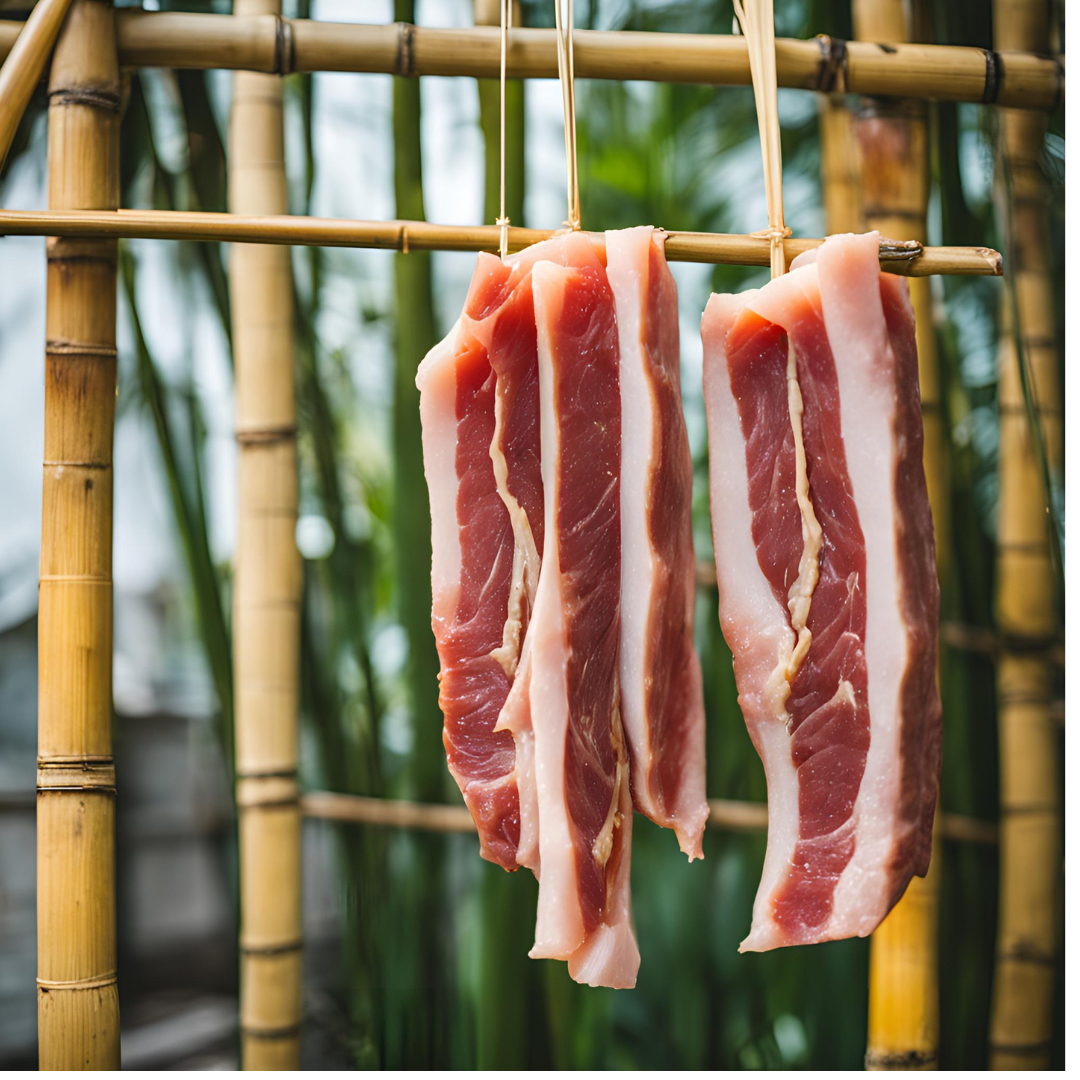
As for the pork, my mother would bring it home, cut it into long strips about a handspan wide, about the size of two adult fingers, marinate it with spices, then wrap it in banana leaves, tie it up, and hang it on a rack. That's how the aroma of Tet filled our family's kitchen in the days leading up to the holiday.
So many springs have passed in my life, yet the taste of boiled pork wrapped in banana leaves still lingers in my mind. At every meal, my mother would open the bundle of meat, take one or two pieces, wash them, season them, and put them in the pot to boil.
Just by dropping a piece of meat into a pot of boiling water, I could smell the aroma spreading throughout the family kitchen. I still vividly remember the pinkish color of the meat taken from the bundle of banana leaves; even after being boiled, it retained that distinctive pale pink hue.
The thinly sliced meat, arranged on the plate, looked almost raw with its distinctive, indescribable color. The aroma seemed to be concentrated in my mother's dish of meat wrapped in banana leaves back then, an unforgettable scent.


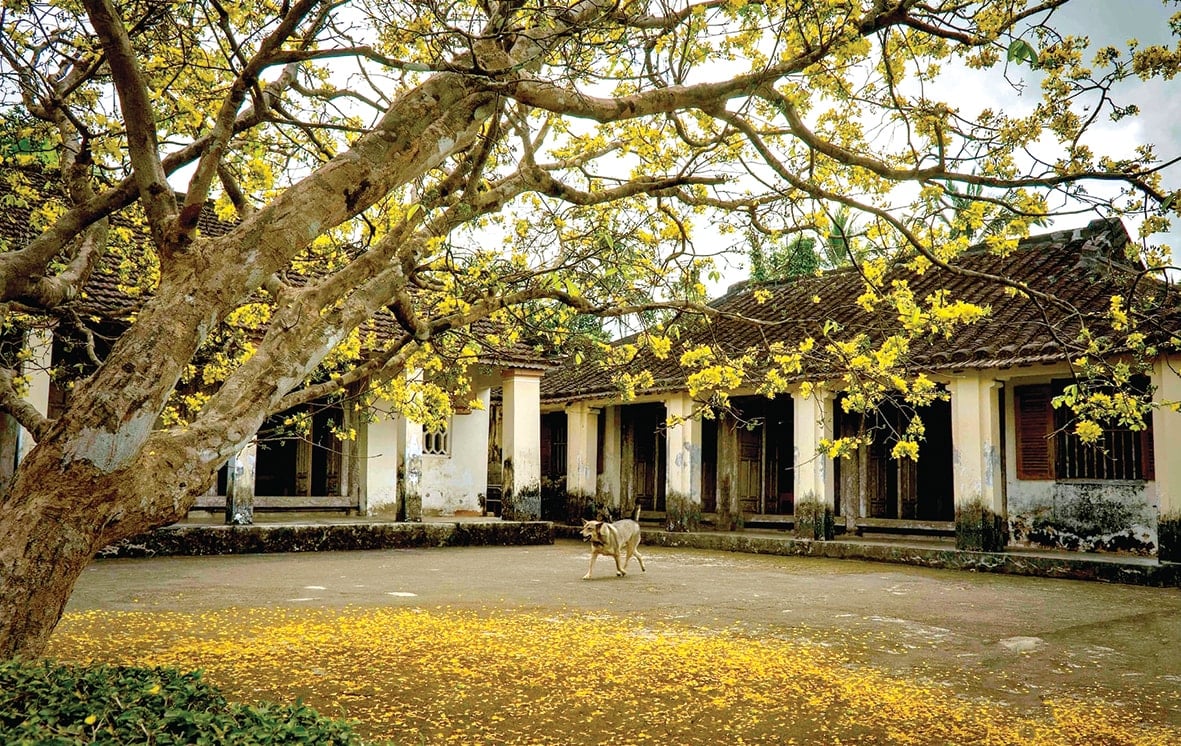
We grew up, left the village for the city, and entered life. Each of us went our separate ways. For me, many images remain etched in my childhood memories, but the image of my mother meticulously marinating meat and carefully wrapping each piece so that we could have delicious meals infused with the flavors of our homeland is one of the most vivid memories of my childhood.
I miss my mother and long to eat that simple but loving family dish of pork wrapped in banana leaves, a staple of the three days of Tet (Lunar New Year). The humble, unpretentious, and genuine flavor of this dish embodies the rustic character and roots of the people of Quang Nam province, a tradition that has existed and will continue to exist…
Source: https://baoquangnam.vn/thit-heo-bo-mo-cau-vi-xua-tet-cu-3148232.html