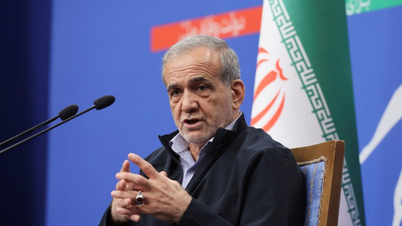
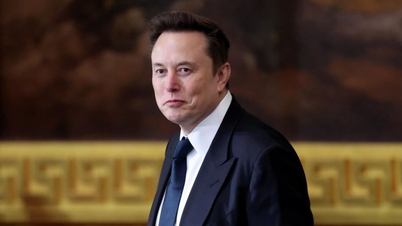
US President Donald Trump and Iranian President Masoud Pezeshkian have officially signed a memorandum of understanding (MoU) aimed at ending the conflict between the two countries. Photo: IRNA.
According to published information, the US and Iran have signed a 14-point memorandum of understanding, establishing a long-term ceasefire, reopening the Strait of Hormuz, initiating negotiations on Iran's nuclear program, and gradually lifting sanctions and embargoes. The two sides are expected to have 60 days to negotiate a more comprehensive agreement.
The event was widely seen as a crucial turning point for Middle Eastern security, helping to de-escalate one of the most serious geopolitical crises since the early 2020s. However, behind the optimistic pronouncements from Washington and Tehran, a host of unanswered questions remain, ranging from Iran's nuclear program and the future of Lebanon to Israel's role in the new regional order.
Diplomacy prevailed after both sides realized the limits of war.

Diplomacy prevailed after both sides recognized the limits of war. Photo: atlanticcouncil.org.
When US President Donald Trump and Iranian President Masoud Pezeshkian signed a memorandum of understanding containing 14 clauses, many analysts argued that it reflected a simple reality: neither Washington nor Tehran could achieve a decisive victory through military means.
According to Qin Tian, Vice President of the Middle East Research Institute at the China Institute of Contemporary International Relations, since the temporary ceasefire on April 8, both sides have in fact been preparing for the possibility of withdrawing from the battlefield. He believes that both the US and Iran understand that continuing to fight will not achieve all of their strategic goals, while the economic, political, and military costs are increasing. Therefore, returning to the negotiating table is a more suitable option in the interests of both sides.
This view is also shared by many Western research organizations. Holger Schmieding, Chief Economist of Berenberg Bank, argues that despite the months-long military campaign, the US has failed to achieve several key objectives, including fundamentally weakening the power structure in Tehran.
According to Schmieding, the war showed that even a military superpower faces significant challenges when confronting an adversary capable of waging asymmetric warfare with missiles, drones, and regional alliance networks.
Conversely, Iran also suffered significant damage. Its economic system, already weakened by sanctions, was further damaged by the disruption of oil exports and the blockade of the Strait of Hormuz. This gave Tehran a strong incentive to seek a diplomatic way out.
The Hormuz has reopened, but the energy problem is not over.

One of the most important aspects of the agreement is the reopening of the Strait of Hormuz – a shipping lane that carries approximately 20% of the world's traded oil. Photo: AP.
One of the most important aspects of the agreement is the reopening of the Strait of Hormuz – a shipping lane that carries approximately 20% of the world's traded oil. For months, Iran's blockade of the strait had caused oil prices to surge, raising the risk of inflation in many major economies.
UN Secretary-General António Guterres welcomed the US-Iran agreement, calling it "a pivotal step toward a peaceful resolution to the conflict," and stressed that restoring freedom of navigation in the Strait of Hormuz is particularly important for global economic stability.
The financial markets also reacted positively. Oil prices fell significantly after news of the agreement was announced, while the US stock market reached new record highs. President Trump saw this as proof that his policy had been successful. He declared on the social media platform Truth Social: “I have never been soft on Iran. The stock market is at record highs and oil prices are plummeting.”
However, experts warn that risks still exist.
Amrita Sen, founder of the consulting firm Energy Aspects, believes the language of the current agreement is relatively favorable to Iran and that many technical details remain unresolved. She argues that a full restoration of shipping traffic through Hormuz will not happen immediately, as the region will still need time to clear mines and restore maritime security mechanisms.
Another issue is that Iran is currently only committed to allowing commercial ships free passage for 60 days. After that, Tehran will discuss with Oman and other Gulf states a new management mechanism for the Strait of Hormuz, including the possibility of implementing service fees. This means the risk of instability in this strategic shipping lane has not completely disappeared.
Who benefits more?
This is perhaps the most contentious question since the agreement was announced. Under the terms now revealed, Iran would be exempt from sanctions on oil exports, gain access to billions of dollars in frozen assets abroad, and potentially receive support from a reconstruction fund worth up to $300 billion.

Amrita Sen commented that what has been released so far suggests the document is "quite favorable, even very favorable, to Iran."
Holger Schmieding also suggested that, based on available information, Tehran appears to have achieved more significant goals than Washington.
Notably, many of the objectives previously stated by the Trump administration when launching the military campaign, such as completely destroying Iran's missile stockpile, ending Tehran's network of allied forces in the region, or altering the balance of power in Iran, are absent from the current document.
Instead, the focus of the negotiations narrowed primarily to the nuclear program.
President Pezeshkian described the agreement as “a historic document” and an opportunity to resolve Iran’s economic and political problems, while opening up “a different world” for Iran and the Middle East. Meanwhile, Iranian leaders declared it proof that the country had forced its rivals to accept reality and return to the negotiating table.
The nuclear dossier remains the biggest test.

Iran's nuclear program remains the biggest test. Photo: kiro7.
The 2015 Iran nuclear deal, signed under former President Barack Obama, imposed strict restrictions on Iran's nuclear program for 15 years. These included: Enriched uranium purity not exceeding 3.67%, far below the approximately 90% needed to produce nuclear weapons; a limited stockpile of enriched uranium not exceeding 300 kg; a strictly limited number of centrifuges; and stricter inspections by international nuclear watchdogs. Opponents argued that the 15-year period was too short, as Iran could quickly restore its nuclear weapons development capabilities after its expiration.
Therefore, the key question now is whether Trump can achieve longer-term and stricter restrictions on Iran's nuclear program. Washington wants Iran to transfer or dilute its existing high-enriched uranium, while Tehran is likely to insist on defending its right to enrich uranium at low levels on the grounds that it serves peaceful purposes.
According to Du Guokang, a researcher at the Institute of West Asian and African Studies of the Chinese Academy of Social Sciences, this will be the most difficult topic in the upcoming negotiations.
According to him, many key aspects of the current agreement are still only at the principle level. Actual implementation will depend on the outcome of negotiations within the next 60 days.
Qin Tian, Vice President of the Middle East Research Institute at the China Institute of Contemporary International Relations, also warned that if the two sides fail to reach a consensus on the nuclear issue, the possibility of renewed military confrontation cannot be ruled out. President Trump himself has sent a tough signal, declaring that the US will resume airstrikes if Iran does not comply with its commitments under the agreement.
Israel - the biggest variable in the peace process.
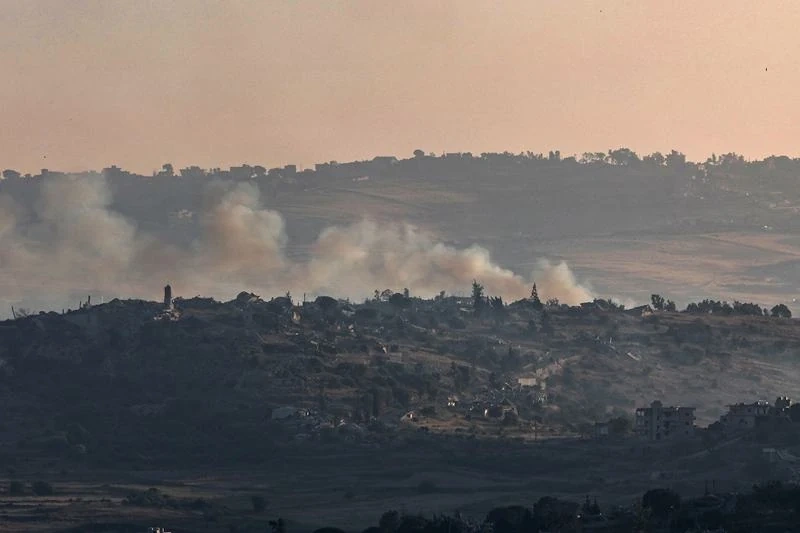
On June 16, 2026, local time, smoke rose from Upper Galilee as Israeli airstrikes continued in southern Lebanon. The Central Command of the Iranian Armed Forces, Hatem Anbia, issued a statement saying that following a memorandum reached between the US and Iran, Israeli forces had violated the ceasefire agreement 84 times in southern Lebanon. (Photo: bjnews)
If the nuclear issue is the biggest test between Washington and Tehran, then Israel is seen as the most unpredictable variable for the future of the entire agreement.
Unlike the US and Iran, Israel did not participate in the negotiations and was not a signatory.
Prime Minister Benjamin Netanyahu's government has reacted coolly, even somewhat negatively, to the new agreement.
Many Israeli politicians and media outlets have described this as a "political and security disaster," because issues of greatest concern to Tel Aviv, such as Iran's ballistic missile program, its allies, and Tehran's influence in Lebanon and Syria, were almost entirely ignored.
Even if the US and Iran reach an agreement, fighting between Israel and Hezbollah in Lebanon will not be over.
Mr. Du Quoc Khanh believes that sporadic attacks between the two sides could easily continue and become a disruptive factor in the peace process.
Meanwhile, Qin Tian commented that Israel might not be happy with the agreement, but ultimately would have to accept Washington's decision due to the strategic alliance between the two countries.
However, he also warned that Tel Aviv could very well seek other opportunities in the future to exert pressure or derail the US-Iran reconciliation process.
The preliminary agreement called for an end to the hostilities in Lebanon, the confrontation between Israel and Hezbollah. However, neither Israel nor Hezbollah signed the document. Iran continues to demand that Israeli troops withdraw from large areas of southern Lebanon that it has controlled since March.
However, the agreement did not explicitly stipulate a troop withdrawal requirement, only emphasizing respect for the “territorial integrity of Lebanon.” Israel has stated it will continue to maintain a military presence in the region, while Hezbollah has affirmed it will continue to resist until Israel completely withdraws. If Washington and Tehran cannot control their allies, any escalation in Lebanon could derail the US-Iran peace process.
A turning point or just a temporary pause?
Currently, most experts agree that the June 17 agreement is the most significant diplomatic achievement since the war broke out in late February. However, very few are willing to assert that the Middle East has entered a new era of peace.
The National Iranian American Council (NIAC) hailed this as the biggest diplomatic breakthrough since the conflict began, but also stressed that the future of the agreement remains highly uncertain due to opposition from Israel, hardliners in Washington, and conservative forces in Iran.
The reality is that many peace agreements in the Middle East, once hoped to usher in a new era, ultimately collapsed under the pressure of political and security instability. Therefore, the document just signed is merely the beginning, not the end goal.
If negotiations over the next 60 days are successful, the US-Iran agreement could be remembered as a milestone marking the point at which the two long-time rivals began to replace the logic of confrontation with the logic of dialogue.
Conversely, if disagreements over nuclear issues, Lebanon, or Israel's role remain deadlocked, this document risks becoming another missed opportunity for peace in the turbulent history of the Middle East.
Meanwhile, the entire region and the world are closely watching every move of Washington and Tehran, because the future of this agreement will not only determine US-Iran relations but could also shape the Middle Eastern security order for years to come.
Thanh Vân
Source: https://baothanhhoa.vn/thoa-thuan-hoa-binh-my-iran-canh-cua-moi-cho-hoa-binh-trung-dong-291605.htm




![[Photo] Prime Minister Le Minh Hung presides over the thematic session on promoting science and technology development and innovation.](https://vphoto.vietnam.vn/thumb/1200x675/vietnam/resource/IMAGE/2026/06/23/1782207872934_ndo_br_dsc-1724-jpg.webp)