

From outsourcing to brand building
The history of the Vietnamese comic book industry began quite early. Many generations of readers grew up with Hesman the Hero, Vietnamese Child Prodigy , or Tý Quậy ... These series are not only childhood memories but also mark the beginning of the domestic comic book market creating a mass readership.
However, that period was quickly overshadowed by a wave of foreign comics such as Japanese manga and anime, and Korean manhwa that flooded into Vietnam from the late 1990s and early 2000s. A generation of readers grew up with Doraemon, Dragon Ball, Naruto, Detective Conan, and more . In that "whirlwind," Vietnamese comics were almost completely overshadowed even in their own country.
For many years, the market was almost entirely dominated by imported works, while the majority of Vietnamese artists had to work for foreign companies or operate independently, lacking a long-term development environment. But over the past decade or so, a new movement has been quietly taking place.
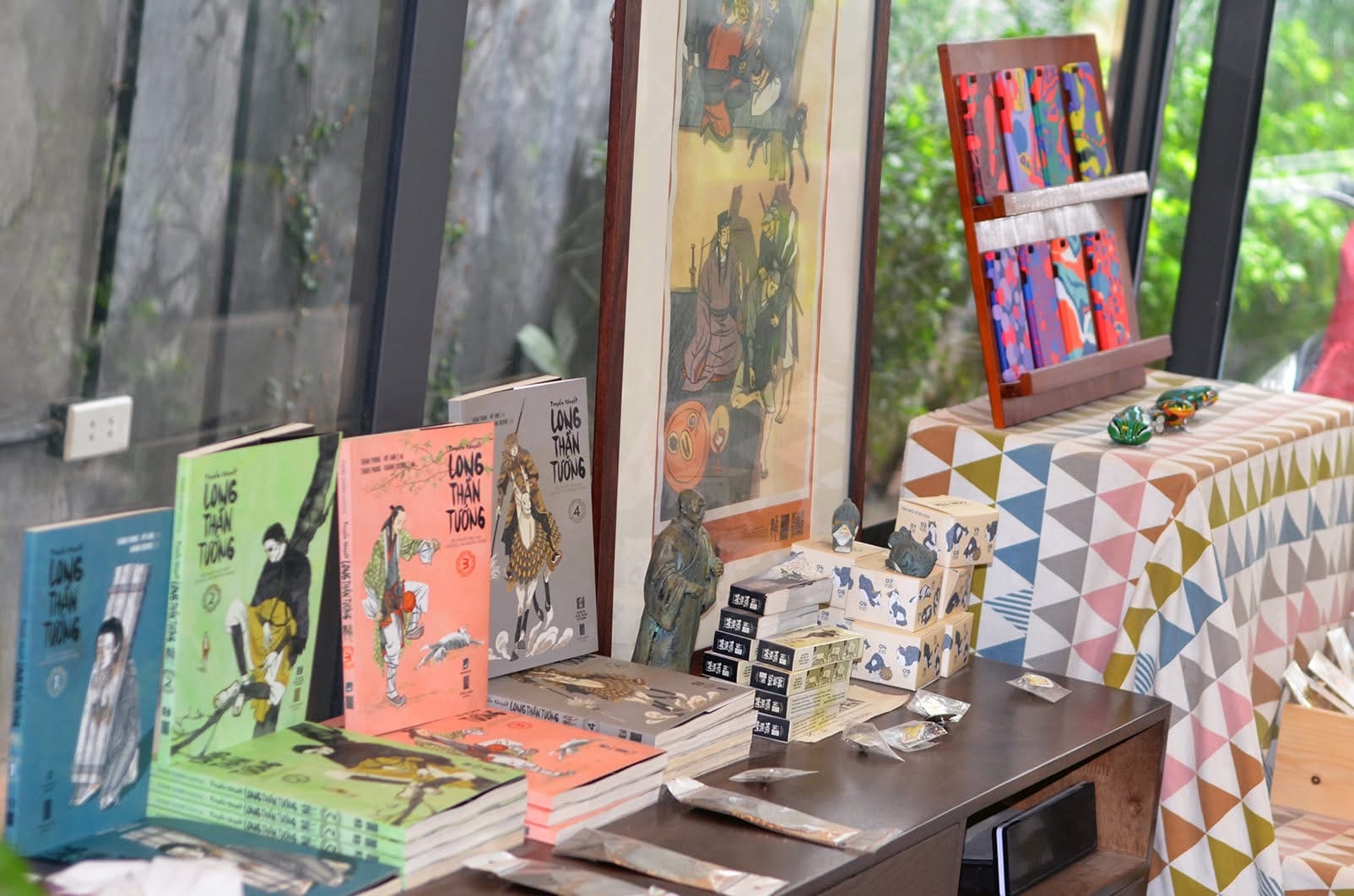
The emergence of independent creative groups and digital platforms has breathed new life into the field. Projects like Long Than Tuong , Dia Nguc Mon , Meo Moc , Bad Luck , Lac Troi... show that the younger generation of artists is approaching comics with a different mindset. For them, comics are no longer just printed books, but intellectual property that can develop into a multi-platform brand.
At the seminar "Sharing the Vision for Developing the Comic Book Creative Ecosystem in Vietnam" on the afternoon of May 16th, comic artist Nguyen Duy Hai, co-founder of PunkgaMe, stated that Vietnamese comics are facing the opportunity to form the "biggest wave" ever, as many favorable factors converge: policies to develop the cultural industry, an increasingly mature generation of young artists, and a booming demand for digital content.
According to artist Nguyen Duy Hai, the creative industry is facing a crucial transition, moving from a position of "employee" to the aspiration of building unique domestic brands. Many Vietnamese artists have participated in international projects, won awards abroad, and possess professional skills comparable to those in the region. However, what is still lacking is a sufficiently strong creative infrastructure to nurture and retain professionals. From training, publishing, investment to distribution and commercialization, the links in the industry remain fragmented and lack sustainable connections.
The biggest challenge remains the long-standing habit of consuming free content. Getting readers to pay for content is a long process. Therefore, tightening copyright protection is not just a legal issue, but is also expected to become a crucial turning point for a healthier creative market, thereby opening up opportunities for sustainable development of the domestic comic book market.
Opportunities arising from copyright and adaptation.
On May 5, 2026, the Prime Minister issued Official Dispatch No. 38/CD-TTg on focusing on combating, preventing, and handling acts of intellectual property infringement. In the field of comics, artist Nguyen Duy Hai believes that the elimination of illegal websites and unauthorized distribution channels is creating a large gap in the digital content market. When the source of illegal content is reduced, readers will gradually develop the habit of paying for content and return to legitimate creative products. This gap also opens up new opportunities for domestic comics.
With nearly 15 years of experience working with Vietnamese artists, Nguyen Khanh Duong, founder of Comicola/Comia, believes that history has clearly shown the impact of copyright protection. For example, when the Berne Convention came into effect in Vietnam in 2004, the pirated comic book market was significantly reduced, and domestic comics had the opportunity to flourish.
Looking at the world , Japan is building global soft power through manga and anime. South Korea has turned webtoons into a "content mine" for film, television, and online platforms. China is also thriving with its native IP ecosystem.
Meanwhile, Vietnam possesses a significant advantage: a young population, access to advanced technology, and a growing demand for digital content. Many international studios are beginning to show interest in the Vietnamese market not only because of its human resources but also because of the potential of the domestic market. Notably, Vietnamese comics no longer exist as an independent field but are gradually connecting with film, animation, games, and more.
Nguyen Khanh Duong, founder and CEO of Box Office Vietnam, the first and only independent platform providing comprehensive box office statistics in the Vietnamese market, stated that Vietnamese cinema has recently experienced strong growth, with increasing investment in the sector. However, this growth is accompanied by a "thirst" for original scripts. Producers need stories that already have a fan base and proven appeal. "The ninth art" perfectly meets this need. In South Korea, most popular online dramas are adaptations of webtoons. These successful works on digital platforms become a "gold mine" for the development of the film industry.
This trend is starting to emerge in Vietnam. Several comic book works have attracted interest from various entities for adaptation. Beyond films, many companies are also beginning to show interest in graphic novels and cross-platform IP models.
Vietnam's rich history, mythology, folklore, and indigenous culture are sufficient to create captivating fantasy worlds, rivaling those of any other country in the region. What's lacking is the ability to transform these materials into compelling, modern storytelling that captivates readers both domestically and internationally.
Many believe that for Vietnamese comics to truly break through, a strong creative infrastructure is needed to nurture talent, enhance copyright protection, and transform imagination into lasting cultural values. When creative resources are placed at the center, the comic industry will not only have the opportunity to form a sustainable domestic market but also to expand regionally with stories that reflect Vietnamese identity.
Source: https://daibieunhandan.vn/thoi-co-vang-cho-truyen-tranh-viet-10417201.html




































































































Comment (0)