

With direct wholesale sales sluggish and e-commerce sales facing intense competition for market share, TikTokers are gradually becoming a customer acquisition channel for businesses.
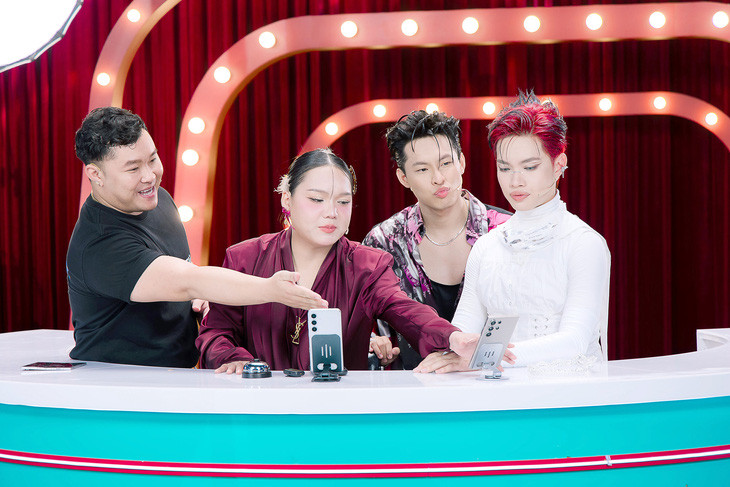
And in fact, more and more businesses are entering this technology game.
Mr. Nguyen Van Thu, director of GC Food Company ( Dong Nai ), shared on his personal page that his company's products were preparing to livestream for the first time through a platform. TikToker: "It's not even time for the live stream yet and I've already closed 25 orders. There are only 200 combos available, guys."
As a result, within 3 minutes of the livestream, 400 combos (coconut jelly with brown sugar, aloe vera smoothie priced at 128,000 VND; aloe vera jelly with fruit flavor priced at 130,000 VND) were sold out beyond the planned target, generating over 50 million VND in revenue.
From nobody buying to a "bestseller"
GC Food Company was originally a business whose main products were coconut jelly and aloe vera, exported to markets such as Japan, South Korea, and China.
According to Mr. Thu, the company has two factories in Binh Duong and Dong Nai provinces, exporting approximately 80-100 containers of processed agricultural products to various markets each month. However, in response to new market trends, the company is also "transforming" itself by finding ways to sell its products through TikTok.
Sharing about this sales method, Mr. Thu said that his staff had been following a TikToker (from Ca Mau province, with over 2.8 million followers) and the TikToker messaged the company inviting them to participate in an event.
"Last September, for the first time, the company livestreamed product sales through TikTok, so we limited it to just 200 orders. They handled the shipping for us, delivering the goods to customers for free, and offered an additional discount on the selling price."
"I watched the livestream for the first time, and the product codes were saved, with no order cancellations, which was very effective compared to traditional sales methods. The company has good products, a skilled team, and understands technology and trends, so together they made the live session a success," Mr. Thu observed.
Similarly, a company from India (with a manufacturing plant in Vietnam) owns a range of skincare and haircare products such as body wash, shampoo, conditioner, facial cleanser, and moisturizer. These products are aimed at the middle-income consumer segment.
According to the company's communications director, the product is sold in supermarkets and grocery stores, and they are now exploring a new business direction by partnering with TikTokers. The director stated: "Previously, we used to ask models and singers to try out our products and advertise them alongside the image of celebrities."
"But for the past year, we've been hiring TikTokers to livestream and sell shampoo and body wash. Surprisingly, the body wash that nobody touches in supermarkets or grocery stores becomes a best-seller when sold online, with sales skyrocketing."
From food and cosmetics to clothing and fashion accessories, these products attract the most attention during livestream sessions. A young business owner from Quang Ngai province, who had a fashion brand with multiple stores but was considering closing them, coincidentally received advice to partner with a famous TikToker and designer for livestreaming. On the first day, the business sold nearly 1,000 orders!
"For the past year, the wholesale market on e-commerce platforms has become saturated, revenue has almost stagnated, and I've had to downsize my stores in District 3 and Tan Binh District. Hiring a celebrity to livestream and sell for one session is equivalent to three months' worth of sales on e-commerce platforms," this business owner compared sales figures and plans to hire more TikTokers to livestream and sell products in the near future.
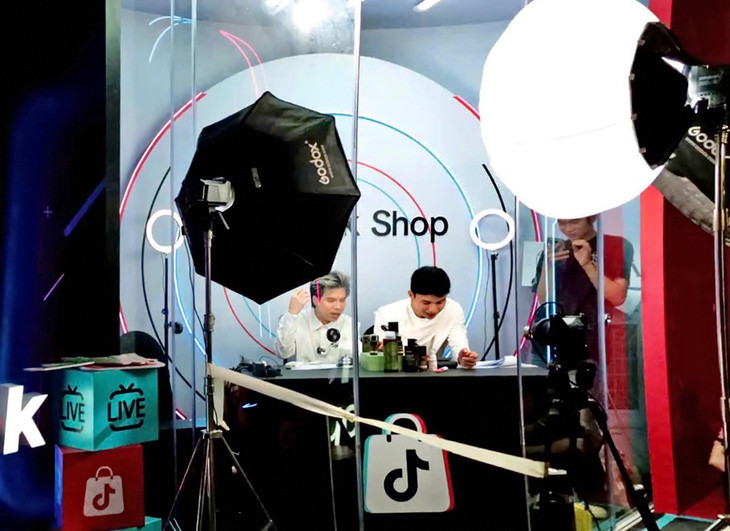
Many businesses are facing difficulties.
Behind the story of the "explosion" of thousands of orders, there are also many bitter issues with this sales method, posing numerous challenges for solutions on both sides: businesses and TikTokers.
A typical example is the story of Mr. Nguyen Van Thu, whose livestream sessions resulted in virtually no revenue after a surge in orders. Explaining this paradox, Mr. Thu said: "Because I offered deep discounts during the live sales, and then there were expenses for the TikTokers, so there was no profit in the end."
However, businesses must also livestream continuously because these sales sessions are a channel leading to other channels; subsequent orders will gradually increase profit margins. Maintaining livestreaming is especially important to maintain search visibility, as customers want their products and brand to appear first."
While large, well-funded businesses are willing to offer deep discounts during major live stream sales to expand their market, small businesses face significant pressure when venturing onto TikTok. This is according to Mr. Ho Thanh Van (owner of a business specializing in dried goods, spices, and instant food in District 12, Ho Chi Minh City).
Mr. Van said that previously there were 20 sales representatives traveling throughout Ho Chi Minh City and neighboring provinces to promote and sell products. However, that number has now been reduced to only one-third, mainly assisting with product packaging. All efforts have been focused on hiring celebrities to livestream sales.
"Hiring celebrities is too expensive, and average sellers don't even get 40 orders per live stream, which isn't enough to cover costs and run the company. But once you're on the platform, you have to follow through; otherwise, you'll just have to kill off a brand you've built over a decade," Văn lamented.
Mr. Van further analyzed: a year ago, the total platform fee paid by businesses was 3%, but this year the total fee is 13%; the rate of increase in costs means that product prices and profit margins are insufficient to cover expenses.
Another challenge of this type of collaboration lies in the potential for damage to a company's brand reputation if they encounter an "unlucky" livestream session.
Mr. Hoang Vu Huy - Head of E-commerce Management at Deevo JSC, who participates in guiding online sales training for businesses and providing support related to TikTok - shared about the "pains" businesses face when hiring celebrities to livestream...
"There are TikTokers with huge followings. Businesses look at them with the belief that their products will spread and be strongly promoted. But for a TikToker who builds their image on TikTok for entertainment purposes to sell food, it's not effective, because the audience is more interested in entertainment than in buying products."
"Not to mention hiring TikTokers with fake followers and a 'structured' purchasing team—meaning they plant people to close fake orders and then cancel them. Therefore, if the partnership isn't for the right purpose, it will affect the business's performance metrics on the platform. In reality, many businesses have suffered losses," Mr. Huy warned.
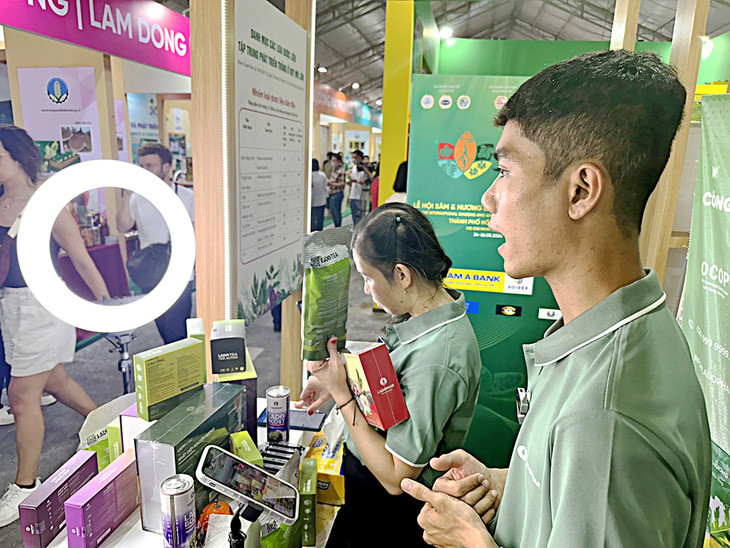
What should TikTokers and businesses do?
"Exaggeration is unacceptable, but understatement leads to misdirected product communication. Businesses and TikTokers must work closely together; superficiality is a drawback. TikTokers also need more time to understand the company's product," said a representative from the company.
Mai Ai Phuong, the owner of a business selling second-hand clothing and household goods from Japan and South Korea on Nguyen Thien Thuat Street (District 3), recounted an experience where she livestreamed herself and hired a professional livestreamer for 1 million VND per broadcast. The effectiveness came from the fact that viewers understood the product story and had the most genuine feelings about it.
"Being articulate and having a knack for selling isn't enough for a TikToker; they must understand the product, even if it's used, knowing its origin is what attracts buyers."
"Businesses must identify the main objectives of the collaboration, diversify product designs, offer promotions, and deliver products that meet the advertised quality and specifications to consumers. Only then will success be sustainable," Ms. Phuong stated.
Meanwhile, according to some influential TikTokers, such as the TikTok channel of beauty queen THPN (with over 87,000 followers), for effective collaboration, the issue lies not only with the TikToker, KOL, or KOC receiving the advertisements, but also with the businesses themselves.
From a business perspective, the biggest challenge lies in establishing an optimal operating system for the livestream business transformation. "Businesses must carefully balance investment costs such as booking fees for KOLs, special discounts during live sessions; shipping and packaging costs, platform fees, commissions, and even costs for canceled or returned orders."
In addition, it's necessary to organize an optimal human resources and logistics system, minimizing operational waste to ensure profitability. Another challenge is understanding your target customers to select suitable live sessions and KOLs for your product," the beauty queen suggested as a solution.
While acknowledging this as a new sales method that needs to be maintained in the future, a representative from the Ho Chi Minh City Department of Industry and Trade stated that regardless of the sales channel, the most important factors for businesses remain reputation, packaging, design, and product quality.
"With the shift in the market, businesses must also change their business methods and expand their distribution channels. Depending on their strategy, each business targets a specific customer segment to select livestreamers who can deliver equivalent value."
"The most important thing is to prioritize business reputation; if you meet the requirements, you will remain stable amidst market fluctuations and competition," this representative advised.
Various costs involved in hiring TikTok KOLs. The cost of hiring a TikTok KOL depends on various factors such as the KOL's follower count and engagement, popularity and credibility, video length, number of ad posts, and the KOL's operating region. Therefore, this service market has a wide range of prices. According to our research, the publicly advertised prices online for hiring celebrities range from 1 to 10 million VND per 1,000 views or shares, while prices per 1,000 likes or comments range from 500,000 to 5 million VND per 1,000 likes or comments. Additionally, if calculated based on the duration of the contract, the price will be 100 million VND/month; while during "prime time" slots such as 6-8 am, 11 am - 1 pm, and 10 pm, the service price will be slightly higher due to the highest number of viewers. Along with the service of hiring KOLs for livestreaming, the service of selling fake views on this platform has also "followed suit". However, Ms. Tran Thi Tan - Director of Social Responsibility at TikTok Shop - believes that if TikTokers do not build "clean" channels, those channels will have their interaction "suppressed" (flop) and will find it difficult to trend, which will affect the reputation of affiliated businesses. |
Careful planning is needed when selling through TikTokers. According to a leader from the Southern region of the Ministry of Industry and Trade, livestreaming sales, while having advantages, also have downsides that need to be strictly controlled and managed because it gives rise to many forms of fraud and deception targeting viewers... "This is where low-quality and counterfeit goods are most easily sold. Buyers act on emotion, sellers sometimes exaggerate the product's features, and the actual delivery is a different story. Legitimate businesses need to carefully consider their options if they use this affiliate marketing model, as it could lead to reputational damage and brand harm." "Local authorities should also monitor business activities at warehouses, chain stores, and businesses in their areas that use e-commerce platforms to prevent commercial fraud," this leader advised. |
Vietnamese people rank 11th in the world for online shopping. According to the affiliate marketing platform AccessTrade Vietnam, there are an average of 2.5 million livestream sales sessions per month, involving more than 50,000 sellers. Vietnamese people spend 13 hours per week watching livestream sales and rank 11th in the world for online shopping. In particular, user-generated videos yielded 184% higher conversion rates compared to typical videos distributed by brands. More recently, the e-commerce data platform Metric reported that Vietnam has the highest growth rate in online shopping in Southeast Asia. Accordingly, Vietnam's e-commerce revenue is likely to reach over 310 trillion VND by 2024. Meanwhile, the Department of E-commerce and Digital Economy (Ministry of Industry and Trade) aims to increase the size of Vietnam's e-commerce market to US$14.7 billion (equivalent to VND 880,000 billion) by 2025. Currently, e-commerce in Vietnam is growing at an average rate of 25% per year, with over 63 million Vietnamese people shopping online and an average purchase value of approximately $336 per person. |
Source




![[Photo] General Secretary and President To Lam meets with National Assembly delegates from ethnic minorities.](https://vphoto.vietnam.vn/thumb/1200x675/vietnam/resource/IMAGE/2026/04/20/1776696701056_a1-bnd-8331-3342-jpg.webp)
![[Image] National Assembly discusses the implementation of the socio-economic development plan.](https://vphoto.vietnam.vn/thumb/1200x675/vietnam/resource/IMAGE/2026/04/20/1776696707422_ndo_br_img-20260420-185419-jpg.webp)





















































































Comment (0)