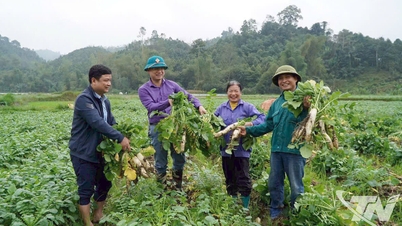
Due to heavy and prolonged rain, farmers in the communes and wards of Hai Phong city will have to wait until the second half of October 2025 to plant their winter onion crop. Although the onions sprout quickly and grow well, the rate of plant death or stem die-off remains, and in many fields, the onion plants have fallen over on the furrows.
Once good farming techniques are in place, the health of the onion plants, the area of new planting, etc., mainly depend on the weather.
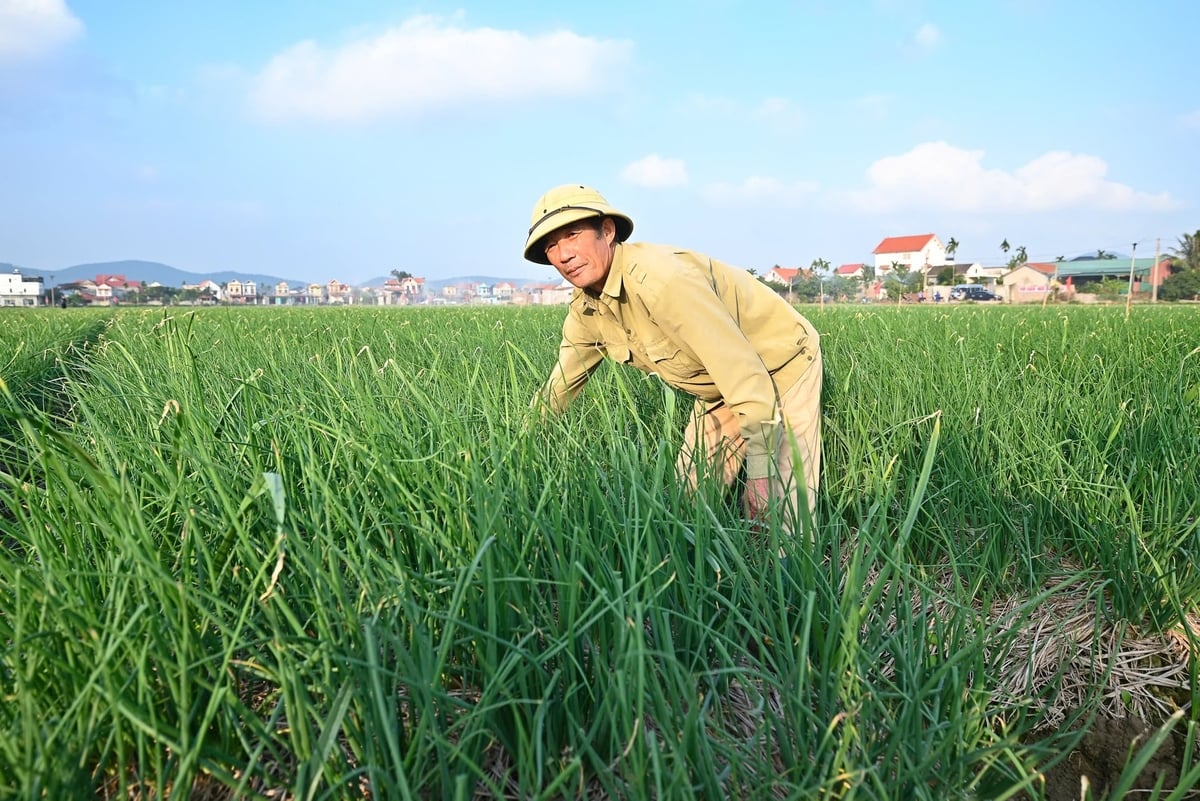
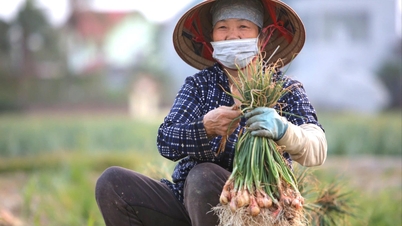
The winter onion crop in Hai Phong is thriving thanks to favorable weather conditions. Photo: Tung Dinh.
In recent years, the planting season for winter onions has typically been from September 23rd to October 20th (depending on the region). Onions are part of a three-crop-per-year crop rotation system, yielding high income (late spring rice – early summer rice – winter onions).
In years with good winter onion harvests, favorable weather conditions (few storms, sufficient rainfall, dry conditions at harvest) and proactive production practices (good varieties, appropriate techniques) are common. In years with cold winters, cold-loving vegetables are easier to cultivate and often yield high productivity.
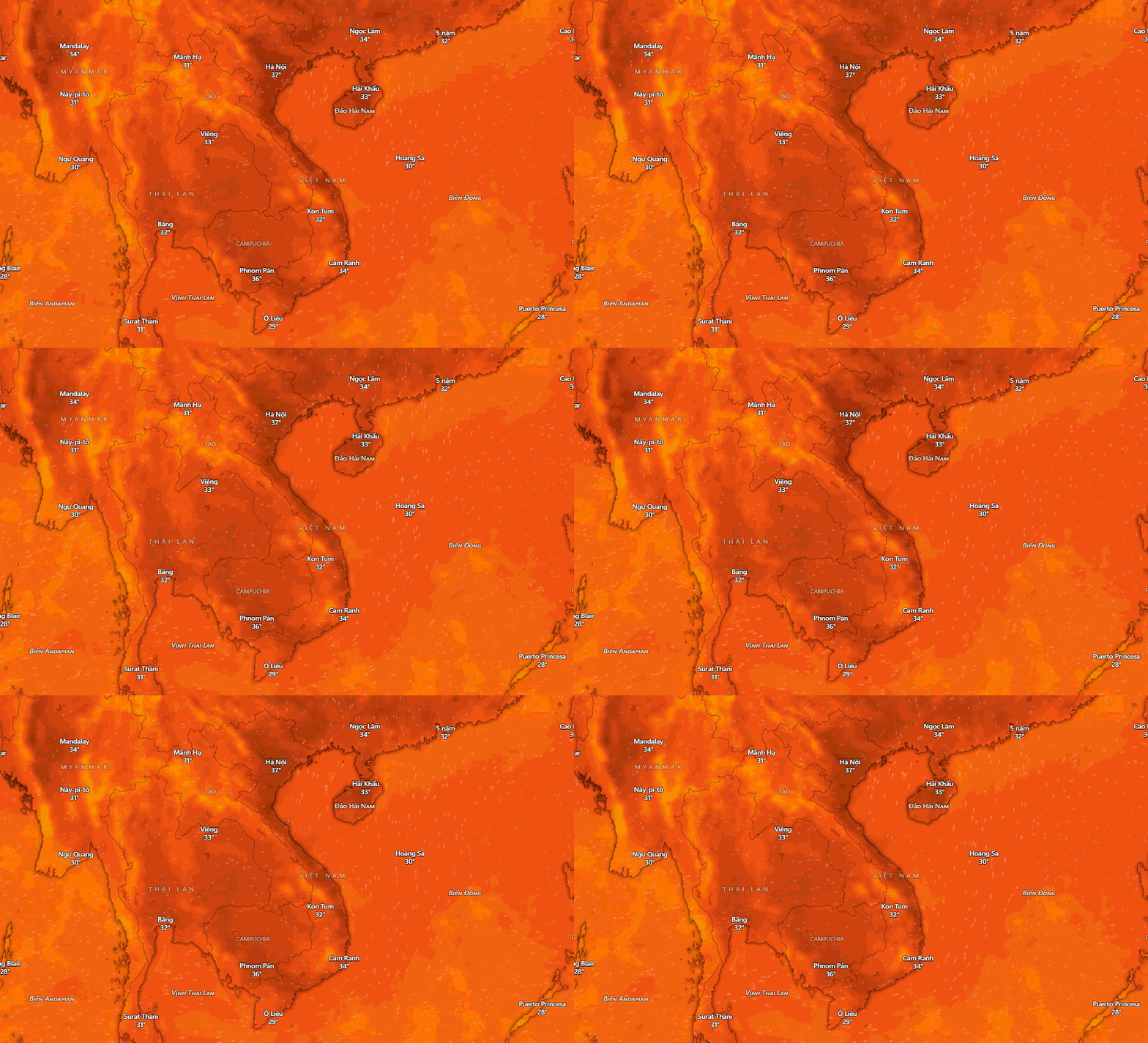
Weather includes factors such as air temperature, soil moisture, rainfall, atmospheric humidity, solar radiation, fog, and frost...
In reality, this year, many rice fields had to be harvested by hand until October 16th because the fields were still waterlogged or muddy. After harvesting, the straw had to be piled into mounds so that the fields could be quickly plowed and prepared by machine, creating ridges.
It wasn't until October 28th that farmers had basically finished planting their winter onion crop, covering the furrows with straw and focusing on furrow irrigation to ensure sufficient moisture. Even so, they were still very anxious because, compared to the same period in previous years, the onion plants were receiving their first or second round of fertilization. So, after tending to their onion fields, they would return home anxiously hoping the onion bulbs would quickly sprout into plants.
Then, fate intervened, granting people's wishes. Specifically, as predicted and actually happened, throughout November and December, air temperatures were lower than usual, creating a cool atmosphere with plenty of gentle sunshine and low solar radiation, ideal for the germination, branching, and clustering of onion plants.
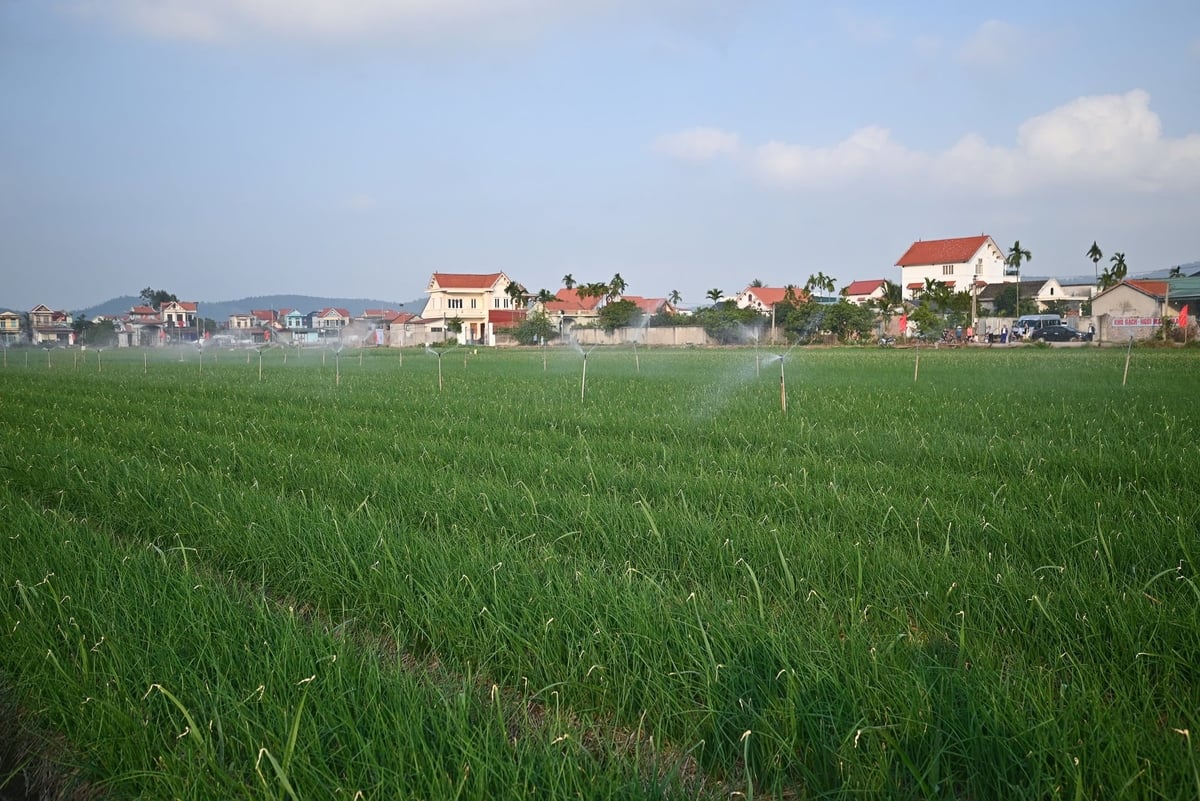
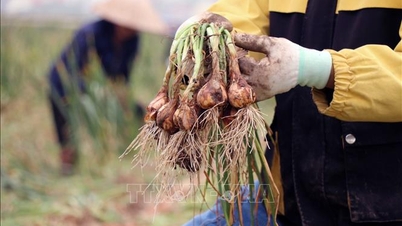
If the weather continues to be favorable, Hai Phong has a good chance of having a successful onion harvest. Photo: Tung Dinh.
Due to heavy and prolonged rainfall at the beginning of this year's winter season, various microorganisms (bacteria and fungi) already present in the soil have spread and entered through cuts in onion bulbs during planting or other mechanical injuries. This has created favorable conditions for the Au Lac Micro Bio biological product to demonstrate its effectiveness. Farmers are very pleased with the use of this biological product.
The onions remain green but are sprawling across the raised beds; farmers often call this "onion lodging" because the weather conditions are so favorable in terms of air temperature, soil moisture, and solar radiation that the onions have grown in two directions (their roots are large, strong, and pure white, and their leaf stalks are also swollen and excessively long).
Currently, the onion plants are 50 to 65 days old, and are expected to reach 90 days by January 15, 2026. With continued favorable weather conditions, farmers in Hai Phong are expected to have a bumper onion harvest.
Agricultural extension and plant protection stations need to coordinate closely with the People's Committees of communes and wards to strengthen technical guidance on caring for onions during the winter season. They should train and guide farmers on how to detect downy mildew and other pests that damage onions at the end of the season. At the same time, small-scale field conferences should be held to discuss the results of using the Au Lac Micro Bio biological product on onions, in order to disseminate this information for future winter crops.
Source: https://nongnghiepmoitruong.vn/thoi-tiet-quyet-dinh-cay-hanh-d791312.html










































































Comment (0)